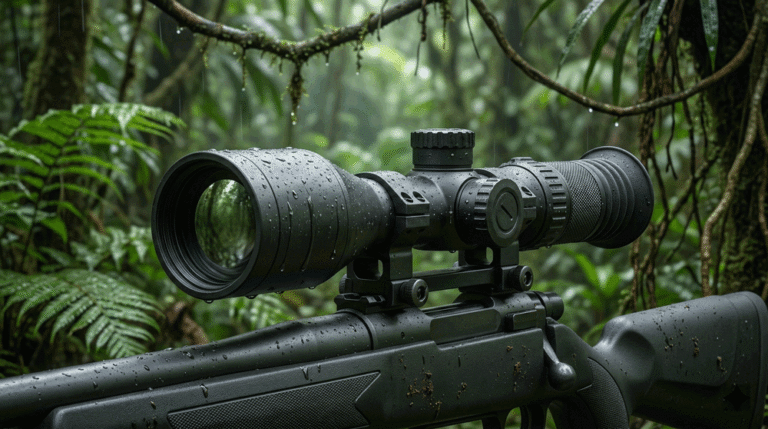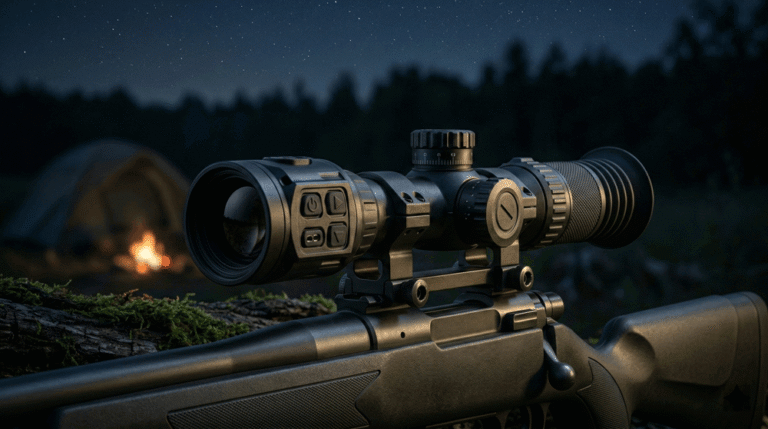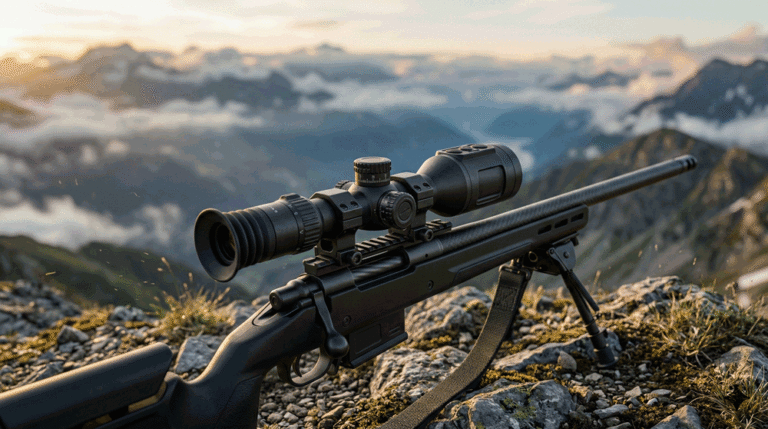
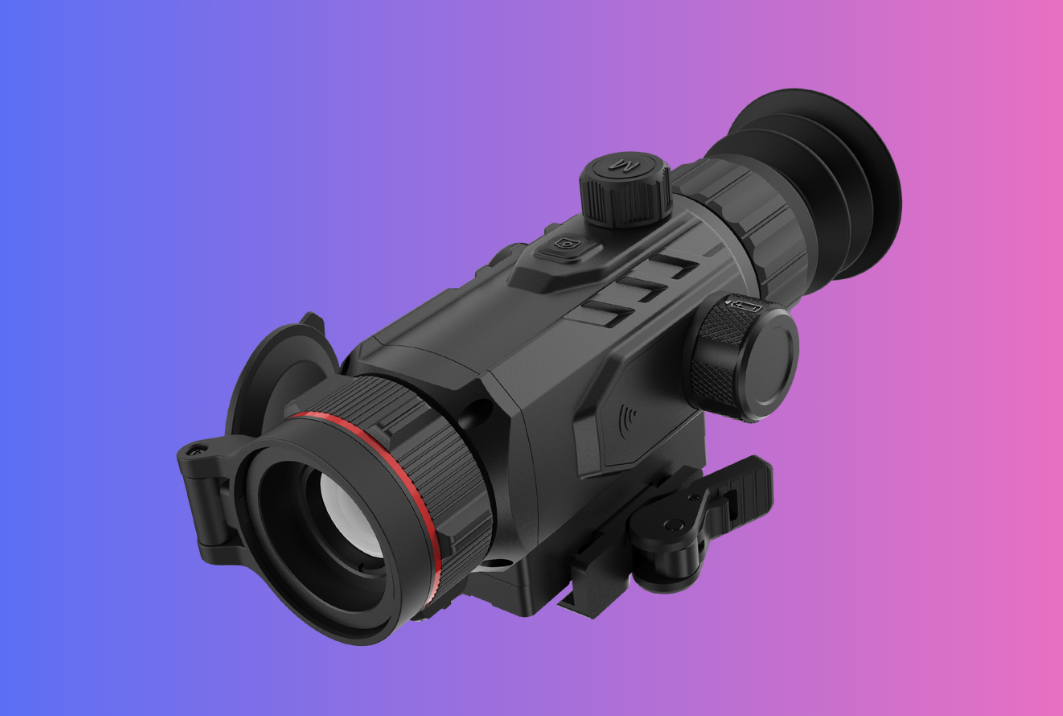
High-end thermal optics can cost as much as a used truck. That’s fine for outfitters and full-time pest-control crews, but most hunters need a best budget thermal scope that fits real-world finances and still works every time they pull the trigger.
Table of Contents
ToggleThe good news: in the last few years, sensor prices have dropped and quality has improved. Everyday hunters can now buy a reliable thermal hunting scope without draining a savings account—if they understand what to look for and where they can safely compromise.
This guide explains how budget-friendly thermal scopes work, what separates smart purchases from false economies, and how different options—dedicated scopes, clip on thermal scope systems, and scopes with rangefinding—fit into common hunting styles.
1. What “Best Budget Thermal Hunting Scope” Really Means
“Best budget” does not mean “the absolute cheapest scope you can find online.” Instead, it means:
- The scope is affordable for a working hunter.
- It delivers enough performance for your typical distances and terrain.
- It holds zero, survives bad weather and has at least basic support.
A genuinely best budget thermal scope should give you several seasons of dependable use, not just a few exciting nights before something fails. It may sit below the elite best thermal rifle scope models in range and features, but it should never make you doubt what you’re seeing through the eyepiece.
2. Dedicated Thermal Hunting Scopes vs Clip-On Options
Before you compare specs, decide which form factor fits your rifles and habits.
2.1 Dedicated thermal hunting scopes
A dedicated Thermal Hunting Scope replaces your day optic entirely. It has its own reticle, turrets or digital zeroing, and is permanently mounted on the rifle.
Advantages for budget buyers:
- Usually cheaper than buying both a high-end day scope and a clip-on.
- Optimised eye relief and controls for night work.
- Multiple zero profiles on many models, so one scope can live on several rifles.
If you keep a rifle set up 100% for night hunts, a dedicated scope is often the best value. Many mid-range products in the best thermal scopes discussions fall into this category.
2.2 Clip on thermal scope systems
A clip on thermal scope mounts in front of an existing day optic, either on the rail or via an adapter. The day scope keeps its reticle and turrets, while the clip-on turns the incoming scene into a thermal image.
For budget-conscious hunters, clip-ons make sense when:
- You already own a quality day scope and don’t want to abandon it.
- You run multiple rifles and want the flexibility to move one thermal between them.
- You sometimes travel by air and prefer to bring a single thermal device.
The best thermal clip on units cost more than many dedicated scopes, but they also replace the need to buy separate night rifles. If you rotate through several platforms, they can be a surprisingly economical solution.
3. Core Specs That Matter More Than Brand Hype
Once you know whether you want a dedicated scope or clip-on, look at the fundamentals that determine how useful the optic will be in real conditions.
3.1 Resolution and lens size
Entry-level budget scopes often use 256×192 sensors; mid-range scopes use 384×288; premium hunting optics use 640×512 or similar.
Pair resolution with lens size:
- 256 + 19–25 mm lens – fine for close-range hogs and tight cover.
- 384 + 25–35 mm lens – a strong all-rounder for mixed hog and predator work.
- 640 + 35–50 mm lens – where many “do-everything” best thermal rifle scope designs live, especially for long-range coyotes.
If your main goal is value, stepping from very cheap 256 systems up to a well-designed 384 platform is often the single biggest improvement per dollar.
3.2 NETD and image processing
Sensitivity (often expressed as NETD) determines how well the scope separates warm animals from a warm background. Lower numbers—40 mK, 35 mK or better—usually mean clearer images in difficult weather.
Equally important is firmware quality: good automatic gain control and noise filtering can make a mid-range core punch far above its paper specs. This is where mature imaging modules from specialists matter more than flashy marketing from re-branded gadgets.
3.3 Refresh rate and latency
A budget scope running at 50 Hz with decent processing will always feel better than a 25 Hz unit when you track moving animals. Latency—the delay between reality and what you see—should be short enough that you can swing naturally on running hogs or foxes.
3.4 Power system and runtime
Look for honest runtime claims and practical batteries. Everyday hunters appreciate scopes that:
- Run a full night on one charge, or
- Use widely available cells (18650/21700) that you can swap in seconds.
A scope that dies after four hours might look “cheap” at checkout but becomes expensive in wasted trips.
4. Matching Budget Thermal Hunting Scopes to Hunting Styles
Different hunters need different tools. Here’s how the main categories line up.
4.1 Close-range hog and farm-pest control
Typical shots: inside 100–150 yards around feeders, crop edges and farmyards.
A realistic best budget thermal scope here is:
- 256×192 or 384×288 sensor
- 19–25 mm lens with 1–2× base magnification
- Fixed or simple digital zoom
- Basic video recording
You do not need an extreme thermal scope with rangefinder or 640-class resolution if almost every shot is under 120 yards. A simple, robust scope beats a fragile, over-featured one.
4.2 Mixed hog and predator hunter
Typical shots: 80–250 yards in varied terrain.
For this hunter, the most cost-effective zone is often:
- 384×288 sensor
- 25–35 mm lens
- 2–3× base magnification with picture-in-picture
- Better NETD and firmware for mixed weather
Scopes in this category often represent the true best budget thermal hunting scope choice because they work for almost everything except extreme long-range coyote work.
4.3 Dedicated coyote hunter in open country
Typical shots: 150–350 yards in fields, prairie or desert.
Even budget-minded shooters here benefit from stretching to a higher tier:
- 384×288 with 35–50 mm lens at minimum; 640×512 strongly preferred
- 3× base magnification or higher
- Optional thermal scope with rangefinder or separate rangefinder
It’s easier to justify extra expense when coyotes are wary and hang at long distances. This is the arena where the phrase best thermal scope for coyote hunting actually means something tangible in your hit rate.
4.4 AR-15 generalist
Many shooters run a single thermal scope for ar15 rifles that sees duty on hogs, coyotes and general ranch work. For that gun:
- Weight and balance matter as much as raw range.
- 384×288 with a 25–35 mm lens and 2× base magnification is usually ideal.
- Compact clip-ons in front of good day glass can also shine, especially when cost is shared between multiple rifles.
Whether you choose a dedicated scope or best thermal clip on, think about how often you carry the rifle on foot versus shoot from vehicles or stands.
5. Feature Trade-Offs on Budget Scopes
High-end optics bundle every feature imaginable. Budget scopes demand choices.
5.1 Rangefinding and ballistics
Integrated LRFs are useful, but they add cost and complexity. Ask yourself:
- Do I really need live range and ballistic solutions beyond 200–250 yards?
- Would a basic pocket rangefinder serve the same purpose for much less money?
Many budget hunters are better off buying a solid non-LRF scope plus a simple handheld rangefinder rather than a marginal thermal scope with rangefinder that compromises elsewhere.
5.2 Recording and streaming
Video recording is nice for sharing hunts and reviewing shots, but it is not essential to making clean kills. If you must cut something to hit your price ceiling, dropping Wi-Fi streaming and high-bitrate recording is less painful than sacrificing sensor quality or lens size.
5.3 Extra colour palettes and gimmicks
Most people stick with one or two palettes (white-hot, black-hot, maybe a high-contrast red). Scope models that advertise a dozen “creative” palettes but skimp on basic ergonomics are not good value. Prioritise simple controls and clear images over gimmicks.
6. Example Budget Roadmap for Everyday Hunters
To bring all these factors together, imagine three budget tiers. This is not about specific brands, but about capability per dollar.
6.1 Entry tier – getting into thermal
Approximate spend: the lowest price that still buys a reputable product.
You can expect:
- 256×192 sensor, 19–25 mm lens
- 1–2× base magnification
- Acceptable but not amazing performance beyond 100 yards
This level is fine if you mainly need an infrared scope for rifle work around the farm or close-range hogs and you hunt a few nights per year.
6.2 Core value tier – the true best budget thermal hunting scopes
Approximate spend: mid-range, where performance jumps but price remains reachable.
Look for:
- 384×288 sensor, 25–35 mm lens
- 2–3× base magnification, PIP mode
- Better NETD and processing for fog, humidity and mixed backgrounds
For many everyday hunters, this is where the best value lies. These scopes are what most people mean when they talk about best budget thermal hunting scope options that they can trust season after season.
6.3 Upper budget tier – near-premium performance
Approximate spend: top of what a serious hobbyist might pay before stepping into professional pricing.
You often get:
- 640×512 sensor with 35–50 mm lens
- Very good image quality at higher zoom levels
- Optional integrated LRF, more advanced ballistics and recording
If night hunting is your primary passion and you are constantly chasing long-range predators, stretching into this tier can still represent value, especially when compared with paying a guide every time.
7. Everyday Setups: How Budget Thermal Scopes Fit Into a Full System
A thermal scope does not live alone; it sits inside a larger hunting system that might include scanners, lights and backup optics.
- Many serious teams use one or more thermal hunting scopes on rifles plus a separate handheld scanner. The scanner identifies game; the scope handles aiming.
- Some hunters mix thermal with traditional NV, using thermal to detect and night-vision to confirm when exact identification is critical.
- Clip-ons allow you to swap between day and night modes without changing your underlying glass, saving money and simplifying dope.
Thinking in terms of a system makes it easier to decide whether you should buy one very capable optic or spread your budget across a good scope plus a simple scanner or rangefinder.
8. OEM/ODM View: Building Budget-Friendly Thermal Hunting Scopes
For brands, distributors and large dealers, “best budget” is not about squeezing every cent out of manufacturing. It’s about choosing the right core technology and designing scopes that hit key performance points without unnecessary extras.
Many companies base their products on proven thermal imaging modules from specialists like Gemin Optics, then create hunting-ready packages with housings, mounts and controls tailored to local markets. By using a shared core platform across several models—entry-level, mid-range and clip-on—they can offer a full ladder of thermal hunting scopes while keeping service and spare parts manageable.
If you’re planning your own product line, building on a stable family of modules and working with an experienced OEM/ODM partner is the most reliable way to deliver true best budget thermal scope value instead of a short-lived bargain.
9. FAQ: Best Budget Thermal Hunting Scopes
Q: Is a dedicated thermal hunting scope always better than a clip-on?
Not always. Dedicated scopes usually offer the best ergonomics and price-to-performance ratio on a single rifle. A clip on thermal scope shines when you want one thermal to serve several rifles that already wear high-quality day scopes.
Q: What’s the minimum resolution I should accept?
For close-range work inside about 120 yards, a well-tuned 256×192 scope can be enough. For general hunting out to 200–250 yards, 384×288 is a much safer floor. Long-range coyote specialists looking for the best thermal scope for coyote hunting often step up to 640×512.
Q: Are cheap unknown-brand scopes worth the risk?
They may work for a while, but poor QC, limited support and uncertain recoil durability make them risky. A slightly more expensive optic from a manufacturer with real engineering and OEM experience is usually a better bet for everyday hunters.
Q: Do I need a thermal scope with rangefinder on a budget?
Only if you routinely shoot beyond 250–300 yards and dislike carrying a separate rangefinder. For most everyday hog and mixed-terrain hunting, a basic external rangefinder plus a non-LRF scope is a smarter use of limited funds.
Q: What is the best budget thermal hunting scope for an AR-15?
Look for a reasonably light 384×288 scope with a 25–35 mm lens, 2–3× base magnification, good mount height and simple controls. Balance matters: the scope should not turn your AR into a nose-heavy club.
Q: How long should a budget scope last?
With normal care, a quality scope should give you many seasons of service. The microbolometer is solid-state; what usually fails first on very cheap optics are controls, connectors, displays or seals. That’s why build quality and warranty matter as much as resolution.
A well-chosen Thermal Hunting Scope doesn’t have to be the most expensive optic in the catalogue. By focusing on honest performance, appropriate form factor and solid support, everyday hunters can find budget-friendly scopes—dedicated or clip-on—that make the dark feel manageable instead of mysterious.