Industrial maintenance teams everywhere are under pressure: more critical assets, tighter shutdown windows, stricter safety rules, and growing expectations for predictive maintenance instead of firefighting.
Table of Contents
ToggleIn that environment, the best industrial thermal imaging camera is not the one with the highest resolution or the fanciest marketing brochure. It is the camera that lines up cleanly with your plant’s risk map:
- Highest-risk assets get the clearest, repeatable data.
- Medium-risk assets get practical coverage at sustainable cost.
- Low-risk areas still get enough thermal visibility to avoid surprises.
This article is written for maintenance managers, reliability engineers, and OEM/ODM buyers who need to specify, purchase, or private-label industrial thermal imaging solutions—from handheld cameras to fixed industrial thermal scanners—often from a China-based factory or OEM supplier.
We will walk through:
- How risk mapping frameworks influence camera requirements.
- Which specs actually matter for different risk tiers.
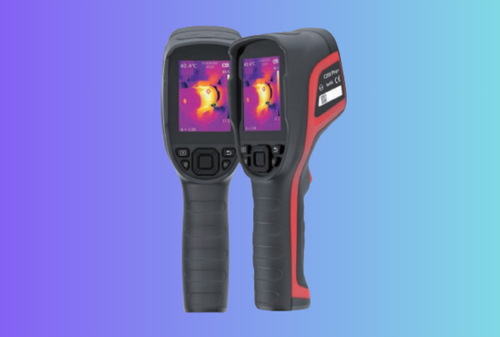
- When to use handheld vs fixed industrial thermal imaging camera systems.
- How to evaluate a China manufacturer or OEM/ODM partner.
- Where a China-based supplier like Gemin Optics fits in your roadmap.
Why “Best” Depends on Your Plant’s Risk Map
If you search online for the best industrial thermal imaging camera, you’ll see many lists based on pure specs: resolution, frame rate, or brand names. That’s not how serious plants buy equipment.
Maintenance and reliability teams usually work from a risk-based asset management framework:
- Criticality rankings based on safety, environmental, production, and financial impact.
- Inspection tasks mandated by internal policies, insurance, or standards such as NFPA 70B for electrical equipment and ISO 18434 for machine condition monitoring.
Within those frameworks, “best” means:
- Right risk at the right cost
- High-risk assets (e.g., MV switchgear, fuel handling, critical rotating equipment) justify high-spec cameras and sometimes multiple devices.
- Low-risk assets may only need basic trend information or spot checks.
- Coverage without blind spots
- A single high-end camera may still leave gaps in viewing angles or measurement range.
- Sometimes a combination of handheld cameras plus industrial thermal scanners (line scanners or fixed cameras) covering specific processes is more effective.
- Compliance and documentation
- NFPA 70B now treats electrical maintenance as a standard rather than guidance, and explicitly references infrared thermography as a required inspection method for energized electrical systems.
- ISO thermography standards emphasize documented procedures, trained personnel, and repeatable measurements.
So the best camera is the one that:
- Delivers the data quality your risk map demands,
- Fits your inspection routes and shift patterns, and
- Supports compliant, repeatable, documented inspections.
What Is an Industrial Thermal Imaging Camera?
Thermal Imaging vs “Infrared Camera” vs “Thermal Scanner”
In industrial maintenance, terms like industrial thermal imaging camera, industrial infrared camera, and industrial thermal scanner are often used interchangeably. All of them detect infrared radiation and convert it into a temperature-coded image—thermography.
Typical characteristics:
- Operate in the long-wave infrared (LWIR) band, roughly 8–14 µm, where most room-temperature objects emit strongly.
- Use uncooled microbolometer detectors with resolutions such as 256×192, 384×288, 640×480, or 640×512.
- Provide real-time temperature maps and spot measurements for maintenance and safety tasks.
Colloquial differences:
- Industrial thermal imaging camera / industrial infrared camera
- Usually refers to a handheld or fixed camera that outputs full 2D thermal images.
- Industrial thermal scanner
- Often refers to a line-scanner or fixed camera that sweeps a process line or rotating kiln, building up a thermal map over time.
Industrial vs Non-Industrial Devices
Consumer or building-grade thermal cameras are not designed for heavy industrial plants. Industrial models typically add:
- Wider temperature ranges (e.g., −20 °C to 650 °C or higher).
- Rugged housings with IP66 or IP67 ingress-protection ratings against dust and water, tested under IEC 60529.
- Support for plant protocols (Modbus/TCP, Ethernet/IP, OPC UA, MQTT, etc.).
- Options for ATEX/IECEx or similar certifications for hazardous areas.
When you describe requirements to a China manufacturer or OEM supplier, it helps to say clearly that you need an industrial thermal imaging camera, not a general “thermal camera” meant for building diagnostics only.
From Risk Map to Camera Requirements
Before diving into sensor specs, it helps to translate your plant’s risk assessment into functional requirements for thermal imaging.
Step 1 – Group Assets by Risk Tier
Most plants use some version of criticality ranking. For thermal imaging, a simple 4-tier map works well:
- Tier 1 – Life-safety and high-energy assets
- MV/LV switchgear, bus ducts, transformers, UPS, large MCCs.
- Fuel trains, high-pressure steam lines, flare systems.
- Tier 2 – High-value production assets
- Critical motors, gearboxes, turbines, kilns, furnaces, extruders.
- Tier 3 – Supporting utilities and building systems
- HVAC, compressed air, building electrical panels, roofs, steam traps.
- Tier 4 – Low-risk or occasional inspections
- General building envelopes, comfort heating, non-critical equipment.
Different thermal tasks support each tier:
- Tier 1 and 2 demand high measurement confidence and frequent inspections or continuous monitoring.
- Tier 3 can often rely on periodic handheld surveys.
- Tier 4 might be opportunistic checks during other tasks.
Step 2 – Match Inspection Method to Tier
Roughly:
- Handheld industrial thermal imaging camera
- Ideal for route-based inspections across many assets.
- Flexible, low initial cost per route, but depends on technicians being available.
- Fixed industrial thermal scanner / camera
- Dedicated to one process: kiln shell monitoring, coke-oven doors, conveyor fire detection, tank level monitoring, etc.
- Higher upfront cost, but supports continuous monitoring and alarms.
In many plants, the best industrial thermal imaging camera strategy is a hybrid: one or two high-end handheld devices for critical route inspections, plus several fixed industrial thermal scanners for high-risk, hard-to-access, or 24/7 processes.
Key Specs That Define the Best Industrial Thermal Imaging Camera
Now let’s look at the core specs and how they link to your risk tiers.
1. Detector Resolution and Pixel Pitch
Resolution determines how many temperature measurement points you have per frame.
Common resolutions:
- Entry: 256×192 (≈49k pixels)
- Mid-range: 384×288 (≈110k pixels)
- High-end: 640×480 or 640×512 (≈300k pixels)
Higher resolution helps when:
- You need to inspect many small connections in a panel from a safe distance.
- You’re dealing with crowded assets where you can’t get close (e.g., overhead busbars).
- You want to crop images for detailed reporting without losing clarity.
Pixel pitch (e.g., 12 µm, 17 µm) also affects image quality and lens choice. Many modern uncooled microbolometers operate in the 8–14 µm band with pixel pitches between 12–17 µm, balancing sensitivity and cost.
Risk map guidance
- Tier 1 – Aim for 640×480 or 640×512; 384×288 is acceptable only if you can safely get very close.
- Tier 2 – 384×288 is usually sufficient; upgrade to 640×480 for large, complex assets.
- Tier 3–4 – 256×192 may be enough for basic trending and building envelopes.
2. NETD (Thermal Sensitivity)
NETD (Noise-Equivalent Temperature Difference) indicates the smallest temperature difference the camera can resolve. Typical industrial devices range from ≤50 mK (0.05 °C) down to ≤40 mK for premium models.
Low NETD is valuable when:
- You’re looking for early-stage faults (e.g., slight phase imbalance in a motor).
- Ambient and target temperatures are close.
- You want consistent trending over long periods.
Risk map guidance
- Tier 1–2 – Look for NETD ≤50 mK; ≤40 mK if you’re doing fine-grained trending or process control.
- Tier 3–4 – NETD ≤60–80 mK is usually adequate.
3. Temperature Range and Calibration
Industrial assets span a wide temperature range:
- Electrical panels may run from ambient up to 120–150 °C.
- Kilns, furnaces, and heat-treatment processes can exceed 1000 °C.
Many industrial thermal imaging camera designs offer multiple ranges, such as:
- −20 °C to 150 °C (building and low-temperature utilities)
- 0 °C to 650 °C (electrical and mechanical maintenance)
- Optional high-temperature ranges (up to 1500 °C or more for process monitoring)
Accuracy is typically specified as a percentage of reading or ±2 °C (whichever is greater) under defined conditions.
Risk map guidance
- Tier 1 – Ensure ranges cover worst-case fault conditions; consider high-temperature ranges for busbars, transformers, or reactors.
- Tier 2 – Match process maximums (e.g., kiln shell temperatures, bearing hot spots).
- Tier 3–4 – Standard maintenance ranges are usually enough.
4. Optics, FOV, and Working Distance
The lens defines your field of view (FOV) and how close you need to be. Maintenance teams often need both:
- Wide-angle lenses (40–60° HFOV) for scanning panels at close range.
- Telephoto options (6–15° HFOV) for distant assets like overhead lines or stacks.
In industrial thermal scanners that watch a fixed process, lens choice is tied to conveyor width, kiln diameter, or zone coverage and must align with your mechanical layout. Lens performance is often discussed in terms of Modulation Transfer Function (MTF) and DRI (detection, recognition, identification) metrics.
Risk map guidance
- Tier 1 – Plan for minimum working distances that keep technicians outside arc-flash boundaries. That often means higher resolution plus narrower FOV lenses.
- Tier 2–3 – A standard wide lens may be enough for motors, gearboxes, and utility panels.
- Tier 4 – Basic wide-angle coverage is fine.
5. Ingress Protection, Shock, and Vibration
Industrial cameras must survive dust, moisture, and handling. IEC 60529 defines IP ratings (e.g., IP66 for dust-tight and high-pressure water jets).
For mobile gear, also look at:
- Drop test ratings (1–2 m).
- Vibration and shock qualifications aligned with relevant ISO/IEC standards for machinery.
Risk map guidance
- Outdoor or washdown areas (e.g., chemical plants, food & beverage) should use IP66/IP67 or better.
- Indoor, clean environments may allow IP54 handhelds, but rugged designs still reduce downtime.
6. Hazardous Area Certifications
If your risk map includes flammable gases, vapors, or combustible dust, equipment may need ATEX/IECEx certification.
- The ATEX Directive 2014/34/EU in the EU governs equipment used in potentially explosive atmospheres.
- The IECEx System provides an international scheme for certifying equipment used in explosive atmospheres, based on IEC 60079/80079 standards.
In such areas, the best industrial thermal imaging camera is one that:
- Carries the correct ATEX/IECEx marking for the zone (e.g., Zone 1 gas, Zone 21 dust).
- Maintains usability (weight, ergonomics, battery life) while meeting these safety constraints.
7. Connectivity, Analytics, and Integration
Modern industrial thermal cameras and thermal scanners can feed data directly into:
- CMMS/EAM systems for work orders.
- SCADA/DCS for alarm and trending.
- Cloud dashboards via MQTT, OPC UA, or HTTP APIs.
When evaluating a China industrial thermal imaging camera manufacturer or OEM supplier, ask about:
- Protocol support (Modbus, OPC UA, Ethernet/IP, ONVIF for security integration).
- SDKs or APIs for system integrators.
- Options to pair with thermal imaging modules or laser rangefinder modules for distance-aware temperature measurement or risk scoring.
Use Cases: How Specs Map to Real Industrial Scenarios
Let’s translate the theory into concrete scenarios where industrial thermal imaging camera and industrial thermal scanner choices really matter.
1. Electrical Distribution: NFPA 70B-Driven Inspection Routes
High-energy electrical equipment is often at the top of the risk map. NFPA 70B now positions electrical maintenance, including infrared thermography of energized equipment, as a requirement rather than optional guidance.
Typical assets
- MV/LV switchgear and breakers
- Bus ducts and busbars
- MCCs and control panels
Specs that matter
- 640×480 or 640×512 resolution
- NETD ≤50 mK
- Narrow-angle lens options for safer working distances
- Strong reporting tools for documenting findings (as NFPA 70B expects).
For some critical feeders, plants may deploy fixed industrial thermal scanners or cameras inside enclosures with IR windows, streaming data around the clock.
2. Petrochemical and Hazardous Areas
Petrochemical plants, refineries, and grain or powder facilities have strict hazardous-area zoning based on ATEX and similar frameworks.
Typical assets
- Pumps handling flammable liquids
- Compressors, flare lines, storage tanks
- Dust-prone equipment in milling or conveying
Specs that matter
- Proper ATEX/IECEx certification for the zone rating.
- Rugged housing with suitable IP rating.
- Temperature ranges aligned with process limits and fire detection thresholds.
- Integration with plant alarm systems for early warning.
Here, the “best” camera may not have the highest resolution; it must pass the right safety certification while still being practical for route work or fixed monitoring.
3. Rotary Kilns, Furnaces, and Ovens
Rotating kilns and furnaces are classic use cases for fixed industrial thermal scanners or line-scan cameras that measure shell temperature profiles.
Typical assets
- Cement and lime kilns
- Coke ovens
- Heat-treatment furnaces
- Reheat furnaces in steel plants
Specs that matter
- High-temperature ranges (up to 1200–1500 °C).
- Line-scan or wide FOV coverage matching the kiln shell or furnace door geometry.
- Fast frame rates for rotating shells or fast conveyors.
- Data acquisition software with trending and alarm zones.
Often, a mid-range handheld industrial thermal imaging camera is also used for close-up root-cause checks when the fixed scanner flags anomalies.
4. Rotating Machinery and Mechanical Systems
Motors, gearboxes, bearings, and couplings are prime targets for predictive maintenance. ISO 18434 highlights thermography as part of condition monitoring programs.
Specs that matter
- NETD ≤50–80 mK, depending on how early you want to detect subtle thermal patterns.
- Adequate resolution for viewing multiple components in one frame.
- Accurate emissivity adjustment and reflections management.
Here, a high-quality handheld camera is usually enough; fixed industrial thermal scanners may be justified for particularly critical drives or inaccessible equipment.
5. Building Envelopes and Utility Systems
For Tier-3 and Tier-4 assets—HVAC, insulation, roofs, steam traps—the priority is coverage and ease of use rather than ultra-fine resolution.
Specs that matter
- Wide FOV for looking at roofs or building envelopes.
- Standard temperature ranges (−20 °C to 150 °C).
- Intuitive user interface and annotation tools for quick reporting.
A mid-range industrial thermal imaging camera from a China OEM supplier can usually serve multiple plants via shared service teams, provided it’s rugged and well supported.
From Specs to Strategy: A Simple Selection Table
The table below summarizes how different combinations of specs map to risk tiers for handheld cameras. You can adapt it when you talk to a Chinese industrial thermal imaging camera manufacturer or distributor.
| Risk Tier | Typical Assets | Recommended Resolution | NETD Target | Optics / FOV | Notes |
|---|---|---|---|---|---|
| Tier 1 – High-energy, life-safety | MV/LV switchgear, transformers, high-pressure lines | 640×480 / 640×512 | ≤50 mK (≤40 mK ideal) | Standard + telephoto lens options | Consider redundant cameras and fixed scanners for 24/7 monitoring. |
| Tier 2 – Critical production | Turbines, kilns, big motors & gearboxes | ≥384×288 (640×480 preferred for complex assets) | ≤60 mK | Mix of wide and medium FOV | Good balance between cost and detail for predictive maintenance. |
| Tier 3 – Utilities & buildings | HVAC, steam traps, building electrical, roofs | 256×192 or 384×288 | ≤80 mK | Wide FOV | Focus on coverage and usability; fewer lens options needed. |
| Tier 4 – Low-risk or occasional | Non-critical equipment, R&D, training | 256×192 | ≤100 mK | Wide FOV | Entry-level cameras or shared devices are often sufficient. |
This table doesn’t replace detailed calculations, but it gives you a structured way to discuss proposals from a China industrial thermal camera factory or industrial thermal scanner OEM.
How to Choose a China Industrial Thermal Imaging Camera Manufacturer
Once you’ve linked your risk map to high-level specs, the next step is choosing the right China manufacturer or OEM/ODM supplier.
Engineering Capability and Customization
For many OEM/ODM programs, you’re not just buying a camera—you’re defining a platform. Evaluate whether the supplier can:
- Offer modular thermal imaging cores or thermal camera modules that can be embedded in your branded devices.
- Combine imaging with ranging, using laser rangefinder modules for accurate distance and spot-size calculation.
- Support your preferred interfaces (Ethernet, USB, MIPI, LVDS, CAN, etc.).
- Provide custom firmware features such as region-of-interest alarms, onboard analytics, or integration with your cloud platform.
Ask for:
- Reference designs for industrial thermal scanners or fixed thermal cameras.
- Example SDK code and integration notes.
- Evidence of past projects with similar complexity and volumes.
Quality Control and Testing
Thermal cameras and scanners are sensitive electro-optical systems. A serious China OEM supplier should demonstrate:
- Optical alignment and calibration procedures, including blackbody calibration at multiple temperature points.
- Environmental tests (temperature cycling, humidity, vibration, drop tests).
- Traceability and change-control processes for sensors, lenses, and key components.
Cross-check whether their test processes align with relevant ISO quality frameworks and the thermography-related standards your plant or customers rely on.
Certifications and Compliance
For global deployments, look at:
- CE, FCC, and UKCA where applicable.
- ATEX/IECEx options for hazardous environments.
- RoHS and REACH compliance.
A strong China industrial thermal imaging camera supplier will have experience certifying devices across multiple regions and can share test reports and technical files under NDA.
Delivery, MOQ, and Lifecycle
As a maintenance manager or OEM buyer, you need confidence that the product will be available for years. Evaluate:
- Minimum order quantities (MOQs) for branded devices and ODM versions.
- Lead times for prototypes, pilot batches, and full production.
- Component lifecycle policies—how long sensors, lenses, and processors will be supported.
For OEM/ODM engagements, ask about end-of-life (EOL) procedures and whether the supplier can propose compatible replacements in advance.
After-Sales Support and Training
Even the best industrial thermal imaging camera fails if your technicians don’t use it correctly. Look for:
- Training materials on emissivity, reflections, and inspection techniques drawn from recognized thermography standards and best practices.
- Remote and on-site support options.
- Firmware update mechanisms and long-term bug-fix policies.
Gemin Optics as Your Industrial Thermal Imaging OEM/ODM Partner
As a China-based thermal imaging and ranging specialist, Gemin Optics is focused on helping OEMs, distributors, and system integrators deploy the best industrial thermal imaging camera solutions for their actual risk maps—not just for lab demos.
R&D and Module-Level Expertise
Gemin Optics builds configurable thermal imaging modules and laser rangefinder modules that can be combined into handheld cameras, fixed industrial thermal scanners, or hybrid systems with distance-aware temperature measurement.
For industrial use, this means you can:
- Build route-based industrial handheld thermal imagers on top of proven cores, then adapt them for different branded product lines.
- Design fixed cameras or scanners tuned to specific risk zones (e.g., kilns, conveyors, tank farms).
- Integrate thermal data with your existing SCADA, DCS, or cloud platforms.
Flexible OEM/ODM Engagement Models
Whether you are a distributor, a plant OEM, or a system integrator, Gemin Optics can support:
- OEM: Your brand, Gemin Optics hardware and firmware, with optional feature customization.
- ODM: Deeper mechanical and UI customization, new housing designs, and long-term roadmap planning.
- Module supply: For integrators who build their own housings, analytics, or platforms.
The team is set up to work with global partners on specification, EMC and safety approvals, and integration projects.
Built for Plant Reality
Because Gemin Optics’ focus is on practical industrial deployments, designs emphasize:
- Rugged mechanical construction and high IP ratings for harsh environments.
- Balanced resolutions (256×192, 384×288, 640×512) and NETD levels tailored to your risk map and budget.
- Software features that support standardized reporting and trending—not just pretty pictures.
For many B2B partners, the result is a portfolio of industrial thermal cameras and industrial thermal scanners that can be positioned at different risk tiers and price points across their customer base.
Work with a China Best Industrial Thermal Imaging Camera Manufacturer You Can Trust
Selecting the best industrial thermal imaging camera for your plant is really about aligning three things:
- Your risk map – which assets matter most, how often they must be inspected, and which standards you answer to.
- Camera and scanner specs – resolution, NETD, temperature range, FOV, IP rating, hazardous-area certifications, and connectivity.
- The right China manufacturer or OEM/ODM supplier – one who can support your risk map with a full hardware and integration roadmap, not just a single product.
Gemin Optics helps OEMs, distributors, and system integrators turn these requirements into real devices and systems—combining thermal imaging modules, industrial thermal imaging camera designs, and industrial thermal scanners that fit your plant’s risk profile and budget.
If you’re planning a new program or evaluating replacements for existing cameras, Gemin Optics can work with your engineers and maintenance managers to match spec tiers to each asset class and develop a realistic rollout plan.
- Ready to talk through your risk map and camera strategy?
- Already have draft specs or OEM/ODM requirements?
- Submit your OEM/ODM requirements here and our engineers will come back with options on sensors, optics, housings, and integrations.