
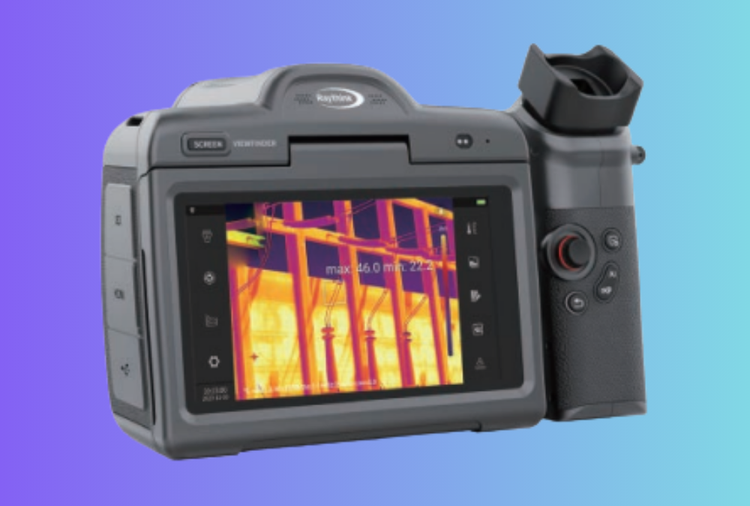
HVAC teams everywhere are under pressure. Energy prices are volatile, building codes are tightening, and owners expect lower operating costs and better comfort at the same time. In that reality, the best thermal imaging camera for HVAC is not a luxury gadget – it is a core diagnostic tool that can pay for itself in a single heating season when used properly.
Table of Contents
ToggleFor OEM/ODM buyers, distributors, and HVAC contractors working with China-based factories, the real question is:
How do we specify an HVAC thermal camera that actually delivers measurable savings on real projects?
This article looks at the HVAC thermal imaging camera through a B2B lens: how it finds waste, how to frame ROI, which specs matter, and what to expect from a China manufacturer or OEM/ODM supplier.
1. Why HVAC Thermal Imaging Is Now a Business Decision, Not Just a Gadget
1.1 Where the money is really going
Multiple public sources agree on one basic point: air leakage and envelope defects waste a lot of heating and cooling energy.
- An ENERGY STAR fact sheet notes that air leakage often represents 25–40% of the energy used for heating and cooling in a typical home.
- U.S. government building guidance explains that reducing air leakage through the building envelope is a key step in energy efficiency and is sometimes required by code.
- The National Park Service points out that cutting drafts can save 5–30% on annual energy use, depending on conditions and starting point.
Commercial buildings are more complex than homes, but the physics is the same: uncontrolled air infiltration and poor insulation force HVAC systems to run harder and longer than necessary.
1.2 Why thermal imaging is the right diagnostic for HVAC
Traditional HVAC diagnostics – airflow measurements, pressure tests, data logging – are powerful but often time-consuming. Infrared thermography adds something unique:
- The U.S. Department of Energy notes that thermographic inspections allow auditors to detect thermal defects and air leakage in building envelopes quickly, using infrared cameras.
- A long-standing technical paper on weatherization describes thermal imaging as a fast way to identify missing insulation, moisture problems, and envelope weaknesses that reduce energy performance.
In practice, a best thermal imager for HVAC can show in seconds what might otherwise require multiple invasive tests:
- Cold streaks in walls where insulation has slumped.
- Duct runs leaking conditioned air into unoccupied spaces.
- Thermal bridges around window heads, lintels, and slab edges.
- Short-cycling or unbalanced heating across rooms and zones.
This ability to “see” heat makes it much easier to prioritize fixes that actually move the energy needle.
1.3 Why payback in one heating season is realistic
If 25–40% of heating and cooling energy is lost due to leaks and poor envelope performance, and thermal imaging helps you target measures that cut that waste even by a modest fraction, the savings add up quickly.
For many commercial buildings:
- Annual heating and cooling bills run into tens of thousands of dollars.
- A professional-grade HVAC thermal camera might cost USD 2,000–6,000, depending on resolution and features.
- Savings of even 10–15% on HVAC energy can cover that cost in a single heating season (we will walk through the numbers later).
The key is to use the camera systematically – not just for “cool pictures,” but as part of structured audits and retrofit programs.
2. What Is an HVAC Thermal Camera in Practical Terms?
2.1 Infrared imaging basics in plain language
A thermal imaging camera for HVAC is an infrared camera tuned for building and mechanical diagnostics:
- It detects long-wave infrared radiation (roughly 8–14 micrometres) emitted by surfaces.
- An uncooled microbolometer sensor converts that radiation into electrical signals.
- Firmware converts those signals into a false-color image where each pixel carries a temperature value.
For HVAC, a camera’s job is to make invisible temperature differences visible, so you can:
- Find where heat is escaping or entering.
- Check whether supply air is reaching the right spaces.
- Diagnose equipment issues (for example, a coil or radiator that is only partially active).
2.2 Industrial vs consumer-grade devices
Many low-cost thermal cameras are marketed to homeowners. For serious thermal imaging camera industrial use in HVAC, especially in commercial buildings, you typically need more than that:
- Wider temperature ranges and better sensitivity (NETD) to see subtle gradients.
- Higher resolution so you can scan large surfaces or high ceilings from a distance.
- Rugged housings and ingress-protection ratings suitable for plant rooms and rooftops.
When you talk to a best thermal imaging camera for HVAC China manufacturer or OEM supplier, make it clear that you are designing for professional, repetitive use, not one-time home inspections.
2.3 Where HVAC thermal imaging sits in standards and best practice
While there is no single “thermal imaging standard” for HVAC, thermography is a recognized tool in:
- Professional home and building energy assessments promoted by the U.S. Department of Energy, which recommend thermographic inspections to locate hidden energy defects before implementing measures.
- Commissioning and testing, adjusting and balancing (TAB) work described in ASHRAE handbooks, where duct leakage, temperature and airflow testing are key to HVAC efficiency.
In other words, a HVAC thermal imaging camera is a mainstream diagnostic instrument that complements blower doors, duct leakage tests, and standard TAB procedures.
3. Where an HVAC Thermal Camera Actually Saves Money
Let’s move from theory to real HVAC tasks. In B2B terms, you want to know exactly how an HVAC thermal camera turns into fewer kilowatt-hours and lower fuel bills.
3.1 Building envelope: air leaks and missing insulation
Air leakage and envelope defects are the most powerful “lever” for payback.
- DOE-linked guidance and university resources consistently state that air leakage accounts for roughly a quarter to two-fifths of heating and cooling energy in many buildings.
With thermal imaging you can:
- Map cold spots where insulation is thin, missing, or damp.
- Identify leaks around window frames, doors, sill plates, and roof penetrations.
- See thermal bridges in structural elements.
A building-envelope toolkit from a national energy center notes that improving envelope insulation and controlling thermal exchange are key to reducing heating and cooling loads.
Targeted fixes—adding insulation where it is missing, sealing specific leaks, correcting damp insulation—are far more cost-effective when guided by thermal images than when done by guesswork.
3.2 Duct leakage and distribution losses
ASHRAE and related technical guides stress that duct leakage significantly reduces HVAC performance, because conditioned air escapes before it reaches the intended zones.
A HVAC thermal imaging camera helps you:
- Spot hot or cold streaks along ductwork that indicate leaks into unconditioned spaces.
- Check for poorly insulated ducts in attics, crawlspaces and plant rooms.
- Verify that supply and return paths are balanced by comparing register temperatures.
When duct systems are properly sealed and insulated, more of the heating or cooling output actually reaches occupied rooms, reducing run-time and fan power.
3.3 Hydronic, steam, and radiant systems
Thermal imaging also pays off in hydronic and steam heating:
- Surface temperature patterns on radiators, floors or piping reveal air locks, blockages or control issues.
- Hot streaks on condensate lines or valve bodies can flag failed traps and leaking valves that waste steam.
Weatherization studies show that infrared imaging is effective at visualizing moisture and insulation defects around piping, which can degrade energy performance and indoor comfort.
Fixing these issues often produces immediate fuel savings and better comfort without touching the boiler size.
3.4 HVAC equipment condition
While electrical standards such as NFPA 70B focus on infrared inspections of electrical equipment, the same principles apply to HVAC machinery:
- Overheated motor bearings, misaligned couplings, and overloaded fan motors show clear thermal signatures.
- Dirty or partially blocked coils show uneven temperature profiles, indicating poor heat transfer and increased compressor or fan energy.
Detecting these issues early reduces unplanned downtime and improves seasonal efficiency, especially in large air-handling units and packaged rooftop units.
4. How the Best Thermal Imaging Camera for HVAC Pays for Itself in One Heating Season
Now let’s translate these savings paths into simple ROI math. We’ll use conservative numbers and clearly separate assumptions from facts.
4.1 What the public data tells us
From the sources above:
- Air leakage can account for 25–40% of heating and cooling energy.
- Cutting drafts and envelope leaks can save 5–30% of annual energy use, depending on building condition and the measures taken.
Let’s assume a moderate scenario:
- Before improvements, 30% of HVAC energy is tied to infiltration and envelope defects.
- A structured program using a best thermal imager for HVAC identifies issues and enables measures that recover one-third of that loss (a conservative portion of the 5–30% range).
That would produce an overall HVAC energy reduction of:
30% (share of energy) × 33% (reduction of that share) ≈ 10% total HVAC energy savings
This 10% is not a guaranteed figure—it’s a reasonable, conservative working assumption, backed by the ranges in the public literature.
4.2 Example 1: Small commercial building
Assume:
- A small office or retail building spends USD 30,000 per year on heating and cooling energy (gas + electricity).
- You purchase a mid-range HVAC thermal imaging camera from a China manufacturer or OEM supplier for USD 3,000 landed cost (or equivalent in your currency).
Using the conservative 10% savings assumption:
- Annual HVAC energy savings: 10% × 30,000 = USD 3,000
In other words, one year of savings equals the camera cost. If most heating occurs in a six-month season and improvements are implemented early, you can reasonably claim that the camera pays for itself within one heating season.
Even if actual savings are only 6–8%, the payback is still around one year.
4.3 Example 2: Multi-site HVAC contractor or energy-service company (ESCO)
For a contractor or ESCO, an HVAC thermal camera is a revenue-generating tool:
- Assume a company serves 20 small-to-medium buildings, each with annual HVAC energy costs of USD 30,000.
- If thermal-guided envelope and duct improvements deliver an average 8% reduction in HVAC energy, each site saves USD 2,400 per year.
- Total savings across the portfolio: 20 × 2,400 = USD 48,000 per year.
If the company invests in two high-spec HVAC thermal imaging cameras at USD 5,000 each (USD 10,000 total), the payback is a fraction of one heating season across the client base.
The cameras not only pay for themselves quickly; they also:
- Create upsell opportunities for additional sealing, insulation, and balancing work.
- Provide visual evidence to justify projects and to support ESG or building-label documentation.
4.4 Intangible benefits that support the business case
Beyond pure energy savings, modern HVAC thermal cameras also:
- Reduce troubleshooting time, which lowers labor costs and minimizes downtime.
- Improve customer trust, because clients can “see” the problems and the results of fixes.
- Provide documentation for green-building certifications and code compliance that emphasize envelope performance and commissioning, such as ASHRAE 90.1-linked codes.
Taken together, these make a one-season payback not just plausible, but often conservative.
5. Spec Checklist: What Makes the Best Thermal Imaging Camera for HVAC?
If you’re sourcing from a Chinese HVAC thermal camera OEM supplier or building your own product line, use a structured spec checklist.
5.1 Imaging performance
Resolution
- Entry-level professional: 160×120 or 256×192 – suitable for small spaces and close-up work.
- Preferred for serious HVAC work: 320×240 or 384×288, allowing you to scan large walls and ceilings from a distance.
- High-end: 640×480/512 for detailed envelope surveys in tall or complex buildings.
NETD (thermal sensitivity)
- Aim for ≤60 mK at room temperature for general HVAC diagnostics.
- For advanced energy audits and moisture/infiltration work, ≤40–50 mK gives cleaner images and more reliable interpretation.
Temperature range
- Lower range: down to –20 °C (for cold climates and roof inspections).
- Upper range: at least 150–250 °C to cover hot piping and mechanical components, though HVAC work rarely needs extreme ranges.
5.2 Optics and FOV for building work
HVAC professionals often work in tight interior spaces and need wide coverage:
- Standard lens HFOV of 45–60° is ideal for rooms, duct runs, and roof sections.
- Optional wide-angle lenses help in small rooms or when standing near walls.
- For rooftop units and facades, a modest telephoto option can be helpful.
When you design with a thermal imaging camera industrial use China manufacturer, consider interchangeable lenses for higher-end models and fixed lenses for entry-level units.
5.3 Ergonomics and workflow
Because HVAC technicians carry many tools, ergonomics matter:
- Pistol-grip design for one-hand operation on ladders and in mechanical rooms.
- Large, bright display readable in sunlight on rooftops.
- Minimum battery life of 4–6 hours of active use; hot-swappable batteries are a plus.
- Fast boot time so technicians don’t wait during callouts.
The best thermal imaging camera for HVAC feels like a natural extension of the technician’s hand, not an awkward extra device.
5.4 Connectivity and reporting
To support modern workflows:
- Wireless: Wi-Fi and Bluetooth for pairing with smartphones, tablets, or site networks.
- Mobile app or SDK: ability to tag images with project, room, and defect type, and upload them to a cloud or CMMS.
- Export: radiometric data formats as well as standard images, enabling deeper analysis and long-term benchmarking.
For OEM/ODM customers, insist that your HVAC thermal camera platform exposes documented APIs so you can build your own software ecosystem.
5.5 Ruggedness and compliance
Even in HVAC work, cameras see tough conditions:
- Ingress protection: at least IP54 for normal commercial use; IP65 for rooftops or dusty plant rooms.
- Drop tested to typical ladder or hand-held heights (around 2 m).
- Operating temperature range from roughly –10 to +50 °C.
On the compliance side, ensure the device supports regional safety and EMC requirements (for example CE and FCC). If the camera includes laser pointers, optical safety should follow IEC guidelines for photobiological safety.
6. Working with a China HVAC Thermal Camera Manufacturer or OEM/ODM Supplier
When you take this checklist to a China thermal imaging camera factory, you want more than a catalog. You want an engineering partner.
6.1 Modules and platforms, not one-off products
Ask whether the manufacturer provides:
- Thermal camera modules that can be integrated into your own housings and electronics.
- A common imaging core that can be reused across entry-level and premium HVAC cameras.
- Options to combine modules into industrial handheld thermal imagers for broader industrial maintenance portfolios.
Designing around modules lets you create a family of HVAC cameras—basic, advanced, expert—without redesigning from scratch each time.
6.2 Calibration and quality control
Because HVAC energy diagnostics depend on relatively small temperature differences, calibration and QC matter:
- Confirm that sensors are calibrated with traceable blackbody sources across the relevant temperature range.
- Ask for sample calibration certificates and typical accuracy data.
- Review environmental test protocols, particularly for humidity and temperature cycling in line with general building and HVAC test practices.
6.3 Support for your software and brand
A good HVAC thermal camera OEM supplier in China should:
- Provide SDKs and protocol documentation so you can integrate cameras with your own mobile apps and cloud platforms.
- Support branding and UI customization (logo, language, palettes, report templates).
- Offer a roadmap for sensor and firmware upgrades so your product line can evolve with the thermal imaging industry.
7. Gemin Optics as an OEM/ODM Partner for HVAC Thermal Imaging
Gemin Optics is a China-based designer and manufacturer specializing in thermal imaging and rangefinding technology for OEM/ODM clients.
For HVAC and energy-efficiency applications, Gemin Optics can support you with:
- Thermal camera modules that form the core of your HVAC thermal cameras, scalable from entry to expert models.
- Ready-to-brand industrial handheld thermal imagers that can be positioned as the best thermal imagers for HVAC in your target markets.
- Integration options that let you connect cameras to mobile apps and building-management systems as part of broader energy-audit and commissioning offerings.
By building on shared platforms, you can create:
- A budget-friendly HVAC thermal camera for basic leak-finding and envelope checks.
- A mid-range HVAC thermal imaging camera with better resolution, sensitivity, and connectivity for professional contractors.
- An advanced model ready for complex commercial projects and multi-site clients.
Because Gemin Optics focuses on OEM/ODM collaboration rather than just catalog sales, you can align hardware, firmware and integration with your specific business model and regional standards.
8. Work with a China Best Thermal Imaging Camera for HVAC Manufacturer You Can Trust
The combination of public data and field experience tells a clear story:
- Envelope and duct defects can waste a significant fraction of heating and cooling energy in real buildings.
- Thermal imaging is a proven, non-destructive way to pinpoint those problems and guide cost-effective repairs.
- With conservative assumptions, a properly used HVAC thermal camera can pay for itself in one heating season on a single commercial building, and much faster across a portfolio.
For OEM/ODM buyers, distributors, and HVAC contractors, the next step is to choose a China best thermal imaging camera for HVAC manufacturer who can provide:
- Robust imaging performance and calibration.
- Modern connectivity and data structures for IIoT integration.
- Flexible OEM/ODM engagement to match your brand and customers.
Gemin Optics is ready to help you design and launch an HVAC thermal camera lineup that fits that brief – from entry-level leak-finders to expert-grade tools that anchor your energy-efficiency services.