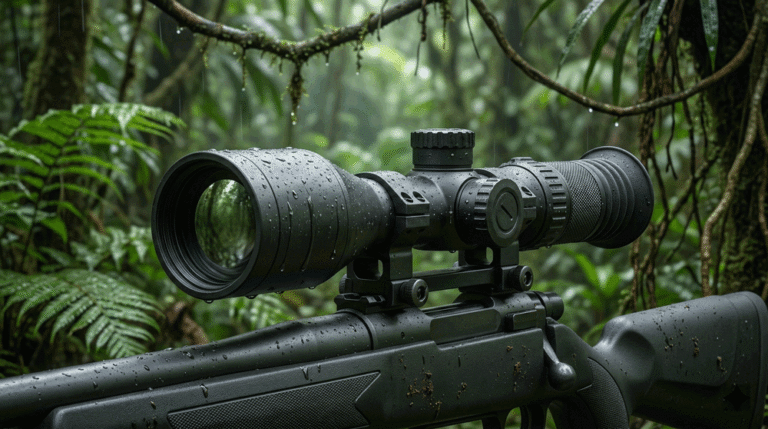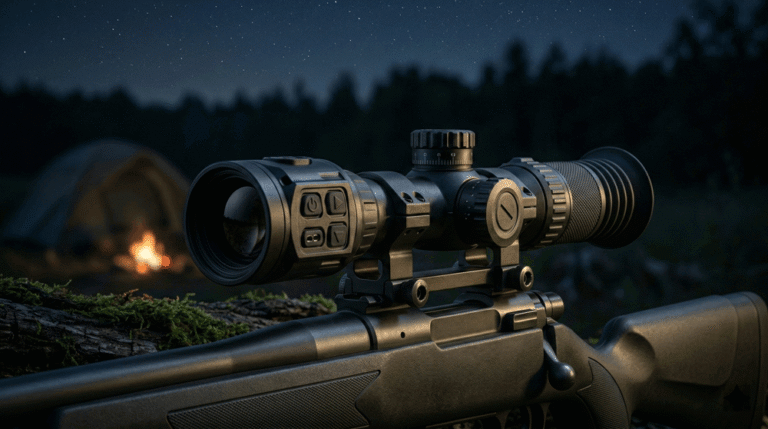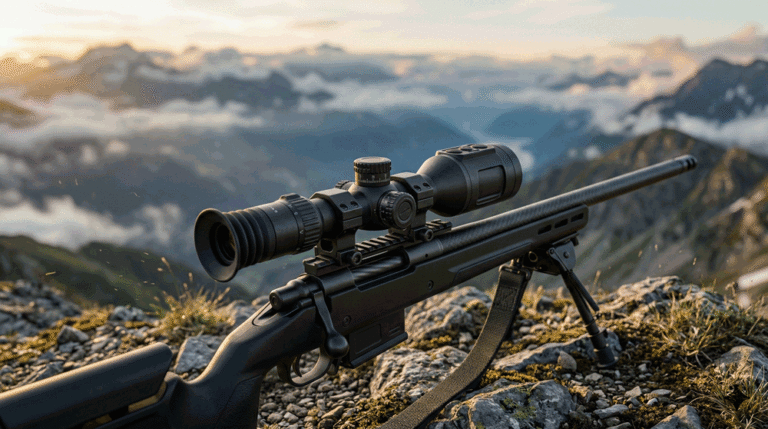
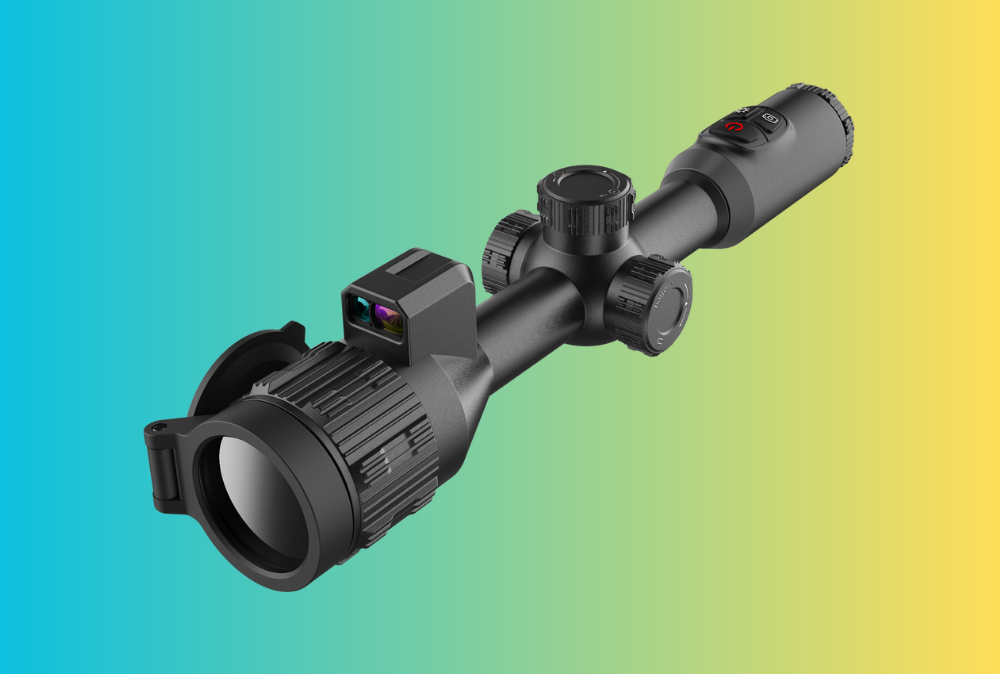
A thermal scope attachment is not just “a scope without an eyepiece.” It is a precision adapter that must look through someone else’s glass, keep the rifle’s daytime zero, and behave identically across dozens of host optics. If your factory brief reads like a generic riflescope spec, you will get a device that looks fine in a lab but drifts on rails, shifts point of impact behind magnified glass, and generates returns. This article lays out a complete, factory-ready brief: what to ask for, how to measure it, and why each requirement matters when you build a clip-on program for real users and dealers.
Table of Contents
ToggleTo make your review easier, you’ll see related terms bolded the first time they appear: clip-on thermal scope, thermal clip-on, front-mount thermal, day scope compatibility, boresight shift, zero retention, MIL-STD-1913, STANAG 4694, 12 µm pixel pitch, NETD, FOV, 640 thermal sensor, 384 thermal sensor, collimation, parallax, AR15 thermal setup, quick-detach mount, IP67 sealing, OTA firmware.
Why a Clip-On Brief Is Not a “Scope” Brief
A dedicated thermal riflescope controls the whole optical path. A clip-on sits in front of an unknown day optic whose coatings, focal position, and magnification window were never designed for thermal imagery. That one fact changes everything—mechanics, optics, image pipeline, and even user interface.
A correct brief treats the clip-on as a collimated imaging relay. It must pass a parallel bundle to the day scope with minimal angular error while preserving contrast after going through multiple glass surfaces. It must also maintain zero retention when removed and remounted on imperfect rails across different host rifles. This is why your requirements need to start with host-optic assumptions, not silicon specs.
Define the Use Model First: Hosts, Rail Geometry, and Magnification Window
Your factory can optimize only what you define. Start by describing realistic host systems and how the attachment will be used.
In the hunting and patrol segments, the most common hosts are 1–6×/1–8× LPVOs and 2–10× or 3–12× day scopes on AR-pattern carbines and light bolt guns. For these, specify a tested magnification window (for example, “validated from true 1× to 6×; usable to 8× with reduced edge clarity”). Include rail assumptions: many uppers are MIL-STD-1913 in name, some are closer to STANAG 4694 geometry, and many commercial rails land “between.” The clip-on’s clamp must seat on all three with no rocking and no cosmetic chewing of soft anodizing. When you state “fits Picatinny,” also state the cross-slot tolerance you’re willing to accept and the torque range the mount must hold without creeping.
Distance to the day scope matters. Define an envelope—for example 65–95 mm—from the day scope’s objective to the clip-on’s rear window. Ask the factory to provide a spacer system or a short rail-extension to hit that envelope on ARs with short handguards. Call out that barrel clamps are not acceptable on thin sporter barrels because they change harmonics; prefer monolithic upper rails or rigid handguard rails for an AR15 thermal setup.
Optical and Collimation Targets the Factory Can Actually Hit
Clip-ons fail in the field for three reasons: mis-collimation at the factory, sensitivity to host magnification, and poor MTF after stacking glass. Your brief should translate those failure modes into measurable numbers.
State a maximum boresight shift for a single mount-and-shoot event—e.g., ≤0.5 mrad (≈1.7 MOA) at 100 m with a validated set of day scopes—and a stricter average shift across ten mount-remove-mount cycles (e.g., ≤0.3 mrad). Require the test to be run both at minimum magnification (1–2×) and a mid-zoom (4–6×), because internal focus in the host scope moves the apparent entrance pupil and can provoke different errors. Insist that the factory reports both mean and worst-case values.
Specify that collimation be set with the clip-on focused at optical infinity and that the image relay deliver a near-telecentric bundle to reduce parallax and reticle growth artifacts through the day optic. Ask for MTF data of the relay group at field center and 70% radius. Include a statement on allowed vignetting at max host zoom (for example “no more than 10% fall-off at 6× on a 24 mm entry pupil”).
Finally, encode the performance tier you are aiming for: a 12 µm pixel pitch core at either 384 thermal sensor or 640 thermal sensor resolution, a germanium objective with F/1.0–F/1.2 speed, and a combined system NETD target that remains within spec after passing through a typical fully-multicoated day scope objective. If your brand offers both tiers, write two tables and make sure lens focal lengths keep the FOV compatible with your hosts. A 35–50 mm class objective is common for 640 clip-ons used at 2–8×; a 25–35 mm class better suits 384 units intended for 1–6×.
Image Pipeline Tuning for “Glass-Through-Glass” Reality
A clip-on’s image must survive coatings, internal baffles, and slight misfocus in the host optic. Contrast therefore needs to be recovered differently from a stand-alone scope. Your brief should ask for two processing profiles:
- a default profile tuned for mid-zoom detection-and-ID under mixed humidity;
- a high-contrast profile for edge-rich scenes at low zoom where haloing from coatings is noticeable.
Do not ask the factory to ship ten palettes; ask for three good ones—white-hot, black-hot, and a low-eye-strain iron that preserves midtones—plus reliable NUC behavior that does not intrude every minute in cold weather. Note that your objective is identification confidence behind a day scope, not “showroom pop.” If the vendor’s demo mode crushes blacks to look dramatic on a TV, forbid it in production firmware.
Mounting and Return-to-Zero, Written for Humans
A clip-on lives or dies by its mount. Specify an integrated, one-piece clamp with a cam or lever style quick-detach mount rated for repeated cycles. Ask for hard numbers: maximum allowable rail lip bite, jaw parallelism under torque, and a clamp range that swallows slightly oversize and undersize rails. Define a centerline height option that matches common day-scope line-of-sight (e.g., 1.5–1.93 in above rail on ARs). Put the torque value on the housing so users do not guess.
If you allow a threaded collar interface for proprietary adapters, demand positive stop features and anti-rotation pins. Tell the factory that print-only “witness marks” are not enough; you want a mechanical key.
Power, Sealing, and Environmental Proof for Field Abuse
Budget owners forgive fewer features; they do not forgive dead devices. Require at least IP67 sealing on the core optical cavity, battery contact plating that tolerates condensation cycles, and graceful brownout behavior under recoil with cold cells. If you choose 18650 packs, define brand and discharge curves used in validation and ask for runtime at −10 °C, +23 °C, and +40 °C with recording on.
Thermal cycling should be called out explicitly: hot-soak at +55 °C, cold-soak at −30 °C, then shoot groups to verify the boresight shift target still holds. Recoil validation must include 5.56 and 7.62 NATO impulse profiles on gas guns, not only a sled. Salt fog and dust ingress should be proportionate to your target markets; state the standards you mirror, even if you’re not certifying to a full mil-spec.
UI and Field Workflow: Preventing Unforced Errors
Clip-ons serve shooters who already know their day scopes. Your UI goal is to disappear. Write this into the brief: a start-to-image time under three seconds; a focus ring with glove-friendly torque and no end-stop dead zones; and a “verify zero” routine that overlays a small offset reticle for a single test shot without ever touching the day scope’s turrets.
If you support picture-in-picture, cap total latency; if you enable recording, guarantee that the trigger sensor or recoil detect does not steal cycles from the imaging path. Ship with two profiles only—default and high-contrast—and make the palette button cycle just those. For updates, insist on robust OTA firmware or cabled updates with dual-bank rollback; a bricked clip-on right before a hunt is a lost customer.
A Spec Template You Can Paste into Your RFQ
You can adapt the following table to your RFQ so factories quote apples to apples. Figures shown are illustrative placeholders—replace with your brand’s targets.
| Block | Requirement |
|---|---|
| Host day scopes | Validated at 1–6× LPVO and 2–10× hunting scopes; back-focus range 65–95 mm |
| Mount/geometry | Integrated lever clamp; fits MIL-STD-1913 and STANAG 4694; centerline 1.6 in; torque 45–55 in-lb; 10× mount/remove ≤0.3 mrad average shift |
| Collimation | Factory set at infinity; ≤0.5 mrad single-mount shift at 100 m; test at 1–2× and 4–6× host zoom |
| Sensor tiers | 384 thermal sensor / 640 thermal sensor, both 12 µm pixel pitch; frame 50/60 Hz |
| Optics | Ge objective 25–35 mm (384) or 35–50 mm (640), F/1.0–F/1.2; relay telecentric; ≤10% vignetting at 6× host |
| Image pipeline | Two profiles (default, high-contrast); white-hot / black-hot / iron; NUC unobtrusive |
| Display | 1024×768 OLED (typ.), brightness/contrast in two steps; no “demo boost” modes |
| Power | 18650 or pack; runtime ≥6 h @ 23 °C; cold start at −10 °C within 3 s to image |
| Sealing & env | IP67 sealing core cavity; −30 °C to +55 °C operating; dust/fog per spec; recoil 5.56/7.62 gas-gun validation |
| Firmware | OTA firmware or USB dual-bank; logs basic faults; palettes capped to 3 |
| Docs | Quick-start card (mounting/zero verify), QR video for zero check; torque value printed on mount |
Hand this table to multiple suppliers and you will immediately see who understands clip-ons and who only builds stand-alone scopes.
What to Save Cost On—and What Never to Touch
If you need a value tier, save money where users accept trade-offs: resolution (offer both 384 and 640), external cosmetics, and accessory depth. Do not save money on the relay collimation process, mount geometry, or battery contact quality. A marginal processor can be forgiven on an entry front-mount thermal; a wandering point of impact cannot. If your factory proposes downgrades, ask which column of the spec table they live in; anything that touches collimation, sealing, or mount repeatability is a red flag.
Validation Runs, Golden Samples, and Dealer Readiness
Before a mass build, insist on a 30–50 unit pilot with three host day scopes per tier and at least two rifle platforms per region (AR-pattern and bolt). Choose three dealers and ship each a small set with the quick-start card and QR video. Capture their “first zero” timings and any confusion points. Use those notes to adjust UI copy, packaging icons, and the zero-verify overlay. The lesson from every successful thermal clip-on launch is the same: small training touches remove big support pain.
Documentation Pack the Factory Must Ship With Every Unit
Your brief should list the paper and digital artifacts that ship with the device: a mounting/spacing diagram, a two-minute zero-verify script, safe use notes for suppressor heat mirage, and care guidance for germanium windows. Include a serial-linked PDF on your site with an extended manual. Dealers will thank you because they can hand a customer one card and say, “Scan this; you’ll be on paper in ten minutes.”
Pricing Logic, MOQ, and Lifecycle Planning
Clip-ons are often your customer’s first thermal experience. Price bands should leave room for step-ups to dedicated optics without making the clip-on feel like a trap. Ask the factory to quote both 384 and 640 builds against the same mechanics so you can share mounts and accessories. Set MOQs high enough for good pricing but keep a reserve for rolling firmware improvements. Map a one-year cosmetic refresh and a two-year sensor/processor refresh so dealers know your roadmap and do not feel stuck.
Internal Links and Next Steps
For teams planning a broader category, your clip-on should be positioned alongside your Thermal Rifle Scopes family, and its imaging core should have cousins in your Thermal Imaging Modules so integrators can reuse tools and know-how. If you work with partners, capture these requirements and checkpoints inside your OEM/ODM Partner Program to keep builds aligned across factories.
When your brief reads like this—rooted in host reality, anchored by collimation and mounting tolerances, and backed by testable numbers—the factory can build a thermal scope attachment that behaves like an extension of a trusted day optic, not an unpredictable gadget. That is how you earn dealers’ trust on week one and keep returns low through season three.