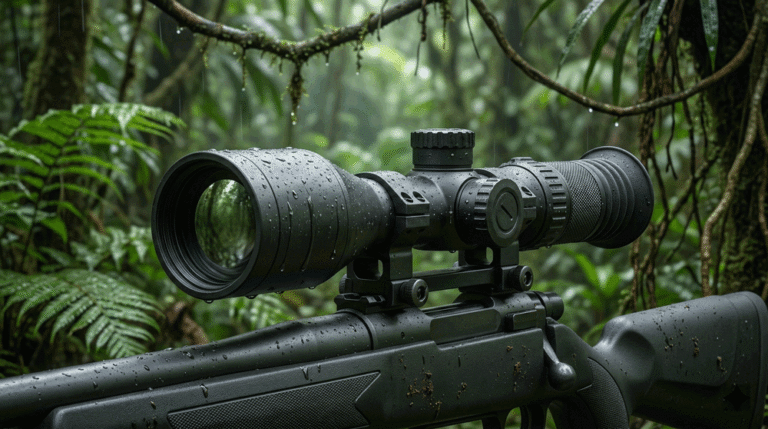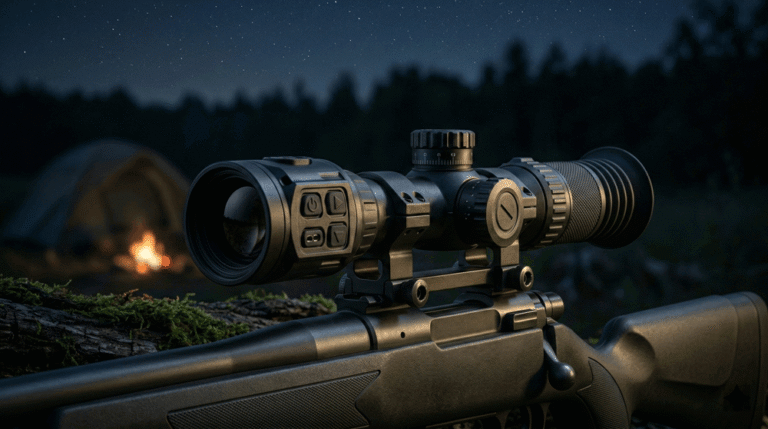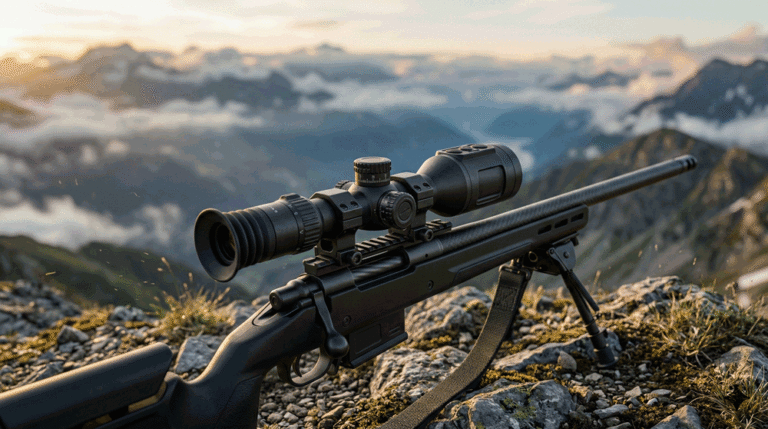
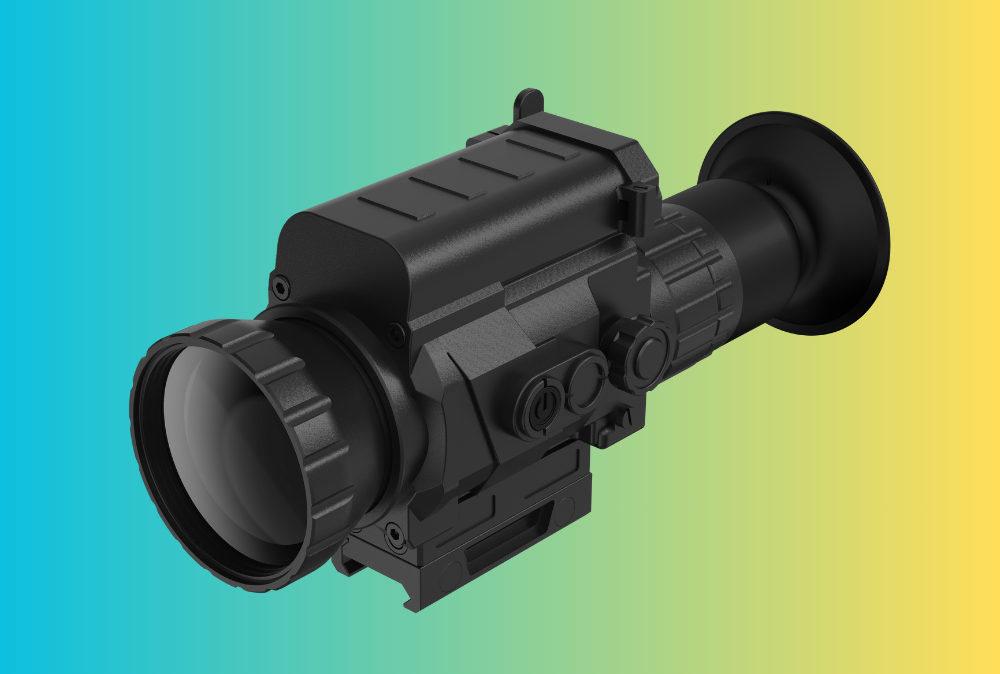
If you sell optics, you already see the same search phrase over and over again: best budget thermal scope. For first-time night hunters, that phrase usually means “give me something I can actually afford that still works in the real world.” For retailers and OEM brands, it should mean something more specific: a predictable bundle that removes friction for new users, moves quickly off the shelf, and still leaves healthy margin in the channel.
Table of Contents
ToggleThis article looks at how to build those bundles deliberately. Instead of treating every “best budget thermal scope” request as a one-off, you can design a small family of starter kits that are easy to explain, easy to stock, and easy for first-time night hunters to succeed with on their very first trip.
Understanding the Budget Thermal Scope Bundle
When buyers type “best budget thermal scope” into a search bar, they are rarely asking about bare optics. They are asking about a whole experience: how the scope fits on their rifle, how they power it, how they zero it, and whether they will feel lost in the menu at 2 a.m. in a field. A standalone optic can technically answer that need, but only if the buyer already knows which mounts, batteries, and accessories to choose. First-time night hunters usually do not.
A bundle is your way of pre-solving those decisions. Instead of leaving customers to browse dozens of separate listings and YouTube videos, you present a simple package: a best budget thermal scope at the center, surrounded by exactly the components they need to get to the range, dial in, and head out after dark. The power of this approach is not just convenience. It changes how retailers merchandise the category, how quickly staff can respond to questions, and how likely it is that beginners will have a good first experience with thermal.
From a B2B perspective, the core concept is straightforward. You identify a baseline configuration that deserves the label “best budget thermal scope” for your brand, and then you build two or three repeatable kit architectures around it. Each bundle has a clearly defined target user, bill of materials, and price band. Once this template exists, everyone in your organization—from product management and procurement to sales and training—uses the same language when they discuss the entry tier.
Market Relevance and Where Bundles Fit in the Retail Journey
Night hunting has shifted from a niche pursuit to a mainstream segment in many markets. Predator control, hog eradication, crop protection, and recreational night shooting have all pushed demand upward. For many of these end-users, a budget thermal scope is their first step into thermal imaging. They are willing to spend enough to avoid obvious junk, but not enough to buy a flagship on day one.
Retailers feel this pattern every weekend. Customers walk in or open a chat window with roughly the same questions: which scope should I start with, do I need extra batteries, what mount fits my AR, how do I record video, and will I be able to zero it without a degree in engineering. The staff can certainly walk each person through a custom configuration, but that burns time, complicates inventory, and introduces mistakes.
A well-designed bundle changes the script. Instead of walking through twenty different choices, staff can say: “If you want the best budget thermal scope to get started, this is the starter kit most people choose. It includes the optic, the right mount, extra power, and an easy zeroing setup. You can add more later if you want, but this will get you hunting next weekend.” That kind of clarity not only speeds up sales; it also raises the perceived professionalism of the brand behind the bundle.
Online, bundles work the same way. A listing that describes a complete “first night hunt” package tends to convert better than an isolated optic spec sheet, especially for customers who are buying their first thermal. Clear bundle naming, images that show the full kit laid out, and honest explanations of what is included reduce cart abandonment and post-purchase confusion.
From the brand side, bundles also play an important strategic role. They define your front door. If your best budget thermal scope bundle performs well and feels thoughtfully assembled, new hunters are likely to stay with your brand when they later upgrade to more advanced Thermal Rifle Scopes. If their first experience is confusing or underwhelming, they may view your entire catalog with skepticism, no matter how good your premium products are.
Technical Insights and Key Specifications
Defining the Core Optic in a Budget Bundle
Everything else in the kit is built around one decision: what counts as the best budget thermal scope in your lineup. That optic does not have to win every comparison chart, but it does need to meet a performance floor that serious users will respect.
In practice, that usually means a modern uncooled sensor in the 384×288 class, paired with a practical lens and a smooth refresh rate. The exact numbers will depend on your manufacturing base, but a configuration along these lines is typical for a credible entry optic:
- sensor resolution in the 320×240 to 384×288 range, ideally using a contemporary pixel pitch;
- NETD low enough that targets stand out clearly against typical backgrounds;
- an objective lens around 25–35 mm that balances field of view for scanning with enough reach for 200–300 m shooting;
- a frame rate in the 50–60 Hz range so that panning feels fluid instead of “laggy.”
Equally important is the user interface. A budget thermal optic aimed at first-time night hunters should have a menu structure that makes sense without a long manual. Core operations—brightness, contrast, palette, zoom, and zeroing—must be reachable quickly from physical buttons, not buried behind long presses and multi-level sub-menus. If the scope requires a smartphone app to do basic tasks, it is probably not the best candidate for a starter bundle.
Once you have that core optic defined, the bundle work becomes simpler. The goal is not to compensate for a weak scope with accessories, but to surround a solid best budget thermal scope with everything required to unlock its potential.
Building the Bundle Architecture Around Real Use
First-time night hunters face a surprisingly long checklist the moment they decide to buy a thermal. They need a mount that actually fits their rifle and places the scope at a comfortable height. They need power solutions that will last through a full night. They need a way to transport and protect the optic. They need some kind of zeroing target and a clear process for sight-in. And increasingly, they want at least basic recording capability or an upgrade path to it.
A thoughtful bundle architecture takes those decisions away from the user and makes them part of your design work instead. For example, if your market primarily uses AR-platform rifles, you can standardize the mount height and design the kit around a one-piece mount that positions the scope correctly on a flat-top rail. If bolt-action rifles are common, you can choose ring options or include an appropriate base. When the customer opens the box, they should see a mounting path that feels obvious, not a bag of generic hardware.
Power is similar. Many scopes can physically run on CR123A or 18650 cells, but that does not guarantee the buyer will have enough on hand for a full weekend. Including a second rechargeable pack, or bundling a small sealed external battery and cable, transforms your best budget thermal scope from a “range toy” into a serious night tool. Simple design choices, such as putting the battery compartment in a place that is accessible with gloves and in the dark, quietly reduce frustration and support calls.
Documentation and training elements are also part of the architecture. A printed quick-start card focused specifically on this bundle—showing rifle mounting, recommended zero distance, basic settings, and safety reminders—does more than a generic multi-language manual. A QR code that links directly to a short video demonstrating the zeroing process with the exact optic and mount in the kit closes the loop.
Example Bundle Templates for First-Time Night Hunters
To make these ideas more concrete, it helps to translate them into a small set of repeatable bundle templates. The table below sketches three common patterns built around a best budget thermal scope core optic. The technical details are illustrative, but the roles are real.
| Bundle Name | Target User | Core Optic Profile | Key Inclusions | Typical Retail Position |
|---|---|---|---|---|
| Range Starter Kit | New shooter who wants to learn at the range first | 320–384 class thermal scope, mid FOV | One-piece mount, extra battery, zeroing target, quick-start guide, soft carry case | Lowest entry price; “learn and try” |
| Field Ready Hunter Kit | First-time hunter who wants to go out immediately | Same best budget thermal scope, slightly upgraded lens or firmware | Mount, extra battery, rugged case, simple sling, cleaning kit, printed night-hunt checklist | Main volume SKU; “ready for the weekend” |
| Creator & Sharing Kit | Beginner who cares about recording and sharing | Best budget thermal scope plus recording capability | Mount, external power, microSD card, cable to phone or recorder, content tips card | Slightly higher price; bridge to mid-tier |
You can tune the exact contents for your brand and market, but having named templates makes it easier for teams to talk about which kit should be pushed in which channel. A farm supply store might focus on the Field Ready Hunter Kit; an indoor range might lean on the Range Starter Kit; an online influencer might promote the Creator & Sharing Kit. All three share the same best budget thermal scope at their core, which simplifies manufacturing and service.
Integration and OEM/ODM Considerations
Many of the most successful budget bundles in the market are not built by one company alone. A rifle brand may partner with a thermal manufacturer, or a regional distributor may assemble kits from multiple sources under a private label. In those cases, the integration and OEM/ODM layer is where your decisions have long-term impact.
From an OEM perspective, the best bundles are built on a stable, well-documented platform. If your best budget thermal scope shares its housing, control layout, and firmware base with the mid-range members of your Thermal Rifle Scopes family, you can offer partners a larger story: an entry bundle that plugs into a path toward more advanced optics. When a hunter outgrows the starter kit, the dealer can confidently recommend a more powerful model that feels familiar.
Mechanical integration is another area where OEM planning pays off. If you standardize interface points—such as the way your scope attaches to mounts or external power—partners can design their own branded accessories or integrate your optic into complete rifle packages. A consistent rail clamp pattern, a predictable centerline height, and documented torque values prevent a lot of guesswork at the gun counter.
On the firmware side, minimal but well-structured integration hooks are valuable. Even in the budget tier, retailers increasingly ask whether a scope can be managed alongside other devices in a security or wildlife-management system. Simple streaming and control options, aligned with your broader Thermal Camera Solutions, allow integrators to use the same tools on entry-level and professional deployments.
These relationships are easier to manage if they sit inside a conscious OEM/ODM Partner Program. When you treat bundle design as a shared roadmap item instead of an ad-hoc project, you can co-develop SKUs that carry both your engineering DNA and your partner’s brand story, while keeping the underlying best budget thermal scope platform recognizable.
Cost, Compliance, and Lifecycle ROI
Bundles complicate the cost picture in two ways. First, they add physical items to the box. Second, they change how retailers view margin. The good news is that those complications can work in your favor if you plan for them.
For the first issue, the key is to distinguish between items that genuinely add value and items that simply increase the bill of materials. A rugged case that protects the optic for years and carries clear branding may justify its cost many times over in reduced damage and stronger brand visibility. A cheap gadget thrown in because “every kit has to have one more thing” is usually forgettable and sometimes detrimental. When you are designing a best budget thermal scope bundle, every item should earn its place with a clear user story: what problem does it solve in the first month of ownership.
On margin, bundles often give you more levers, not fewer. You can combine a core optic with low-cost but high-perceived-value accessories, then price the kit so that both you and the retailer earn acceptable returns. Because the value is packaged, customers have a harder time line-iteming every component against online prices. Instead, they evaluate the proposition as a whole: does this package get me into night hunting at a sensible total spend. If your bundle template is disciplined, the answer can be yes even when your margins are healthier than on a bare-scope sale.
Compliance and logistics are the more invisible side of ROI. Batteries, chargers, and certain materials introduce extra regulatory requirements and shipping constraints. When you design a standard bundle bill of materials, it makes sense to invest upfront in making every included component compliant in the markets you intend to serve. That might mean choosing battery formats that are easier to ship by air, or sourcing chargers with the right certifications. A bit of discipline here keeps you from discovering months later that your “simple” best budget thermal scope kit cannot be sold in a key region without rework.
Over the whole lifecycle, the right bundle strategy also reduces support load. A customer who buys a kit that includes the correct mount, enough power, and clear instructions is far less likely to call your help desk complaining that the scope is dim, unstable, or impossible to sight in. New hunters who have a positive first night-hunt experience become advocates, not detractors. In terms of long-term ROI, that kind of word-of-mouth is worth far more than the incremental cost of a second battery or a better quick-start guide.
At a high level, you can capture the buyer’s perspective as a short set of insights. They are looking for a starter package that is simple to choose, trustworthy in performance, compatible with their rifle, and structured so they can grow into more advanced equipment later. If your best budget thermal scope bundle achieves that, the economic case follows naturally.
Partnering and Next Steps
Designing effective bundles is not an afterthought. It is a product strategy decision that should be made with input from engineering, marketing, sales, and frontline retail staff. The engineering team defines what counts as a reliable best budget thermal scope platform. Marketing refines how that platform is described and photographed in the context of a “first night hunt” story. Sales brings channel feedback about price bands and competitor offerings. Retail staff contribute real-world insight into what customers struggle with on the shop floor.
Once you have those perspectives in the same room, you can map out a small number of bundle archetypes like the ones described earlier and decide which channels they belong in. You might choose to launch the Field Ready Hunter Kit through brick-and-mortar dealers first, while keeping the Creator & Sharing Kit as an online exclusive. You might decide that one template will be adapted into a regional package tailored for a specific market, using the same core optic but different accessories.
As your bundle strategy matures, you can connect it more explicitly to the rest of your thermal ecosystem. Starter kits can be presented in relation to your broader Thermal Rifle Scopes offering, so buyers see the path from entry-level to advanced. Integrators and business customers can be directed toward your Thermal Imaging Modules and Thermal Camera Solutions for fixed installations or multi-sensor setups. Prospective OEM partners can be invited into an OEM/ODM Partner Program that includes co-branded bundles based on the same core platform.
When your organization is ready to move from concept to implementation, the final step is to turn this into a structured technical conversation. That is where you sit down with product and engineering teams to specify hardware, accessories, packaging, documentation, and support plans for each bundle SKU. From there, it becomes much easier for retailers to sell a best budget thermal scope kit that is more than a price point. It becomes the starting point of a long, profitable relationship between first-time night hunters and your brand.