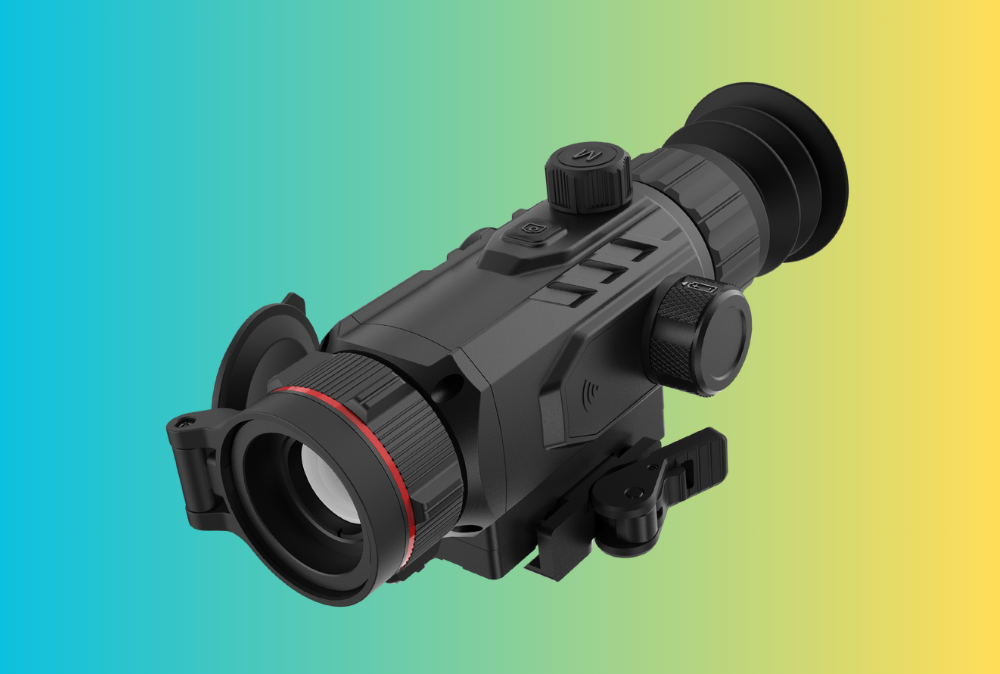
For many brands and distributors, the biggest leap in the night-hunting market is not buying a new SKU from a catalogue. It is sitting down with an OEM partner and saying:
Table of Contents
Toggle“Let’s design a Thermal Hunting Scope together that fits our hunters, our rifles and our price ladder.”
Done well, co-development turns a generic product into a strategic asset. You are no longer fighting over the same entry models as every competitor; you are building a line that reflects your customers’ terrain, game, regulations and budget. Done badly, co-development can become an endless back-and-forth of unclear specs, disappointing samples and missed seasons.
This article walks through a practical roadmap for co-developing a custom Thermal Hunting Scope with your OEM partner—from early requirements mapping and specification design, through prototyping, testing and ramp-up. The focus is on building a genuine win-win relationship where both sides innovate together.
1. Why co-develop a custom Thermal Hunting Scope at all?
Before jumping into technical details, it is worth asking why co-development is worth the effort. B2B partners usually have three main drivers.
First, differentiation. The hunting market is full of similar-looking scopes competing only on discount. A co-developed optic can be tuned to your region: the quarry your customers chase, the typical shot distances, local regulations and preferred rifle platforms.
Second, long-term value. When you co-design a platform with an OEM, you can plan future variants—different lenses, sensors, clip-on versions—on the same mechanical and electronic backbone. That reduces training, inventory complexity and total cost of ownership.
Third, control of the customer experience. Instead of working around someone else’s firmware choices or reticle library, you can shape menus, profiles and accessories so that your dealers can sell with confidence and your brand earns a reputation for “scopes that make sense” in your market.
Gemin Optics already supplies off-the-shelf thermal rifle scopes, but the most successful partnerships are the ones where we sit on the same side of the table as the customer and design a line together.
2. Start with the business case, not the datasheet
Many co-development projects go wrong because they start with scattered feature requests: “We want 640 sensor, 50 mm lens, Wi-Fi, LRF, 10 hours battery…” instead of a clear business story.
A better approach begins with four questions.
2.1 Who is the primary user?
Define real people, not generic “hunters”:
- weekend hog hunters on small farms
- serious coyote callers in open country
- outfitters guiding multiple clients every night
- pest-control professionals working from vehicles
Each group has different expectations for a Thermal Hunting Scope—weight, interface, detection range, durability and price.
2.2 Where does this scope sit in your ladder?
Is it:
- an entry model, similar to your “best budget thermal scope” offers?
- a mid-tier workhorse?
- a flagship long-range predator scope that competes with the best thermal scopes on the market?
Your answer sets realistic targets for sensor resolution, lens size, LRF integration and retail price.
2.3 What volume and channels do you expect?
An optic aimed at a few hundred high-end units per year can justify different investments than one destined for big-box retail. Share realistic forecasts with your OEM partner; it will influence choices like housing re-use, tooling strategy and service planning.
2.4 How long must the platform live?
If you want at least five seasons of continuity, the design must use components and thermal camera modules with a multi-year roadmap. That avoids painful redesigns and protects your brand from sudden obsolescence.
Clarifying these business anchors before discussing tiny details saves months of confusion later.
3. Translating hunting needs into engineering requirements
Once the business case is clear, the next step is to express field needs in technical language that engineers can implement.
3.1 Detection, recognition and identification ranges
Hunters rarely talk about pixels; they talk about “seeing hogs reliably at 200 metres” or “ID a coyote at 300.” Together with your OEM, you can convert these into minimum detection / recognition / identification ranges based on sensor resolution, lens focal length and expected weather.
For example:
- entry scope: reliable hog identification at 150 m
- mid-tier predator scope: coyote ID at 250–300 m
- premium model: strong ID confidence at 350 m+
These goals drive decisions about 256 vs 384 vs 640 sensors, and lens sizes from 19–50 mm.
3.2 Rifle platforms and ergonomics
A scope primarily aimed at AR-15 platforms needs different ergonomics from one aimed at heavy bolt rifles:
- mount height appropriate for AR rails
- weight and balance that work with modern chassis rifles
- button layout reachable with a support-hand thumb
When you define in advance that this model is “our primary thermal scope for ar15,” the mechanical design can reflect that instead of being a generic compromise.
3.3 Software features that actually matter
List the features that genuinely support your users:
- number of zero profiles and rifle types
- reticle styles relevant to local calibres
- need (or not) for picture-in-picture, Wi-Fi streaming or internal recording
- whether a thermal scope with rangefinder is necessary in this tier
Be honest: adding features that users rarely touch only increases cost, complexity and support load. A well-designed, mid-tier workhorse often beats a bloated flagship in real hunting use.
4. Running a co-design workshop with your OEM partner
At this point you and your OEM partner should hold a structured co-design workshop—either in person or online—to turn business and field requirements into a draft specification.
4.1 Selecting a core platform
The OEM will propose suitable imaging cores based on your range and price targets. Re-using a proven platform from existing hunting or industrial devices (for example, the same core used in their thermal monoculars) reduces risk and accelerates development.
You will discuss:
- sensor size and NETD
- lens options and interchangeability
- display type and resolution
- base magnification and digital zoom strategy
4.2 Mechanical architecture and housing family
Next, you define the physical form:
- tube-style vs compact box-style housing
- battery choices (18650, proprietary pack, CR123, etc.)
- interface layout: buttons, dials, focus ring, side vs top turrets
- recoil ratings and mounting interfaces
If you plan to add future variants (for example a short-bodied compact or a clip-on thermal scope derivative), building a housing family now will save significant cost later.
4.3 Optional rangefinding and ballistic integration
If long-range precision is part of your brand, discuss integrating a laser rangefinder module from the outset. That affects mechanical space, power budgeting and firmware architecture.
Not every model needs LRF; often it fits only your premium “best thermal rifle scope for coyote hunting” tier. Being selective keeps lower-tier devices simpler and more affordable.
4.4 Compliance, testing and documentation
Finally, agree on target markets and the resulting compliance stack:
- CE / FCC
- RoHS / REACH
- laser safety for LRF models
- any local hunting-specific rules (e.g., export controls, civilian resolution limits)
At the end of the workshop you should have a written draft specification that both sides accept as a living document.
5. Prototyping stages: from first sample to field-ready Thermal Hunting Scope
Co-development really takes shape during prototyping. The key is to define clear phases and feedback loops.
5.1 EVT: engineering validation prototypes
Early units (EVT) confirm basic architecture:
- image quality and field of view
- menu structure and button logic
- mechanical feel of focus ring, eyecup, battery door
These prototypes are not for harsh field abuse yet; they are for evaluating the concept. At this stage, changes are easier and cheaper, so feedback should be detailed.
5.2 DVT: design validation and real hunting tests
Design validation test (DVT) units are closer to final hardware. This is when you put the scope in the hands of trusted hunters:
- night hog hunts on farms
- coyote stands in different terrain
- vehicle-based scanning and shooting
You should gather structured reports on:
- how fast users can get on target
- whether reticles feel natural
- how well the scope handles fog, drizzle, cold mornings
Feedback here often leads to firmware refinements, reticle tweaks or palette adjustments. It’s also the time to verify mounting systems on a range of rifles so that the optic genuinely works as an infrared scope for rifle across your market.
5.3 PVT: pilot production and stress testing
Pilot-run units (PVT) are built on near-final production lines with full testing. They undergo:
- recoil simulations on common calibres
- temperature cycling and water ingress tests
- extended operation to reveal rare firmware bugs
This stage validates that the scope not only performs well but can be produced consistently at your planned volumes.
6. Defining quality control and service expectations together
If you have already read about our quality processes for Thermal Hunting Scope lines, you know we treat QC as brand protection. For a co-developed product, QC planning is a joint exercise.
6.1 Acceptance criteria and golden samples
Together we define “golden samples” that represent ideal performance. These are stored both at your office and in the factory. During production ramp-up, random units are compared against these golden samples for image quality, button feel and mechanical tolerance.
6.2 Field failure targets and feedback loops
You should align on acceptable field failure rates (for example, less than X% within the first season) and on procedures for handling any clusters of issues. Because we maintain traceability on modules and subassemblies, we can rapidly isolate batch-specific problems rather than treating every failure as random.
6.3 Service documentation
At this stage we can also co-write branded manuals and quick-start guides, using your tone of voice and our technical diagrams. For OEM/ODM projects, these materials become part of a complete package, similar to those outlined on our thermal rifle scopes OEM/ODM solutions page.
7. Planning the launch: from first shipment to full portfolio
A custom scope is most successful when launch planning is part of the project from the beginning.
7.1 Initial configuration and SKU strategy
Decide how many configurations to launch with:
- one “hero” model to focus marketing
- or a pair of options (for example, a general-purpose hunter and a long-range predator variant)
Avoid over-fragmenting the line at the start; it is better to launch solidly with one or two targeted SKUs and expand once dealers and hunters are familiar with the platform.
7.2 Training for dealers and staff
Set up dedicated training sessions before the first containers arrive:
- product webinars
- in-store demo days
- simple comparison charts vs previous scopes you sold
Because you co-developed the scope, your staff will be able to explain not only “what it does” but “why we built it this way”—a powerful story for serious customers.
7.3 Roadmap for future variants
Finally, document a rough roadmap:
- planned sensor or lens upgrades
- possible future best budget thermal scope in the same family
- potential clip-on or monocular derivatives
Sharing this roadmap with your OEM partner helps them plan tooling and R&D resources so that your brand benefits from continuous, sustainable innovation instead of sporadic “big jumps.”
8. Best practices for a win-win OEM partnership
Co-development succeeds when both sides think beyond the next purchase order. Some simple habits make a big difference:
- Designate clear owners. One technical and one commercial contact on each side reduce miscommunication.
- Keep a single source of truth. Maintain a shared specification and change log; don’t rely on scattered emails.
- Be transparent about constraints. Share real forecast ranges, regulatory concerns and channel feedback—even when they’re uncomfortable.
- Respect lead times. Engineering changes close to hunting season help no one; plan major revisions for off-season windows.
- Celebrate success together. Share field photos, reviews and sales milestones with your OEM; they are part of the story too.
When you treat your OEM as a genuine partner instead of a generic vendor, you gain access to their full engineering creativity and industrial experience.
9. CTA – Co-create your next Thermal Hunting Scope with Gemin Optics
Co-developing a custom Thermal Hunting Scope is more work than choosing a catalogue model—but the payoff is a product that belongs to your brand, fits your hunters and supports a long-term business strategy.
At Gemin Optics we co-design hunting optics with partners worldwide, leveraging our experience in thermal modules, rangefinder integration and industrial imaging. From concept workshops and specification drafting, through prototyping, field testing and production ramp-up, our goal is simple: innovate with you, not just for you.
If you are considering a new thermal line or want to turn a successful SKU into a full platform, you can reach our team via the Gemin Optics contact page to discuss ideas, timelines and OEM/ODM cooperation. Together we can build a custom Thermal Hunting Scope that gives your brand a unique edge in the night-hunting market.