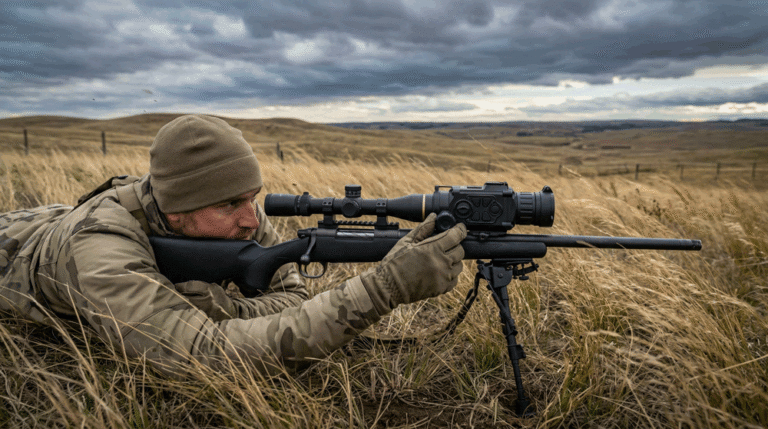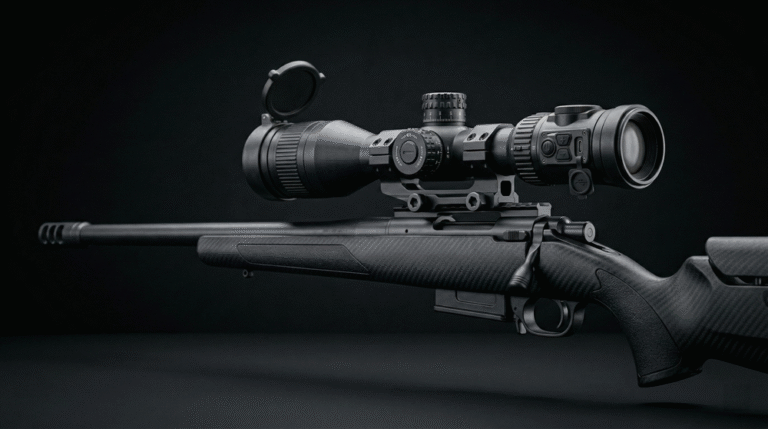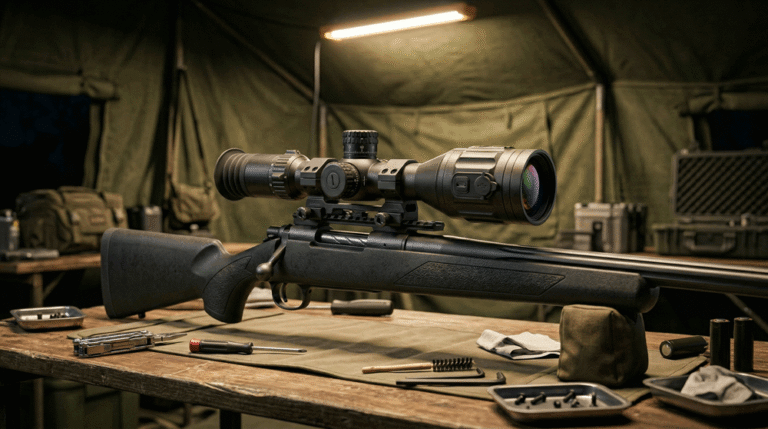

Thermal rifle scopes don’t sell like commodity optics. In most dealer channels, they sell when a salesperson can demonstrate the experience quickly and confidently, and when the dealer believes the brand will handle problems without drama. That is why “dealer enablement” is not a nice add-on. It is a commercial system that increases conversion, protects pricing discipline, and reduces returns driven by misunderstanding.
Table of Contents
ToggleThe problem is that many brands treat enablement as a pile of PDFs and a few training slides. Dealers then improvise. Improvisation creates inconsistent messaging, overselling, under-selling, and more “not as expected” returns. Dealers also avoid stocking deeper inventory when they don’t feel confident running demos, because thermal is a category where one bad demo can damage trust more than a weak brochure ever could.
This article gives a practical dealer kit and demo program that B2B thermal rifle scope brands can execute. It focuses on what dealers actually use in the field: a short demo script, a short zeroing explanation, a quick troubleshooting path, and a governed demo unit plan that increases sell-through without creating discount loopholes. It is designed to work with the series pillar, Thermal Rifle Scope Go-to-Market and After-Sales Framework, and it should align with your pricing discipline from Thermal Rifle Scope Pricing Framework, your channel structure from Thermal Rifle Scope Channel Strategy, and your support system from Thermal Rifle Scope RMA Workflow and Failure Codes. If you want a policy anchor for what dealers can promise, keep Warranty aligned with what your kit teaches.
Why the best dealer kit reduces returns more than it increases sales
Dealer enablement is usually framed as “help the dealer sell.” That is true, but the bigger strategic value is that enablement reduces avoidable returns.
Thermal rifle scopes create returns when buyers misunderstand how the product works. Many buyers are first-time thermal users. They overestimate identification range, they confuse digital zoom with optical capability, they struggle with zeroing and profiles, they interpret NUC events as “bugs,” and they assume recording will work like a phone camera. None of these misunderstandings are solved by a thick user manual. They are solved by the dealer setting expectations in a credible, short conversation.
That conversation only happens reliably when the dealer has a kit that makes it easy. The goal of the kit is not to make dealers memorize your product. The goal is to make correct messaging the default.
When the kit works, two things happen. Conversion improves because the demo becomes smooth. Returns decline because expectations are set honestly. Lower returns then protect your pricing discipline because dealers no longer feel the need to discount to “move risk.” That is why enablement is part of your pricing system, not separate from it.
The dealer kit should be designed around dealer time, not brand pride
Dealers do not have time to learn everything you want them to learn. They need an enablement system that respects their workflow.
In practice, dealers use three types of materials.
They use ultra-short materials at the counter: a two-page quick-start, a one-page “how to demo,” and a one-page “common questions.” They use medium materials for training: a short deck or video that teaches the sales story and the product ladder. And they use internal support materials when something goes wrong: a troubleshooting flow and an RMA summary that tells them what to do next.
The mistake is to create only the medium materials. Medium materials feel professional, but they do not help the moment of sale and they do not help the moment of friction. The moment of sale and the moment of friction are what determine channel trust.
Build a 60-second demo that matches real buying psychology
A thermal rifle scope demo succeeds when it answers three buyer questions quickly: what does it look like, how hard is it to use, and why should I trust it.
The demo therefore should not start with specs. It should start with experience. Show the image, show how quickly the user can change zoom and palette, show that NUC is controllable and not “random,” and show how recording works in a stable way. Then, only after the experience is established, explain what tier this SKU belongs to and why it exists.
The easiest way to damage a thermal demo is to oversell range. Dealers should be trained to talk about range in the right language: detection is different from identification, and conditions change range. A credible brand is the brand that sets honest expectations. That credibility is what keeps dealers recommending the product when a customer asks, “Is this real?”
Your dealer kit should therefore include a demo script that forces the right order: experience first, confidence second, numbers last.
Teach “why upgrade” in one sentence per tier
A dealer’s core job is to help a buyer choose between tiers. If you want healthy sell-through, you must make tier differences easy to explain.
The upgrade story should be one sentence per tier. Entry should be “easy and reliable.” Core should be “balanced for most hunts.” Premium should be “better identification confidence under harder conditions.” If the upgrade story is complicated, the dealer will default to price comparison, which pushes the sale toward discounting and increases expectation-gap returns.
This is also where your pricing framework matters. Tiering only works when MAP discipline keeps the ladder stable. If discounting collapses the price gaps, the upgrade story collapses. That is why enablement and pricing governance reinforce each other, as described in the framework Thermal Rifle Scope Pricing Framework.
Zeroing and profiles: the one-page cheat sheet that saves you money
If you track returns in thermal rifle scopes, you will often see “won’t hold zero” complaints that are actually workflow problems. Profile confusion is a major driver. Users don’t realize which profile is active, they overwrite a zero, and they conclude the product is defective.
Dealer enablement can prevent this.
Your kit should include a one-page zeroing cheat sheet that teaches dealers how to explain three things: how to choose the right profile, how to save and confirm the zero, and how to recover if the user makes a mistake. It should also include the most common mistakes and how to avoid them.
This single page reduces support tickets and reduces returns, because it shifts the conversation from “the scope is wrong” to “here’s how to do it correctly.”
The “expectation alignment” card: what the dealer says before the customer buys
If you only include one concept in your dealer kit beyond the demo script, it should be expectation alignment. This is a small card or page that helps the dealer set honest expectations in 20 seconds.
Expectation alignment usually covers five topics: range reality, digital zoom reality, environmental reality, NUC reality, and recording reality. The point is not to scare customers. The point is to prevent them from buying with the wrong mental model.
Brands often fear that honest expectation setting reduces conversion. In most premium categories, it does the opposite. Buyers trust brands that sound competent and honest. Trust increases conversion and reduces returns.
Dealer troubleshooting: reduce friction before it becomes an RMA
Dealers do not want to become technicians. But they do want a simple way to resolve common issues without shipping a unit.
Your kit should include a short troubleshooting flow for common complaints: battery/runtime complaints, recording issues, app connection issues, profile confusion, and NUC misunderstanding. The troubleshooting flow should be written in plain language and should point the dealer toward the next step quickly.
This is also where version visibility matters. If the troubleshooting flow includes “confirm firmware version,” you can resolve many complaints faster and avoid unnecessary returns. That is why your RMA system should request firmware build and configuration profile during intake, as described in Thermal Rifle Scope RMA Workflow and Failure Codes. Enablement is the front line of that system.
Demo program design: demo units are channel infrastructure
A demo program is not a discount. It is infrastructure that increases sell-through.
The problem is that demo programs can also become pricing loopholes. A dealer can buy demo units at a discount and then sell them as new. Or the market can see demo pricing and interpret it as street pricing. Both outcomes undermine MAP discipline.
A mature demo program solves this by governance. Demo units should be serialized and tracked. Demo discount rules should include eligibility criteria and obligations. Demo units should have clear labeling rules and resale rules. Demo warranty handling should be defined so dealers are not afraid of demo reliability issues.
The demo program should also be tied to training. Dealers who complete training and maintain MAP compliance should have access to demo benefits. Dealers who violate pricing discipline should lose demo privileges. This turns demo into a compliance incentive, which supports channel stability.
This is also where your channel strategy matters. In a distributor-led model, distributors may manage demo inventory. In a direct model, the brand may manage it. The key is that the ownership is explicit and the rules are consistent, as discussed in Thermal Rifle Scope Channel Strategy.
Define what dealers get, what dealers must do, and how you measure it
Enablement is not only content. It is a program. Programs work when obligations are clear and measurement exists.
Dealers should know what they get: demo eligibility, training assets, priority support, and marketing materials. They should also know what they must do: maintain MAP compliance, complete training, keep demo units in good standing, and follow the RMA intake process.
Your brand should measure a few simple metrics: demo unit usage (not surveillance, just program health), sell-through by dealer, return rate by dealer, MAP compliance, and training completion. This data allows you to invest more in dealers who execute and to reduce exposure to dealers who create friction.
This measurement is not about policing. It is about aligning incentives so the channel becomes stable and scalable.
A simple dealer kit blueprint that is actually used
Most dealer kits fail because they are too big. The best kit is the kit dealers use without thinking.
You can structure it into two layers.
Layer one is “counter-ready.” It is what the salesperson uses while talking to the customer: a demo script, an expectation alignment card, and a zeroing cheat sheet. These should be short and printable.
Layer two is “support-ready.” It is what the dealer uses when something goes wrong: a troubleshooting flow, an RMA summary, and a warranty boundary summary. These should be short and operational.
Everything else—long manuals, deep technical docs—belongs in a library, not in the kit.
If you maintain a centralized library, Downloads can be your distribution point, but the dealer kit should still be a curated subset. Dealers won’t hunt for what they need. They will use what is easy.
FAQ
Do dealer kits really increase sell-through for thermal rifle scopes?
Yes, when they are designed for dealer time. A fast demo script and clear tier upgrade language improves conversion, and expectation alignment reduces returns, which protects long-term sell-through.
What is the most important item in a dealer kit?
A short demo script plus an expectation alignment card. Those two items shape the customer’s mental model and reduce “not as expected” returns.
How do demo programs avoid becoming discount loopholes?
By governance: serialized tracking, eligibility rules, obligations, clear resale boundaries, and linking demo privileges to MAP compliance and training.
Should dealers handle troubleshooting before RMAs?
They should handle basic troubleshooting with a short, simple flow. The goal is to resolve common issues without shipping, not to turn dealers into technicians. Clear escalation rules prevent frustration.
How does dealer enablement connect to RMA cost?
Better enablement reduces avoidable RMAs caused by misunderstanding. It also improves intake quality when RMAs occur, which speeds resolution and reduces cost.
Call to action
If you share your target regions, dealer channel style, and whether you plan a distributor-led or direct program, we can convert this into a dealer enablement pack that matches your brand: a 60-second demo script, tier upgrade one-liners, a zeroing cheat sheet, an expectation alignment card, and a governed demo program policy aligned with your MAP and warranty rules.
Use Contact to share your channel plan. If you want to keep the overall operating framework consistent, start from Thermal Rifle Scope Go-to-Market and After-Sales Framework and align your RMA workflow with Thermal Rifle Scope RMA Workflow and Failure Codes.
Related posts
- Thermal Rifle Scope Go-to-Market and After-Sales Framework
- Thermal Rifle Scope Pricing Framework
- Thermal Rifle Scope Channel Strategy
- Thermal Rifle Scope Warranty Policy Design
- Thermal Rifle Scope RMA Workflow and Failure Codes
- Dealer Kit and Demo Program for Thermal Rifle Scopes