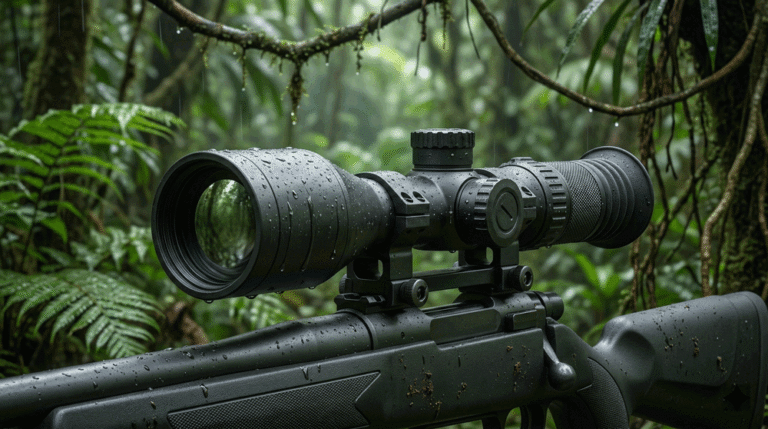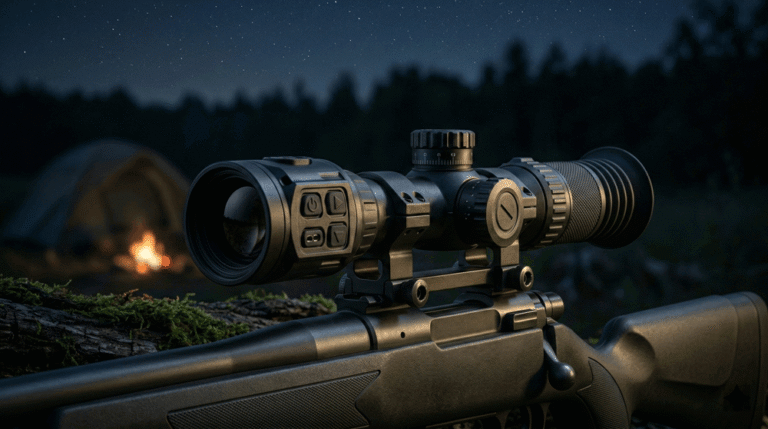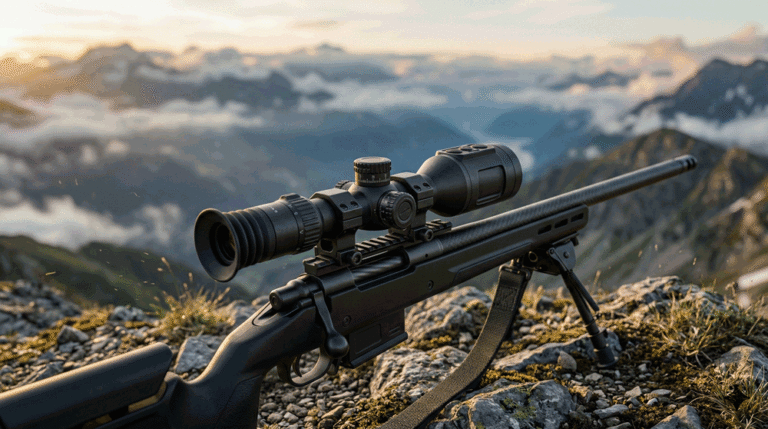
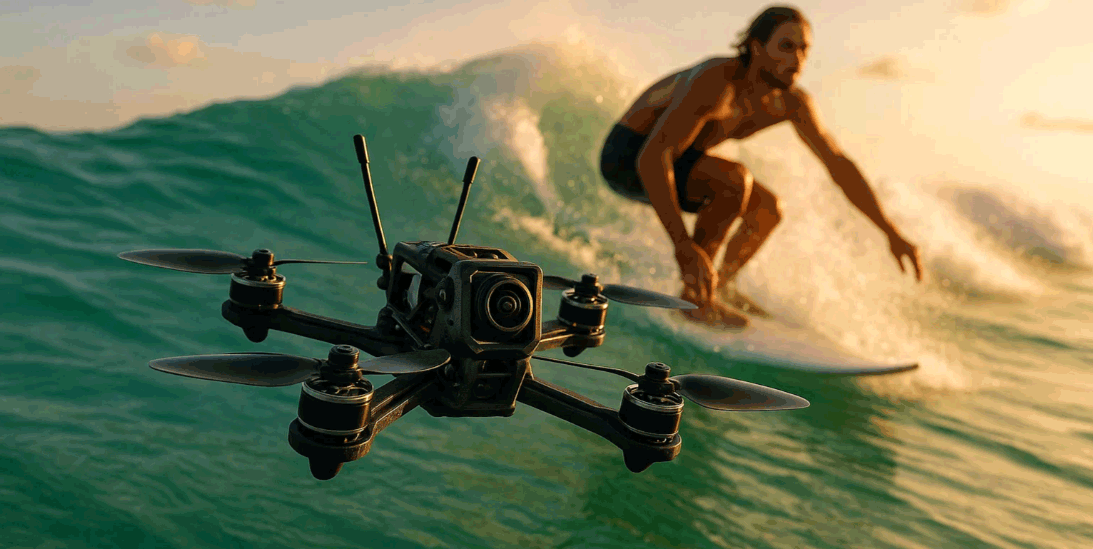
OEM/ODM teams don’t want “another sensor”—they want a field-proven FPV payload that fuses a Thermal Imaging Module with a Laser Rangefinder Module, ships with acceptance scripts, and is export-ready. This guide packages the specs, interfaces, and business rules you need to de-risk sourcing and accelerate channel onboarding.
Table of Contents
ToggleExecutive Summary
- Fusion beats single-sensor. Thermal shows targets in low light and through obscurants; the rangefinder adds distance + confidence for safer approaches and inspection hand-offs.
- Choose by workload, not hype. For UAV inspection and night ops, a fused kit improves decision quality and reduces aborts; thermal market growth and LiDAR adoption show sustained demand in pro segments.
- Ship a kit, not a component. Define optical options, I/O, time sync, and per-serial acceptance (10–20 s clip + CSV). Align laser safety to IEC 60825-1 Class 1 for public demos.
- Be export aware. EU dual-use controls and periodic list updates require clear classification notes in your quote pack.
Start with our Thermal camera module and add our Laser Rangefinder Module. Night ops accessories: Thermal Monoculars and Thermal Binoculars for ground confirmation.
Use Cases & Buyer Scenarios
FPV night operations and training programs
Thermal HUD exposes hot spots and people; range overlay confirms standoff and landing distances. SOPs align to public-safety practices (e.g., standardizing training artifacts), smoothing approvals.
Industrial/utility inspection passes
Operators fly parallel to roofs, lines, or façades. Thermal flags anomalies; the rangefinder provides repeatable distance evidence for work orders and maintenance logs. Fused CSV logs feed asset systems.
Distributor demo kits and channel enablement
Class-1 laser labeling, CE/FCC/RoHS docs (in the technical file), and short acceptance clips per serial let resellers list faster and reduce NFF returns.
Spec & Selection Guide
Key parameters and trade-offs for a fusion kit
- Thermal core: resolution (e.g., 256×192/384×288/640×512), NETD (mK), lens (f, FOV), frame-rate SKU (≤9 Hz vs >9 Hz for export planning), palettes/AGC. Market demand for thermal solutions continues to expand across pro use cases.
- Rangefinder: wavelength (905 vs 1550 nm), beam divergence (near-field vs standoff), PRF, multi-echo, confidence output, Class-1 safety.
- Time base: publish event-time for both thermal frames and range hits; derive HUD and logs from the same clock (ROS 2
/clockor equivalent). - Interfaces: UART for control; CAN for robust multi-node telemetry; Ethernet (optional) for high-throughput logging or nest deployments.
- Power: separate rails for image pipeline and LRF; LC filters; log
supply_mvto catch sag-induced faults. - Deliverables: SDK with
t_event,range_m,confidence,n_returns; boresight guide; acceptance script; label artwork (IEC 60825-1).
Comparison table—two kit archetypes you can RFQ side-by-side
| Fusion kit archetype | Thermal core | Rangefinder | Typical use | Interfaces | Notes |
|---|---|---|---|---|---|
| Lightweight night-ops | 256–384 res, 25–50° FOV | 905 nm, 2–5 mrad, high PRF | FPV training, patrol, landing assist | UART + CAN | Minimal mass/power; smooth HUD for close-in work |
| Inspection standoff | 384–640 res, 18–35° FOV | 1550 nm, 0.5–2 mrad, mid PRF | Utilities, roofs, façades | CAN + Ethernet | Better fog/rain retention; structured logging for CMMS |
Decision flow
If missions are close and fast → 905 nm + wider divergence + higher PRF + wide FOV thermal
If missions need standoff in mixed weather → 1550 nm + tighter divergence + mid PRF + narrow FOV thermal
If bus is noisy or multi-node → use CAN; log event-time for both streams
If public demos/venues → require IEC 60825-1 Class 1 labels and include them in the quote pack
Always demand per-serial acceptance: 10–20 s clip + CSV with t_event, range_m, confidence
Integration & Engineering Notes
Electrical & Interfaces
-
Segregate rails for VTX/compute vs LRF; add LC filtering and size for 2× steady-state to survive cold starts.
-
CAN discipline on airframe (twisted pair, 120 Ω ends, short stubs).
-
SDK parity: publish identical event-time fields for thermal and range hits—no downstream clock guessing.
Optics & Mechanics (mounting, alignment, sealing)
-
Boresight & parallax: align optical axes at two distances (near/far); for gimbals, confirm no vignetting at max tilt.
-
Windows: AR coatings sized for divergence; ensure IP target if you enclose apertures.
Firmware/ISP/Tuning (AGC, palettes, fusion HUD)
-
AGC presets for “search” vs “inspect”; stabilize with small temporal windows.
-
Fusion HUD: numeric distance + confidence bar + ROI box; warn if safety derate activates to maintain Class-1.
Testing & Validation (bench → field)
-
Bench: thermal MTF/NETD checks; range accuracy at 5/25/75/120 m vs taped targets.
-
Weather lane: mist/spray comparison; keep same targets; log deltas—fused kits often reduce operator guesswork.
-
Acceptance: save the 10–20 s clip + CSV per serial; channels use it for incoming inspection.
Compliance, Export & Certifications
-
Laser safety: classify the rangefinder to IEC 60825-1 and include labels/warnings; Class-1 is the simplest path for public venues.
-
Export planning: provide a one-pager on EU dual-use scope and note that the EU updates its control list regularly; include your internal screening workflow.
-
Operational standards context: public-safety programs often reference NFPA 2400 for sUAS operations; aligning acceptance artifacts with its spirit helps procurement.
For field confirmation tools, consider bundling Thermal Monoculars or Thermal Binoculars in demo kits.
Business Model, MOQ & Lead Time
-
Samples: 2–4 weeks (standard optics); 4–6 weeks (custom divergence/aperture).
-
MOQ: 100–300 units per fusion SKU (driven by optics lots and calibration throughput).
-
Deliverables: module pair + harness + mounts, SDK, boresight guide, Class-1 laser file set, and acceptance pack.
-
Channel pack: CE/FCC/RoHS DoC, spec sheet, 10–20 s acceptance clip + CSV, product images.
Mini ROI model (distributor)
| Driver | Before fusion | After fusion | Units/yr | Impact |
|---|---|---|---|---|
| Night mission aborts | 7% | 3% | 1,000 sorties | ↑ completion |
| Training to competency | 6 h | 4 h | — | ↓ onboarding cost |
| NFF returns | 1.0% | 0.5% | 2,000 units | −10 RMAs |
Pitfalls, Benchmarks & QA
Common mistakes to avoid
-
Unstated reflectivity/weather in range claims—acceptance becomes subjective.
-
No event-time: thermal and range overlays “swim”; sync at capture time.
-
CAN without proper termination—ghost faults in the field.
-
Oversmoothing thermal/range—lag during fast approaches.
-
Missing Class-1 labels—venue approvals stall.
Benchmark checklist (copy-ready)
-
Distances: 5/25/75/120 m; Reflectivity: 10 % / 50 %; Weather: clear + light mist
-
Metrics: mean error, stdev, HUD latency vs PRF, multi-echo hit rate, CAN error counters
-
Artifacts: 10–20 s clip + CSV with
t_event,range_m,confidence, PRF,supply_mv
FAQs
1) Why fuse thermal with a rangefinder for FPV?
Thermal finds targets regardless of lighting; the rangefinder adds measurable distance to reduce guesswork and improve safety/inspection evidence.
2) 905 nm or 1550 nm?
905 nm suits lightweight close-in cueing; 1550 nm supports higher eye-safe power and often holds range better in fog/rain for standoff passes.
3) What paperwork speeds channel listing?
IEC 60825-1 classification + labels, CE/FCC/RoHS DoC, and per-serial acceptance clips—everything a distributor needs to publish.
4) Can we log to plant systems?
Yes—use Ethernet JSON/CSV or a CAN-to-gateway bridge; align time with event-time stamps for audit reliability.
5) How do we avoid HUD jitter?
Sync PRF to OSD cadence and stamp event-time at capture; keep power rails clean.
Share your airframe class, target ranges, and demo regions. We’ll propose a fusion kit—thermal core + rangefinder options, CAN/UART/Ethernet harness, Class-1 file set, and acceptance scripts—built on our Thermal camera module and Laser Rangefinder Module.