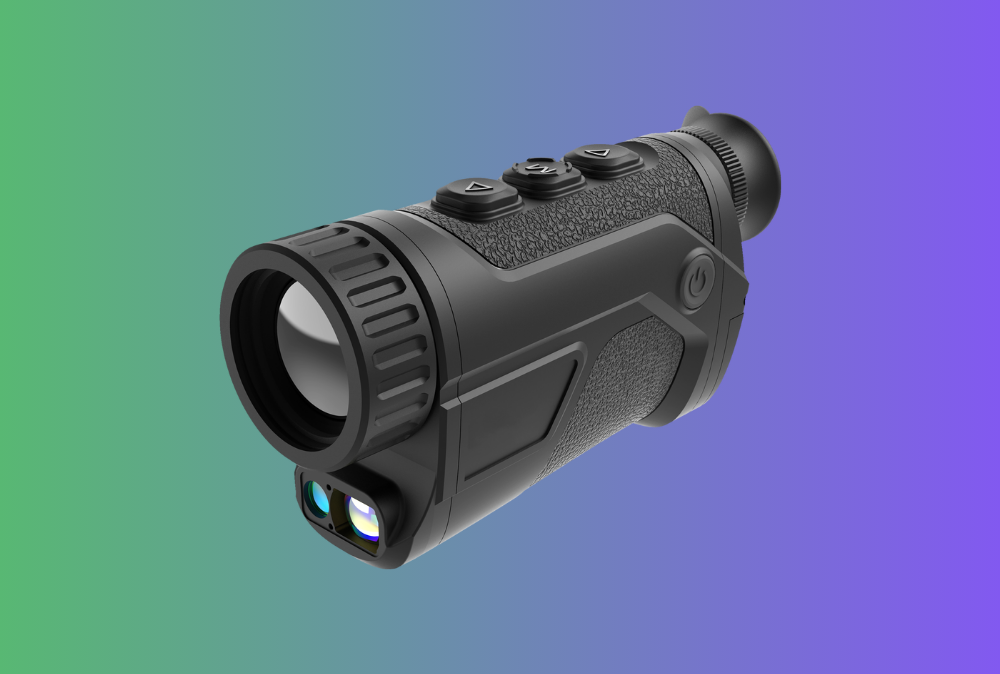
For hunters and campers, a handheld thermal monocular is a convenience. For police officers and search-and-rescue (SAR) crews, it is a safety-critical tool.
Table of Contents
TogglePublic-safety-focused thermal monoculars from major manufacturers are marketed as “force multipliers” that give officers 24/7 vision and improve decision support in low-visibility conditions. They’re expected to survive bad weather, hard knocks and long shifts, while streaming video to command units and running on standardized batteries.
If you’re an OEM buyer or brand owner, that means you can’t just paint a hunting monocular black and call it “tactical.” Patrol and SAR operators evaluate gear on very different criteria: how it feels in the hand with gloves, how quickly they can bring it up for a three-second scan, how long it runs on a winter night, and how easily it talks to radios, body-cams and command software.
This guide turns those expectations into a design checklist for professional-grade handheld thermal monoculars, and shows how to build them into a coherent Thermal Optics portfolio rather than a one-off gadget.
1. Why Patrol and SAR Teams Rely on Handheld Thermal Monoculars
Fixed cameras and drones are powerful, but ground teams still need something they can stash in a pocket and use instantly. Public-safety case studies highlight three recurring advantages of thermal monoculars for patrol and SAR:
- Detection in any lighting and many weather conditions. Thermal imagers detect emitted heat rather than reflected light, so officers can spot people in darkness, smoke, light foliage or cluttered urban scenes.
- Mobility and agility. A compact thermal imaging monocular can be carried on a lanyard or mounted on a helmet, keeping hands free for weapons, radios or ropes. Devices like ATN’s ODIN LT and similar units are explicitly marketed as lightweight, helmet-mountable scanners for on-the-go observation.
- Rapid situational awareness. DHS guidance on thermal imagers for search missions notes that experienced teams bring their imager up only for a few seconds at a time, scanning quickly and then moving. That workflow demands instant wake-up and intuitive controls.
All of this shapes the hardware, ergonomics and firmware. A patrol-grade handheld thermal monocular is less about maximum detection range and more about reliable, repeatable performance in stress conditions.
2. Turn Mission Profiles into Design Inputs
Before you choose a sensor or battery, you need a clear picture of how your customers work. Professional users can roughly be grouped into three mission profiles.
2.1 Urban & Suburban Patrol
Beat officers, sheriff’s deputies and security teams use thermal to:
- check alleys and backyards for hiding suspects;
- locate people during foot pursuits;
- sweep parking lots and building exteriors.
Products like FLIR’s Scout Pro, designed with law-enforcement input, pair a wide ~32° field of view with enough detection range to read human heat signatures across streets and yards.
Design implications:
- wide or medium FOV (typically 25–35 mm lens on 384×288 cores, or shorter on 640) for fast scanning;
- one-handed operation from a duty belt or vest pouch;
- quick video capture and secure wireless streaming.
2.2 Rural Patrol, SAR and Disaster Response
County deputies, game wardens, volunteer SAR teams and firefighters face different terrain:
- forests, clearcuts, riverbanks, ravines;
- search grids along roads, trailheads or avalanche paths;
- extended operations at night and in cold weather.
Here, guidance from first-responder product literature emphasizes rugged housings, long runtimes and the ability to transmit live footage back to a command post as teams move.
Design implications:
- robust IP ratings and drop resistance;
- hot-swappable batteries and external power options;
- easy helmet or chest mounting to keep hands free for ropes, stretchers and tools.
2.3 Specialized Units: SWAT, K9, Border and Marine
At the high end, tactical units need:
- excellent detail for threat identification at longer distances;
- integration with helmet-mounted displays or rifle optics;
- sometimes integrated laser rangefinders and geotagging.
Top-tier devices with 640×512, 12-micron sensors, sub-20 mK sensitivity, fast 50 Hz imaging and built-in LRFs are tailored to these users.
Design implication: segment your product tree. Don’t try to make one handheld thermal monocular serve every profile. Instead, define configurations anchored to these real missions.
3. Ergonomics for All-Night Carry and One-Handed Use
Professional users will carry your monocular every shift, not just on weekend trips. Ergonomics isn’t a luxury; it’s a safety feature.
3.1 Form Factor and Weight
Retail and spec sheets for patrol-oriented monoculars stress compact size and low weight, emphasizing one-hand grip and helmet-mount options.
Practical design rules:
- Target a slim, tube-like housing that fits naturally in one hand with all primary controls under the thumb.
- Keep weight manageable even with batteries—ideally in the 300–500 g range for general patrol, allowing heavier builds only for range-focused tactical models.
- Design the centre of gravity so the device feels balanced when held up to the eye or mounted on a helmet. Front-heavy designs fatigue necks quickly.
3.2 Grip Surfaces and Controls for Gloves
Police and SAR operators often wear gloves. Smooth plastics that look sleek in renderings may be slippery in rain or snow.
- Use textured surfaces, rubber over-moulds or mild palm swells to anchor the device.
- Separate buttons physically and in height so that operators can identify power, zoom and capture keys by feel.
- Avoid capacitive touch controls; mechanical switches and rockers are more predictable in wet or cold conditions.
3.3 Mounting and Carry Options
Law-enforcement-focused monoculars commonly offer both hand-held and helmet mounting.
Your design should:
- include robust lanyard and carabiner points for vest or belt carry;
- offer a standard interface (e.g. dovetail or mini-rail) for helmet mounts;
- use symmetric mounting where possible so left- and right-handed users are equally comfortable.
Well-designed carry solutions also unlock accessory and bundle opportunities in your handheld thermal monoculars range.
4. UI Design Under Stress: Controls, Modes and Displays
On a quiet demo range, any interface feels fine. In a real call-out, officers are tired, adrenaline is high and visibility is poor. Your handheld thermal imager has to be learnable in minutes and usable months later without re-training.
4.1 Core Controls: Power, Palette, Zoom
Field experience shows that professional users cycle through a small set of actions constantly: turning the unit on, changing palettes and adjusting zoom.
Design guidelines:
- Make power a long-press on a dedicated button to avoid accidental shutdowns.
- Put palette switching on a single, easily reached key or rocker. Users should be able to toggle White-Hot / Black-Hot / Red-Hot without menu diving.
- Provide a small number of digital zoom steps (e.g. 1×, 2×, 4×). Too many micro-steps slow operators down.
Advanced options (Wi-Fi, GPS, rangefinding, calibration modes) should live one layer deeper in an on-screen menu.
4.2 Display and Symbology
Modern patrol-grade monoculars frequently use 1024×768 OLED micro-displays, which give crisp imagery and comfortable viewing. When designing your optics:
- Prioritize a high-contrast, high-resolution display; officers need to distinguish people from background clutter at a glance.
- Keep on-screen overlays minimal: battery, recording status, zoom, and maybe compass/azimuth. Flooding the view with icons works against situational awareness.
- Offer a “clean view” mode mapped to a hotkey for moments when users need maximum scene clarity.
4.3 Boot, Sleep and Wake Behaviour
DHS guidance notes that experienced SAR teams raise the imager, scan for a few seconds, then lower it and move. That pattern means:
- Boot time must be short; aim for a ready-to-use image in a few seconds.
- Provide a standby mode that powers down the display and lowers consumption but wakes instantly with one button. Many current devices incorporate exactly this pattern to hit long runtimes.
If boot or wake delays are too long, field users simply stop using the device between scans—which defeats its purpose.
5. Battery and Power Planning for Professional Duty Cycles
Consumer buyers tolerate short battery life. Patrol and SAR teams do not. Marketing for law-enforcement-oriented monoculars often highlights 6–10+ hours of continuous operation and support for standardized cells (e.g. 18650 or CR123A) with hot-swap options.
5.1 Define Realistic Runtime Targets
A typical night shift or SAR operation can easily run 8–12 hours. However, the device will rarely be used continuously—operators scan, then idle.
Practical design targets:
- Minimum 6 hours continuous runtime at 25 °C with Wi-Fi off and screen at default brightness.
- Stretch goal: 10+ hours under mixed use with aggressive standby and screen-off behaviour.
Be conservative in your marketing claims; nothing generates bad will faster than a “10-hour” monocular dying after three hours of real patrol use.
5.2 Standardised, Swappable Batteries
Many professional devices now support common 18650 rechargeable cells or dual-chemistry setups (disposable CR123A + optional rechargeables).
Design choices:
- Use standardized cells whenever possible so agencies can leverage existing chargers and stock.
- Make battery compartments easy to open with gloves but secure against impact and moisture.
- Provide clear state-of-charge indicators and low-battery warnings long before shutdown.
5.3 External Power and Vehicle Integration
Patrol cars, rescue trucks and command vans can all supply power. Include:
- USB-C or similar power-in with robust, reinforced connectors;
- the ability to operate while charging;
- mounting options that let the monocular sit on a dashboard or tripod while connected to vehicle power.
Thoughtful power design turns your handheld thermal monocular into a tool that can cover both short foot patrols and multi-hour searches without swapping gear.
6. Connectivity, Recording and System Integration
Modern law-enforcement and SAR operations are data-driven. Devices like FLIR’s Scout Pro are designed not just to show images to the operator, but to stream encrypted, geotagged video back to command centres in real time.
When defining your feature set:
- Support local recording of video and stills to internal memory or microSD for evidence, after-action review and training.
- Offer secure streaming over Wi-Fi or USB, ideally with APIs or SDKs so agencies can integrate with their own software.
- Consider how your monocular ties into an ecosystem that also includes rifle optics, clip-ons and rangefinding. A common core built around a shared thermal camera module and structured Module Integration for OEMs makes firmware and support much easier.
- For premium tactical models, integration paths with ballistic and rangefinding systems—similar in concept to a dedicated Thermal + LRF Fusion & Ballistics solution—are attractive to specialised units.
The goal is not to cram every possible protocol into a single device, but to offer clear integration stories for your main customer segments.
7. Ruggedness, Safety and Compliance
Professional buyers worry about more than image quality. Procurement teams will ask about standards, certifications and environmental impact.
7.1 Environmental Robustness
Specs for patrol-oriented monoculars commonly advertise IP67 or better sealing, drop resistance and broad operating temperature ranges.
Your design should define:
- minimum IP rating (IP66 or IP67 for outdoor law-enforcement and SAR work);
- drop tests (e.g. multiple drops from 1 m onto concrete);
- operating temperature range suitable for local climates.
These requirements should be documented in your QA plans and referenced in materials on your Manufacturing & Quality pages.
7.2 Electrical Safety: IEC 62368-1
For electronic products that blend IT and AV functions—like a networked handheld thermal imager—IEC 62368-1 is now the main safety standard. It replaced older IEC 60950-1 and 60065 rules and takes a hazard-based approach: identify energy sources that could cause injury or fire, and define safeguards to control them.
Even for battery-powered gear, you should ensure:
- compliance with the relevant clauses for thermal, electrical and mechanical hazards;
- documented test reports from recognised labs;
- clear labelling and safety instructions.
7.3 RoHS and Environmental Compliance
The EU’s RoHS directive limits ten hazardous substances—including lead, mercury, cadmium, hexavalent chromium and several brominated flame retardants and phthalates—in electronics, to protect public health and reduce e-waste impacts.
Professional agencies, especially in Europe, will expect confirmation that your handheld thermal monocular family is RoHS-compliant and that WEEE obligations are addressed. Publishing concise declarations and certificates on your Certificates page simplifies procurement.
8. From Design Checklist to OEM Handheld Thermal Monocular Program
Turning this design brief into a real product line is easier if you start from proven building blocks. A good approach is to:
- Choose sensor families (e.g. 384×288 and 640×480, 12-micron, 50 Hz, sub-35 mK NETD) that can power both patrol and tactical models.
- Build multiple housings—compact patrol, helmet-mount tactical—on top of shared cores and firmware.
- Define accessory and packaging sets tuned to law-enforcement and SAR use: robust lanyards, helmet mounts, vehicle chargers, hard or semi-hard cases.
- Use structured integration support, such as a dedicated Thermal Monoculars — OEM/ODM program, to align mechanical, electrical and software design with your broader roadmap.
Done well, this produces an ecosystem where patrol officers, SAR teams and tactical units all recognise the same UI and image “look” across your handhelds, scopes and clip-ons. Training time drops, and support becomes more predictable.
Ready to Spec Your Next Handheld Thermal Monocular for Professional Use?
If you’re planning a new handheld thermal monocular for patrol or SAR—or want to harden an existing consumer design for pro service—the best moment to make these decisions is before you issue the RFQ.
Our engineering team can help you translate mission profiles into concrete sensor, housing, UI and battery specifications, and map them onto existing platforms or custom builds. Share your target agencies, duty cycles and budgets through the Get a Quote form, and we’ll come back with detailed proposals, sample options and integration paths that fit into a long-term public-safety thermal optics roadmap.