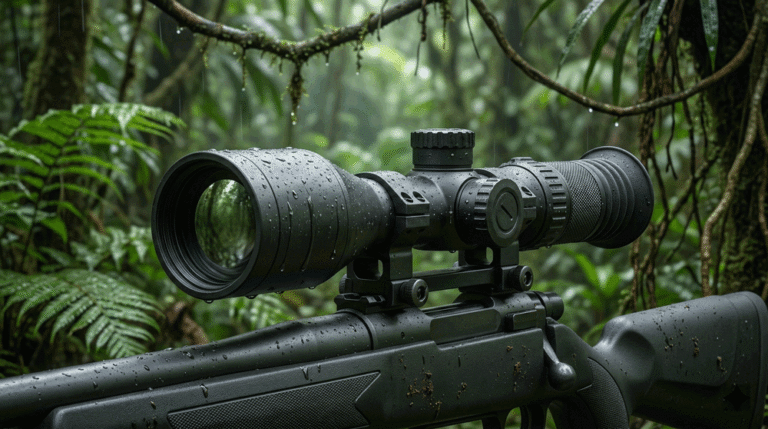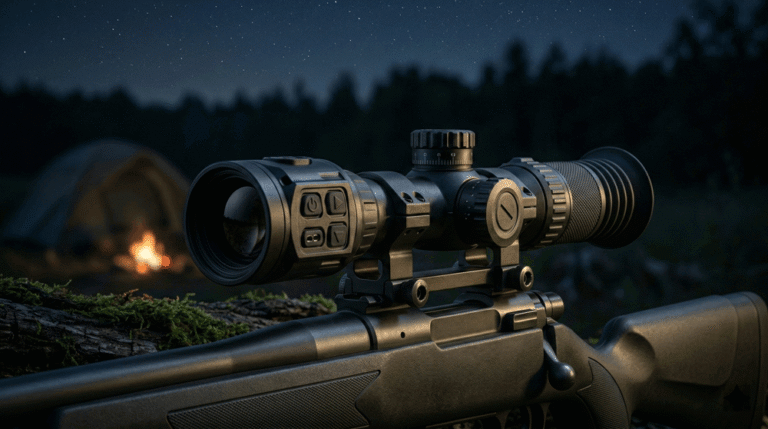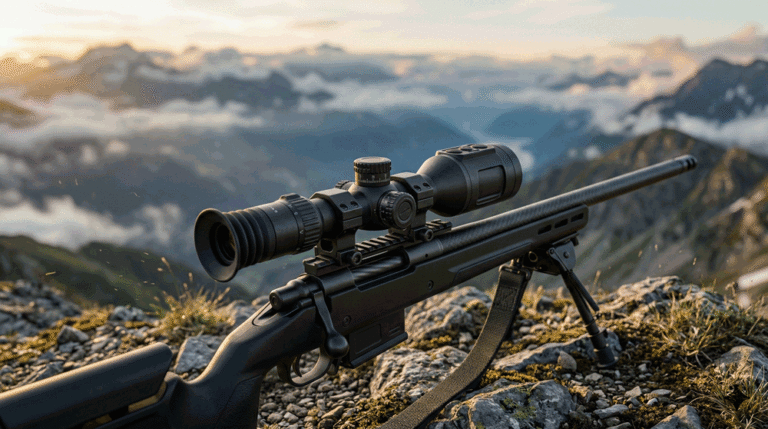
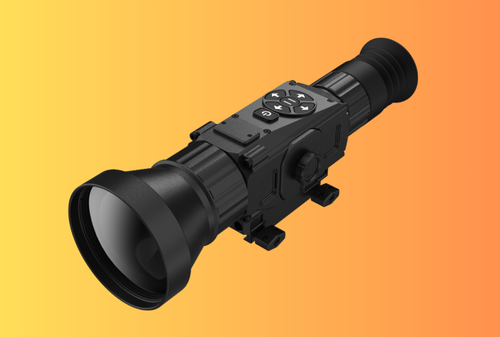
A thermal scope for coyote hunting has to do three jobs at once: help shooters see and hit coyotes at real field distances, survive hard night use in bad weather, and make enough profit that dealers actually reorder it. If you only optimize for one—spec sheet numbers, or price, or durability—you end up with a scope that either doesn’t sell, doesn’t last, or doesn’t get stocked again.
Table of Contents
ToggleThis article is a B2B design guide for brands and distributors who want a coyote-focused thermal scope line that becomes a repeat seller. We’ll cover how thermal imaging works in this context, which specs really matter for coyotes, how to align them with dealer price ladders, and how to package scopes and bundles so reorders become the default, not the exception.
Understanding the Core Concept
Why coyotes are a special case
Coyotes sit in an awkward middle ground for optics:
- They are smaller than hogs and deer, which raises the bar for recognition and shot placement at distance.
- They are primarily active in low light and at night, pushing you toward thermal imaging rather than visible-only optics.
- They’re often hunted in open country—pastures, crop fields, prairie—where 200–300 m shots are common.
Wildlife damage and predator-control programs in the U.S. explicitly call out night shooting with thermal or night vision as an effective tool for managing coyote depredation on livestock and crops, provided local regulations allow it.
A generic “all-purpose” thermal riflescope might work, but a thermal scope for coyote hunting can be tuned for:
- The size and behavior of coyotes.
- Typical engagement distances.
- The way predator hunters actually move, scan, and shoot at night.
Thermal imaging basics, in coyote terms
A thermal scope is a camera and sight combined. It detects the infrared energy (heat) emitted by objects and converts that into a visual image. A thermal camera is a non-contact device that measures infrared radiation—usually in the long-wave infrared band around 8–14 µm—and turns it into an image with brightness or color mapped to temperature differences.
Inside a typical hunting scope:
- A LWIR objective lens in germanium or chalcogenide focuses thermal radiation.
- A microbolometer focal plane array—an uncooled sensor whose pixels change electrical resistance as they warm from infrared energy—captures a temperature map.
- Electronics digitize the signal, apply non-uniformity correction (NUC), adjust gain, and sharpen the image.
- A microdisplay and eyepiece present the processed image to the shooter like a digital riflescope.
Independent technical evaluations by NIST treat thermal imagers as black boxes and grade their performance using metrics like field of view (FOV), spatial resolution, non-uniformity, effective temperature range, and thermal sensitivity—all of which affect how easily a user can detect and identify targets.
If you want your thermal scope for coyote hunting to work night after night, those same metrics need to be engineered around the shape, distance, and movement of coyotes, not just a lab target.
Market Relevance and Applications
Who actually buys a coyote-focused thermal scope?
From a B2B perspective, your thermal scope for coyote hunting will mostly end up in four hands:
- Predator specialists
- Hunt coyotes regularly on farms, ranches, and leases.
- Expect 100–300 m shots, sometimes more.
- Want a scope that they can leave on a rifle all season.
- Ranchers and landowners
- Use thermal as a tool for protecting stock and monitoring problem animals.
- Often less tech-savvy; they want intuitive controls and long runtime.
- Outfitters and guides
- Need several scopes that can be shared among clients.
- Care about durability, simple training, and quick zero checks.
- Wildlife damage professionals
- Work under government contracts or programs.
- Use thermal scopes as part of integrated predator control.
Each group is a little different, but they all reward scopes that:
- Hold zero and survive rough handling.
- Make coyotes easy to detect and recognize at relevant distances.
- Are easy to operate at 2 a.m. in gloves and cold wind.
Why dealers reorder
Dealers don’t just care if a thermal scope sells once. They care about:
- Velocity – how often they reorder and how fast units move.
- Margin – the spread between wholesale and retail.
- Trouble factor – time spent handling returns, complaints, and “it won’t turn on” visits.
A thermal scope for coyote hunting that becomes a repeat seller tends to have:
- A clear, believable performance story at its price point (e.g., “designed around 200–300 m coyotes on pasture”).
- Clean, minimal SKUs (Good / Better / Best) that fit existing price ladders.
- Low return rates: few failures, and realistic expectations set in the copy.
Your job as a designer is to engineer the scope so those three conditions are true.
Technical Insights and Key Specifications
A strong thermal scope for coyote hunting is built around four pillars:
- Geometry: sensor, lens, and FOV vs real coyote distances.
- Sensitivity and image quality: thermal sensitivity, NUC, display.
- Ergonomics: controls, reticles, and firmware tuned to predators.
- Power and reliability: batteries, weather, and zero stability.
Geometry that matches coyote size and distances
Coyotes present a relatively small thermal target—roughly 0.3–0.5 m high at the shoulder—often at 150–300 m. That drives basic design choices for:
- Resolution – 256×192, 384×288, or 640×512.
- Pixel pitch – typically 12 µm in modern hunting cores.
- Lens focal length and FOV – 19–50 mm lenses with HFOV in the 8–15° range.
Instead of chasing maximum resolution, start with use cases:
- Mixed farmland, 80–200 m shots from sticks or truck: need wide enough FOV to scan, but enough pixels on target for confident shot placement.
- Open prairie, 150–350 m shots: can accept a slightly narrower FOV if it delivers more recognition at distance.
A practical three-profile approach:
| Profile | Typical terrain | Sensor | Lens | Approx. HFOV | Base mag | Main strength |
|---|---|---|---|---|---|---|
| Woods / edges | Brush, tree lines | 384×288, 12 µm | 19–25 mm | 12–15° | ~2× | Fast scanning, 50–200 m |
| Mixed farmland | Fields + hedgerows | 384×288 or 640×512 | 25–35 mm | 10–12° | ~2.5–3× | 100–250 m, balanced |
| Open prairie | Pasture, open range | 640×512, 12 µm | 35–50 mm | 8–10° | ~3–4× | 200–350 m recognition |
You can then align each profile to a price tier so your “Good / Better / Best” scopes each answer a different slice of “best thermal scope for coyote hunting” in your market.
Sensitivity, NETD, and image quality that works on low-contrast nights
Thermal sensitivity matters most on those warm, damp nights when coyotes and background are close in temperature. NIST’s work on thermal imagers shows that thermal sensitivity (TS, similar to NETD), non-uniformity, spatial resolution, and effective temperature range jointly determine how easily a user can see targets in challenging conditions.
For coyote scopes:
- Aim for system-level thermal sensitivity (not just detector spec) of roughly:
- ≤50–60 mK at 25 Hz for an entry predator scope.
- ≤40–50 mK at 30 Hz for a mainstream model.
- ≤35–40 mK at 50 Hz for a flagship.
- Make sure the spec is quoted with conditions (frame rate, f-number, ambient temperature).
Then support that raw sensitivity with good processing:
- Non-uniformity correction (NUC) that keeps banding low across a wide temperature range.
- Tone curves and palettes tuned for animal detection, not industrial inspection.
- Sharpening strong enough to show edges, but not so aggressive that it creates halos and noise.
Remember that display quality also matters. NIST found that the way a thermal image is presented on the display—contrast, noise, and artifacts—directly impacts a user’s ability to perform recognition tasks. A crisp OLED with stable brightness and a carefully chosen palette can make a mid-range sensor feel much “better” to hunters.
Ergonomics and firmware that fit predator hunts
A thermal scope for coyote hunting is often used in the dark, in gloves, by shooters who are moving between truck, stand, and sticks. That calls for:
- Large, tactile controls for power, zoom, and palette, reachable without leaving the shooting position.
- A zeroing workflow that lets guides quickly adjust scopes for different rifles and shooters.
- Reticles aligned with the way coyote hunters think: simple crosshairs, hash marks for holdover, maybe a few ballistic options.
Predator-control guidance also notes that night operations with thermal or night vision must respect local regulations and seasons. That means you should avoid cluttered menus that encourage hunters to fiddle instead of focusing on safe, legal shots.
Firmware design tips:
- Save at least 3–5 rifle profiles for guides and owners with multiple setups.
- Offer a simple quick-zoom ladder (e.g., 1× / 2× / 4× digital) so users don’t get lost in endless zoom increments.
- Allow NUC on demand with a dedicated button and show a clear icon when a calibration is in progress.
Power system and cold-weather reliability
Coyote hunting often happens in late fall and winter, when temperatures drop and batteries struggle. Standard lithium-ion cells see rising internal resistance and reduced capacity in the cold, which is why specialized low-temperature 18650 batteries and packs exist for sub-zero operation.
Design your thermal scope for coyote hunting as if it will live in the cold:
- Use cells rated for low-temperature discharge, or at least specify realistic runtime at −10 to −20 °C.
- Make battery changes easy in gloves: robust doors, clear polarity, and strong latching.
- Consider an external power option (e.g., for long sits in a blind) without compromising waterproofing.
Dealers will notice if your scopes “just work” on those bitter nights when competitors’ units die early.
Integration and OEM/ODM Considerations
Start with a coyote design brief, not a parts list
When working with an OEM/ODM partner, start your brief with coyote-specific scenarios:
- Typical property type (row crops, pasture, mixed brush).
- Average and maximum shot distance.
- Common calibers (.223, .22-250, .243, 6.5, .308).
- Use pattern (solo farmer vs full-time predator caller vs guide with clients).
Then translate that into simple performance statements:
- “Detect and recognize coyotes at 250 m on a cool, damp night in open field.”
- “Allow stable tracking of running coyotes at 100–150 m with minimal blur.”
Your OEM can map those to sensor, lens, and processing options much more effectively than if you simply demand “the highest resolution thermal scope for coyote hunting under $X.”
Shared platform, coyote-tuned variants
From an integration point of view, you’ll move fastest if your coyote scopes reuse:
- A common electronics and firmware platform proven in other thermal products.
- A shared chassis with modular lens and mount options.
- Common interfaces for accessories such as rangefinders or external power.
You can build a coyote-focused line by varying:
- Sensor resolution and NETD grade.
- Lens focal length and FOV.
- Enabled firmware features (recording, Wi-Fi, advanced reticles).
Doing this on top of a proven thermal camera module architecture reduces both R&D risk and field failures while giving you enough flexibility to position each model precisely.
Dealer-friendly bundles
Dealers love scopes that come with obvious upsell paths. For a thermal scope for coyote hunting, consider:
- “Coyote kit” bundles including scope, mount, spare batteries, and a simple cheat-sheet for distances.
- Optional rangefinder-enabled bundles that pair the scope with a compatible LRF for holdover or lead estimation.
- Demo kits for dealers with one of each tier plus marketing assets, to accelerate in-store education.
Document these bundles in your price list so dealers can reorder a known package instead of improvising each time.
Cost, Compliance, and Lifecycle ROI
Align spec and price with dealer ladders
Coyote hunters often walk into a store with a psychological budget—“around $X”—and ask for the best thermal scope for coyote hunting they can afford. Your dealers want:
- A credible option at each of their main price points.
- Clear talking points that justify the step up from one model to the next.
- A line that doesn’t generate constant after-sale headaches.
Build your cost structure so that:
- The entry coyote scope is stripped of non-essentials (no Wi-Fi if not needed), but still delivers real range and durability.
- The mid-tier scope adds visible benefits—better image, smoother zoom, more profiles—without confusing the UI.
- The flagship earns its premium with long-range performance and integration features.
Regulatory and ethical considerations
USDA and state wildlife agencies recognize that thermal imaging and night shooting can be powerful tools for predator control, but they also emphasize compliance with local firearm and night-hunting regulations.
As a manufacturer, you should:
- Avoid suggesting illegal or questionable use cases in marketing.
- Provide clear guidance that hunters must check state and local laws on night hunting and thermal scopes.
- Be cautious about features such as recording, streaming, or laser marking in restrictive jurisdictions.
This protects both your brand and your dealers.
Lifecycle economics
A thermal scope for coyote hunting that fails mid-season costs more than the replacement unit; it creates skepticism among all the shooter’s friends and their dealer. To maximize lifecycle ROI:
- Target low return rates by investing in durability testing (shock, vibration, IP rating, cold performance). MIL-STD-810 shock and environmental tests, even in simplified form, are a good framework for qualifying your designs.
- Budget for support and firmware maintenance over several years—critical for scopes that may stay on rifles for a long time.
- Keep accessories—mounts, batteries, eyecups—compatible across models to extend life and enable resales.
Buyer insights (summary)
- Design your thermal scope for coyote hunting around real coyote size and distances, not marketing ranges.
- Balance sensor resolution and NETD against optics, FOV, and display quality; the overall image is what matters.
- Build on a shared thermal platform and vary lens, resolution, and features for each price band.
- Plan cold-weather power and ruggedness from day one; that is when coyotes move and scopes are truly tested.
- Treat reorders as the KPI: if dealers reorder without you pushing, you have the right mix of performance, price, and reliability.
Partnering and Next Steps
If you want a thermal scope for coyote hunting that shooters trust and dealers reorder, the fastest path is to stand on proven thermal modules and a clear specification, rather than experimenting in the field with your first generation.
Start by exploring core platforms in Thermal camera module, then work with engineers to adapt optics, mechanics, and firmware for predator use using patterns from Thermal camera module integration. For hunters who need ranging and lead solutions on bigger fields, extend your scopes with Laser Rangefinder Modules on a shared interface, and lock in roadmap and volume plans under an OEM/ODM Partner Program. When you’re ready to turn those building blocks into a coyote-focused product family dealers are proud to stock, contact us to schedule a 30-minute design and price-ladder workshop.
FAQs — Thermal Scope for Coyote Hunting
Q1: What base magnification works best for coyotes?
For mixed farmland and pasture, many shooters prefer a base magnification around 2.5–3×, paired with a horizontal FOV of roughly 10–12°. This gives enough field of view to scan for moving coyotes while still providing detail at 150–250 m. Very narrow FOVs may help at 300+ m but make close-range calling setups harder to manage.
Q2: Do I really need 640×512 resolution for a coyote scope?
Not always. A well-designed 384×288 scope with appropriate FOV, good optics, and solid processing can handle most coyote hunting inside 250 m and hit important price points. Reserve 640×512 for your flagship models aimed at long-range specialists and guides who truly benefit from extra detail.
Q3: How important is refresh rate for coyote hunting?
Higher refresh rates (30–50 Hz) make panning and tracking running coyotes smoother and reduce motion blur, particularly when shooting from moving vehicles or in wind. Lower frame rates can be legally required in some export markets but feel less natural; if possible, give your core markets full frame rate and provide compliant variants where needed.
Q4: What runtime should I target for a serious coyote scope?
As a rule of thumb, aim for at least 6–8 hours at typical winter temperatures on a standard set of batteries or pack. Anything less forces hunters to ration time or juggle power at the worst moment. Use low-temperature-rated cells or packs and be honest about runtime in cold conditions.