Table of Contents
ToggleIndustrial maintenance teams don’t buy an industrial handheld thermal camera just to get pretty colour images. They buy it to keep people safe, cut unplanned downtime, and prove that predictive maintenance actually works.
Whether the camera delivers that value often depends less on the core sensor, and more on the “boring” accessories around it: lenses, batteries, and protective housings. Get those wrong and even the best detector will give fuzzy images, dead batteries, or broken housings. Get them right and one technician can scan hundreds of assets per shift with reliable, repeatable results.
This article is a practical guide for OEM/ODM buyers, distributors, and industrial integrators working with a China industrial handheld thermal camera manufacturer. We’ll look at how lens options, power systems, and housings affect measurement physics, uptime, and lifecycle cost—and how to build an accessory strategy that supports serious B2B customers.
1. Why accessories decide the success of an industrial handheld thermal camera
Thermal imaging is now a mainstream tool in industrial maintenance. By detecting infrared radiation and turning it into a temperature map, cameras highlight overheating in electrical, mechanical, and process equipment before failure.
But in real plants, three practical constraints dominate:
- Can the technician actually see the target, at the right scale?
- Will the camera stay alive for a full route?
- Will the instrument survive dust, water, shocks, and temperature extremes?
Those questions are answered not by the detector, but by the lens, the battery system, and the housing. Accessories are where physics, ergonomics, and ruggedisation meet the realities of the field.
For B2B customers, accessories also shape the commercial offer: a distributor may differentiate its private-label industrial thermal camera line by bundling specific lenses and battery kits, or by offering IP-rated housings certified for harsh environments.
2. How an industrial handheld thermal camera really works
To understand why accessories matter, it helps to recall the basic architecture of an industrial handheld thermal camera:
- Detector – an uncooled microbolometer converts infrared radiation into electronic signals.
- Lens – collects radiation from the scene and focuses it on the detector. Field of view (FOV), aperture, and lens material strongly influence image quality and measurement accuracy.
- Electronics & firmware – convert detector data into temperatures, apply corrections and palettes, and manage storage and connectivity.
- Power system – batteries and power management circuits keep the camera running through full inspection routes. Battery life is a key buying factor for field users.
- Housing – protects everything from dust, water, knocks, and temperature extremes. Enclosures are typically designed to meet IP ratings defined in IEC 60529.
Accessories are the parts of this system that you can adapt per application without redesigning the core module. For a China industrial thermal camera OEM or ODM supplier, they are the easiest way to create different SKUs and market segments around a shared thermal core.
If you build on modular thermal imaging modules, one detector platform can support wide-angle building inspection cameras, telephoto electrical inspection tools, and ruggedised industrial handheld thermal imagers—simply by changing lenses, batteries and housings.
3. Lenses: how optics make or break industrial handheld thermal cameras
3.1 Field of view and working distance
The most obvious lens parameter is field of view (FOV).
- A wide-angle lens (e.g. 45° or more) captures a large area at close distance, ideal for tight rooms, building envelopes, and short-range mechanical checks.
- A narrow or telephoto lens (e.g. 12° or 6°) magnifies distant targets such as overhead busbars, outdoor lines or tower equipment.
Guides to thermal camera selection show that FOV is determined entirely by the lens, and you need different lenses for close-up versus long-distance work.
For an industrial handheld thermal camera, that means:
- If you only offer a wide lens, your users will struggle to resolve small connections in tall switchgear or distant bearings.
- If you only offer a narrow lens, technicians will constantly step back or miss context on panels and process lines.
A flexible China industrial handheld thermal camera manufacturer should therefore provide at least two lens options—or a family of SKUs prefabbed with the right FOV for electrical, building, or process inspection routes.
3.2 Lens diameter, sensitivity, and measurement accuracy
Lens aperture size and quality also matter. Larger diameter lenses collect more infrared radiation, which improves image quality, thermal sensitivity and detection range.
Precision IR lens design affects:
- Thermal sensitivity (NETD) – more incoming radiation gives cleaner signals and lower noise.
- Geometric resolution – macro or telephoto accessory lenses can increase spatial resolution on small targets by changing working distance and magnification.
- Distortion and authenticity – poorly corrected lenses introduce distortion that affects image interpretation and temperature measurement.
When you specify an industrial handheld thermal camera OEM design, insist that lens performance has been calibrated with the detector so that accuracy specifications (e.g. ±2 °C or ±2%) are valid across all supported lenses.
3.3 Close-up, macro, and specialty lenses
In some industries, accessory lenses are what unlock specialised applications:
- Macro lenses allow sharp focus at very short distances, ideal for PCB hot-spot analysis or small connector checks.
- High-temperature lenses or filters support furnace or molten metal applications by shifting the spectral response or protecting optics.
- Window-compatible lenses ensure good coupling through IR-transparent windows in electrical cabinets.
If you sell into multiple verticals, it often makes sense to create lens kits—e.g., a “maintenance kit” (standard + telephoto) and a “R&D kit” (standard + macro)—for your industrial handheld thermal camera product line.
3.4 Practical design tips for China industrial thermal camera OEMs
For a Chinese industrial thermal camera factory or OEM/ODM supplier, lenses are a strategic differentiator:
- Use a common lens mount across the product family so distributors can stock a manageable accessory set.
- Provide clear FOV charts and distance-to-spot size data so engineers can calculate detection limits for their inspections.
- Document how each lens affects calibration and accuracy, not just marketing “zoom” claims.
When combined with robust industrial handheld thermal imagers, a well-designed lens ecosystem lets customers treat thermal cameras as serious measurement instruments, not toys.
4. Batteries: keeping an industrial handheld thermal camera alive all day
A dead camera at mid-route is more than an annoyance; it’s a safety and quality risk. If the inspection stops halfway, you lose trending continuity and may miss critical anomalies.
4.1 Runtime and swapability
Thermal camera buying guides consistently list battery life as a key criterion, especially for field work. Major manufacturers highlight increased battery capacity and support for hot-swappable packs as reasons to upgrade.
For an industrial handheld thermal camera China manufacturer, that translates into several requirements:
- All-day runtime – aim for at least one full inspection shift (6–8 hours of mixed use) on a standard battery.
- Removable packs – allow users to carry spares and swap batteries without rebooting or losing images.
- Charging flexibility – support in-camera charging, desk chargers and possibly multi-bay chargers for maintenance teams.
Field users often operate in remote or hazardous zones where plugging into mains power is not possible, so design accordingly.
4.2 Battery chemistry, temperature, and lifecycle
Battery performance isn’t just a capacity number on a datasheet. Practical guidance on thermal camera maintenance notes that battery life depends heavily on operating temperature and charging habits; heavy daily use in harsh environments can limit battery life to about a year, while light use in milder conditions can extend it to several years.
To protect both safety and total cost of ownership:
- Specify battery operating ranges compatible with your housing’s ambient limits.
- Use pack designs with appropriate protections (over-charge, over-discharge, temperature cut-off).
- Provide clear instructions for storage, charging cycles, and replacement intervals.
If you’re offering industrial handheld thermal camera solutions as an OEM/ODM supplier, a well-documented battery maintenance guide can save your clients significant downtime and warranty disputes.
4.3 Accessory kits that actually work in the field
From a B2B perspective, think beyond the single battery in the box. Provide:
- Field battery kits – two or three extra packs plus a multi-bay charger.
- Vehicle chargers for mobile teams.
- Battery health indicators in firmware, so technicians know whether a pack is still fit for a full route.
Those details turn your industrial handheld thermal camera China OEM product into a trustworthy daily tool rather than a “nice but unreliable” gadget.
5. Protective housings: keeping industrial handheld thermal cameras alive in harsh environments
Industrial sites are not labs. Dust, water, oils, cleaning sprays, and occasional impacts are the norm. The housing around your industrial handheld thermal camera must survive all of that—and still protect measurement accuracy.
5.1 Understanding IP ratings
Ingress Protection (IP) ratings defined in IEC 60529 classify how well an enclosure resists dust and water.
- The first digit (0–6) describes protection against solids and accidental contact (e.g. dust).
- The second digit (0–9) describes protection against water (drips, jets, immersion).
Typical targets for industrial electronics are:
- IP54 / IP55 – general dust protection and limited water spray, suitable for indoor use.
- IP65 / IP66 – dust-tight and resistant to high-pressure water jets, used for wash-down areas and outdoor boxes.
- IP67 – dust-tight and temporarily submersible up to 1 m for 30 minutes.
For an industrial handheld thermal camera, you don’t always need IP67, but you do need enough protection for your target industries (e.g., IP54 for most dry plants, IP65/IP66 for outdoor utilities and wash-down environments).
5.2 Shock, vibration, and drop resistance
Handheld devices get dropped. While there is no single global drop standard for thermal imagers, industrial practice often targets 1–2 m drops onto concrete, along with basic vibration resistance for use on platforms and ladders.
Good housings combine:
- Impact-resistant plastics or magnesium frames
- Rubber bumpers on corners
- A lens bezel that protects optics from direct ground impact
For OEM/ODM buyers, drop test reports and mechanical design reviews from your China industrial thermal camera factory are worth asking for—they are the difference between a device you can hand to contractors at height and one you hide in a cabinet.
5.3 Optical windows, contamination, and measurement error
Even a perfect housing can ruin measurements if the optical path is compromised. Infrared training resources show that obstructions or contaminations in front of the lens—like dirty windows or a finger—can introduce several degrees of error and distort temperature differences.
To avoid that:
- Use IR-transparent window materials (e.g. germanium) with anti-reflection coatings.
- Design lens hoods that reduce the risk of contamination.
- Make cleaning instructions part of the user manual.
If you also supply online thermal monitoring systems, you can reuse many of the same window and enclosure technologies for both handheld and fixed cameras, simplifying your accessory ecosystem.
6. Accessory strategy for OEM/ODM buyers and distributors
Accessories are not just engineering details—they are part of your product and pricing strategy.
6.1 Tiers and bundles that match real workflows
Instead of one “fully loaded” industrial handheld thermal camera, consider:
- Core kit – camera body, standard lens, two batteries, charger, basic case.
- Electrical kit – core kit plus telephoto lens, IR window compatibility notes, and a holster designed for switchgear work.
- Building & HVAC kit – core kit plus wide-angle lens, tripod mount and reporting templates for building surveys.
- Industrial maintenance kit – core kit plus extended battery pack, IP-rated boot or shell, and a shoulder harness for long rounds.
This lets distributors and system integrators choose the accessory level that matches each customer’s budget and risk profile.
6.2 Accessory lifecycle and aftermarket revenue
From a business angle, accessories also create recurring revenue:
- Replacement batteries every 1–3 years, depending on usage.
- Replacement housings or protective boots after drops or chemical exposure.
- Upgraded lenses as customers expand into new applications.
A well-documented and readily available accessory catalog makes your industrial handheld thermal camera China OEM offer more attractive to both distributors and end users.
7. FAQ: accessories for industrial handheld thermal cameras
7.1 Do I really need multiple lenses for one industrial handheld thermal camera?
If your team only inspects one type of asset at one distance, a single lens may be enough. But most plants mix close-up panel work, mid-range mechanical checks, and occasional long-distance inspections. FOV guidance from thermal camera vendors shows that wide lenses suit close-up work while telephoto lenses are necessary for small, distant targets. For B2B buyers, offering at least two lens options usually pays off.
7.2 How many batteries should we plan per camera?
Guides on thermal camera maintenance point out that battery life depends on usage and temperature, with heavy daily use shortening pack life to about a year.As a rule, plan for two to three batteries per industrial handheld thermal camera in 24/7 operations, plus multi-bay chargers. For lighter use, two packs may be enough.
7.3 What IP rating should we require for an industrial handheld thermal camera?
For indoor factories with limited water exposure, IP54 is often adequate. In wash-down areas, outdoor utilities or dusty environments, IP65 or IP66 is safer, with IP67 reserved for particularly wet conditions or when the camera may be briefly submerged. Always match the rating to your environment and cleaning practices.
7.4 Can we retrofit housings to existing cameras?
Yes—many vendors offer IP-rated protective enclosures for industrial cameras that can upgrade their environmental resistance. IP67 housings, for example, protect against dust and temporary immersion, extending system life and reducing downtime. If you work with a flexible China industrial thermal camera supplier, you can often co-design custom housings fitted to your device.
8. Gemin Optics as your China industrial handheld thermal camera OEM/ODM partner
Accessories are where a good thermal core becomes a great industrial handheld thermal camera solution. Lenses align geometry with real inspection tasks. Batteries keep the device alive through long shifts. Housings protect your investment and maintain calibration in harsh conditions.
Gemin Optics is a China-based industrial thermal camera manufacturer and OEM/ODM supplier focused on exactly this ecosystem:
- Thermal cores and modules – configurable thermal imaging modules that let you design handheld and fixed cameras around a shared, calibrated core.
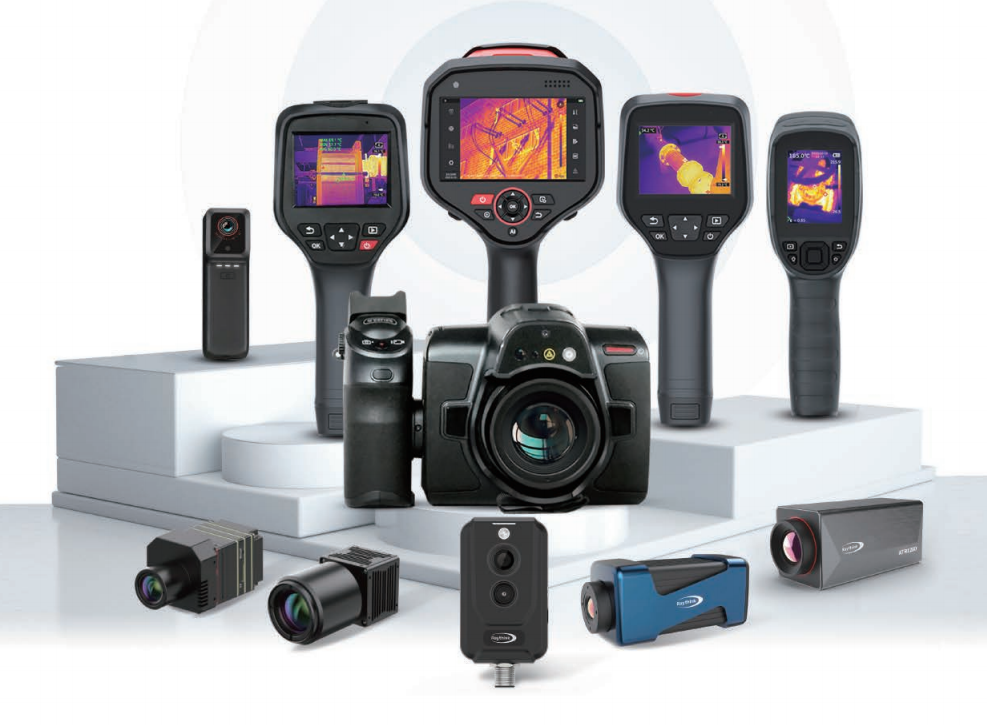
- Industrial handheld platforms – rugged industrial handheld thermal imagers with flexible lens, battery, and housing options for different routes and industries.
- Fixed and online systems – complementary online thermal monitoring systems for critical assets where continuous monitoring is required.
Whether you’re a distributor planning a private-label product line, a system integrator bundling thermography into predictive maintenance projects, or a brand owner designing your own industrial handheld thermal camera family, the right accessories will determine how customers experience your solution.
9. Work with a China industrial handheld thermal camera manufacturer you can trust
If you want your next industrial handheld thermal camera to be more than just a spec sheet, start by defining the accessory story:
- Which lenses match your customers’ electrical, mechanical, building or process applications?
- How will batteries and charging systems support real-world routes?
- What housing and IP levels are needed for the environments you target?
Gemin Optics can help you answer those questions and turn them into concrete OEM/ODM designs and accessory kits.
Contact the Gemin Optics team to discuss your industrial handheld thermal camera project, lens and battery requirements, and protective housing needs.
Share your target industries, inspection workflows and budget, and we’ll help you build an industrial thermal camera portfolio where every accessory earns its place—and every inspection adds measurable value.