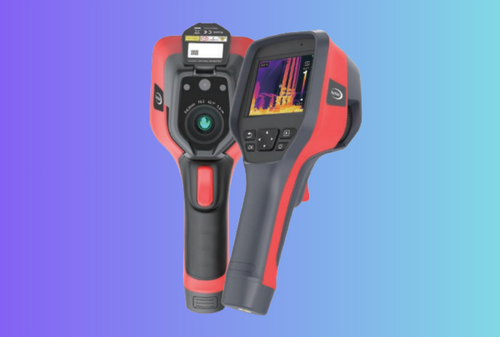
In the power generation sector, reliability is not just a metric; it is the currency of the business. A single unplanned outage at a combined cycle power plant or a substation can cost hundreds of thousands of dollars per hour in lost revenue and regulatory fines. In this high-stakes environment, the industrial handheld thermal camera has transitioned from a luxury diagnostic tool to a mandatory piece of safety equipment.
Table of Contents
ToggleFor B2B buyers, maintenance managers, and OEM distributors, understanding the specific role of these devices is critical. It is no longer about simply “seeing heat”; it is about deploying a ruggedized, high-resolution industrial infrared camera capable of detecting the earliest warning signs of failure before a catastrophic breakdown occurs.
This guide explores the technical applications of thermal imaging in power generation, the specifications required for plant-grade equipment, and how global brands can partner with a China manufacturer like Gemin Optics to source or develop world-class thermal solutions.
The Economics of Reliability: Why Thermal Imaging is Non-Negotiable
The energy sector faces a dual challenge: aging infrastructure and increased load demands. As transformers, switchgear, and turbines age, their failure modes become less predictable. Traditional maintenance—replacing parts on a schedule—is inefficient. Reactive maintenance—fixing things after they break—is too costly.
The solution is Condition-Based Maintenance (CBM). At the heart of CBM lies the industrial handheld thermal camera.
By detecting thermal anomalies (Delta T) that precede mechanical or electrical failure, these cameras allow plant operators to:
- Schedule Repairs: Move maintenance from “emergency” status to planned shutdowns.
- Verify Work: Ensure that a repair (e.g., tightening a lug) actually reduced the resistance and heat.
- Reduce Insurance Premiums: Many insurers now mandate annual thermographic inspections for power plants.
For an OEM supplier or distributor, this represents a stable, growing market. The demand for high-performance industrial ir camera units is driven by operational necessity, not just consumer preference.
Key Application Scenarios in Power Generation
To sell or utilize these tools effectively, one must understand where they are used. An industrial handheld thermal camera is versatile, but in a power plant, it focuses on three critical zones.
1. Electrical Distribution: Switchgear and MCCs
The most common application is inspecting electrical cabinets and Motor Control Centers (MCCs).
- The Fault: Loose connections, corroded contacts, or overloaded phases increase resistance ($I^2R$ losses), which manifests as heat.
- The Requirement: The camera must have high thermal sensitivity (NETD <40mK) to detect slight temperature rises above the ambient baseline.
- Safety Factor: Using a high-resolution camera allows the technician to stand outside the arc flash boundary while inspecting the equipment through an IR window.
2. High-Voltage Substations
Outdoor substations present a unique challenge. Technicians need to inspect transformer bushings, surge arresters, and disconnect switches from a safe distance—often 50 to 100 feet away.
- The Lens Factor: A standard lens is insufficient here. The industrial infrared camera must be compatible with telephoto lenses (e.g., 2x or 4x zoom) to ensure the “spot size ratio” is correct. If the detector’s pixel covers more area than the target hotspot, the temperature reading will be averaged down (inaccurate), potentially masking a critical fault.
- Core Technology: This is why Gemin Optics focuses heavily on high-resolution [thermal camera modules]1. A 640×512 resolution sensor provides four times the pixels of a standard 320×240 unit, offering the detail needed for long-range substation work.
3. Mechanical Systems: Pumps, Motors, and Bearings
Power plants are driven by massive rotating machinery.
- Bearings: A failing bearing generates friction heat long before it vibrates significantly.
- Shaft Misalignment: Misalignment between a motor and a pump creates a distinct thermal gradient across the coupling.
- Steam Traps: A failed steam trap can leak valuable energy. An industrial ir camera can instantly visualize if a trap is stuck open (blowing steam) or closed (cold, blocking condensate).
Defining the “Industrial” Grade: What Buyers Must Look For
Not all thermal cameras are created equal. A device suitable for home insulation checks will fail in a power plant. When sourcing an industrial handheld thermal camera from a China factory or developing an OEM product, prioritize these specs:
1. Ruggedness and Ergonomics
Power plants are harsh environments. The device must withstand drops, dust (coal dust is conductive and abrasive), and water.
- IP Rating: Look for IP54 or IP67 ratings.
- Drop Test: 2-meter drop protection is standard for industrial grade.At Gemin Optics, our [Manufacturing & Quality] 2 processes include rigorous shock and environmental testing to ensure our OEM designs survive field abuse.
2. Radiometric Accuracy and Range
A consumer camera might max out at 400°C. A power plant camera often needs to measure up to 650°C or even 1500°C (for boiler refractory inspection).
- Accuracy: Professional users expect ±2°C or ±2% accuracy.
- Emissivity Correction: The firmware must allow easy adjustment of emissivity values (e.g., copper vs. painted metal) to ensure accurate readings.
3. Integration and Connectivity
Modern maintenance is data-driven. The camera cannot be a data silo.
- Reporting: Images must be easily exported to generate compliance reports.
- Module Integration: For OEMs building custom systems, we offer [thermal camera module integration] 3 support, allowing you to embed our thermal cores into specialized housing with your own custom software interface.
The Strategic Advantage of Sourcing from China
For global instrument brands and distributors, the question is how to compete with giants like Fluke or FLIR. The answer lies in partnering with a specialized China manufacturer.
Closing the Technology Gap
Historically, Western brands held a monopoly on high-resolution detectors. Today, that gap has closed. A top-tier China supplier like Gemin Optics produces uncooled FPA detectors that match the sensitivity and pixel pitch (12μm) of Western competitors.
Flexibility in Design (ODM)
Large brands sell fixed products. As an OEM/ODM partner, Gemin Optics can tailor the industrial handheld thermal camera to your niche.
- Need a specific reticle for inspecting power lines?
- Need a custom “fusion” mode that overlays [Laser Rangefinder Module] 4 data onto the thermal image for precise distance-to-spot measurement?
- Need a private label housing that fits your brand identity?This level of customization allows you to offer a unique value proposition to your power plant customers.
Gemin Optics: The Core of Your Thermal Strategy
Gemin Optics is not just a vendor; we are an engineering partner. We specialize in the critical components that make an industrial infrared camera effective.
High-Performance Modules
Our [thermal camera modules] 5 are the engine under the hood. We offer a range of resolutions (from 256×192 to 1280×1024) and interface options (USB, MIPI, Analog) to suit different tiers of industrial products. Whether you are building a budget-friendly tool for electricians or a high-end camera for utility companies, we have the core technology.
Precision Optics
A thermal sensor is only as good as its lens. We design and manufacture germanium and chalcogenide lenses that maximize energy transmission. Our expertise extends to integrating these with [accessories] 6 like protective windows and motorized focus mechanisms.
Proven Reliability
In the power industry, trust is everything. If a camera gives a false reading, a technician might touch a live busbar. We take this responsibility seriously. Our commitment to [quality] 7 ensures that every pixel is calibrated and every unit is stress-tested before shipment.
The Future: Smart Cameras and Predictive AI
The evolution of the industrial ir camera is moving toward “edge intelligence.”
Imagine a camera that doesn’t just show heat, but recognizes a specific brand of circuit breaker, pulls up its historical thermal data, and warns the operator: “Temperature is 5°C higher than last month—Schedule Maintenance.”
This future requires tight integration between hardware (sensors) and software. Gemin Optics is at the forefront of this trend, researching [thermal + LRF fusion] 8 and AI-driven image processing to create the next generation of smart tools.
Conclusion
The industrial handheld thermal camera is the first line of defense against unplanned downtime in power plants. It turns invisible heat into visible, actionable data, saving millions in lost production and ensuring the safety of personnel.
For B2B buyers and OEMs, the market opportunity is vast. Power plants, solar farms, and wind turbines all require these tools. The key to capturing this market is offering a product that balances ruggedness, resolution, and price.
By partnering with Gemin Optics, you gain access to the manufacturing prowess and optical expertise needed to build a market-leading thermal imaging solution. Whether you need raw modules or a complete private-label device, we are the bridge between your brand and the future of predictive maintenance.
Partner with a Leader in Thermal Innovation
Are you ready to add high-performance thermal imaging products to your catalog? Work with a manufacturer that understands the demands of the power industry.
Gemin Optics offers:
- Core Technology: State-of-the-art thermal sensors and modules.
- Custom Engineering: Full ODM support for housing, firmware, and optics.
- Global Standards: Products designed to meet international industrial requirements.
Take action today:
- Design Your Own Camera: View our specifications for Thermal Camera Modules9.
- Explore Custom Solutions: Learn about our Thermal Camera Module Integration 10 services.
- Discuss Your Project: Contact our team 11 to get a quote or consult with our engineers.