When you buy an industrial handheld thermal camera, you are not just buying pixels and temperature ranges. You are buying a tool that must survive drops from ladders, dust and moisture on the shop floor, aggressive cleaning routines, and sometimes even explosive atmospheres. If the camera fails, you lose inspections, data, and credibility with management.
Table of Contents
ToggleThe question is not whether ruggedness matters, but how rugged is “rugged enough” for your plant or product line. For OEM/ODM buyers working with a China industrial thermal camera manufacturer, this is a design and branding decision. For maintenance managers, it is a risk decision: what level of drop resistance, IP rating, and explosion protection do you really need?
This guide breaks the problem down into physics and standards. We will look at drop tests, ingress protection (IP) codes, ATEX / IECEx requirements, and how to match them with real-world applications. The goal is to help you specify and source industrial infrared cameras that are tough enough to work, without overspending on features you will never use.
1. The real cost of an under-rugged industrial handheld thermal camera
An industrial handheld thermal camera is usually deployed in environments where equipment failure is expensive: electrical switchrooms, substations, production lines, refineries, or outdoor yards. If the camera is fragile, several hidden costs appear.
First, there is lost inspection coverage. A cracked lens or dead display means missed routes, gaps in trend data, and a higher chance of missing early-stage faults. Studies on predictive maintenance consistently show that regular condition monitoring, including infrared thermography, reduces unplanned downtime and maintenance costs. If the camera is often out of service, you lose those gains.
Second, there is safety risk. Thermal imaging is commonly used to detect overheating connections in electrical equipment before they lead to arcing or fire, and to identify hot spots in mechanical and process systems. If a camera fails in a critical moment—because it can’t handle dust, moisture, or impacts—technicians may be forced back to risky open-panel checks or visual judgment.
Third, there is brand and OEM risk. If you are selling an industrial infrared camera under your own label, every cracked housing, failed button, or fogged lens is a hit to your reputation. Once customers see devices as fragile, upgrading resolution or adding Wi-Fi will not fix their perception.
In short, ruggedness is not a “nice extra.” It is part of the value proposition of any serious industrial handheld thermal camera.
2. What does “rugged” actually mean for an industrial handheld thermal camera?
Ruggedness has three main dimensions: mechanical durability, environmental sealing, and suitability for hazardous areas. Each is governed by established standards and test practices.
2.1 Mechanical durability and drop tests
Most major vendors advertise a drop rating for their handheld thermal imagers. A common benchmark is 2 m drop resistance: well-known industrial cameras from Fluke and FLIR are specified as being drop-tested from 2 m and marketed as suitable for “tough” industrial environments.
Behind those numbers are test methods derived from general environmental test standards (for example, IEC 60068 or MIL-STD-810 procedures for mechanical shock), although the exact methodology is often proprietary. The important points for a buyer are:
- Height – Is the camera certified for 1 m, 1.5 m or 2 m drops onto concrete?
- Surfaces and orientations – Were multiple faces and edges tested, or only a flat back drop?
- Post-test functionality – Does the specification guarantee “no damage,” or “no loss of function within stated accuracy”?
For an industrial handheld thermal camera used on ladders, scaffolds or outdoor structures, 2 m onto concrete is a reasonable minimum. For milder indoor use, 1 m may be acceptable—but your risk appetite and typical working method should drive the decision.
2.2 Ingress protection (IP) ratings
The IP code (Ingress Protection code) defined in IEC 60529 classifies enclosures by their resistance to dust and water.
- The first digit (0–6) covers solid objects and dust. “5” means “dust-protected,” “6” means “dust-tight.”
- The second digit (0–9) covers water from drips to high-pressure jets and immersion. Example: IP54 is protected against limited dust ingress and splashing water; IP67 is dust-tight and protected for temporary immersion up to 1 m.
Most industrial thermal cameras aimed at electricians and maintenance teams advertise IP54 or IP65 housings: rugged enough for dusty switchrooms and occasional water exposure, but not for continuous submersion.
For an industrial handheld thermal camera, practical IP targets are:
- IP54 – indoor industrial, light dust, occasional splashes or drizzle.
- IP65 / IP66 – dusty or wash-down environments, outdoor substations in bad weather.
- IP67 – extreme environments, regular hose-down or risk of brief immersion.
Higher IP ratings tend to increase cost and weight, so matching the rating to real conditions is important.
2.3 ATEX / IECEx and hazardous areas
In sectors like oil and gas, chemicals, grain handling and some pharmaceuticals, you may need a hazardous-area rated industrial infrared camera. Here the key frameworks are:
- The ATEX 2014/34/EU directive in the EU, which covers equipment and protective systems intended for use in potentially explosive atmospheres and defines essential health and safety requirements.
- The international IEC 60079 series of standards, which cover equipment for explosive atmospheres, including general requirements, types of protection and area classification.
ATEX and IECEx classify equipment by zone (likelihood of an explosive atmosphere), gas or dust group, and temperature class. Certified devices carry Ex markings and are tested by notified bodies according to specific protection methods (e.g. intrinsic safety per IEC 60079-11).
In practice, this means:
- If you want to point a camera into Zone 1 or Zone 2 areas, you may need an ATEX/IECEx-certified industrial handheld thermal camera or an Ex-approved housing.
- Certification can significantly increase cost, size and lead time.
- Not every plant area requires ATEX; classify zones carefully before specifying Ex equipment.
2.4 Other ruggedness factors
Beyond drop, IP and ATEX, consider:
- Operating temperature range – outdoor and freezer environments may require –20 °C or lower start-up capability.
- Chemical resistance – housings and lens windows must withstand cleaning agents and process vapours.
- Ergonomics under PPE – large buttons, grippy surfaces and glove-friendly design are part of being “rugged” in real use.
3. Design choices that drive ruggedness in industrial handheld thermal cameras
If you are specifying or designing an industrial handheld thermal camera with a China OEM/ODM partner, ruggedness is not just a line in the spec sheet; it is the outcome of dozens of design decisions.
3.1 Mechanical architecture and materials
Rugged cameras use a combination of:
- Internal frames (often magnesium or reinforced polymer) that support the detector, PCB and lens, decoupling them from housing impacts.
- Elastomer over-moulding around corners to absorb shocks.
- Recessed screens and lenses so that the first point of impact is a protective bezel, not the glass.
To hit 2 m drop ratings, vendors test multiple impact orientations and often design the centre of mass to minimise damage when the camera slips from a hand or harness.
3.2 Optics and window design
For an industrial infrared camera, the lens and any protective window must both survive impacts and maintain optical performance. Design considerations include:
- Germanium or chalcogenide optics with anti-reflection coatings for the long-wave IR band.
- Hard, scratch-resistant front windows to protect more delicate internal lenses.
- Sealing and anti-fog strategies to prevent condensation under rapid temperature changes.
A rugged housing without equally rugged optics is a half solution; scratches, chips or fogging will degrade accuracy even if the electronics survive.
3.3 Power, connectors and moving parts
Many industrial handheld thermal cameras now offer Wi-Fi, USB-C, tripod mounts and sometimes interchangeable lenses. Each feature is a possible weak point if not ruggedised.
- Battery compartments must resist vibration yet be easy to swap with gloves.
- Connectors should have strain relief and protective covers to maintain IP rating.
- Lens mounts must lock securely to withstand drops without de-centering.
When evaluating a China industrial thermal camera manufacturer, ask how these elements are tested—do they simply survive bench use, or have they gone through cycle, vibration and drop tests?
3.4 Certification and test documentation
From a B2B buyer’s perspective, evidence of ruggedness is as important as design itself. Look for:
- Test reports or certifications for IP rating according to IEC 60529.
- Drop test descriptions (height, surface, number of drops, functional criteria).
- For hazardous areas, ATEX or IECEx certificates referencing appropriate parts of IEC 60079.
If you are building your own branded industrial handheld thermal camera line using thermal imaging modules, your OEM partner should be able to share such documentation or work with local labs to obtain it.
4. Matching ruggedness level to application
Not every plant needs an ATEX-certified, IP67, 2 m drop-rated camera. Ruggedness should follow risk and environment.
4.1 General manufacturing, facilities and commercial buildings
Typical conditions: indoor switchboards, MCC rooms, HVAC equipment, building envelopes, light dust or moisture.
For these sites, a well-designed industrial handheld thermal camera with:
- 1–2 m drop resistance
- IP54 or IP55 housing
- Operating range around –10 °C to +50 °C
is usually sufficient. Many mainstream industrial infrared cameras use exactly these levels to balance durability and cost.
4.2 Utilities, data centres and outdoor substations
Here you face outdoor weather, more dust, and sometimes live-line clearances that make drops more likely. For utility crews and data centre teams working around critical infrastructure, it is prudent to specify:
- 2 m drop test minimum
- IP54–IP65, depending on rain exposure
- Wider operating temperature range and robust battery performance
If your reliability strategy also includes remote monitoring, you may combine handheld devices with fixed online thermal monitoring systems for the most critical assets.
4.3 Oil and gas, petrochemical and chemical plants
In these industries, explosive atmospheres and aggressive chemicals are common. ATEX and IECEx classifications are mandatory in defined zones.
Camera choices include:
- ATEX Zone 1/2-certified industrial handheld thermal cameras, often with intrinsic safety or explosion-proof housings.
- Standard industrial thermal cameras used only in non-classified safe areas, combined with fixed Ex-certified thermal systems for process monitoring.
When Ex certification is required, IP rating and drop resistance still matter, but they are constrained by enclosure designs defined in IEC 60079. Expect higher cost and more limited accessory options.
4.4 Mining, grain handling and dusty bulk materials
These environments often involve combustible dusts, which also fall under ATEX/IECEx frameworks.
A suitable industrial infrared camera may need:
- Dust-tight IP6X protection
- ATEX Category II 2D or similar dust-zone certification
- Protective windows that resist abrasive dust and cleaning methods
As with oil and gas, consider whether every handheld inspection truly needs Ex certification, or whether you can segregate safe areas and use fixed Ex-rated cameras where continuous monitoring is required.
4.5 OEM/ODM and brand strategy
If you are building a portfolio with a China industrial handheld thermal camera manufacturer, one effective strategy is to define ruggedness tiers:
- Standard industrial thermal camera – IP54, 1 m drop, for general industrial maintenance.
- Rugged industrial handheld thermal camera – IP65, 2 m drop, with reinforced housing, for field utilities and heavy industry.
- Ex-rated industrial infrared camera – ATEX/IECEx certified, potentially with specialised housings, for hazardous zones.
Each tier can reuse the same thermal core and software while targeting different markets and price points.
5. How to evaluate a China industrial handheld thermal camera manufacturer
Choosing the right OEM/ODM partner is critical if you want to offer rugged industrial handheld thermal cameras under your own brand. Here are practical criteria.
5.1 Engineering and testing capability
Ask potential suppliers to demonstrate:
- Experience designing rugged housings around thermal modules.
- Access to environmental testing facilities for IP, vibration and drop.
- Familiarity with IEC 60529 and, if relevant, IEC 60079 and ATEX testing processes.
A serious industrial thermal camera manufacturer should treat ruggedness as part of the engineering process, not an afterthought.
5.2 Documentation and traceability
Look for:
- IP and drop test reports, not just marketing claims.
- Clear derating curves for temperature and battery performance.
- Component and change control so your “rugged” camera is consistent across batches.
This level of documentation will support your own quality system and help satisfy audits by large industrial customers.
5.3 Customisation flexibility
You may want different branding, lens sets, or housing colours for different markets. A flexible industrial infrared camera OEM should be able to:
- Offer multiple front-end designs around common thermal imaging modules.
- Add or remove features like Wi-Fi, laser pointers, or specific buttons without compromising certifications.
- Provide private-label packaging and documentation that reflect your ruggedness positioning.
5.4 After-sales support
Rugged devices still fail occasionally. Clarify:
- Turn-around time for repairs and replacement housings.
- Availability of spare batteries, lens caps and boots.
- Policy for units damaged beyond normal wear during drops or exposure.
A strong after-sales model is part of what makes an industrial handheld thermal camera “safe to recommend” to demanding B2B customers.
6. Gemin Optics as your rugged industrial handheld thermal camera OEM/ODM partner
Gemin Optics is a China-based manufacturer focused on thermal imaging modules, industrial handheld thermal cameras and laser rangefinder modules for OEM/ODM customers worldwide.
6.1 Common thermal core, multiple rugged form factors
Using configurable thermal imaging modules, Gemin can build:
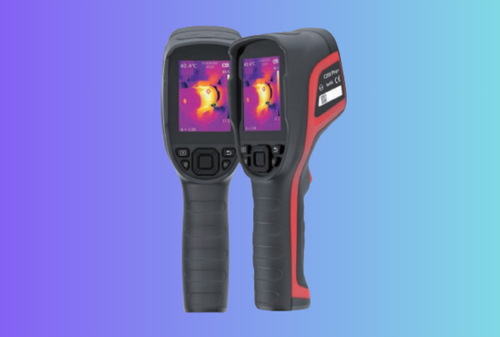
- Compact industrial handheld thermal cameras with robust housings for route-based inspections.
- Fixed industrial infrared cameras integrated into online thermal monitoring systems for 24/7 asset protection.
This shared core simplifies calibration, firmware updates and accessory ecosystems across your product line.
6.2 Handheld platforms designed for industrial use
Gemin’s industrial handheld thermal imagers are engineered with:
- Rugged housings suitable for harsh electrical and mechanical environments.
- Flexible power options for long inspection routes.
- Connectivity features that support modern reporting workflows.
As an OEM/ODM partner, Gemin can adapt these platforms to your ruggedness requirements and branding—from standard industrial use to more demanding applications.
7. FAQs: ruggedness for industrial handheld thermal cameras
Q1. Is a 2 m drop rating always necessary for an industrial handheld thermal camera?
Not always. For office-like environments or controlled switchrooms, 1 m may be acceptable. However, many industrial users work at height, on platforms or in crowded spaces. Leading vendors use 2 m onto concrete as a practical benchmark for “rugged field use,” so matching that level gives your product parity and reduces risk.
Q2. What IP rating should I specify for a general-purpose industrial infrared camera?
For typical indoor plants with some dust and occasional moisture, IP54 or IP55 offers a good balance. If you expect wash-down or outdoor exposure to rain and spray, IP65 or IP66 is safer. Extreme or immersion scenarios may justify IP67, but cost and complexity rise with each step, so align the rating with real conditions.
Q3. When do I need an ATEX or IECEx-certified industrial handheld thermal camera?
You need ATEX/IECEx equipment only in classified hazardous areas where explosive gas or dust atmospheres can occur (Zones 0/1/2 for gas, 20/21/22 for dust). ATEX Directive 2014/34/EU and IEC 60079 define these areas and equipment categories. If inspections are performed in safe areas, a standard industrial handheld thermal camera is usually acceptable. Always follow your site’s hazardous-area classification.
Q4. Does higher IP rating or ATEX approval affect image quality?
Indirectly, yes. Thicker windows and heavier housings can introduce reflections or vignetting if not designed carefully, and some Ex housings restrict lens options. That is why it is important to work with an experienced industrial thermal camera manufacturer who can balance ruggedness with optical performance and verify accuracy after certification testing.
Q5. How can I verify that a camera really meets its IP and drop specifications?
Request:
- Third-party IP test reports referencing IEC 60529.
- Drop-test descriptions including height, surface, and pass criteria.
- For ATEX/IECEx, certificates and associated reports from a notified body or certification agency.
If a vendor cannot provide documentation, treat ruggedness claims with caution.
8. Work with a China industrial handheld thermal camera manufacturer you can trust
Ruggedness is not a decorative label on the datasheet. For an industrial handheld thermal camera, it is a carefully engineered combination of drop resistance, IP rating, thermal and chemical robustness, and—when needed—compliance with ATEX and IECEx standards.
Get these choices right, and your technicians will trust the camera in any environment. Your predictive maintenance program will have fewer gaps. Your OEM/ODM brand will stand for reliability, not for fragile instruments.
Gemin Optics helps B2B customers around the world design and manufacture rugged industrial thermal cameras and systems—from handheld imagers to fixed online monitoring nodes—built on proven thermal cores and supported by flexible OEM/ODM services.
If you are planning your next industrial handheld thermal camera project or product line:
Contact the Gemin Optics team to discuss your ruggedness requirements, target environments and certification needs.
Share your asset mix, risk levels and budget, and we’ll help you specify an industrial infrared camera solution that survives the real world—and pays for itself in avoided failures and stronger customer confidence.