
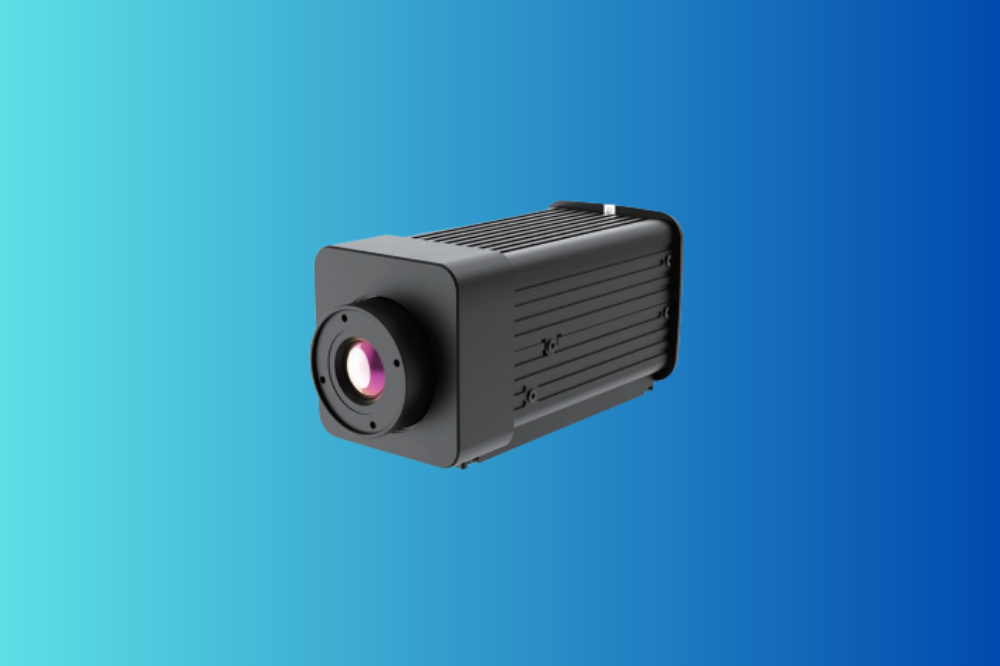
When a company operates dozens of plants, a single industrial online thermal imaging system pilot is easy to approve. Turning that successful pilot into a group-wide standard is much harder. You must align IT/OT, purchasing, maintenance, cybersecurity, insurers, and local plant managers—often across several countries and time zones.
Table of Contents
ToggleThis article outlines a practical roadmap from “one pilot line” to “group-wide deployment”. It focuses on B2B users who plan to combine fixed systems built around industrial thermal imaging cameras with handheld tools and existing maintenance programs. We will look at technical, organizational, and commercial steps, and where an OEM thermal camera supplier can make or break your long-term strategy.
1. Why multi-site groups move from pilot to rollout
In most organizations, thermal imaging starts with handheld inspections. Over time, two forces push companies toward online systems.
The first is risk. Fires, explosions, or major outages are often traced back to undetected hot spots: loose electrical joints, overheating bearings, self-heating bulk material, or local process upsets. After a few near-misses—or one real incident—management starts asking how to get earlier, more reliable warning.
The second is scalability. With ten sites, each having hundreds of critical assets, handheld rounds become expensive and inconsistent. Some sites do them well; others skip or shorten routes when they are busy. A central reliability or EHS team has very little real-time visibility.
A well-designed industrial online thermal imaging system addresses both problems. Fixed cameras stream continuous temperature data into an analytics platform. Alarms are standardized, trends are logged, and central teams can see the same information as local operators. The challenge is introducing this technology in a way that fits budgets, IT policies, and local realities.
2. Designing the pilot with rollout in mind
Many pilots fail to scale because they are designed as one-off experiments. To avoid this, the pilot must already reflect the constraints of a full rollout.
2.1 Choose a representative but manageable pilot scope
Pick one or two sites that are technically typical but organizationally cooperative. Within them, select a limited number of high-impact assets: a transformer yard, a critical conveyor system, or a set of silos. The point is not to cover everything, but to prove that online thermal imaging can detect relevant faults, integrate with existing systems, and be maintained locally.
Make sure the chosen assets represent the variety you will face later: indoor and outdoor, electrical and mechanical, different process temperatures, and different line layouts. A pilot that only monitors a simple MCC room will not teach you how to manage cameras over a dusty coal pile.
2.2 Define success metrics from day one
Before any industrial thermal imaging camera is mounted, agree on what “success” means. Typical pilot KPIs include:
- Number and type of thermal anomalies detected and resolved.
- Reduction in emergency repairs compared to historical baselines.
- Operator and maintenance feedback on alarm usefulness.
- System uptime and camera availability.
- Effort required for cleaning, calibration checks, and configuration changes.
Financial KPIs should be included but set realistically. A pilot may or may not catch a major incident during its first year; its goal is to validate capability, not guarantee immediate payback.
2.3 Engage all relevant stakeholders early
Pilots that involve only the local maintenance team often hit barriers later from IT, cybersecurity, or corporate EHS. Involve these groups early. Show them the architecture, data flows, and expected benefits. Address questions about network segmentation, firmware updates, and remote access before hardware is ordered.
This early alignment is essential if the pilot is to become the template for dozens of sites.
3. Building a scalable technical architecture
A multi-site roadmap lives or dies on architecture. If your first system is built as a custom one-off, every new site will require new engineering, integration, and approvals.
3.1 Standardize on modular hardware platforms
Where possible, build the system around a small family of cameras and modules. Fixed devices based on common thermal imaging modules can cover most use cases by varying optics, housings, and mounting. This makes procurement, spares, and training much simpler than if each site uses different hardware.
For example, you might choose one OEM thermal camera core with:
- Different FOV options for close-range cabinets and long-range yard monitoring.
- Common electrical and communication interfaces across all variants.
- A shared firmware base that supports the same analytics and alarm functions.
This modularity lets your group negotiate better pricing with a China-based OEM/ODM supplier and simplifies future upgrades.
3.2 Separate edge devices from central analytics
A scalable architecture typically has three layers:
- Cameras and edge devices in the plant, close to assets.
- Local servers or gateways that collect streams, run analytics, and integrate with SCADA.
- Central platforms that aggregate data from multiple sites for reporting and fleet-level analysis.
Design the pilot so cameras talk to a local gateway, which then exposes standardized tags or APIs to SCADA and higher-level systems. This minimizes site-specific customization and makes it easier to add new locations later.
3.3 Design for network and cybersecurity from the start
Multi-site groups are rightly cautious about cybersecurity. Each industrial online thermal imaging system must fit into existing OT security policies:
- Cameras reside on dedicated OT VLANs, not on office Wi-Fi.
- Access is authenticated and, where appropriate, encrypted.
- Remote support uses controlled VPNs or jump servers, not direct internet exposure.
Document these patterns in your reference architecture. When you bring a new site online, IT will see that it follows the same proven rules, which speeds approvals.
4. Operational model: who does what at pilot stage
Technology alone does not guarantee success; roles and responsibilities matter just as much.
During the pilot, define clearly who will own:
- Daily monitoring of alarms (often the control room or maintenance).
- First-line troubleshooting (local electricians, mechanics).
- Camera cleaning and visual inspections.
- Configuration changes (threshold tuning, new regions of interest).
- Integration and software maintenance.
Central teams may provide guidance and second-line support, but sites must feel ownership. Otherwise, when you propose a full rollout, they will see the system as “someone else’s project” and resist.
It is often helpful to nominate a “thermal champion” at each site: a technician or engineer who receives deeper training and acts as the local point of contact.
5. Evaluating the pilot and deciding to scale
After several months of operation, you need a structured evaluation, not just a collection of anecdotes.
Review technical performance first. Did the industrial online thermal imaging system achieve the uptime target? Were there unexpected blind spots or false alarms? Did any components show reliability issues in the local environment?
Next, assess operational impact. How many meaningful anomalies were detected? How did the system influence maintenance decisions? Were there moments when online monitoring clearly prevented an incident or allowed more controlled shutdowns?
Then look at economics. Compare actual maintenance and outage data against historical baselines. Even approximate estimates of avoided downtime or reduced emergency work help quantify benefits. Include the cost of running the system: cleaning, calibration checks, and occasional camera replacement.
Finally, gather user feedback. Ask operators, electricians, reliability staff, and management what worked and what did not. Identify training or usability gaps. The goal is to refine your template before you multiply it across sites.
6. Designing the rollout playbook
Once management agrees to expand, you need a playbook—a documented, repeatable process for taking an industrial online thermal imaging system from concept to steady operation at each site.
6.1 Site classification and standard designs
Start by classifying your sites into a few categories: power-heavy plants, bulk storage facilities, high-temperature process sites, or mixed industrial complexes. For each category, define standard monitoring packages.
A “Type A” plant, for example, might receive a standard set of industrial thermal imaging cameras for substations and main MCC rooms. A “Type B” site with coal or biomass storage might include additional coverage for piles and conveyors.
Standard designs include typical camera counts, recommended mounting positions, example FOV diagrams, and integration patterns. Sites can deviate from them when justified, but the default is clear and well-documented.
6.2 Group-level BOMs and framework agreements
Use the pilot’s lessons to create group-level Bills of Materials (BOMs). These BOMs list approved camera models, housings, cables, and servers, together with order codes and preferred vendors.
Then negotiate framework agreements with your OEM/ODM partners and local integrators. Multi-site volumes give you leverage on pricing, lead times, and service terms. They also help suppliers plan their production and support capacity, which indirectly reduces your risk.
6.3 Training and certification
Rollouts are smoother when you standardize training. Develop a modular curriculum covering:
- Basics of thermal imaging and asset failure modes.
- Operation of the industrial online thermal imaging system interface.
- Local maintenance tasks such as cleaning and simple replacements.
- Cybersecurity and remote support procedures.
Consider issuing internal “certifications” so that each site has a minimum number of trained users and technicians. This builds confidence among managers and insurers that the system will be properly used.
7. Managing change and avoiding pilot drift
A common failure mode is “pilot drift”: as you move to new sites, people modify the design until the group ends up with five different systems under the same name. This destroys economies of scale and complicates support.
To avoid this, establish a small governance group—often within central engineering or reliability—that owns the reference architecture and playbook. All requested deviations from the standard go through them. Some are accepted, others are rejected, but in each case the reasoning is documented.
At the same time, governance should not become a bottleneck. Encourage sites to propose improvements based on their experience. When a better strategy for a particular application emerges, update the standard so future sites benefit.
A practical approach is to schedule annual “thermal imaging reviews” where representatives from several plants share lessons learned, near-misses, and suggested changes. Over time, the group becomes not just a rule-setting body but a learning network.
8. Role of OEM and integration partners in multi-site rollouts
Multi-site projects magnify the importance of your technology partners. A single large plant can tolerate a more bespoke integration; a global rollout cannot.
From an OEM supplier, you should expect:
- Stable OEM thermal camera platforms with documented roadmaps.
- Detailed mechanical and electrical integration guides.
- Calibration and QA information suitable for internal and insurance audits.
- Development support for custom firmware or analytics when needed.
From system integrators, you should expect repeatable project execution: surveys, installation, commissioning, and training following consistent templates. Ideally, the same core team or partner network supports several sites, building up domain knowledge as they go.
Your contracts and SLAs should reflect multi-site realities: pooled spare inventories, regional support hubs, and escalation paths that cover both hardware and software layers. It is easier to negotiate these clauses before the first rollout project than after problems appear.
9. Continuous improvement after full rollout
Reaching “full rollout” does not mean the roadmap ends. Instead, the industrial online thermal imaging system becomes part of your continuous improvement cycle.
Central teams can now perform fleet-level analytics: comparing hot-spot rates across sites, identifying recurring failure modes, and prioritizing upgrade budgets. Thermal data can feed into corporate asset-management systems, supporting decisions about replacement, refurbishment, or redesign.
Online monitoring also creates opportunities for new services. Some groups establish internal centers of excellence that review thermal events across all plants, provide second opinions, and support root-cause investigations. Others work with insurers to develop joint case studies showing how online thermal imaging has reduced near-misses and claims.
As technology evolves—better sensors, smarter analytics, or new communication standards—you can roll out upgrades gradually, based on the solid foundation established during the initial roadmap.
10. Gemin Optics as your OEM/ODM partner for scalable online thermal imaging
Gemin Optics is a China-based manufacturer specializing in thermal imaging and rangefinding solutions for B2B customers. For multi-site industrial projects, we focus on being a reliable OEM thermal camera partner rather than just a component vendor.
Our portfolio of compact thermal imaging modules forms the core of many fixed cameras and monitoring systems. By building multiple device types around shared modules and interfaces, we help groups standardize hardware while covering diverse use cases—from substations and switchgear rooms to bulk storage and process lines.
We support OEM/ODM customers with:
- Engineering advice during pilot design, including optics and FOV selection.
- Integration documentation and SDKs that simplify connection to local gateways, SCADA, and central platforms.
- Manufacturing and quality practices designed for stable, repeatable production over many years.
- Service models that align with group-level rollouts, including spare strategies and lifecycle planning.
For commercial and technical discussions about your next industrial online thermal imaging system, our team is available via the Contact page. We are accustomed to working with multi-site groups that need consistent solutions across several regions.
11. FAQ: scaling industrial online thermal imaging across multiple sites
How long should we run the pilot before deciding on rollout?
Most groups find that 6–12 months of operation is enough to test reliability, usability, and integration. This period should include different seasons and operating conditions so that alarms are tested under varying loads and ambient temperatures.
Do all plants need identical hardware?
Not necessarily, but a high degree of standardization is essential for good TCO. It is usually better to use the same industrial thermal imaging camera family with different optics and housings than to mix several unrelated platforms across the group.
How many people do we need at each site to operate the system?
With a well-designed interface and standard procedures, online monitoring rarely needs dedicated staff. Typically, one or two “thermal champions” per site receive deeper training, while operators and maintenance crews learn how to interpret alarms as part of their normal roles.
Can we reuse handheld thermal imaging data when starting the pilot?
Yes. Historical handheld images and reports are valuable for selecting pilot assets, defining alarm thresholds, and benchmarking performance. Over time, online data will enrich and eventually dominate your thermal history.
What if different regions have different insurance or regulatory expectations?
Your roadmap should allow for regional variations, but the core architecture and processes can remain the same. It is often easier to start from a global standard and add local modules—such as extra reporting or testing—than to design separate systems per region.
How do we avoid overloading operators with alarms during rollout?
Start with conservative thresholds and a focus on clear, actionable events. Use the pilot to tune logic and minimize false positives before replicating settings across sites. Once operators trust the system, you can gradually introduce more advanced analytics.
12. Work with a China industrial online thermal imaging system partner you can trust
Moving from a single site pilot to a group-wide industrial online thermal imaging system is a strategic decision. Done well, it improves safety, reduces outages, and gives corporate teams unprecedented visibility into thermal risks across their fleet. Done poorly, it becomes a patchwork of incompatible devices and one-off integrations.
The difference lies in having a roadmap: a clear sequence from pilot design and stakeholder alignment to standard architectures, rollout playbooks, and lifecycle support. It also depends on partnering with an OEM/ODM manufacturer that understands multi-site realities, offers stable platforms, and supports you beyond the first project.
If your organization is exploring this journey, consider how standardized hardware, modular OEM thermal camera designs, and strong support can accelerate deployment while controlling cost and risk. With the right roadmap—and the right partner—online thermal imaging can move from experiment to essential infrastructure across your entire group.