
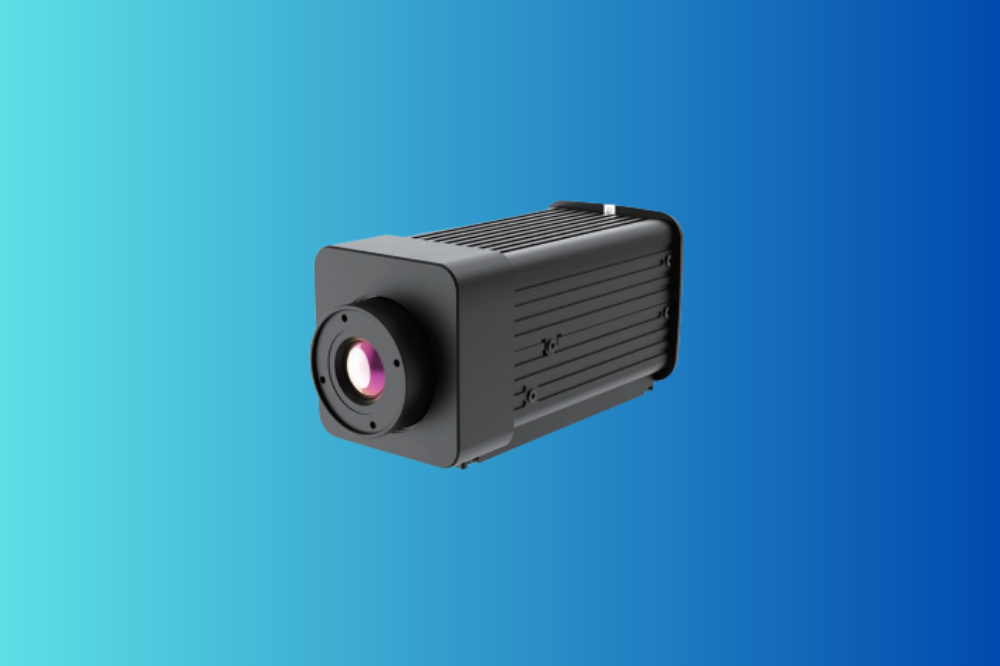
The moment you connect an industrial online thermal imaging system to a plant network, it stops being “just a camera” and becomes part of your cyber-physical infrastructure. Those cameras are now potential entry points into OT networks, potential sources of falsified data, and potential blind spots if an attacker disables them at the wrong time.
Table of Contents
ToggleAt the same time, plant managers and system integrators need remote access. Engineers must be able to review alarms from home, service teams need to diagnose issues without driving to site, and OEMs are often asked to support systems across countries. The challenge is to enable this flexibility without turning online thermal imaging into the weakest link in your cybersecurity posture.
This article looks at cybersecurity and remote access for industrial online thermal imaging systems from a practical, engineering-driven perspective. It is written for product managers, OT engineers, system integrators, and OEM/ODM buyers working with Chinese manufacturers of thermal imaging hardware and software.
Why cybersecurity matters for industrial online thermal imaging
Online thermal imaging started as a condition-monitoring tool: watch for hotspots, log temperatures, and raise alarms. In many plants it is now integrated with:
- SCADA and DCS systems
- Fire and gas detection
- Safety instrumented systems
- Remote control rooms or even central fleet monitoring centers
If those thermal images or temperature values are manipulated, operators might:
- Miss a real fire risk in a coal pile or silo.
- Overlook overheating in a transformer or switchgear cabinet.
- Take unnecessary shutdown actions based on false alarms.
Even worse, poorly secured cameras can act as stepping stones. Attackers often look for devices with default passwords, outdated firmware, or exposed web interfaces. Once compromised, they may use them to move laterally toward PLCs, controllers, or corporate networks.
In other words, your thermal imaging network has to be treated like any other OT subsystem: designed with security in mind from day one, and maintained securely for its entire lifecycle.
Threat landscape for online thermal imaging in OT networks
The threats facing an industrial online thermal imaging system are similar to those facing other networked OT devices, but with some specifics.
At the device level, unprotected cameras may be exposed through open HTTP interfaces, hard-coded passwords, or insecure RTSP streams. Attackers can view or manipulate live images, change configuration, or disable alarms altogether. In many older designs, video and temperature data are transmitted unencrypted, making it easier to intercept or inject malicious content.
At the network level, thermal systems are often connected to switches and routers shared with other OT equipment. If VLANs, firewalls, and access lists are not configured carefully, an attacker who gains access to one camera may gain a foothold in the broader OT network. Because thermal systems are sometimes viewed as “low criticality,” they may receive less scrutiny than protection relays or PLCs, which is exactly why they are attractive to attackers.
Remote access introduces another set of risks. Engineers may connect via unsecured VPNs, shared user accounts, or third-party remote support tools that bypass corporate controls. Cloud connectivity, where images and alarms are pushed to external servers, expands the attack surface further if not designed correctly.
Finally, supply-chain risks exist as well. Firmware containing vulnerabilities, weak cryptography, or undocumented backdoors can be shipped unintentionally by vendors who do not have mature security processes. B2B buyers should treat cybersecurity as a core part of the specification when choosing hardware, firmware, and software for their online thermal imaging projects.
Where the industrial online thermal imaging system sits in your architecture
In most plants, the thermal system sits in a middle layer between field devices and control systems.
At the bottom, cameras and sensors reside in production areas: substations, coal yards, silos, furnaces, or conveyor galleries. These devices connect to local switches, often using Ethernet with PoE. They may communicate directly with SCADA servers, video management systems, or dedicated analytics servers.
Above that, control rooms and central monitoring centers access thermal data over dedicated OT networks. Sometimes images are also mirrored to corporate networks so engineers can review events from their offices. Remote access can be provided via VPN gateways, jump hosts, or browser-based remote desktops.
Very rarely is it necessary for cameras themselves to talk directly to the internet. When you see designs where each camera has its own public IP address, you are looking at a serious red flag. A secure architecture tends to keep cameras on segmented, non-routable subnets, with well-defined gateways that enforce access control.
This is where online thermal imaging differs sharply from a consumer wireless thermal security camera plugged straight into Wi-Fi. Industrial systems should be treated as OT equipment, not as smart home gadgets.
Device-level security for industrial thermal imaging cameras
The first line of defense is the camera itself. Regardless of whether you use a compact thermal module or a full device, you should expect basic security features.
Authentication must be strong and configurable. Default passwords must be changed during commissioning, and user management should allow different roles (operators, engineers, administrators) with appropriate privileges. Access attempts should be logged so that suspicious patterns, such as repeated failures, can be detected.
Encryption is increasingly non-negotiable. Web interfaces should support HTTPS, not just HTTP, and streaming protocols should offer secure variants or be tunneled over secure channels. Even in closed OT networks, encryption protects against insider threats and accidental exposure.
Hardening the firmware is equally important. Unused services and ports should be disabled by default. Web UI, SSH, or Telnet access should be limited to what is necessary for operation and maintenance. If the camera offers an API, it should require authentication and, ideally, support token-based or certificate-based mechanisms rather than simple passwords.
Firmware updates must be manageable and trustworthy. B2B buyers should ask how updates are delivered, whether they are signed, and how rollback is handled in case of problems. A vendor that treats firmware updates casually is not a good choice for long-lived industrial installations.
Secure boot mechanisms, where available, ensure that only authenticated firmware images can run on the device. This adds another layer of protection against tampering, especially in remote or physically exposed locations.
Network segmentation and secure connectivity patterns
Once devices are hardened, the network must be designed to limit exposure and support secure remote access.
Segmentation is the foundation. Cameras and analytics servers should reside on dedicated OT VLANs, separated from business IT networks and from safety-critical devices such as protection relays or SIS controllers. Firewalls or layer-3 switches enforce strict rules about which systems can talk to which ports and protocols.
For example, cameras may be allowed to send video and temperature data to a central analytics server, but they may not accept incoming connections from arbitrary clients. Operator workstations access the analytics server rather than each camera directly. This model reduces the number of systems that need direct communication with field devices.
Remote access should go through well-defined gateways. Instead of opening camera ports to the internet, engineers connect to a secure VPN or jump host, authenticate strongly, and then access SCADA or analytics systems. Those systems, in turn, access cameras on the internal OT network according to predefined rules.
Monitoring and logging complete the picture. Network devices, servers, and cameras should generate logs that feed into a central system. Unusual patterns—such as a camera rebooting frequently or receiving configuration changes at odd hours—can be early indicators of an issue that deserves investigation.
Finally, redundancy must be considered. If security controls are implemented in a single gateway or server, that component becomes a single point of failure. Critical thermal monitoring systems should have redundant pathways and failover plans that preserve both safety and security.
Remote access without compromising security
Industrial users want remote access for good reasons: faster incident response, reduced travel, and OEM support. The challenge is doing it safely.
The safest pattern is to provide remote access at the application layer, not at the device layer. In practice, this means connecting to SCADA, historian, or thermal analytics servers via VPN, and using those applications to view data and manage alarms. Cameras remain on internal networks and are not directly exposed.
When device-level access is necessary—for example, to troubleshoot a specific camera—the same VPN or jump host can be used, but access should be tightly controlled and time-limited. It is good practice to require explicit approval for such sessions and to log every command executed during them.
Multi-factor authentication (MFA) is strongly recommended for any remote access path. Passwords alone are not sufficient protection for critical OT systems. Plant owners should integrate their thermal systems into existing identity and access management (IAM) frameworks where possible.
For OEM/ODM suppliers supporting multiple customers, remote access policies must be especially strict. Access should be customer-controlled, not vendor-controlled. This means the plant owner decides when a support tunnel can be opened and monitors its use. Long-lasting “always on” tunnels that bypass customer controls are dangerous and unnecessary for most use cases.
Wireless thermal security camera concepts in industrial contexts
The term wireless thermal security camera is often associated with consumer or perimeter security systems: Wi-Fi cameras streaming to NVRs or cloud services. In heavy industry, wireless connectivity can be useful, but it must be treated with caution.
In some layouts—such as temporary installations, remote conveyor sections, or mobile equipment—running cables is difficult. In these cases, a thermal camera may connect via industrial Wi-Fi, private LTE, or mesh networks. The security challenges are similar to wired systems, but with additional concerns:
Wireless links are more exposed to eavesdropping and interference. Encrypting traffic becomes essential, not optional. Strong authentication between endpoints is required to prevent rogue devices from joining the network.
Radio coverage must be planned carefully to avoid leaks beyond the intended area. Directional antennas, power control, and physical placement all play roles in reducing the risk of someone intercepting or injecting traffic from outside the facility.
Finally, wireless segments should still be part of the OT network design. They should connect to the same segmented structure and gateways as wired devices, rather than being treated as separate, ad-hoc systems. When integrated correctly, wireless thermal cameras can extend the reach of an industrial online thermal imaging system without creating unsupervised “back doors.”
Lifecycle security: from design to decommissioning
Cybersecurity for online thermal imaging is not a one-time configuration; it is a lifecycle process.
During design, engineers must define security requirements, perform risk assessments, and choose architectures that support segmentation and monitoring. This is the stage where you decide which devices can reach which systems, how remote access will work, and what standards (such as IEC 62443) you aim to follow.
During commissioning, default credentials are changed, logs are enabled, and firmware versions are checked against approved baselines. Tests should verify that unauthorized clients cannot access cameras, and that only expected ports are reachable from each network segment.
During operation, patch management, vulnerability monitoring, and log review become routine tasks. Cameras and servers should be included in regular security assessments. When vendor advisories announce vulnerabilities, plant owners must plan patch windows and risk mitigations.
Eventually, devices will reach end of life. Decommissioning must include secure data erasure and removal of any credentials or certificates associated with the system. Leaving old cameras on the network, even if they are no longer “used,” invites trouble.
Choosing a China industrial online thermal imaging system supplier with security in mind
Cybersecurity requirements have a direct impact on vendor selection. B2B buyers evaluating Chinese suppliers should look beyond specs like resolution or frame rate and ask questions about security design and processes.
One important aspect is module and device architecture. Vendors who offer OEM thermal imaging modules often have a clear separation between imaging cores, interface boards, and software layers. This modularity can make it easier to implement secure protocols, integrate with existing OT networks, and update firmware over time.
Another is development culture. A supplier that performs security testing, tracks vulnerabilities, and issues signed firmware updates demonstrates a mature approach. Documentation should explain how to configure secure passwords, enable encryption, and integrate the product into segmented networks.
Quality systems and export experience matter as well. A manufacturer that already serves safety-critical industries, and describes its processes in detail on its Manufacturing & Quality pages, is more likely to understand the regulatory and audit expectations around cybersecurity. For long-term projects, stable roadmaps and transparent communication about changes are equally important.
Finally, OEM/ODM cooperation models should explicitly include security. Contracts and technical specifications can define responsibilities for firmware maintenance, vulnerability disclosure, and remote support practices. This avoids misunderstandings later when security requirements evolve.
Gemin Optics as your OEM/ODM partner for secure thermal imaging
Gemin Optics is a China-based manufacturer focused on thermal imaging and rangefinding solutions for global B2B customers. Our portfolio spans compact modules, integrated devices, and application-specific systems for industrial monitoring, outdoor observation, and OEM integrations.
For industrial online thermal imaging system projects, we work with customers from architecture definition through pilot deployments and production rollouts. This includes advice on how to segment camera networks, select secure interfaces, and design remote access paths that fit existing OT and IT policies.
Our experience with OEM module integration—summarized on pages such as our thermal camera module documentation—and our manufacturing and quality systems give system integrators a reliable foundation. We see cybersecurity as part of product quality, not as an optional add-on.
For international partners, we offer engineering support, SDKs, and firmware roadmaps tailored to long-lived industrial deployments. We understand that a secure design today must be maintainable tomorrow and upgradable in the future.
FAQ: cybersecurity and remote access for industrial online thermal imaging systems
How critical is encryption for thermal imaging traffic on a closed OT network?
Even on a closed network, encryption protects against insider threats and unintended exposure through misconfigured switches or temporary connections. Encrypting web interfaces and control APIs is particularly important, as they often carry authentication data and configuration settings.
Can we safely expose a camera’s web interface to the internet if we use a strong password?
Direct exposure is strongly discouraged. Even strong passwords are vulnerable to brute force and credential reuse attacks. A safer pattern is to keep cameras on internal subnets and expose only hardened gateways or application servers, protected by VPNs and multi-factor authentication.
How should we think about remote access for OEM support?
Remote access should always be under the plant owner’s control. Time-limited VPN access, via a jump host or remote desktop into the control network, is safer than vendor-managed permanent tunnels. All actions should be logged and, where possible, supervised by local staff.
Do wireless thermal security cameras have a role in heavy industry?
They can, particularly for temporary installations or mobile equipment. However, they must be integrated into the same security framework as wired devices, with encrypted links, strong authentication, and proper network segmentation. Treat them as OT devices, not consumer gadgets.
How often should thermal cameras receive firmware updates?
Updates should be applied when vulnerabilities are disclosed or critical bugs are fixed, following a tested change-management process. “Set and forget” is not acceptable for devices connected to plant networks. OEM/ODM partners should provide clear guidance and signed firmware images.
What standards should we reference when specifying security for thermal imaging systems?
Many utilities and industrial sites use frameworks such as IEC 62443 for industrial automation and control systems, along with corporate IT security policies. Thermal imaging systems should be designed to fit within those frameworks, not as exceptions.
Work with a China industrial online thermal imaging system manufacturer you can trust
A well-designed industrial online thermal imaging system does more than watch for hotspots; it becomes a trusted part of your OT infrastructure. To achieve that, cybersecurity and remote access strategies must be integrated into the design from the first architecture sketch, not bolted on afterward.
As a China-based manufacturer with strong OEM/ODM capabilities, Gemin Optics helps integrators and end users build systems that are secure, maintainable, and aligned with modern OT security practices. If you are planning a new deployment or modernizing an existing installation, our team can support you in choosing the right modules, interfaces, and secure connectivity patterns.