
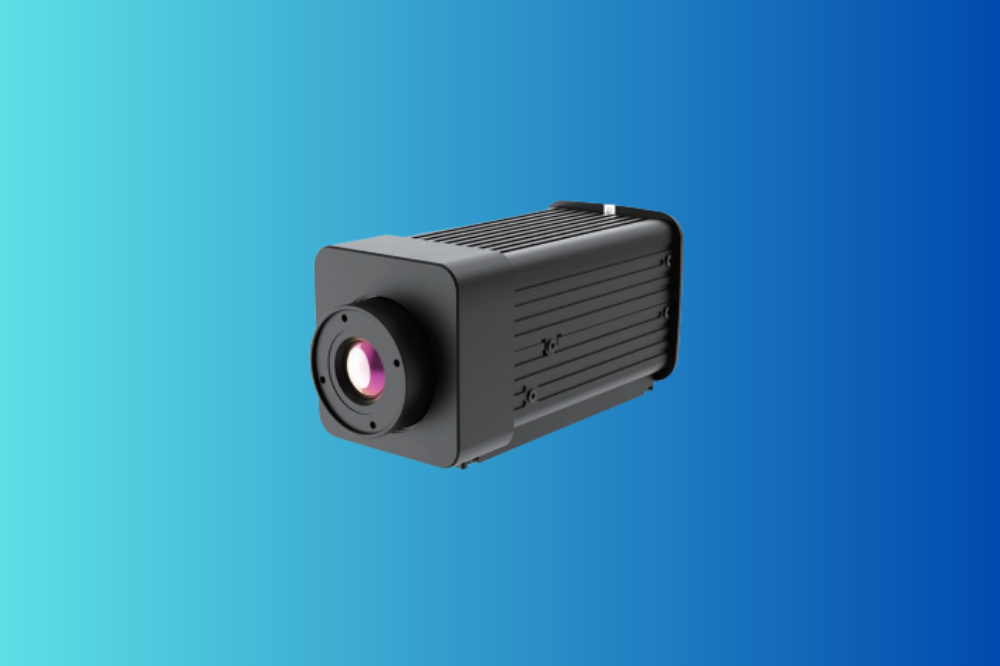
Industrial thermal camera technology has moved from a specialist tool to a core part of reliability and safety programs. Many utilities, factories, and process plants start with one or two handheld industrial thermal cameras for periodic inspections. After a few years, they face the same question:
Table of Contents
ToggleWhen do we move from handheld spot-checks to fixed, online thermal imaging systems that watch our assets 24/7?
This article answers that question from a B2B OEM/ODM and system integrator perspective. We explain what an industrial thermal imaging camera really is in an online context, which specs matter, how the migration path works, and how to choose a China manufacturer that can support the full journey—from basic thermal camera module to integrated online systems.
Industry pain points: where handheld industrial thermal cameras hit their limits
Handheld cameras are usually the first step into thermal technology. They are flexible, easy to deploy, and perfect for quick diagnostics. But as plants grow more complex and uptime targets increase, several structural pain points appear.
Labor, consistency, and missed events
Handheld inspections are route-based and people-dependent:
- Routes may be shortened when the plant is busy or understaffed.
- Inspectors do not always keep the same distance, angle, or emissivity settings.
- Measurements are periodic—weekly or monthly—not continuous.
Intermittent issues are easy to miss: loose electrical connections that only heat at peak load, bearings that overheat during start-up, or temperature spikes during batch transitions. The industrial thermal camera itself is accurate, but it can only see what the inspector looks at, at that moment.
Documentation, trending, and audit pressure
In many facilities, thermal images and reports are spread across laptops, USB drives, and email threads. This creates several problems:
- Difficult to compare current readings with those from 6–12 months ago.
- Hard to prove to insurers or regulators that inspections are systematic.
- No central view of risk level across multiple plants or countries.
As reliability programs mature, management increasingly asks for data, traces, and trend curves, not just one-off images in PDF reports.
Safety and physical access
Some assets are difficult or dangerous to reach:
- High-voltage switchgear and busbars
- Overhead transmission lines
- Kilns, furnaces, and hot process vessels
- Equipment located in explosive or corrosive atmospheres
Handheld inspections here may require shutdowns, scaffolding, or special work permits. The cost and risk of repeated manual access often justify investment in fixed industrial thermal imaging camera systems that can see the same assets continuously from a safe distance.
Online thermal imaging systems are typically introduced when these pain points turn into real business risk—production loss, safety incidents, or insurance pressure.
What is an industrial thermal camera in an online monitoring system?
Before talking about migration, we need a clear definition of the device at the heart of the system: the industrial thermal camera.
Working principle in simple terms
An industrial thermal imaging camera is built around an uncooled VOx microbolometer:
- A infrared-transparent lens focuses long-wave IR radiation (8–14 µm) onto the sensor.
- Each pixel changes resistance depending on the IR energy it receives.
- Readout electronics convert these changes into digital values.
- Calibration, non-uniformity correction (NUC), and temperature compensation algorithms turn this into a temperature map.
In many OEM projects, the core of the device is a compact thermal camera module combined with your own housing, optics, and system integration. The same core technology can be used for handheld devices, fixed cameras, or fusion systems with rangefinders.
From one handheld to a true thermal monitoring “system”
When plants “go online,” the architecture changes from one device to a distributed system:
- Edge devices: fixed industrial thermal cameras covering specific cabinets, furnaces, conveyors, or corridors.
- Network layer: Ethernet/PoE or industrial buses carrying video, temperature data, and alarms.
- Software: central servers or HMIs that display live images, store trends, and manage alarm thresholds.
- Integration: links into SCADA, DCS, PLCs, or safety interlocks for automated responses.
In many projects, the same supplier also provides thermal camera module integration expertise—how to mechanically mount, protect, and connect modules inside your own equipment. That role is reflected on Gemin’s dedicated thermal camera module integration page, which covers coupling to optics, housings, and industrial interfaces.
Handheld and online solutions are not mutually exclusive:
- Handheld devices remain ideal for troubleshooting and offline audits.
- Online systems watch the most critical assets continuously, generate alarms, and create a long-term temperature history.
Key specs, engineering trade-offs, and what B2B buyers should really look at
Once you install a fixed industrial thermal camera on a mast, inside a cabinet, or above a conveyor, you expect it to run for years. Choosing the right specification is therefore a long-term engineering decision, not just a one-time purchase.
Detector resolution and pixels on target
Common resolutions for industrial thermal imaging camera cores include:
- 256 × 192 – entry-level, good for simple hot/cold detection.
- 384 × 288 – mainstream choice for many industrial monitoring tasks.
- 640 × 512 – high detail, better for large areas or distant targets.
Instead of thinking only in resolution, think in pixels on target:
- A busbar joint might need at least 10 × 10 pixels to reliably see a small hotspot.
- A conveyor belt may be fine with fewer pixels if you only need gross over-temperature alarms.
Higher resolution improves detection granularity but increases cost, data rate, and storage. For many OEM and system integrator projects, 384 × 288 balances price and coverage.
NETD: seeing subtle temperature differences
NETD (Noise Equivalent Temperature Difference) indicates the smallest temperature difference the camera can resolve.
- ≤ 40 mK – suitable for low-contrast scenes and early-stage hotspot detection.
- ≤ 50–60 mK – acceptable for high-temperature or high-contrast processes.
For electrical inspections and data centers, better NETD helps detect small increases in temperature. In high-temperature industrial processes, NETD is less critical than correct range selection and calibration.
Optics, FOV, and stand-off distance
Lens selection is a major trade-off in every industrial thermal camera project:
- Wide FOV (e.g., 42°) – covers a room or cabinet at close range.
- Standard FOV (e.g., 25°) – balances coverage and detail.
- Telephoto (e.g., 9°–12°) – sees distant assets from a safe position.
The right choice depends on:
- Minimum and maximum distance to target
- Size of the object or area you must see
- Whether multiple hot spots can appear in the same scene
In many OEM configurations, the optics are selected together with the thermal camera module supplier to ensure the combination meets your spatial resolution requirements.
Temperature range, accuracy, and real-world factors
Most industrial thermal cameras offer two or more ranges, such as:
- –20 °C to 150 °C (low range)
- 0 °C to 550 °C (high range)
- Extended ranges for steel, glass, or cement processes
Typical accuracy specs are around ±2 °C or ±2% of reading. However, real-world accuracy depends heavily on:
- Emissivity and surface condition
- Reflections, especially on shiny metals
- Viewing angle and atmospheric conditions
A responsible China manufacturer will explain these limits clearly and help convert them into practical alarm thresholds, instead of pretending the camera can measure every surface with laboratory precision.
Calibration, drift, and NUC behavior
Sensor drift over time and temperature is unavoidable, so calibration strategy matters:
- Factory multi-point calibration against stable blackbody sources
- Internal temperature sensors for drift compensation
- Scheduled or automatic NUC operations (with or without mechanical shutters)
For online systems, you need to understand:
- How often NUC is required in continuous 24/7 operation
- What happens to the video stream during NUC
- How much drift to expect between calibrations
These questions should be part of your technical evaluation with any OEM supplier.
Firmware robustness, refresh rate, and latency
In online monitoring, the camera’s firmware design is just as important as its optics:
- Refresh rate (commonly 9 Hz, 25 Hz, or 30 Hz) defines how fast changes appear.
- Latency matters when the image is used in closed-loop control or safety logic.
- Alarm logic may run directly on the camera or in central software.
B2B buyers should ask for firmware roadmaps, SDKs, and release histories. A mature manufacturer that also produces high-volume outdoor devices (rifle scopes, thermal monoculars, etc.) usually brings that experience into industrial firmware reliability.
Ruggedness, IP rating, EMC, and manufacturing quality
Fixed industrial cameras live in hot, dusty, vibrating, and electrically noisy environments. Look for:
- IP66 or IP67 housing ratings where dust and water are present.
- Vibration resistance appropriate for motors, pumps, or moving machinery.
- EMC/EMI compliance with relevant IEC/EN standards.
This is where a manufacturer’s manufacturing & quality system makes a real difference. Gemin Optics outlines its approach on the Manufacturing & Quality page, covering production controls, testing, and traceability for export customers who need predictable performance across batches.
Interfaces, protocols, and integration ecosystem
Finally, no industrial thermal camera lives in isolation. Integration options may include:
- Ethernet/PoE with RTSP, HTTP, or proprietary protocols
- Industrial protocols such as Modbus/TCP or simple digital I/O alarms
- SDKs for Windows and Linux to build custom monitoring software
- Coupling with other sensors such as a laser rangefinder module or radar
Suppliers who understand both the thermal and system integration side can save you months of engineering time by providing example projects, configuration guides, and ready-made interface options.
Application scenarios and migration paths: from one camera to one system
Let’s look at how industrial thermal cameras are actually deployed when companies migrate from handheld to online monitoring.
Power distribution and substations
Starting point: technicians use handheld thermal cameras to inspect:
- MV/LV switchgear
- Busbars and cable terminations
- Transformers and disconnect switches
Migration path:
- Identify assets with a history of hotspots or high criticality.
- Install fixed industrial thermal imaging cameras on these points.
- Connect cameras to SCADA for alarms and trending.
Handheld cameras remain in use, but online systems cover critical components that cannot be allowed to fail without early warning.
Petrochemical and chemical plants
Starting point: periodic handheld inspections of:
- Furnaces, reformers, and flare systems
- Pumps, compressors, and rotating equipment
- Tank farms and pipe racks
Migration path:
- Prioritize areas where access is difficult or hazardous.
- Add fixed industrial thermal cameras in protective housings.
- Integrate temperature and alarm data into DCS or safety systems.
Here, explosion-protected housings and correct certification become key, strengthening the case for a structured OEM/ODM relationship with a China supplier that understands these requirements.
Industrial furnaces, kilns, and conveyors
Starting point: operators use handheld cameras to manually check:
- Kiln shells for refractory damage
- Furnace walls for insulation failure
- Conveyors and chutes for blockages or fires
Migration path:
- Install multiple fixed cameras along the kiln or conveyor path.
- Configure thermal zones and alarm thresholds for each area.
- Use the system to detect abnormal patterns long before flames or severe damage.
The same industrial thermal imaging camera technology can be deployed at different points in the process, but with different optics, ranges, and alarm logic.
Data centers and critical facilities
Starting point: facility teams use handheld cameras to inspect:
- UPS systems and PDUs
- Busbars and cable trays
- Server rows and in-row cooling equipment
Migration path:
- Define “no-compromise” areas where overheating must never be missed.
- Deploy fixed cameras aimed at these components.
- Feed alarms into BMS/DCIM platforms for rapid response.
Data center groups often standardize on a single industrial thermal camera platform across multiple locations, favoring manufacturers that can supply consistent hardware and firmware over many years.
How to choose a China industrial thermal camera manufacturer or OEM supplier
Choosing the right China-based partner is not only about price. For industrial applications, you are effectively choosing part of your long-term reliability strategy.
Engineering and customization capability
Check whether the supplier can:
- Offer different FOVs, lenses, and working distances.
- Adjust temperature ranges, ROIs, and alarm logic in firmware.
- Deliver bare modules, sealed cameras, and application-specific housings.
Suppliers who already provide rangefinder module integration and thermal camera module integration for other OEMs typically have more structured engineering processes and documentation.
Control over key components and design
Ask how much of the solution the supplier controls internally:
- Thermal sensor sourcing strategy and second-source plans
- Optics design and lens supply chain
- Firmware, ISP, and software development teams
Higher internal control reduces the risk of last-minute design changes or obsolescence that can break your own product plan.
QA/QC, traceability, and factory processes
Industrial customers should expect more than simple outgoing inspection:
- Calibrated test equipment and traceable blackbody standards
- Environmental and aging tests on a sampling plan
- Serial number traceability back to production and test data
Gemin Optics summarizes this on its Manufacturing & Quality page, giving buyers a transparent view of how export-grade thermal products are built and controlled.
Lifecycle, logistics, and service
Serious B2B buyers need clarity on:
- Expected product lifecycles and replacement policies
- Typical lead times for samples vs. volume orders
- MOQ thresholds for custom versions and private labels
- How warranty and after-sales service are handled globally
Manufacturers who already support international distributors and Why Choose Us–type OEM relationships tend to have more mature processes for global customers.
Gemin Optics as your OEM/ODM partner for industrial thermal cameras
Gemin Optics is a China-based manufacturer focused on thermal imaging technology across multiple product lines:
- OEM thermal camera module platforms
- Laser rangefinder module solutions, including fusion with thermal channels
- Hunting and outdoor devices such as thermal rifle scopes and monoculars
- Industrial thermal concepts built on the same core modules
Because these products share a common technology stack, OEM/ODM partners can create consistent portfolios that start with handheld devices and grow into online monitoring solutions.
From module to system: integration support
For OEMs and system integrators, Gemin Optics provides:
- Module-level guidance via dedicated thermal camera module integration and rangefinder module integration know-how.
- Thermal + LRF fusion options, as outlined on the thermal + LRF fusion & ballistics page, for projects that need both temperature imaging and distance information.
- Documentation, SDKs, and reference designs to shorten your engineering cycle.
This means you can start with a few handheld prototypes and later migrate to fixed industrial thermal camera installations without changing core suppliers.
Manufacturing, quality, and OEM/ODM mindset
Gemin Optics positions itself as a long-term OEM/ODM partner rather than a one-off product vendor:
- A documented quality system and calibrated test processes, described under Manufacturing & Quality.
- A transparent view of company background and milestones on the Company pages, which reassure overseas buyers about stability.
- OEM/ODM cooperation models, export experience, and value proposition summarized on Why Choose Us.
For B2B buyers, this combination reduces risk and simplifies internal approvals when choosing a Chinese industrial thermal camera manufacturer.
FAQ: B2B buyers’ most common questions about industrial thermal cameras
1. What detector resolution is recommended for an industrial thermal camera?
For many online monitoring systems, 384 × 288 offers a strong balance of cost, coverage, and detection capability. Use 640 × 512 when you need to monitor large areas, long distances, or very small objects. Lower resolutions can work in simple high-temperature or fire-detection scenarios.
2. How accurate is temperature measurement in industrial environments?
Most industrial thermal imaging cameras offer ±2 °C or ±2% of reading under standard calibration conditions. Real-world accuracy is influenced by emissivity, reflections, angle, and atmospheric conditions. It is usually better to design your system around trends and thresholds than to chase absolute laboratory accuracy.
3. Can Gemin Optics customize industrial thermal cameras for OEM/ODM projects?
Yes. Gemin Optics can customize optics, ranges, firmware, interfaces, and mechanics based on your requirements. Many projects start from a standard thermal camera module and then add application-specific housing, window materials, and communication protocols.
4. What interfaces are available for system integration?
Typical options include Ethernet/PoE, serial interfaces, and digital I/O, along with video and data protocols suitable for SCADA, DCS, and VMS integration. OEM customers also receive SDKs for tighter integration with proprietary software platforms.
5. How do I evaluate a China industrial thermal camera manufacturer?
Beyond price, evaluate: depth of engineering support, quality documentation, calibration processes, export track record, and the clarity of information on pages like Manufacturing & Quality and Why Choose Us. These elements tell you how seriously the supplier treats long-term B2B relationships.
6. What is the typical lead time and MOQ for OEM orders?
Lead times depend on customization level and order size. Standard modules can often be supplied faster than fully customized devices. MOQ requirements are discussed during the project definition phase; Gemin Optics aims to balance OEM flexibility with stable manufacturing batches.
7. Can these devices operate outdoors or in harsh environments?
Yes—provided the housing, window, and mounting are correctly selected. IP66/IP67 protection, suitable window materials, and corrosion-resistant mounts are typical for outdoor deployments. For explosive atmospheres or very aggressive environments, additional engineering and certification may be required.
8. How does warranty and after-sales service work for B2B buyers?
Industrial customers receive defined warranty terms and structured support channels. For complex OEM/ODM projects, Gemin Optics works directly with your engineering team to support validation, upgrades, and long-term maintenance.
CTA: work with a China industrial thermal camera manufacturer you can trust
Migrating from handheld spot-checks to online monitoring is not just a hardware upgrade; it is a change in how you manage risk, uptime, and safety. Choosing a reliable industrial thermal camera platform—and a Chinese manufacturer that understands OEM/ODM cooperation—is essential for success.
Gemin Optics offers:
- Proven thermal camera module platforms and integration know-how
- Structured QA systems described under Manufacturing & Quality
- A clear OEM/ODM value proposition on Why Choose Us
- Direct communication channels via the Contact page for engineering and commercial discussions
If you are planning an industrial thermal imaging camera project or upgrading from handheld inspections to online systems, contact our team to discuss your requirements and explore OEM/ODM collaboration. A single, well-chosen industrial thermal camera platform today can become the backbone of your full thermal monitoring strategy tomorrow.