In many projects, the hardest part of using an industrial thermal imaging camera is not the sensor or the optics. It is keeping the device alive in a place where people would never want to stand: above a steel ladle, next to a rotary kiln, on an offshore flare boom, inside a dusty cement plant, or in a desert substation.
Table of Contents
ToggleIntegrators often focus on detector resolution, NETD, and FOV. Then commissioning day comes and they discover that:
- Ambient temperature exceeds the camera’s spec.
- Dust or corrosive gases are destroying lenses and connectors.
- Sun, wind, or rain create condensation inside the housing.
This article explains how to specify enclosures and cooling for online thermal imaging cameras used in harsh industrial environments. We will look at common pitfalls, design trade-offs, and what B2B buyers should expect from a China OEM/ODM manufacturer—whether they are integrating their own systems or benchmarking against a flir industrial camera–type solution.
Industry pain points and market context
Cameras that fail before the process does
Unplanned downtime is costly. If the camera responsible for detecting hot spots fails first, it becomes a liability rather than a safeguard. Typical pain points include:
- Electronics overheating in summer or near hot process equipment.
- Housings cracking or deforming from thermal cycling.
- Cables and glands suffering from UV, oil, or chemical exposure.
Replacing cameras on towers, kilns, or offshore structures is expensive and risky. Engineering teams quickly realize that enclosure and cooling design are as critical as the camera itself.
Inadequate protection against dust, moisture, and chemicals
Industrial plants rarely offer clean, climate-controlled environments. Instead, cameras must survive:
- Cement dust, coal dust, or grain chaff.
- Salt spray and corrosive marine atmospheres.
- Acids, solvents, or hydrocarbons around process vessels.
An enclosure with the wrong IP rating or material can fail in months, even if the thermal core is high-end.
Ambiguous responsibilities between camera vendor and integrator
Another recurring issue: who is responsible for the enclosure and cooling solution?
- Some camera vendors provide only bare modules.
- Others supply “general purpose” housings that are not rated for the customer’s real conditions.
- System integrators may underestimate heat load or contamination risk.
Clear specifications and role definitions are needed so that the final industrial thermal imaging camera installation meets both performance and lifetime expectations.
What is an industrial thermal imaging camera in this context?
Working principle: the sensitive core you must protect
At the heart of every solution is an uncooled VOx microbolometer:
- The sensor is mounted on a PCB with readout electronics.
- Optics (often germanium or chalcogenide lenses) focus long-wave IR radiation on the sensor.
- Firmware performs non-uniformity correction, temperature compensation, and signal processing.
Most cores are designed to operate reliably only within a moderate internal temperature range (for example, –40 °C…+70 °C). Outside this window, noise, drift, or permanent damage may occur. The job of the enclosure and cooling system is to keep the core within this safe zone regardless of external conditions.
System architecture: from module to hardened field device
In a typical online monitoring system, the thermal camera node consists of:
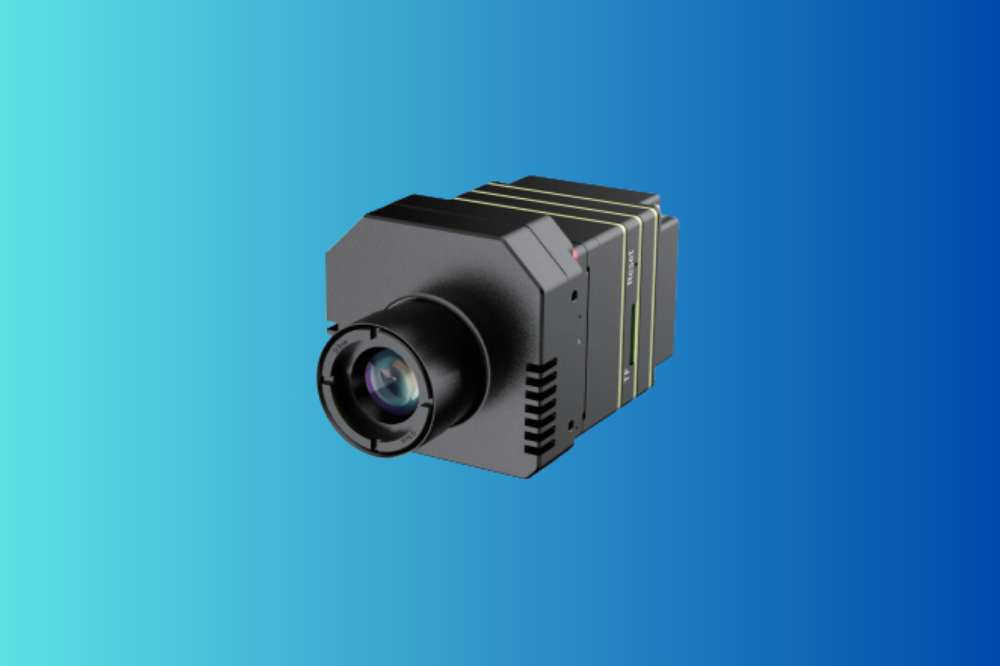
- Thermal core – a compact module similar to the thermal imaging modules used in many OEM products.
- Interface electronics – power management, network interfaces, I/O, and sometimes edge analytics.
- Mechanical enclosure – housing, window, seals, glands, and mounting hardware.
- Thermal management – conduction paths, sunshades, fans, heat exchangers, or active coolers.
The better these parts are designed as a whole, the more robust the final industrial thermal imaging camera will be in harsh environments.
Key specs and engineering trade-offs for enclosures and cooling
Environmental ratings: IP, IK, and temperature
The first specification to check is the environmental rating:
- IP66 / IP67 – protection against dust and powerful water jets (IP66) or temporary immersion (IP67).
- IK rating – impact resistance, relevant in areas with risk of mechanical knocks.
- Operating temperature – the allowable ambient range for the complete camera and housing.
Remember that the ambient temperature inside an enclosure can be much higher than outside, especially under direct sun or near hot process surfaces. A camera rated for +60 °C internal temperature may see ambients well above that unless cooling is planned.
Materials and corrosion resistance
Housing materials must match the environment:
- Stainless steel – common in food, chemical, and marine applications; good corrosion resistance but heavier and more expensive.
- Aluminum with proper coatings – lighter and with good thermal conductivity; requires high-quality anodizing or painting in corrosive atmospheres.
- Plastics or composites – sometimes used for light duty or non-sparking requirements, but less tolerant of high temperatures.
Fasteners, brackets, and glands must be selected with the same care; mixed metals can lead to galvanic corrosion, especially offshore.
Windows and optical considerations
The enclosure window is a critical interface between the harsh environment and the delicate lens:
- It must transmit long-wave IR efficiently (commonly germanium or IR-grade chalcogenide glass).
- It must survive mechanical impacts, cleaning cycles, and thermal shock.
- Anti-reflection coatings should be chosen for both optical performance and durability.
In dusty environments, air knives or protective shutters may be required to keep the window clean. If the camera compares to a flir industrial camera in specification, its window design must also be benchmarked for long-term stability.
Passive cooling: conduction, radiation, and shielding
Passive methods are preferred wherever possible because they require no moving parts:
- Conduction – designing the enclosure as a heat sink, with good thermal contact between the internal electronics and the housing walls.
- Radiation – surface finishes chosen to radiate heat efficiently to the environment.
- Natural convection – vertical fin structures that help hot air rise and cooler air replace it.
- Sunshields – physical shields or double roofs that block direct solar radiation, reducing internal temperatures dramatically.
When specifying a passive solution, engineers must calculate or simulate worst-case heat load: internal power consumption plus absorbed solar energy plus proximity to hot equipment.
Active cooling: fans, vortex coolers, and liquid systems
When passive measures are not sufficient, designers turn to active cooling:
- Internal fans – improve air circulation inside the housing; simple but require filters and maintenance.
- Vortex coolers – use compressed air to generate cold air streams; popular in very hot industrial settings, but increase utility consumption.
- Air-to-air or air-to-liquid heat exchangers – suitable for sealed enclosures where ambient air is too dirty to enter.
- Thermoelectric (Peltier) coolers – can precisely control internal temperature, but require careful design to manage condensation on cold surfaces.
Active cooling adds complexity, power consumption, and points of failure. It should be used only when justified by ambient conditions or camera requirements.
Power consumption and thermal budget
Every watt of power consumed inside the enclosure ends up as heat that must leave somehow. This includes:
- The industrial thermal imaging camera core.
- Interface electronics (network switches, PoE splitters, etc.).
- Any internal heaters, fans, or coolers.
During design, it is good practice to:
- Sum the worst-case power consumption of all internal components.
- Add a margin for future upgrades.
- Size enclosure cooling based on this total thermal budget.
EMC/EMI and safety considerations
In harsh industrial environments, thermal cameras may sit near high-current conductors, large motors, or radio equipment. The enclosure must support EMC performance:
- Shielding and grounding paths built into the mechanical design.
- Cable routing with attention to separation from noisy sources.
- Compliance with relevant IEC or regional standards.
In explosive atmospheres, ATEX or similar certifications for the complete camera and housing are required; this influences material, sealing, and cooling choices.
Application scenarios and enclosure strategies
Steel plants and foundries
Environment: radiant heat from ladles, furnaces, and slabs; flying sparks; scale and dust.
Strategy:
- Use robust metal housings with high-temperature seals.
- Place cameras where line-of-sight is good but radiant heat load is manageable; use sunshields and water-cooled jackets when necessary.
- Consider vortex cooling or air-purged housings for cameras that must be very close to hot surfaces.
Cement plants and kilns
Environment: heavy dust, vibration, and high ambient temperatures around kilns and coolers.
Strategy:
- Enclosures with IP66 ratings and dust-tight cable glands.
- Air purging or air knives to keep the window clear of dust.
- Passive cooling via finned housings on cooler structural points; active cooling near the hottest zones.
Petrochemical plants and refineries
Environment: flammable atmospheres, corrosive gases, and extreme weather.
Strategy:
- Explosion-proof or purged/pressurized housings according to zone classification.
- Stainless-steel structures and chemically resistant coatings.
- Careful selection of seals and windows to withstand hydrocarbons and solvents.
Offshore platforms and marine sites
Environment: salt spray, high winds, UV exposure, and vibration.
Strategy:
- Marine-grade stainless or coated aluminum housings with excellent corrosion protection.
- Double seals and desiccant systems to prevent moisture ingress.
- Mechanical designs that avoid standing water around seals and windows.
Desert substations and solar plants
Environment: intense sun, large temperature swings between day and night, and fine dust.
Strategy:
- Light-colored housings with sunshields and large passive heat-sink fins.
- IP66/67 sealing plus breathable membranes to handle pressure changes.
- Filters and labyrinths that minimize dust ingress without obstructing cooling paths.
Arctic or refrigerated areas
Environment: very low ambient temperatures and frequent condensation.
Strategy:
- Insulated housings with internal heaters to keep electronics and optics above their minimum temperature.
- Careful control of humidity inside the enclosure to prevent ice or condensation.
- Heated windows to stop frost from blocking the FOV.
How to choose a China industrial thermal imaging camera manufacturer or OEM supplier
Experience with harsh-environment deployments
Not every vendor that offers a high-resolution thermal core understands harsh-environment packaging. When selecting a China manufacturer:
- Ask for references in steel, cement, petrochemical, or marine projects.
- Request photos or drawings of previous enclosure designs.
- Evaluate whether they can discuss thermal modeling, not just catalog specs.
This is where benchmarking against established players like a flir industrial camera can help set expectations.
Engineering and customization ability
Harsh-environment projects almost always require some customization:
- Special brackets and orientation options.
- Unique window materials or coatings.
- Integration with customer-specific purging, cooling, or safety systems.
An OEM-focused supplier should be comfortable adapting its standard industrial thermal imaging camera platform for your layout, rather than forcing you into one fixed housing.
QA/QC for environmental performance
You are not just buying a device; you are buying confidence that it will survive. Check:
- Environmental testing procedures: temperature cycling, humidity, vibration, and ingress tests.
- Documentation of test results and acceptance criteria.
- How these processes are described in the company’s Manufacturing & Quality information.
A rigorous QA/QC system reduces the risk of unexpected failures in the field.
Lifecycle management and service
Harsh environments accelerate wear and tear. When working with an OEM/ODM supplier, you should discuss:
- Expected product lifecycles and component availability.
- Spare parts strategies: housings, windows, seals, and cooling components.
- Service options such as refurbishment or upgrade paths.
This is particularly important for large networks of industrial thermal imaging cameras where uniformity and long-term stability matter.
Gemin Optics as your OEM/ODM partner for industrial thermal imaging cameras
Gemin Optics is a China-based factory specializing in thermal imaging and rangefinding technologies for demanding B2B customers. Our portfolio includes:
- Compact thermal imaging modules for OEM integration.
- Laser rangefinder modules and fusion concepts for advanced sensing platforms.
- Complete devices designed for outdoor and industrial environments.
Engineering support from core to enclosure
For harsh-environment projects, we support partners with:
- Thermal and mechanical design guidance tailored to your application.
- Housings, windows, and cooling options suitable for high-temperature, dusty, marine, or cold climates.
- Firmware and integration support to ensure that enclosure and thermal design work hand-in-hand.
Because we operate as an OEM/ODM supplier, we can adapt our industrial thermal imaging camera platforms to your brand, standards, and installation practices.
Quality, traceability, and long-term cooperation
Our production and quality systems are built around export-grade requirements, with calibration, environmental testing, and traceability at their core. For industrial customers, this means:
- Consistent performance across batches.
- Clear documentation to support audits and safety cases.
- A stable foundation for long-term projects and wholesale distribution.
FAQ: Industrial thermal imaging camera enclosures and cooling
1. When do I need active cooling instead of passive housings?
You typically need active cooling when the worst-case ambient, plus solar and process heat, would push the internal temperature beyond the camera’s limit even with good passive design. Examples include cameras mounted near furnace doors or inside enclosed, unventilated spaces.
2. Can I use the same enclosure design indoors and outdoors?
Not always. Outdoor environments add solar loading, rain, wind, and often more aggressive contaminants. Indoor housings may lack sunshields, drainage paths, or corrosion-resistant materials required outdoors.
3. How do I avoid condensation on the window?
Use sealed housings with low internal humidity, possibly with desiccant or pressure-relief membranes. Avoid large, rapid temperature swings where possible. In cold climates, consider window heaters or controlled internal temperatures.
4. Are stainless-steel housings always better than aluminum?
Stainless steel offers superior corrosion resistance but is heavier and less efficient at conducting heat. Aluminum housings with high-quality coatings can offer better thermal performance at lower weight, provided the environment is compatible.
5. How does enclosure design affect calibration and accuracy?
If internal temperature varies too widely or exceeds the design limits, sensor drift and noise increase, and calibration may become invalid. A stable thermal environment inside the housing helps maintain accuracy and reduces recalibration needs.
6. Can Gemin Optics supply both camera cores and hardened housings?
Yes. As an OEM/ODM manufacturer, Gemin Optics can supply bare modules for your own housings or deliver integrated industrial thermal imaging camera assemblies with enclosures and cooling solutions designed for your environment.
7. What standards should I consider for harsh environments?
Common references include IP and IK ratings, IEC/EN EMC standards, and specific hazardous-area certifications where applicable. For marine or offshore applications, additional class society rules may apply.
Work with a China industrial thermal imaging camera manufacturer you can trust
In harsh environments, the success of an industrial thermal imaging camera project depends as much on enclosure and cooling design as on detector resolution or NETD. A well-engineered housing turns a sensitive thermal core into a rugged field instrument that delivers reliable data year after year.
As a China-based manufacturer with strong R&D and OEM/ODM capabilities, Gemin Optics can help you:
- Specify housings, windows, and cooling strategies tailored to your plant conditions.
- Integrate thermal cores into complete solutions that meet your mechanical, electrical, and safety requirements.
- Build scalable product lines and systems that compete with established benchmarks such as a flir industrial camera, while leveraging flexible Chinese manufacturing.
If you are planning a new project or upgrading existing installations, contact our team to discuss your enclosure and cooling requirements—and turn thermal imaging into a dependable asset even in the toughest environments.