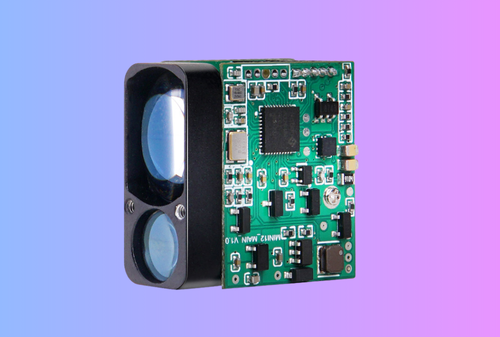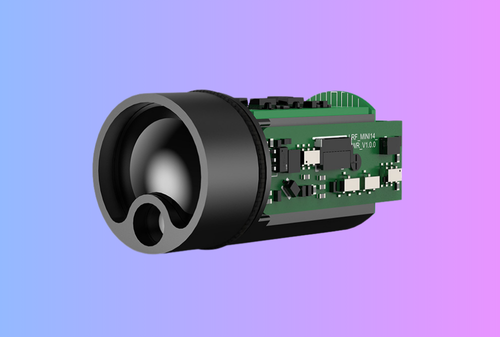
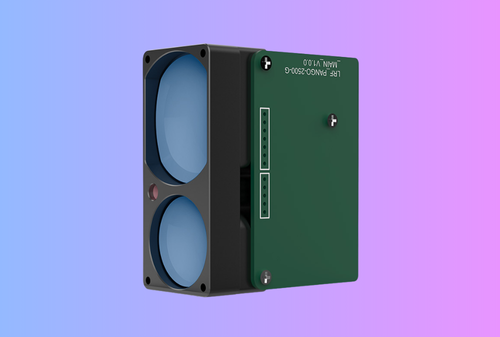
A laser rangefinder module boresight alignment guide is one of the most valuable technical references an OEM team can have, because many field performance complaints that look like “range instability” are actually alignment problems in disguise. A module may pass communication checks, power on normally, and even produce repeatable measurements in a controlled bench setup, yet still disappoint after integration because the laser emission path, the aiming reference, and the system optical axis are not truly aligned. When that happens, the product does not fail in a dramatic way. It fails by becoming harder to trust.
Table of Contents
ToggleThat kind of failure is especially expensive in B2B programs because it often appears late. The buyer may not notice it during early sample evaluation. The problem becomes visible only after the module is mounted behind a window, paired with a visible or thermal imaging channel, installed in a housing, subjected to fastening stress, or tested across distance and scene changes. Then the user reports that the range point “feels off,” that the aiming image and actual laser response do not match, or that accuracy seems to shift between units, temperatures, or build lots.
This is why boresight alignment should not be treated as a narrow optical detail. In an OEM laser rangefinder module project, it is a system-level control topic. It connects mechanics, optics, assembly, test strategy, pilot-build discipline, and long-term service behavior. A supplier or integrator that treats alignment casually may still ship working hardware, but it will struggle to ship consistent product confidence.
What boresight alignment really means in an OEM product
In practical OEM terms, boresight alignment describes the relationship between the laser rangefinder module’s effective measurement direction and the product’s intended aiming reference. That aiming reference may be a visible reticle, a camera centerline, a thermal image center, a crosshair, an electro-optical sight axis, or another defined system reference. The core question is simple: when the user believes the system is pointing at a certain target, is the laser actually interrogating that same target area?
That question becomes more complicated as soon as the rangefinder is no longer a stand-alone board on a bench. Once the module is integrated into a product, its output path is influenced by its own optical axis, its mechanical mounting relationship, the housing datum, any front window or protective aperture, and the alignment relationship to other sensing channels. At that point, boresight is not merely about one emitter. It is about geometric agreement across the product.
This is why “the module itself is accurate” is not enough as an engineering conclusion. A module can be internally stable and still create poor product behavior if the system axis is not controlled. Boresight alignment is therefore not a cosmetic tuning issue. It is part of what makes a laser rangefinder module usable inside an OEM device.
Why boresight matters so much in real applications
The cost of alignment error depends on the application, but in many real products it is one of the first things users notice. In handheld observation devices, the complaint may be that the product does not seem to measure the target the user intends. In electro-optical systems with imaging channels, the complaint may be that the response appears offset from the image center. In UAV payloads, surveying tools, targeting systems, PTZ products, or multi-sensor platforms, boresight error may reduce trust in every downstream function because range data is no longer clearly associated with the visible point of interest.
This becomes even more important at longer distance or smaller target size. A small angular offset can produce a large spatial miss at range. The farther the target, the more visible the misalignment becomes. Likewise, the smaller or more cluttered the target, the more likely it is that the laser beam will interrogate background or adjacent structures instead of the user’s intended object. In those cases, even a technically stable rangefinder can feel erratic because it is measuring the wrong part of the scene.
That is why alignment and target behavior are deeply connected. The earlier Laser Rangefinder Module Target Reflectivity and Background Interference Guide explains why scene complexity matters. Boresight control determines whether the system is even aimed at the intended scene region in the first place.
Optical axis, mechanical axis, and user axis are not automatically the same
One of the biggest sources of confusion in OEM projects is the assumption that all axes in the product naturally agree. In reality, a laser rangefinder product may contain several different “axes,” and they are not automatically identical.
The optical axis of the module refers to the effective emission or receiving geometry defined by the internal optical design. The mechanical axis refers to how the module is positioned relative to mounting surfaces, reference datums, and the product structure. The user axis refers to what the operator believes is the aiming direction, often defined by a display, reticle, camera image, or housing geometry. In a multi-sensor product, there may also be separate axes for the visible channel, thermal channel, and laser path.
These relationships need to be intentionally managed. A product can have a beautifully machined housing and still suffer boresight error if the internal module datum is not referenced properly. A camera can be centered in the UI and still disagree with the laser path if the optical stack is not aligned. A thermal image can be useful in general observation and still be a poor range-reference channel if the relative geometry between thermal and LRF was never controlled tightly enough.
The OEM team’s task is therefore not only to mount the module. It is to define which axis is the governing reference for the product and how other axes are brought into acceptable agreement with it.
Where boresight error usually comes from
In real builds, boresight error rarely comes from one dramatic mistake. More often it comes from the accumulation of small geometric and process deviations. A module may have normal internal tolerance. The mounting bracket may have its own tolerance. The housing datum may shift slightly. The front window may be installed with small angle error. The adhesive thickness may vary. The tightening sequence may introduce stress. The result is a product that is not catastrophically wrong, but not tightly aligned either.
This is why alignment should be viewed as a stack-up problem rather than a single-part problem. The product team should ask where angular error can enter the system and how it accumulates. The critical sources often include datum definition, bracket precision, screw position, torque sequence, adhesive cure behavior, seating repeatability, window wedge or tilt, and tolerance mismatch between optical and mechanical references.
The supplier and OEM buyer should also separate internal module boresight characteristics from product-level boresight behavior. A module may leave the supplier within its intended alignment state, yet become misaligned after the OEM integrates it into the final enclosure. When this distinction is not recognized, teams often blame the wrong part of the chain.
Mounting design is one of the strongest alignment decisions
A strong boresight outcome begins with mounting design. Many products create alignment difficulty because the module was given no truly stable datum relationship to the rest of the optical system. The mount may physically hold the module, but it does not constrain it with enough repeatability to preserve angular consistency across units.
For OEM teams, a good mount does more than secure the module against movement. It defines how the module seats, what surfaces control its position, how repeatable that seating is, and how much stress is introduced during assembly. In precision products, a mount that allows too much freedom before tightening may create lot-to-lot or operator-to-operator variation even if every part is technically “assembled correctly.”
This is why mount architecture should be reviewed with alignment in mind, not only with vibration or packaging in mind. Sometimes a simple datum improvement creates more boresight stability than a more expensive module change. Sometimes the mount looks rigid but actually transmits harmful stress into the module body or optical carrier. Sometimes the adjustment feature is present, but the locking method introduces drift later.
A mount should therefore be evaluated for repeatability, stress behavior, adjustment practicality where relevant, and long-term retention under environmental and handling conditions.
Front windows can shift more than performance
Most OEM teams already understand that front windows affect transmission, contamination behavior, and scene quality. What they sometimes underestimate is how strongly a front window can influence boresight and optical-axis confidence.
A protective window that is slightly tilted, wedged, poorly seated, or mechanically stressed can alter the effective outgoing or incoming optical path enough to matter in precision applications. Even when the shift is not large in absolute terms, it may still be large enough to affect small-target ranging at longer distance, or to create disagreement between the laser path and the user’s visual reference.
This is why front-window specification should not be isolated as a simple materials decision. The material, flatness, parallelism, mounting method, cleanliness control, and replacement procedure can all influence alignment stability. A window that is acceptable for general protection may not be acceptable for products where the laser and image axis need tight agreement.
This also explains why the earlier Laser Rangefinder Module Window Cleaning Guide connects directly to the current topic. Once the front window is treated as part of the final optical path, both contamination and geometry become alignment issues, not only maintenance issues.
Alignment is different from calibration, but the two are connected
Boresight alignment and calibration are related, but they are not identical. Alignment deals with geometric agreement between the laser path and the product reference axis. Calibration may involve correcting or compensating measurement behavior, confirming offsets, or storing system-specific parameters so the product behaves consistently.
In many OEM programs, these concepts become blurred. Teams may say a unit was “calibrated” when what they really mean is that the sight axis was adjusted. Or they may say alignment is fine because the product can be corrected in software. In practice, a sound product architecture should not rely on software to hide poor mechanical or optical alignment unless that strategy was intentional from the beginning and remains stable over environmental variation.
The cleaner approach is to first achieve a structurally sound boresight condition and then use calibration logic, where needed, to refine or preserve system behavior. This is exactly why the next article in your content line, Laser Rangefinder Module Factory Calibration vs Field Recalibration Guide, follows naturally after this one. The product must first define what geometric relationship it is trying to preserve before it can decide what calibration model is appropriate.
Thermal drift and mechanical stress can move alignment after assembly
A product may look well aligned at room temperature on the bench and still shift later because the assembly behaves differently under temperature change or mechanical stress. This is one of the reasons boresight error often appears late in development or only after field use.
Different materials expand differently. Brackets, housings, window retainers, adhesives, and module bodies may each respond to temperature in their own way. If the product has a constrained assembly stack, thermal change can introduce stress or subtle movement that shifts the effective optical relationship. Likewise, a fastening method that seems acceptable in the factory may create creeping distortion over time or after repeated temperature cycling.
This matters because alignment retention is often more important than one-time alignment achievement. A product that can be aligned once but cannot hold that state through normal use, shipping, or environmental cycling is not truly ready. OEM teams should therefore evaluate not only how boresight is set, but how it is retained.
This is also where pilot and validation work become meaningful. A controlled alignment result in engineering is only the start. The real question is whether that result survives real build flow and realistic operating conditions.
Shock, vibration, and handling retention deserve separate attention
Some products live in relatively gentle environments. Many do not. Handheld products, vehicle-mounted systems, UAV payloads, industrial platforms, and portable outdoor devices may all see shock, vibration, transport stress, and repeated handling. In those conditions, boresight retention becomes a durability issue as much as an optical one.
A product that loses alignment after transport or mild shock may not fail obvious electrical tests. It may simply become less trustworthy in use. That kind of degradation is costly because it often appears as a performance complaint rather than a simple service diagnosis. The user does not say “the axis shifted by a small angle.” The user says “the product is no longer consistent.”
For this reason, OEM teams should think about boresight retention as part of mechanical qualification. It is not enough to ask whether the module survives vibration electrically. The team should ask whether the product still points where it is supposed to point afterward.
Verification strategy should be practical and staged
A mature boresight strategy uses more than one verification moment. It does not rely on a single heroic alignment event in engineering and then hope that production will preserve it. Instead, the team should define what is verified at design stage, what is verified during pilot build, what is checked in production, and what is left to service troubleshooting only.
During engineering, the goal is to understand the geometry, sensitivity, and adjustment logic. During pilot, the goal is to prove that the intended alignment condition can be achieved repeatedly in realistic assembly flow. During production, the goal is usually to confirm that the product remains within the accepted boresight window without excessive cycle time or adjustment burden. In service, the goal is to determine whether a suspected field issue is actually an alignment problem and whether recalibration, reassembly, or replacement is the correct response.
This staged approach is critical because not every alignment test belongs at every stage. Production lines need efficient control, not exhaustive optical studies. But if the engineering and pilot stages did not generate a robust acceptance model, then production has nothing meaningful to protect.
Boresight criteria should be application-driven
One of the easiest mistakes in alignment planning is to use a vague pass/fail statement such as “laser and image should match well.” That is not a usable criterion. A boresight requirement must be tied to the product’s actual application, user expectation, target size, and working distance.
A close-range industrial ranging tool may tolerate different alignment error than a long-range targeting device. A product meant to interrogate large structures may accept different boresight behavior than a product intended for small isolated targets. A multi-sensor surveillance system may care more about channel agreement across the field than a simpler single-reference device.
That is why OEM teams should define boresight acceptance in terms of real use conditions. How much offset is acceptable at what range? Against what target size? Under what optical reference? Across what temperature or handling state? Without these answers, alignment review often becomes subjective.
The table below shows a practical way to think about the issue.
| Review question | Why it matters | Typical OEM concern |
|---|---|---|
| What is the reference axis? | Alignment cannot be controlled without a defined reference | Visible image, thermal image, crosshair, or mechanical axis |
| At what range is alignment judged? | Small angular error grows with distance | Product may look fine nearby but fail at real operating distance |
| What target size is assumed? | Small targets reveal offset faster | Product may miss intended target in clutter |
| What conditions must it survive? | Static alignment is not enough | Temperature, vibration, transport, and service handling |
| How is it checked in production? | Design intent must become release control | Repeatable fixture and clear pass/fail window |
Production control should protect alignment, not improvise it
A surprising number of products enter low-volume production with no truly disciplined boresight control. The engineering team knows how to align the unit, but the production flow is vague. Operators follow general visual guidance. Adjustment depends on experience. Locking methods vary. Final checks are informal. The product may still ship, but consistency suffers.
A stronger OEM program treats alignment-sensitive features as controlled build characteristics. The mount datum, window installation condition, fastening sequence, any adjustment step, and the final verification method should all be defined clearly enough that production can repeat them. The exact method will differ by product class. Some products are designed for fixed alignment with minimal adjustment. Others include a deliberate alignment step. But in both cases, the production flow should preserve the design logic, not replace it with operator improvisation.
This is where the Laser Rangefinder Module End-of-Line Test Strategy becomes highly relevant. EOL is not a substitute for good design, but it is the last controlled point where alignment-related escapes can be prevented from reaching the customer. A product that depends heavily on boresight confidence should reflect that reality in its production release logic.
Service and field support should distinguish misalignment from module failure
One reason boresight deserves its own article is that field misalignment is often misdiagnosed. Buyers and users report “wrong distance,” “unstable range,” or “poor accuracy,” while the underlying issue is that the laser path and user reference are no longer in agreement. If the service team treats every such complaint as a core module failure, the program will waste time and create the wrong corrective actions.
A better service model distinguishes among at least three possibilities. First, the module itself may have a true internal problem. Second, the product may have retained module function but lost alignment because of mounting shift, window change, service error, or mechanical stress. Third, the user may be encountering scene-selection error because the product is aligned only marginally and the target is small or cluttered.
This is why boresight knowledge should be part of failure screening, not only design documentation. It also explains why the future Laser Rangefinder Module Failure Analysis Guide for OEM Teams will connect naturally to this topic. Many “performance” complaints make sense only after alignment is reviewed.
OEM buyers should ask sharper questions during sourcing
Alignment capability is a useful supplier filter because it reveals whether the supplier thinks in system terms or only in part-number terms. A supplier that can discuss boresight only as an internal module characteristic may still be useful, but a supplier that can also discuss mounting assumptions, window effects, verification logic, and retention behavior usually offers stronger OEM support.
Useful buyer questions include these. What is the module’s internal alignment reference, and how should it be related to the product axis? What mounting datums are recommended? How sensitive is the system to window tilt or front-end geometry? What alignment verification method is recommended during pilot and production? What kind of retention behavior has been considered for transport, vibration, and temperature change? What service actions are most likely to disturb boresight?
These questions are valuable because they help the buyer separate nominal module capability from real integration stability.
Final thought
A laser rangefinder module boresight alignment and optical axis guide is really a guide to measurement trust. It explains why a product can be electrically healthy and still feel wrong in use, why small geometric errors become large field complaints, and why alignment belongs to the full OEM system rather than to the module alone.
For suppliers, this topic is a chance to demonstrate that they understand how the module behaves once it enters a real product. For OEM buyers, it is a way to reduce late-stage surprises, unstable pilot results, and misdiagnosed field returns. And for the product itself, boresight control is one of the clearest examples of the difference between “the hardware works” and “the finished product is truly dependable.”
FAQ
What is the difference between boresight alignment and calibration?
Boresight alignment is about geometric agreement between the laser path and the product reference axis. Calibration may refine or preserve system behavior, but it should not be used to hide fundamentally weak alignment architecture unless that was intentionally designed and validated.
Why can a small alignment error create a big field complaint?
Because angular offset grows into larger spatial miss at longer distance. The farther the target and the smaller the target area, the more obvious the disagreement becomes.
Can a front window affect boresight even if the module itself is stable?
Yes. Window tilt, wedge, mounting stress, contamination, or replacement variation can affect the final optical path enough to influence alignment confidence.
Should boresight be checked only in engineering?
No. Engineering should define the geometry and sensitivity, but pilot, production, and service should each have their own appropriate verification or screening logic.
CTA
If your OEM product needs stable agreement between the laser rangefinder path and the system aiming reference, boresight alignment should be reviewed together with mount design, front-window design, pilot verification, and production release control. You can discuss your project with our team through our contact page.
Related articles
You may also want to read:
- Laser Rangefinder Module Integration Checklist
- Laser Rangefinder Module Window Cleaning Guide
- Laser Rangefinder Module Pilot Build Readiness Checklist
- Laser Rangefinder Module End-of-Line Test Strategy