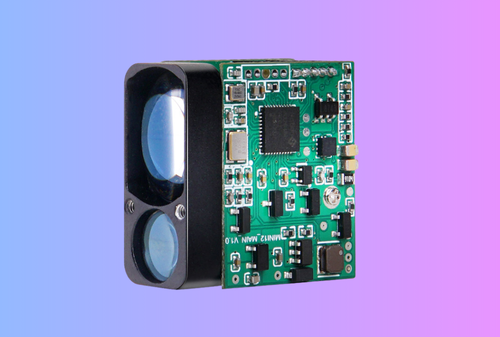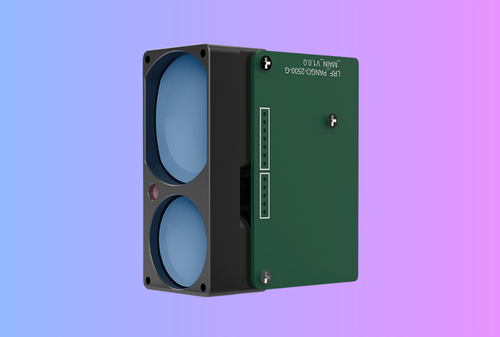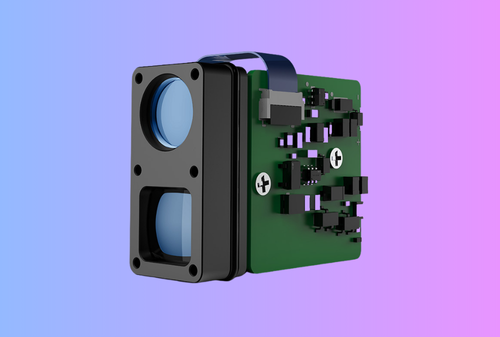
A laser rangefinder module can look accurate on a bench and still disappoint in a real product. That does not always mean the module is bad. More often, it means the team treated the quoted accuracy as a fixed property instead of as the result of an error budget. In OEM programs, range performance is rarely determined by one variable. It is the sum of optical, electrical, thermal, algorithmic, and integration choices that all move the final result. Your current LRF content already reflects this system view through pages on integration, beam divergence, power and EMI, mechanical alignment, troubleshooting, and acceptance planning. This article pulls those threads together into one engineering question: where does ranging error come from, and how should a buyer budget for it?
Table of Contents
ToggleFor OEM engineers, an error budget is not just a lab exercise. It is a design-control tool. It tells the team which error sources are inherent to the physics, which are created by the payload or host product, which can be calibrated, which must be prevented by design, and which only appear after the module is installed in a real system. Without that framework, teams often argue about “accuracy” in a vague way and end up overpaying for one variable while ignoring three others that matter just as much.
Why a published accuracy number is not the whole story
Datasheets are useful, but they compress reality. A quoted accuracy value is usually measured under bounded conditions: a certain target class, range band, reflectivity, optical setup, ambient environment, and host behavior. Once the module enters a real product, those conditions begin to move. Your product page already positions Gemin’s LRF modules as configurable by range, beam divergence, optics package, and interface, which is itself a clue that there is no single universal accuracy state. The integration page goes further by showing that beam path, mounting, interfaces, power budget, and validation all affect the final result.
That is why an error budget matters. It forces the team to stop asking “What is the module’s accuracy?” and start asking “Under our target type, optics, motion, timing, temperature, power, and alignment conditions, what accuracy can we realistically preserve?” Those are very different questions, and only the second one is useful in a commercial OEM project.
Start by separating specification error from application error
The cleanest way to think about LRF accuracy is to split the budget into two layers. The first layer is the module’s intrinsic measurement performance under defined conditions. The second layer is the application error introduced by the host product and the real operating scene.
Intrinsic performance includes the ranging engine, optics quality, receiver behavior, internal timing, firmware logic, and calibration state. Application error includes target reflectivity, background clutter, beam placement, co-boresight drift, power noise, temperature drift, timing mismatch, window contamination, and any software interpretation issues after the raw measurement is produced. This split aligns naturally with your existing article structure. The product and integration pages talk about configurable platform parameters, while your newer power, mechanical, interface, and environmental articles describe how the host system can either preserve or degrade those parameters.
A buyer that keeps these two layers separate makes better decisions. It avoids blaming the module for system problems, and it avoids assuming that a strong module can rescue weak integration. Both mistakes are common.
The most useful error-budget categories
For most OEM projects, the LRF error budget can be grouped into seven categories: target and scene effects, beam and optical-path effects, alignment effects, timing and firmware effects, electrical effects, temperature and environmental effects, and production variation. That grouping is not arbitrary. It mirrors the practical topics already visible across your LRF content stack, from beam divergence and DFM to troubleshooting, mechanical integration, power integrity, and environmental planning.
The reason this structure works is that it maps well to ownership. Optics and beam are usually shared between optical and system engineering. Alignment lives with mechanics and calibration. Timing and protocol belong to embedded integration. Electrical stability belongs to hardware and system power design. Environmental drift belongs to validation and materials strategy. Production variation belongs to manufacturing engineering and supplier control. When an error-budget article is organized this way, it becomes actionable instead of academic.
Target reflectivity is one of the biggest hidden error sources
One of the most misunderstood LRF variables is target reflectivity. Buyers often think in terms of distance first and target type second, but the ranging engine experiences the opposite. It “sees” return energy and signal quality, not the buyer’s marketing name for the target. A bright cooperative target, a dark roof surface, vegetation, rough concrete, water, or mixed foreground-background geometry do not produce equivalent returns even at the same nominal distance. Your beam-divergence article already explains that spot size, energy density, and background confusion are tightly linked. The troubleshooting article also points to reflectivity assumptions as a cause of intermittent no-return behavior, especially in moving or complex scenes.
This matters because reflectivity does not merely affect whether the module returns a result. It also affects where the uncertainty sits. A weak or messy return can increase jitter, promote wrong-target selection, or reduce the confidence of any downstream filtered value. That means a serious buyer should budget not only for nominal accuracy on a cooperative target, but for degraded confidence on the worst realistic surfaces in the actual application.
Background clutter can distort a good measurement
In field use, the target is rarely isolated. Trees, brush, sloped terrain, rails, wires, rooftops, and water can all sit inside or near the effective beam spot, especially at longer range. Your beam-divergence article states clearly that divergence determines spot size and how easily the receiver confuses the intended target with background. That is not just a detection problem. It is an error-budget problem, because a return may still be produced even when it is not the return the operator thought they asked for.
This is why error budgeting should include not only “no return” scenarios but also wrong-return scenarios. In many commercial systems, a plausible but wrong answer is more dangerous than no answer, because the user continues acting on it. This is especially relevant in products that fuse LRF output with thermal imagery, ballistic logic, robotics, or UAV workflows, where the system may appear intelligent while using the wrong range context.
Beam divergence changes the whole budget
Beam divergence deserves its own place in the error budget because it directly changes target selectivity, energy density, operator forgiveness, and scene ambiguity. Your dedicated Gemin article on beam divergence is already a strong foundation here. It explains that divergence determines spot size and therefore how much energy reaches the target and how much background may get mixed into the return.
A narrower beam can improve target discrimination and reduce some clutter risks, but it can also make the system less forgiving of motion, wobble, or alignment mismatch. A wider beam can feel easier to use in some handheld or unstable contexts, but it increases the chance that the return includes unintended structures. This is why beam divergence should not be treated as a spec-sheet detail. It is one of the parameters that reshapes the entire accuracy budget. In many projects, teams try to solve a background-selection problem with firmware after they have already accepted the wrong optical budget.
Alignment error often looks like measurement error
A very large share of real-world LRF “accuracy complaints” are actually alignment complaints. The module may still measure the distance to where it is pointing, but the host product is no longer pointing where the user thinks it is. Your recent mechanical integration guide makes this issue explicit by framing boresight as a controlled engineering outcome, not a cosmetic calibration step. The eye-safe guide and ballistic/thermal scope content also reinforce that parallax, recoil shift, thermal movement, and mounting discipline all affect whether the measured distance corresponds to the intended target.
That makes alignment a core line item in the error budget. It is not enough to budget for the module’s internal range precision. You must also budget for how far the host optical axis, reticle, display cue, or line-of-sight reference may drift relative to the beam. In practical projects, this is one of the most important distinctions between a module that is accurate in isolation and a system that is accurate in use.
Window and optical-path losses belong in the budget
Once the LRF is installed in a real product, the beam and return paths are no longer living in ideal air. They pass through windows, coatings, seals, brackets, and contamination risk. Your mechanical-integration article already makes the point that the window is part of the optical-mechanical system. The DFM article reinforces that aperture, diffuser strategy, and tolerance stack can affect both safety margin and process capability.
For an error budget, that means two things. First, the optical path can reduce signal margin through loss, reflection, or contamination. Second, the window stack can alter beam geometry or alignment enough to change which target is effectively being measured. A good buyer will therefore treat the host optical path as part of the ranging budget and not assume the module’s bench performance survives unchanged behind a finished enclosure.
Timing and protocol errors can create spatial error
Teams often think of timing as a software issue rather than an accuracy issue. That is a mistake in any moving system. Your ROS 2 and MAVLink time-sync article says directly that timestamp errors of only a few milliseconds can create meaningful fused-perception and mapping drift. The troubleshooting article also references delayed overlays and motion-related timing problems in fast-moving systems.
This belongs in the error budget because a delayed but otherwise correct range can still be wrong for the scene the system is currently displaying or logging. In a static bench setup that error may appear invisible. In a UAV, robotics, surveying, or fused-sensor product, it becomes real spatial error. A mature budget therefore includes timing uncertainty, state-freshness handling, trigger behavior, and the host’s ability to know whether the reported range is current enough to trust.
Power noise often masquerades as ranging instability
Your recent LRF power-and-EMI guide makes an important point: many “algorithm problems” are actually electrical problems. A rail that sags, injects noise, or behaves poorly during startup or concurrent system activity can make a good module look unstable.
In an error budget, electrical instability usually shows up as one of three things. It can reduce measurement consistency, it can promote intermittent communication or state errors, or it can move the system into marginal behavior that is difficult to reproduce. The practical consequence is that power integrity is not only a reliability topic. It is an accuracy-preservation topic. If the buyer does not control supply behavior, current return paths, and interface integrity, the final range output may drift or jitter for reasons that will never appear in the module’s standalone datasheet.
Temperature changes both the signal path and the geometry
Temperature belongs in the error budget for at least two reasons. First, receiver behavior, bias conditions, and internal gain control can shift with temperature. Your DFM article specifically references APD bias, temperature control, and LUT-based compensation as ways to cut unit-to-unit variability and false alarms. The eye-safe guide also warns that improper APD biasing and temperature drift can increase noise.
Second, temperature changes geometry. Your mechanical-integration article already explains that different materials in the host stack expand differently and can move the alignment relationship even while the module itself still functions. The environmental-test-plan article then extends that logic into qualification planning.
This means temperature error is not a single line item. It is usually a combined term that includes detector or receiver sensitivity shift, optical or window behavior shift, and mechanical boresight shift. Buyers who only test hot/cold power-up without checking drift are not really closing this part of the budget.
Firmware modes influence the perceived accuracy budget
Your firmware-modes guide already shows that first-target, last-target, and scan behavior change how the module interprets a scene. That belongs directly in an error-budget discussion because the module may be consistent inside one mode and still create a very different user impression in another.
For example, if the buyer expects nearest-surface logic but the module or host product effectively favors another return, the system can appear inaccurate even when the underlying time-of-flight engine is healthy. This is why mode behavior, validity flags, and user-facing interpretation should be budgeted conceptually along with physical error sources. In a modern OEM product, “accuracy” is partly a question of what distance the system has decided is the correct one to report.
Production variation is part of the accuracy budget too
A team can fully understand the physics and still lose the product during manufacturing if the process cannot hold the design intent. Your DFM article is especially relevant here. It discusses diffuser strategy, aperture tolerances, pulse-energy and PRF limits, and APD-bias control in the context of yield and process capability. The quality and documentation-focused content on your site also reinforces controlled process, traceability, and revision discipline as part of OEM support.
That means production variation deserves a dedicated place in the error budget. It includes unit-to-unit alignment spread, optical-path spread, electronic calibration spread, and the possibility that process drift quietly moves the module away from the conditions under which the original accuracy estimate was generated. A good error-budget article should therefore not end with engineering validation. It should ask whether the factory can preserve the same budget in pilot run and volume production.
How to build a practical OEM error budget
The most useful error budgets are not excessively mathematical at the beginning. They start as structured engineering tables. A team should list each major error source, decide whether it is random or systematic, note whether it is intrinsic to the module or introduced by the host product, estimate its likely contribution at the intended operating condition, and define whether it will be handled by design, calibration, firmware, or acceptance criteria. That same approach fits naturally with your integration checklist and acceptance-test-plan content, both of which are built around stage-gated engineering decisions rather than lab theory alone.
At early sample stage, the budget may be coarse. At engineering stage, it should become more explicit and be linked to beam choice, optics, power architecture, and mechanical design. By DVT or pilot stage, it should be validated against real host assemblies and real acceptance logic. That path is also consistent with your rangefinder integration page, which frames evaluation, pilot build, and production enablement as connected stages.
A simple working template
One practical way to document the budget is like this:
| Error source | Typical question | Owner | Control method |
|---|---|---|---|
| Target reflectivity | Will dark, angled, wet, or mixed targets reduce confidence? | System / application | Real-target testing, mode tuning, acceptance limits |
| Beam divergence | Is the spot too wide or too narrow for the use case? | Optics / system | Divergence selection, optical review |
| Alignment | Is the beam still measuring what the operator thinks it is? | Mechanical / calibration | Datum strategy, boresight verification |
| Timing | Is the reported range current enough for the scene or metadata? | Embedded / system | Sync, trigger, timestamps, protocol validation |
| Power / EMI | Does the rail or harness create jitter or intermittent behavior? | Hardware / system | Rail design, filtering, harness review |
| Temperature | Do gain, geometry, or windows drift with temperature? | Validation / mechanical / EE | Thermal test, compensation, material control |
| Production variation | Can the factory preserve the validated setup? | Manufacturing / quality | DFM, EOL control, traceability |
This kind of table works well because it turns a vague accuracy conversation into a design conversation. It also creates a clean path into future articles such as end-of-line strategy or reflectivity/background-interference guidance, which are natural next steps after an error-budget guide.
Common buyer mistakes
The first mistake is treating datasheet accuracy as if it were final product accuracy. Your site structure as a whole already argues against that by emphasizing integration, optics, mechanics, power, validation, and documentation.
The second mistake is blaming the module for wrong-target selection caused by beam geometry or clutter. Your beam-divergence and troubleshooting articles both suggest how often scene conditions are the real culprit.
The third mistake is treating alignment as a calibration-only issue instead of part of the accuracy budget. Your mechanical guide shows why that is wrong.
The fourth mistake is excluding timing and metadata freshness from the budget in moving systems. Your ROS 2/MAVLink article directly demonstrates why that can create meters of downstream drift.
The fifth mistake is validating only engineering samples and assuming the factory will naturally preserve the same result. Your DFM and quality-oriented content argue strongly against that assumption.
Conclusion
A laser rangefinder module error budget is one of the most useful ways to move an OEM project from generic accuracy discussion to controlled engineering. It helps the buyer understand which uncertainties are inherent, which are introduced by the host product, which can be calibrated, and which must be designed out before pilot build. Most importantly, it prevents teams from over-trusting a single bench number and underestimating how beam, reflectivity, alignment, timing, power, temperature, and manufacturing together shape the final result. That makes this topic a strong next article after your current integration, mechanical, power, acceptance, and environmental pieces.
FAQ
What is an error budget for a laser rangefinder module?
It is a structured way to break final ranging uncertainty into separate contributors such as target reflectivity, beam divergence, alignment, timing, power integrity, temperature, and production variation.
Is the module’s datasheet accuracy enough for OEM design?
Usually not. The datasheet reflects bounded conditions, while the real product adds host-level optical, mechanical, electrical, thermal, and timing effects.
Why is beam divergence part of the error budget?
Because it changes spot size, energy density, and background confusion, which in turn affect both return quality and wrong-target risk.
Can timing really affect range accuracy?
Yes in any moving or fused system. A delayed but otherwise correct range can become spatially wrong if the scene or platform has moved.
Why include production variation in an error budget?
Because process spread in optics, alignment, APD bias, and assembly can move the delivered product away from the validated sample state.
CTA
If your team is evaluating an LRF platform for a real OEM product, do not stop at the quoted accuracy line. Start with the Laser Rangefinder Module platform page, then review the Rangefinder Module Integration path and related articles on beam divergence, mechanical integration, power and EMI, and environmental validation. Then map your own target types, optics, timing, and validation flow into a real error budget before you freeze the design.
Related Articles
- Laser Rangefinder Module
- Rangefinder Module Integration
- What Is Beam Divergence and Why It Limits Range
- Laser Rangefinder Module Mechanical Integration and Alignment Guide
- Laser Rangefinder Module Power and EMI Design
- Laser Rangefinder Module Environmental Test Plan
- Laser Rangefinder Module Acceptance Test Plan
- Laser Rangefinder Module Troubleshooting: 20 Issues & Fixes
- ROS 2 & MAVLink Time Sync for Laser Rangefinder Modules