Laser Rangefinder Module: Eye-Safe Design & Compliance Guide
Lead: If you build or integrate a Laser Rangefinder Module, Class 1 eye-safety isn’t just a regulatory checkbox—it shapes optical design, algorithm choices, BOM, and ROI. This compliance-first guide shows OEM/ODM product teams and integrators how to engineer eye-safe ranging without sacrificing performance, then ship with confidence in US/EU/global markets.
Table of Contents
ToggleExecutive Summary
- Design for Class 1 (or 1M) from day one. IEC 60825-1 classification drives wavelength, divergence, pulse energy, and enclosure choices; retrofitting later is costly.
- Pick wavelength strategically. 905 nm (Si APD) is cost-efficient; 1535/1550 nm (InGaAs APD) enables higher eye-safe power and often longer range when tuned well.
- Engineer safety margins. Choose beam-shaping optics, AEL guards, watchdogs, and “fail-dark” firmware to protect Class 1 status (especially in multi-emitter arrays).
- Validate like you certify. Build a metrology loop—radiometry, divergence, and safety aperture measurements—then confirm Class 1 in pre-compliance before CE/FCC/RoHS submissions.
- Show the business case. With the market growing ~7–15% CAGR, eye-safe, integration-ready modules reduce legal risk and accelerate channel onboarding.
Use Cases & Buyer Scenarios
UAV payloads that must be eye-safe over crowds
Design for flights over people and urban VLOS/BVLOS trials. A Class 1 or 1M Laser Rangefinder Module reduces operational risk and eases approvals for public-facing demos. Pairing with a Thermal camera module enables day/night mapping, target confirmation, and precise slant-range for geotagging.
Internal link: Explore our Laser Rangefinder Module and Thermal camera module options.
Hunting/outdoor optics where user comfort and compliance matter
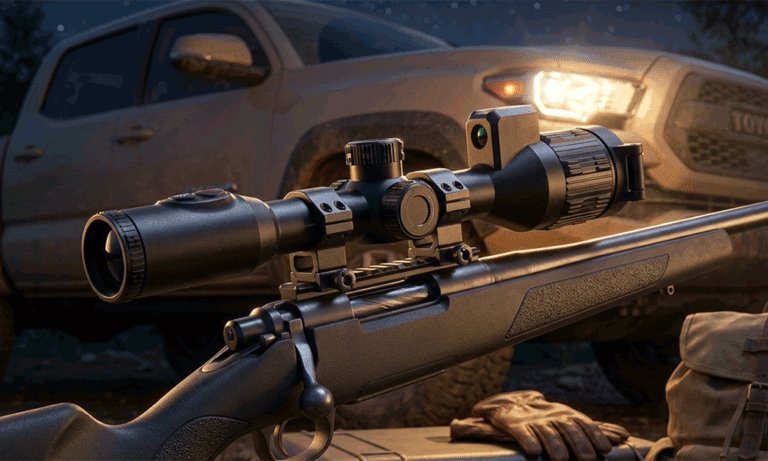
For Thermal Rifle Scopes, Thermal Monoculars and Thermal Binoculars, eye-safe ranging lets brands add ballistic or distance-to-target readouts without intimidating safety labeling. Class 1 messaging also reduces retailer hesitation.
Industrial/security systems deployed near staff and visitors
Gate automation, perimeter surveillance, or tower-mounted sensors benefit from continuous ranging. Eye-safe modules minimize site restrictions, while the design also tolerates third-party optics (e.g., protective windows) without breaching the AEL.
Spec & Selection Guide
Key parameters, why they matter, and trade-offs
-
Wavelength (905 vs 1535/1550 nm). 905 nm supports lower-cost Si APDs but faces stricter eye-safety AEL limits within the retinal hazard band (400–1400 nm). 1535/1550 nm lies outside the most sensitive retinal region, allowing higher eye-safe energy and often longer practical range; requires InGaAs detector and careful cost control.
-
Beam divergence / spot size. Larger divergence spreads energy to meet Class 1 limits but dilutes irradiance on target; balance with optics quality and spot shaping.
-
Pulse energy & PRF. Higher energy improves SNR; PRF interacts with motion, velocity gating, and ambient light rejection. Both are bounded by AEL and thermal limits.
-
Receiver & bandwidth. APD gain, TIA noise, and bandwidth should match pulse width and range targets; narrowband optical filters reduce solar background.
-
Ranging algorithm. Leading-edge vs constant-fraction vs matched filter DSP; multi-return detection improves through-foliage and wire hits.
-
Interfaces & compute. UART/CAN/USB/MAVLink plus time-sync for fusion; optional on-module MCU/DSP offloads host.
-
Power & thermal. Define average vs peak; thermal design protects detector bias stability and laser lifetime.
Quick comparison (conceptual examples, configurable per SKU)
| Parameter | 905 nm Class 1 LRF | 1535/1550 nm Class 1 LRF |
|---|---|---|
| Detector | Si APD (lower cost) | InGaAs APD (higher sensitivity cost) |
| Eye-safe power budget | Lower AEL margin (retinal band) | Higher AEL margin → higher peak power possible |
| Typical divergence | 1–3 mrad (adjustable) | 0.5–2 mrad (eye-safe with higher power) |
| Practical range (man-size target)* | 1–2 km | 2–4 km (similar optics & detector class) |
| Ambient rejection | Good with NIR filters | Lower solar background; robust with narrow filters |
| BOM trend | Lower emitter & detector cost | Detector cost declining; better at long range |
*Representative; actual performance depends on optics, algorithm, target reflectivity, and atmospheric conditions.
Decision rules
If target ranges ≤1.5 km AND cost/size constrained → choose 905 nm.
Else if long range >2 km OR crowd-facing operations → choose 1535/1550 nm.
If optics window, aiming channel, or clip-on stack present → increase divergence or add diffuser to stay Class 1.
If high fog/dust site → keep PRF moderate, add matched filtering and multi-return logic.
Integration & Engineering Notes
Electrical & Interfaces (UART/USB/CAN/MAVLink/SDK)
-
Provide deterministic timestamps and sync in/out for sensor fusion with IMU/thermal/video.
-
Offer MAVLink distance_sensor and custom messages for status (signal strength, return count, temperature).
-
Over-current and over-temp interlocks tied to firmware “safe state” prevent emissions above AEL on fault.
-
SDK hooks: range, SNR, return histogram, self-test, firmware update, and Class 1 guard status.
Optics & Mechanics (mounting, alignment, recoil, sealing)
-
Maintain boresight within ±0.1–0.3° across temperature and recoil; use dowel-pin or V-groove datums.
-
Prefer aspheric collimators or diffractive diffusers to tune divergence without hot spots; validate with beam profiler.
-
Environmental: IP66/67 gasket stack-ups, low-outgassing adhesives, anti-fog coatings on windows; avoid stray reflections that could tighten beam and violate the safety aperture.
Related device families frequently paired with LRFs: Thermal Clip-On Sight for day-scope ranging, and Thermal Pistol Sights in compact setups.
Firmware/ISP/Tuning (AGC, palettes, fusion, ranging algorithm)
-
Signal conditioning: adaptive threshold + constant-fraction discriminator; reject multipath via width and slope metrics.
-
Atmospherics: dynamic PRF and pulse averaging; gate by expected TOF window to raise SNR in fog or haze.
-
Fusion: overlay range onto thermal stream for target cueing (AGC and palette choice affect user readability).
-
Safety watchdog: periodic energy calibration; if bias drifts, auto-derate or disable emission (“fail-dark”).
Testing & Validation (bench → field, acceptance criteria)
-
Bench: radiometric power through the IEC safety aperture; divergence mapping at 95% encircled energy; timing jitter; thermal drift.
-
Range tunnel: calibrated targets (Lambertian + retroreflector), multiple returns, false-alarm rate vs background.
-
Field: detection/recognition/ID distance logs; fog/rain trials; UAV flight logs with GPS-time cross-checks.
-
Acceptance: Class 1 verification, MTBF extrapolation, shock/vibe, drop, and operating altitude/temperature.
Compliance, Export & Certifications
-
Laser safety: Design to IEC 60825-1 Class 1/1M; Class 1 means safe under all conditions of normal use (including typical magnifying optics as specified). Label product per class, wavelength, and invisible-laser warnings.
-
Retinal-hazard region: 400–1400 nm passes to retina; choose optics and power accordingly (905 nm is within this band; 1550 nm is outside the most sensitive retinal range).
-
EMC/EMI: CE/UKCA and FCC Part 15 for digital emissions; plan shielding for APD/TIA.
-
RoHS/REACH: Material declarations; Pb-free soldering profiles.
-
Export control: Some long-range modules and combined thermal+LRF systems can be considered dual-use; your use case and country determine licensing.
-
Warranty & service: Publish MTBF, service intervals, and RMA flows on your site.
Business Model, MOQ & Lead Time (OEM/ODM)
-
Sampling: EVT samples in 2–4 weeks for standard optics; custom divergence in 4–6 weeks.
-
MOQ: 50–200 pcs typical for standard SKUs; 300+ for custom optics or housings.
-
Mass production: 6–10 weeks ARO after design freeze; include time for compliance mark printing and traceability labels.
-
Private label & kits: Laser-engraved logos, brand-colored bezels, and kit-packing with cables/brackets/manuals to speed your line build.
-
Documentation: Interface guides, safety labels, and pre-filled DoC templates ease CE/FCC filings.
Simple distributor ROI (example)
| Item | Value |
|---|---|
| Purchase price (ex-works) | $220 |
| Landed cost (duty+freight) | $15 |
| Channel MSRP | $449 |
| Gross margin | ~$214 |
| Annual unit volume | 800 |
| Gross profit before SG&A | ~$171k |
Assumes standard 905 nm Class 1 module; adjust per SKU and region.
Pitfalls, Benchmarks & QA
Common mistakes—and how to avoid them
-
Treating eye-safety last. Selecting emitter/optics first often forces Class 3R/3B; start with Class 1 budgets and design margins.
-
Ignoring magnifying optics. Day scopes, clip-ons, or windows can concentrate beams; validate through the IEC safety aperture and with realistic accessories.
-
Over-optimistic range claims. Quote detection at 50% reflectivity and state weather assumptions; provide lab + field logs.
-
No watchdog to “fail-dark.” Temperature or driver faults can over-emit; firmware must shut down emission safely.
-
Improper APD biasing. Gain drift with temperature increases noise; add NTC feedback and calibration LUTs.
-
Under-filtered receivers. Narrow your optical bandpass and electrical bandwidth to fight solar background.
-
Skipping boresight verification. Thermal or recoil shifts create ranging parallax errors on combined optics.
Field benchmarks (how to read specs)
-
Detection (target present), recognition (classify as human/vehicle), identification (specific type).
-
Report each distance under clear and adverse conditions; for LRFs, also give retroreflector range vs Lambertian target and false-alarm rate (FAR).
FAQs
1) Is 1535/1550 nm always better than 905 nm?
No. 1550 nm allows higher eye-safe energy (good for long range), but detector and optics costs can be higher. For sub-1.5 km and tight budgets, 905 nm remains excellent.
2) What’s the practical meaning of Class 1 vs 1M?
Class 1 is safe under normal use; 1M is safe unless viewed with magnifying optics. If your device might sit behind scopes or telescopes, design and label accordingly.
3) How do you verify Class 1 in production?
We measure emitted power through the IEC safety aperture, confirm divergence, and maintain SPC charts; firmware AEL guards are tested at temperature extremes.
4) Can I overlay range onto thermal video?
Yes—our modules expose SNR/return meta so your Thermal Monoculars or Thermal Binoculars can draw stable reticles and display distance without clutter.
5) What about regulations in the US/EU?
IEC 60825-1 classification with correct labels, CE/FCC EMC, and RoHS; some high-performance models may be dual-use and require export checks.
6) How fast can I go from sample to pilot?
Typical: 4–8 weeks including mount design, boresight jigs, and SDK integration; add compliance label artwork approval.
7) Is the market growing?
Yes. Analysts estimate the laser rangefinder market at ~$1.3–3.2 B in 2024 with ~7–15% CAGR into the 2030s—strong for OEMs with differentiated modules.
Call-to-Action (CTA)
Ready to build an eye-safe, integration-ready Laser Rangefinder Module into your platform? Share your range, optical stack, and interface needs—we’ll propose a Class 1-compliant design and sample plan. If you’re a distributor, ask about private-label kits and demo bundles for your launch regions.