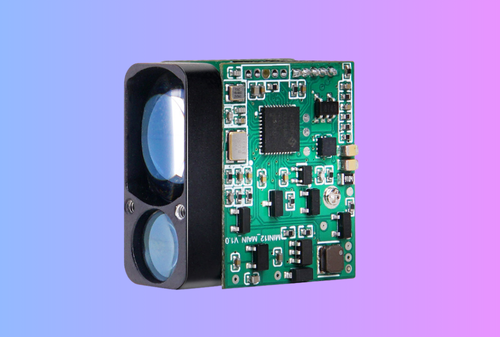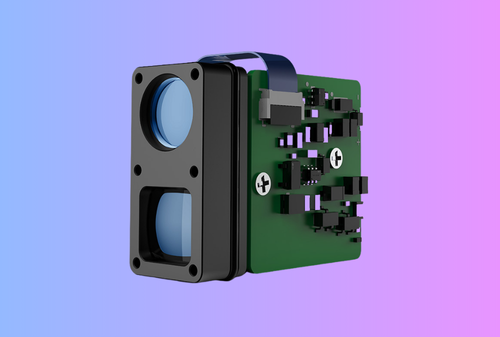
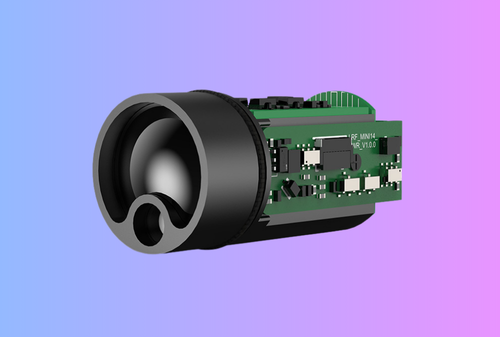
A laser rangefinder module for utility and powerline inspection is never valuable simply because it can output a distance number. In a real OEM inspection platform, the module becomes useful only when that distance information helps the operator or the system do something better: verify clearance, identify the correct asset, improve inspection efficiency, support image interpretation, or reduce ambiguity in the field. That is why utility and powerline inspection applications place a very specific kind of demand on a laser rangefinder module. The module is often expected to work on small, thin, elevated, partially cluttered, and geometrically awkward targets while operating inside a platform that may also contain visible imaging, thermal imaging, pan-tilt mechanics, UAV payload structure, vehicle power, or handheld field electronics.
Table of Contents
ToggleThis makes the inspection vertical especially interesting for OEM teams. The technical value is high because accurate and well-integrated ranging can directly improve the usefulness of the platform. But it is also a demanding vertical because many of the targets are not ideal ranging targets. Conductors, insulators, towers, clamps, connectors, crossarms, and substation structures create scenes in which the target of interest is often small relative to the laser footprint, visually complex, or surrounded by stronger background returns. In such products, a good-looking bench demo means very little unless the module remains useful in real inspection geometry.
That is why utility and powerline applications should be treated as a system-integration problem, not as a simple sensor-selection problem. The right question is not only “what is the maximum ranging capability?” The more valuable question is “how reliably can the rangefinder support inspection decisions in real field conditions, on real utility assets, within the actual workflow of the inspection platform?”
Why utility and powerline inspection is a special use case
Utility and powerline inspection differs from many other laser rangefinder applications because the targets are often structurally narrow, visually layered, and operationally safety-sensitive. A product used for this vertical may be trying to interrogate a conductor, an insulator string, a fitting, a tower member, a splice, a connector area, or a thermal anomaly location identified in another channel. These are not large, cooperative, flat targets. They are often thin, elevated, reflective in some parts, dark in others, and surrounded by background structures or terrain.
This creates a very different measurement context than generic “distance to object” use cases. The system is not merely ranging to the presence of a target. It is often trying to range to the correct feature on a complex asset. A small miss in boresight, beam placement, or target interpretation can therefore make the distance operationally misleading even when the module output is technically valid.
Another reason this vertical is special is that inspection platforms are diverse. Some systems are mounted on UAVs. Some are carried by field teams. Some are installed in vehicle-based or mast-based observation systems. Some are integrated into electro-optical inspection payloads with visible and thermal channels. Each of these product types introduces different power, EMI, alignment, vibration, and workflow demands. That means the same laser rangefinder module can perform very differently depending on how it is packaged and used.
What utility buyers actually care about
Many OEM teams assume that utility buyers mainly care about long distance. Distance matters, but it is rarely the whole buying logic. In most inspection projects, the buyer cares more about whether the rangefinder helps the operator or platform interpret the right asset feature with less uncertainty.
In practice, this means utility buyers often care about whether the module can support accurate targeting on small or narrow objects, whether it remains aligned with the imaging channel, whether it behaves predictably near cluttered structures, whether it integrates cleanly into the host platform, and whether it remains stable in real field use. They also care about maintainability. Inspection tools are expected to work reliably across repeated field deployment, not just in a one-time demonstration.
This is why utility buyers tend to value engineering discipline more than brochure numbers. They want to know whether the supplier understands fine-target geometry, multi-sensor alignment, power integrity, front-window effects, environmental retention, and service diagnosis. The module becomes valuable when it improves inspection confidence, not when it merely produces a large-range headline.
Small targets are the central challenge in powerline inspection
One of the biggest technical challenges in utility inspection is that many targets of interest are small relative to the beam footprint. Conductors, insulator components, fittings, jumpers, and detailed structure features do not behave like a large painted wall or a cooperative target board. Even if the operator can see the exact point of interest clearly through the camera, the laser footprint at range may illuminate both the intended target and the surrounding background.
This has major implications. The measured return may come partly or mostly from a background structure, terrain, tower member, or adjacent object rather than the exact small feature the user had in mind. In some cases, the target may be too narrow or too angle-sensitive to dominate the return consistently. As a result, the product may appear unstable or “inaccurate” when the deeper issue is that the laser is not interrogating only the intended feature.
This is why powerline inspection is one of the clearest examples of why target size and beam geometry matter. The module must be evaluated against realistic inspection features, not just generic range references. And the OEM team must decide what level of precision the user truly expects. In some workflows, ranging to the asset structure broadly is acceptable. In others, the user expects the system to correspond to a very specific point.
Utility scenes are often cluttered scenes
Small targets are only part of the challenge. Utility inspection scenes are also usually cluttered scenes. A conductor may sit against terrain, sky, trees, or a tower structure. An insulator assembly may be visually clear but surrounded by metal hardware. A thermal hotspot may appear on a component that is physically close to several other reflective or structural surfaces. A line may cross a background with significant depth variation.
This means the laser rangefinder module must often operate in exactly the kinds of scenes where background interference becomes meaningful. Even if the operator knows what they are looking at, the module still has to interact with the full optical scene, not just the mentally selected point. If the product does not account for this, then user trust erodes quickly. The system may still return a number, but the user may no longer believe that number belongs to the intended inspection feature.
This is why the earlier Laser Rangefinder Module Target Reflectivity and Background Interference Guide is especially relevant in this vertical. Utility inspection is not a clean-target application. It is a complex-scene application.
Thermal and visible channels usually matter as much as the rangefinder
In many utility and powerline inspection products, the laser rangefinder module is not the primary sensing channel. The operator often finds the target first through a visible image, a thermal image, or a fused interpretation of both. The rangefinder then adds context, confirmation, or measurement support. That means the rangefinder’s value depends heavily on how well it relates to the imaging channels.
If the operator uses thermal imagery to identify a hotspot on a connector or insulator, the rangefinder must support that workflow by remaining meaningfully aligned with the thermal or visible reference. If the module is slightly off-axis, the returned distance may belong to a nearby structure rather than the thermally interesting point. If the imaging channels and the laser path are not kept in controlled agreement, the product becomes harder to trust precisely when the inspection task becomes more demanding.
This is why utility inspection products should be reviewed as multi-sensor systems. The question is not only whether the rangefinder can measure. The question is whether the rangefinder can measure the same thing the operator believes they are inspecting.
Boresight alignment is critical when the target is thin
Boresight is important in almost every ranging product, but in powerline inspection it becomes especially critical because the targets are so often thin or geometrically selective. A small angular mismatch that might be acceptable in a broad-area application can become very visible in a powerline system when the user is aiming at a conductor, clamp, or insulator component.
This means that alignment cannot be treated as a one-time setup detail. The optical axis of the module, the visible or thermal channel, and the user’s aiming reference all need to remain in useful agreement. If the system loses that agreement after transport, vibration, service, or temperature change, then the product will quickly feel unreliable even if the module itself still functions.
That is why the earlier Laser Rangefinder Module Boresight Alignment Guide is particularly applicable here. In a utility inspection platform, boresight is not only about geometric neatness. It is a condition for making the distance information operationally meaningful.
UAV-based inspection changes the integration problem
A large share of modern utility inspection work involves UAVs or drone-mounted payloads. This changes the rangefinder integration problem significantly. The module may now sit inside a payload constrained by weight, power, space, vibration, thermal limits, and platform motion. The product may operate while the airframe is moving, while stabilization is active, and while the operator is using a gimbal view to inspect narrow features at distance.
In these systems, the laser rangefinder module must fit into a much tighter integration envelope. Power quality may be less forgiving. EMI from motors, ESCs, radios, and onboard processing may be more relevant. Mechanical retention and cable routing become more sensitive. Boresight between the laser path and the camera line of sight becomes even more important because the inspection target is often small and the platform is dynamic.
This is why OEM teams should not assume that a module proven in a static bench product will behave the same way in a UAV inspection payload. Airborne platforms tend to amplify integration weaknesses that were not obvious earlier.
EMI, EMC, and grounding can affect inspection reliability
Utility inspection platforms, especially those mounted on vehicles or UAVs, often operate in electrically noisy environments. The product itself may contain radios, processors, video links, displays, switching regulators, battery systems, and gimbal electronics. In some applications, the platform also works near high-voltage infrastructure, where the broader electromagnetic environment may not be trivial.
This does not automatically mean the rangefinder will fail, but it does mean the OEM team should pay close attention to power integrity, cable routing, shielding, and ground structure. A laser rangefinder module that appears to behave unpredictably may in fact be reacting to electrical-environment weakness rather than optical weakness. Intermittent communication, resets, timing instability, or mode-sensitive behavior should therefore always be reviewed with EMC in mind.
This is exactly why the earlier Laser Rangefinder Module EMI and EMC Guide matters in this vertical. Inspection reliability depends not only on optics and software, but on whether the module is given a clean enough electrical environment to behave consistently.
Front-window behavior still matters in inspection products
Even in utility inspection systems, the laser rangefinder module often operates behind a protective window or front cover. This is true in vehicle systems, portable field devices, and UAV payloads. That means the front-end optical path remains a critical part of the final product behavior.
In inspection work, front-window issues can be particularly misleading because many tasks already involve difficult target geometry. If the window introduces contamination, haze, tilt, or reflection-related weakness, the user may interpret the resulting inconsistency as a problem with the target, the module, or the alignment. In reality, the front-end optical path may already be degrading the product’s usable signal margin.
This is why window material, mounting, coating choice, cleaning compatibility, and service handling all matter here as well. The earlier Laser Rangefinder Module Window Cleaning Guide is directly applicable because inspection platforms often spend long periods in field conditions and may not always be cleaned by specialists.
Accuracy should be defined by inspection workflow, not abstract expectation
One of the most common sources of confusion in utility projects is that “accuracy” is used too broadly. Some users mean true ranging accuracy under controlled conditions. Others mean whether the system is pointing at the intended feature. Others mean whether the distance output is stable enough to support inspection interpretation. If these meanings are not separated, the team can end up arguing about the wrong problem.
For utility inspection products, it is usually better to define useful accuracy in relation to workflow. Does the module help identify the right span, structure, or asset zone? Does it help the operator understand stand-off distance or relative feature depth? Does it support more confident inspection decisions in thermal and visible channels? These are the practical questions that make range data valuable.
A product may have very good internal measurement performance and still be weak in workflow usefulness if the target geometry, boresight, or scene complexity was never considered properly. Conversely, a product that is not designed for extreme precision on a tiny feature may still be highly valuable if it reliably supports the real inspection task it was built for.
Calibration and field verification should remain disciplined
Utility teams often like the idea of field recalibration, especially when platforms work in remote locations and downtime is costly. But as with many other OEM products, broad field recalibration is not automatically the best answer. In many cases, the more mature strategy is controlled factory calibration combined with strong field verification and structured service escalation.
This is especially important in inspection products because many issues that look like calibration drift are actually caused by boresight change, window degradation, power instability, or target-scene difficulty. If the product allows too much uncontrolled field adjustment, the line between real drift and other faults becomes blurred. That weakens service clarity instead of improving it.
This is why the earlier Laser Rangefinder Module Calibration Guide remains highly relevant here. Utility products need clear boundaries between what should remain factory-controlled and what may be verified or restored in controlled service conditions.
Environmental retention still matters, even outside coastal use
Although powerline inspection is not the same as maritime use, it still places strong environmental demands on the product. UAV payloads, vehicle-mounted systems, and outdoor inspection tools may all face dust, sun exposure, rain, temperature swing, condensation, and long deployment cycles. These conditions affect not only the module but the whole system relationship around it.
For OEM teams, this means that environmental testing should be linked to functional retention, not just survival. Can the system still align properly after transport and cycling? Does the front window remain usable? Does cable routing remain stable? Does the module still behave predictably after exposure? Does the mounting structure preserve boresight confidence over time?
This is where the logic behind the Laser Rangefinder Module Environmental Test Plan continues to matter. The real question is not simply whether the product comes back on. The real question is whether it still supports confident inspection after environmental exposure.
Production control matters because inspection users notice inconsistency fast
Utility inspection users often work comparatively close to the operational limits of the product. They may inspect small features, difficult scenes, or thermal anomalies that require the operator to trust what the system is telling them. Because of that, inconsistency across units becomes very noticeable. A product line where one unit behaves cleanly and another feels uncertain will quickly lose credibility with professional users.
This is why production discipline is particularly important. Module revision, firmware state, alignment logic, window specification, outgoing verification, and traceability all need to remain under control. The product should not rely on a single excellent pilot build. It should produce repeatable field behavior across units and lots.
This is where the earlier Laser Rangefinder Module End-of-Line Test Strategy and Laser Rangefinder Module Pilot Build Readiness Checklist directly support this vertical. Inspection buyers usually value repeatability and supportability more than they value a one-time engineering demo.
Service and failure screening should be planned for real inspection complaints
Inspection products generate a very particular kind of field complaint. Users rarely say only “it failed.” More often they say the measured distance does not seem to match the point of interest, or the result feels inconsistent on certain assets, or the system behaves differently after transport or maintenance. These are failure-analysis-heavy complaints, not simple on/off failures.
That is why utility and powerline inspection products need a strong service-screening model. The team should be able to separate scene-related limitations, boresight problems, optical-path degradation, EMC-related instability, and real module-origin faults. Without that structure, every complaint becomes a suspected module defect and service cost rises without improving understanding.
This is exactly why the earlier Laser Rangefinder Module Failure Analysis Guide is so important to this vertical. Inspection products do not only need to work. They need to remain diagnosable when the field says something feels wrong.
What OEM buyers should ask suppliers for this application
A buyer sourcing a laser rangefinder module for utility and powerline inspection should ask more than generic range and interface questions. Useful questions include these. How does the supplier recommend handling small-target geometry? How should the module be aligned to visible or thermal channels? What front-window assumptions are most important? What EMC precautions matter most in UAV or vehicle-based systems? How should the product distinguish between scene difficulty and real module faults? What level of field verification is recommended? What production controls are most important to maintain inspection usefulness?
These questions help reveal whether the supplier understands the operational nature of utility inspection or only the nominal characteristics of the module.
A practical review framework for utility and powerline inspection
Many OEM teams find it useful to structure this application before design freeze.
| Review area | What the OEM team should confirm | Why it matters |
|---|---|---|
| Small-target behavior | Module is evaluated on realistic inspection features | Thin assets behave very differently from large reference targets |
| Multi-sensor alignment | Laser path agrees with visible and/or thermal reference | Inspection workflow depends on targeting confidence |
| Electrical environment | Power, grounding, shielding, and routing are robust | UAV and vehicle platforms can be electrically noisy |
| Front-end optical path | Window and housing preserve usable optical margin | Field contamination quickly affects difficult scenes |
| Environmental retention | Product keeps alignment and function after field exposure | Outdoor use stresses the full platform over time |
| Production control | Alignment, version, and EOL logic remain consistent | Professional users notice lot-to-lot inconsistency quickly |
| Service workflow | Failure screening separates scene, alignment, and module issues | Reduces noisy RMA and weak diagnosis |
This type of framework helps the team review the module as part of an inspection platform rather than as a stand-alone distance component.
Final thought
A laser rangefinder module for utility and powerline inspection should be selected and integrated as a workflow-enabling subsystem, not as a generic distance sensor. In this vertical, the module creates value only when it supports confident inspection of real utility assets, under realistic geometry, inside a multi-sensor platform, and across the electrical, environmental, and service realities of field deployment.
For suppliers, this is a strong opportunity to show real OEM depth in alignment, scene understanding, EMC awareness, and service support. For buyers, it is a reminder that generic range performance is not enough. And for the finished product, it is one of the clearest examples of how a laser rangefinder module becomes valuable only when the full inspection system around it is designed to make that value usable.
FAQ
Why are powerline inspection targets difficult for laser rangefinder modules?
Because many targets are thin, small, elevated, and surrounded by clutter. The laser footprint may illuminate both the intended feature and nearby structures or background.
Why is boresight especially important in utility inspection?
Because the operator is often trying to interrogate a very specific feature seen in visible or thermal imagery. Even a small axis mismatch can make the range correspond to the wrong object.
Do UAV-based inspection systems create special integration risks?
Yes. They add motion, vibration, tight power limits, EMI from onboard electronics, and stricter mechanical packaging constraints, all of which can expose integration weakness.
Is field recalibration always a good idea for inspection products?
No. In many cases, strong factory calibration combined with field verification and controlled service escalation is more reliable than broad field adjustment access.
CTA
If your OEM project uses a laser rangefinder module in a utility or powerline inspection platform, the module should be reviewed together with small-target behavior, multi-sensor alignment, EMC, field workflow, and service strategy. You can discuss your application with our team through our contact page.
Related articles
You may also want to read:
- Laser Rangefinder Module Boresight Alignment Guide
- Laser Rangefinder Module EMI and EMC Guide
- Laser Rangefinder Module Calibration Guide
- Laser Rangefinder Module Failure Analysis Guide