Laser Rangefinder Module RFQ/RFP Template (Editable Buyer’s Checklist)
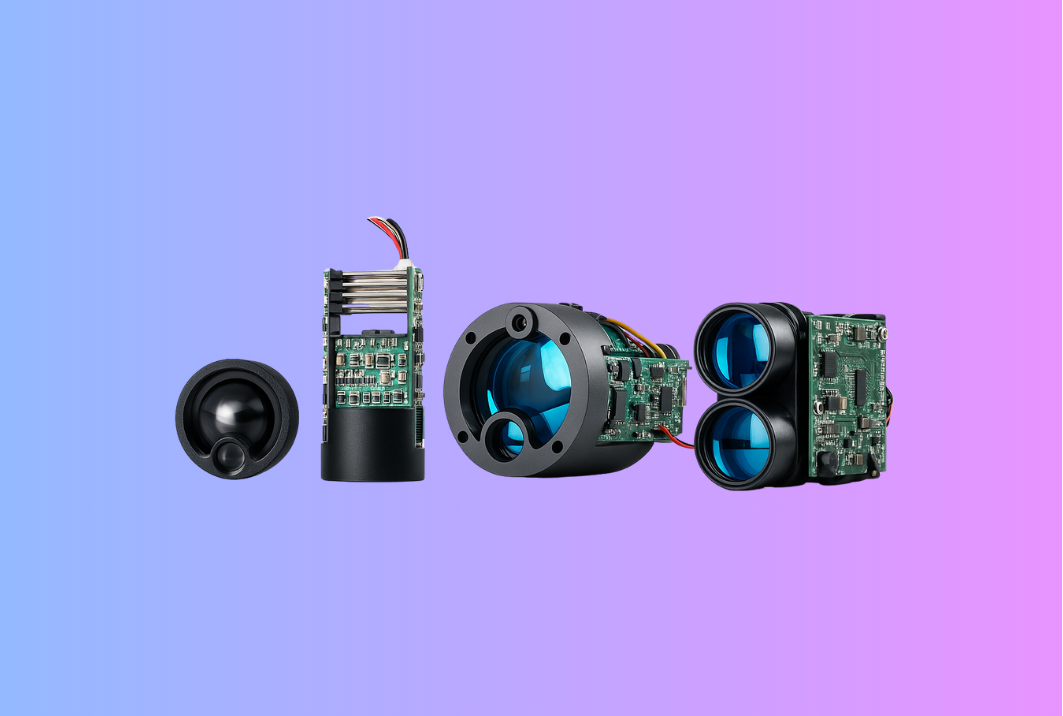
Lead: Before you ask for quotes, ask better questions. This buyer-first RFQ/RFP template helps OEM/ODM teams specify a Laser Rangefinder Module unambiguously—reducing back-and-forth, de-risking compliance, and yielding comparable bids across suppliers.
Table of Contents
ToggleExecutive Summary
- Standardize your asks. Define wavelength, range/accuracy, divergence, interfaces, calibration depth, and compliance scope in a single RFQ so quotes are apples-to-apples.
- Bind performance to method. Require vendors to state target reflectivity, atmospheric conditions, and FAR (false-alarm rate) alongside distance specs.
- Make it traceable. Request calibration artifacts (or references) aligned to ISO/IEC 17025 and eye-safety classification under IEC 60825-1.
- Plan integration cost. Interfaces, SDK maturity, and field-check tooling materially change total cost of ownership (TCO)—not just unit price.
- Think channel & region. Include CE/FCC/RoHS and export control declarations up front to speed distributor onboarding.
Need hardware to test? See our Laser Rangefinder Module options; pair with a Thermal camera module for fused distance + imaging.
Use Cases & Buyer Scenarios
UAV mapping and robotics fleets
You need consistent range and hardware timestamps for SLAM/geotagging. RFQ must call for MAVLink/ROS 2 support and PPS/TimeSync pins, plus multi-return data.
Outdoor/hunting optics brands
For Thermal Rifle Scopes, Thermal Monoculars, and Thermal Binoculars, specify recoil/vibe tolerance, compact power budgets, and reticle/boresight alignment workflow.
Industrial/security integrators
Gate automation and perimeter systems need mm-to-cm-class accuracy at short–mid range and predictable drift. Include IP rating, window coatings, PLC/CAN support, and acceptance-test criteria.
Spec & Selection Guide (the heart)
How to write what you want—so vendors can price and commit.
| Spec Area | What to Decide | Why it Matters | RFQ Language (copy/paste) |
|---|---|---|---|
| Wavelength & detector | 905 nm (Si-APD) or 1535/1550 nm (InGaAs) | Eye-safety headroom, long-range SNR, detector availability | “Quote both 905 nm & 1550 nm options; state detector type and lead time.” |
| Range & accuracy | Max distance on Lambertian X% & retroreflector; accuracy & repeatability | Prevents inflated claims; sets test method | “Report Dmax at 20% Lambertian and retroreflector; ±accuracy @100/500/1000 m; repeatability (1σ). State FAR threshold.” |
| Divergence & beam quality | FWHM or 95% encircled energy, hot-spot uniformity | Eye-safety & SNR depend on it | “Provide divergence (mrad) and beam profile; certify through safety aperture.” |
| PRF / multi-return | PRF modes; number of returns & confidence | Through-foliage, wire hits, motion | “Support PRF ≥X Hz; N returns with SNR/width metadata.” |
| Power & thermal | Avg/peak power; thermal limits; cold-start | Impacts battery sizing & reliability | “List peak current, average power, and thermal derating curves (−20…+55 °C).” |
| Interfaces & time | UART/USB/CAN/MAVLink; PPS/time sync; timestamps | Fusion and log integrity | “Expose hardware timestamp and PPS in/out; provide ROS 2 sample node & MAVLink bridge.” |
| Calibration depth | Offset/scale/jitter/divergence/power; artifacts | Unit-to-unit consistency & acceptance | “Provide 17025-traceable data per S/N or artifact references; share CSV format.” |
| Enclosure & sealing | IP rating; window glass & coatings | Outdoor reliability & warranty | “IP66/67; AR + anti-fog; scratch resistance rating.” |
| Compliance scope | IEC 60825-1 class; CE/FCC/UKCA; RoHS/REACH | Channel onboarding & liability | “Deliver DoC, label proofs, test reports, and user instructions.” |
| Firmware & SDK | APIs, diagnostics, updater, versioning | Integration speed & support | “Return {range_m, snr, t_event_ns, n_returns}; provide signed firmware updater and changelog.” |
Decision rules (simple flow)
If range ≤1.5 km & cost-critical → ask for 905 nm + Si-APD baseline, 1550 nm as option.
If public-facing demos or >2 km → prioritize 1550 nm + InGaAs, Class 1 margin details mandatory.
If fused with thermal/EO → require boresight workflow + time-sync + multi-return metadata.
If harsh outdoor/recoil → mandate IP66/67, window coatings, vibe/shock and a 5-min field check kit.
Comparison table—request at least two tiers in quotes
| Tier | Typical Use | Tech Path | Notes for Vendors |
|---|---|---|---|
| Value | Handheld/industrial short-mid range | 905 nm + Si-APD, 1.5–2.5 mrad | Cost-optimized; include Class 1 report & basic calibration. |
| Performance | Long-range/UAV demos | 1535/1550 nm + InGaAs, 0.5–1.5 mrad | Higher BOM; demand full calibration + multi-return and time-sync. |
The Editable RFQ/RFP Checklist
Copy this section into your RFQ document and fill the blanks.
1. Application & Volumes
-
Application: UAV mapping / outdoor optics / industrial / security / other: ______
-
Annual volume & ramp: EVT ___ / DVT ___ / PVT ___ / MP ___
-
Target launch window & regions: ______
2. Performance & Methods
-
Wavelength: ☐ 905 nm ☐ 1535/1550 nm (quote both if possible)
-
Dmax (Lambertian 20%): ___ m @ Clear / ___ m @ Haze
-
Dmax (Retroreflector): ___ m
-
Accuracy @100/500/1000 m: ±___ / ±___ / ±___ m
-
Repeatability (1σ): ___ m; FAR threshold at test points: ___%
-
Divergence: ___ mrad (95% EE) ; Hot-spot uniformity: ___
-
PRF: ___ Hz; Multi-return: ☐ Yes (max ___) ☐ No
-
Boresight method to thermal/EO: ☐ Required ☐ Not required
3. Interfaces & Time
-
Interface: ☐ UART ☐ USB ☐ CAN ☐ MAVLink
-
Time sync: ☐ PPS in/out ☐ ROS 2 sample ☐ MAVLink
TIMESYNC -
Telemetry fields:
range_m, snr, t_event_ns, n_returns, temperature, status
4. Power & Environment
-
Supply: ___ V; Peak current ≤ ___ A; Average power ≤ ___ W
-
Operating temp: ___ to ___ °C; Storage temp: ___ to ___ °C
-
Shock/Vibe: ___ g / ___ ms; Recoil profile (if any): ___
-
IP rating: ☐ IP66 ☐ IP67 ; Window: ☐ AR ☐ Anti-fog ☐ Scratch-resist
5. Calibration & QA
-
Factory calibration: ☐ Offset ☐ Scale ☐ Jitter ☐ Divergence ☐ Power
-
Artifacts: ☐ ISO/IEC 17025-traceable ☐ Vendor reference only
-
Data per S/N: ☐ CSV export ☐ On-device NVM ☐ Cloud portal
-
Field check kit: ☐ Retroreflector ☐ Matte board ☐ 5-min script
6. Compliance & Documentation
-
Eye-safety: IEC 60825-1 Class ☐1 ☐1M (deliver label proofs & test method)
-
EMC: CE/FCC/UKCA test reports (pre-scan allowed? ☐Y/☐N)
-
Materials: RoHS/REACH statements; DoC package; User manual
-
Export classification / dual-use declaration: ☐ Provided
7. Commercials
-
MOQ tiers: 50 / 200 / 1,000 / 5,000+
-
Sample lead time: ___ weeks; MP lead time: ___ weeks ARO
-
Warranty & RMA target: ___ months; SLA for FA reports: ___ days
-
Private label & packaging: ☐ Laser-engrave ☐ Kit-pack ☐ Custom labels
Internal links to help readers: Laser Rangefinder Module family; fused imaging with Thermal Clip-On Sight and compact Thermal Pistol Sights.
Integration & Engineering Notes
Electrical & Interfaces (UART/USB/CAN/MAVLink/SDK)
-
Require hardware timestamps mapped to ROS 2
Header.stamp; provide PPS pins and a MAVLink/ROS sample node. -
Ask for DFT hooks (test pads, test-mode commands) so your CM can automate range/power checks at FT.
-
Request firmware updater with signature/rollback and a semantic versioning policy.
Optics & Mechanics (mounting, alignment, sealing)
-
Specify datums (V-groove/dowel) and a repeatable boresight step; attach a drawing if possible.
-
Define window material and coatings (AR/anti-fog) and their scratch resistance preference.
-
If recoil or heavy vibration applies, ask for shock/vibe results and fixture photos.
Firmware/ISP/Tuning (AGC, palettes, fusion, ranging algorithm)
-
Vendors should expose SNR, width, multi-return count and confidence; this lowers your debugging cost.
-
Define how false-alarm rate will be measured at distance points and in sun/glare.
Testing & Validation (bench → field, acceptance criteria)
-
Ask for calibration logs per serial number plus a 5-minute field check flow (tripod target + script).
-
Define acceptance: offset/linearity/jitter gates, divergence & eye-safety verification, and boresight tolerances.
Compliance, Export & Certifications
-
Eye-safety: Classify under IEC 60825-1 (Class 1/1M) and request label proofs + test method summary.
-
Calibration credibility: For distance/power artifacts, prefer alignment to ISO/IEC 17025; this strengthens audits and channel trust.
-
EMC & materials: CE/FCC/UKCA emissions/immunity; RoHS/REACH material declarations bundled with the DoC.
(Neutral references: IEC 60825-1; ISO/IEC 17025; buyer guides that emphasize method-tied performance reporting (e.g., reflectivity & conditions) and traceability (industry practice, 2024–2025).)
Business Model, MOQ & Lead Time
-
Samples: 2–4 weeks for standard optics; 4–6 weeks for custom divergence/windows.
-
MOQ: 50–200 pcs (standard), 300+ for custom enclosures/optics.
-
MP lead time: 6–10 weeks ARO; add time for private-label artwork and multilingual manuals.
Mini ROI example—why a clear RFQ saves money
| Item | Vague RFQ | Clear RFQ (this template) | Units/yr | Impact |
|---|---|---|---|---|
| Vendor Q&A loops | 3–5 rounds | 1–2 rounds | — | ↓ 2–3 weeks launch slip |
| RMA rate (spec misunderstandings) | 1.5% | 0.7% | 2,000 | −16 RMAs |
| Engineering hours (integration) | 160 h | 90 h | — | −70 h (≈2 wks) |
| Channel approvals | Slow | Faster | — | Sooner revenue |
Pitfalls, Benchmarks & QA
Seven traps to avoid in RFQs
-
Distance with no reflectivity & weather. Always pair Dmax with reflectivity and conditions.
-
Accuracy with no method. Demand test distances and acceptance gates.
-
No divergence profile. Eye-safety margin and SNR hinge on it.
-
Ignoring timestamps/time sync. Fusion fails without consistent clocks.
-
Skipping calibration scope. State what’s calibrated and how it’s stored (CSV/NVM).
-
Compliance afterthought. Ask for IEC 60825-1 class and EMC plan early.
-
Variant sprawl. Limit optical/electrical variants to concentrate volume.
Benchmark recipe (include in RFP)
-
Course: 50/100/250/500/1000 m markers, Lambertian 20% and retroreflector.
-
Report: Dmax, accuracy, repeatability, FAR, and confidence thresholds under clear/haze.
-
Log: weather, sun angle, window condition; include boresight error vs distance for fused devices.
FAQs
1) Can I request both 905 nm and 1550 nm quotes?
Yes—do it in the same RFQ so vendors show differences in detector type, divergence, eye-safety margin, and lead time.
2) What do “Lambertian 20%” and “retroreflector” mean in practice?
A matte 20% target simulates mid-reflectivity objects; retroreflectors show a best-case return. Asking for both keeps specs honest.
3) Do I need ISO/IEC 17025 certificates from the vendor?
You can accept vendor references, but 17025-aligned artifacts improve repeatability across factories and markets.
4) How should I ask for time-sync?
Require hardware timestamp, PPS input (and pass-through if needed), and either ROS 2 or MAVLink TIMESYNC examples.
5) What about IP rating and windows?
State your required IP class and coatings; they add cost but prevent warranty spikes in field deployments.
6) How do I compare SDKs?
Ask for a one-page API summary and a 10-minute demo; the best SDKs expose diagnostics and logable confidence, not just distance.
7) What if I need private label kits?
Include laser-engrave, packaging, and document bundles in the RFQ; these speed channel onboarding.
Call-to-Action (CTA)
Ready to issue an RFQ? Send us your filled checklist. We’ll return a side-by-side quote (905 vs 1550, calibration depth, IP rating) plus a sample and acceptance-test plan—starting from our Laser Rangefinder Module family.