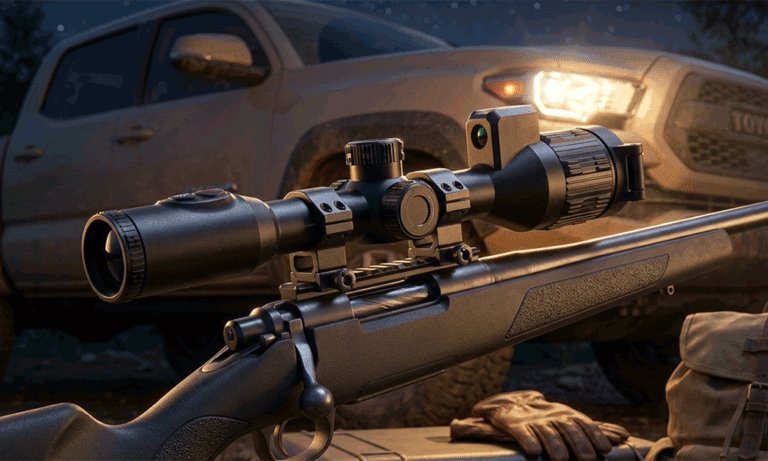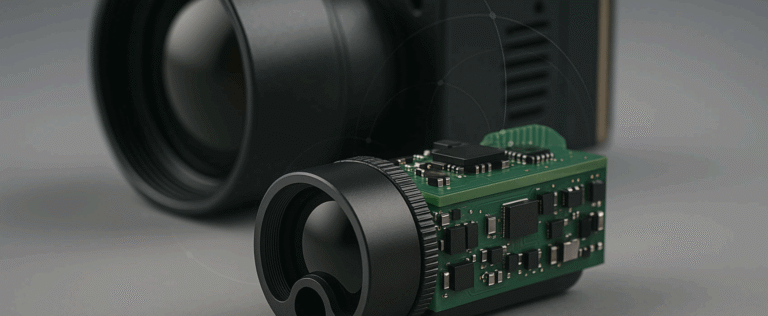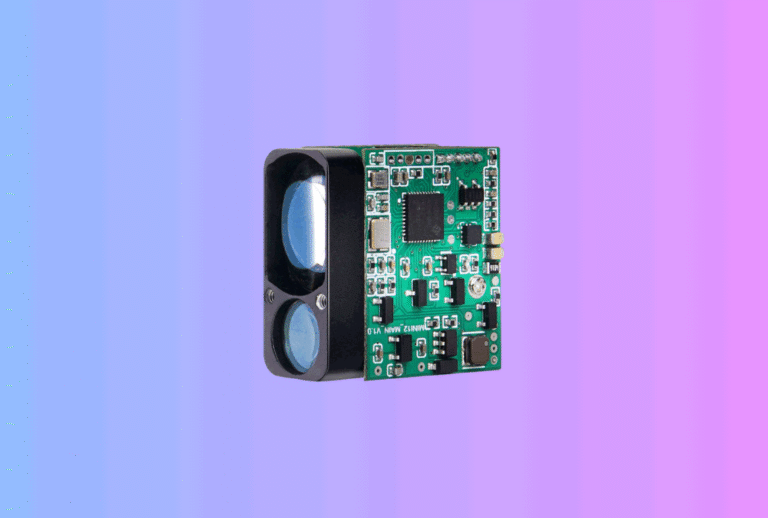
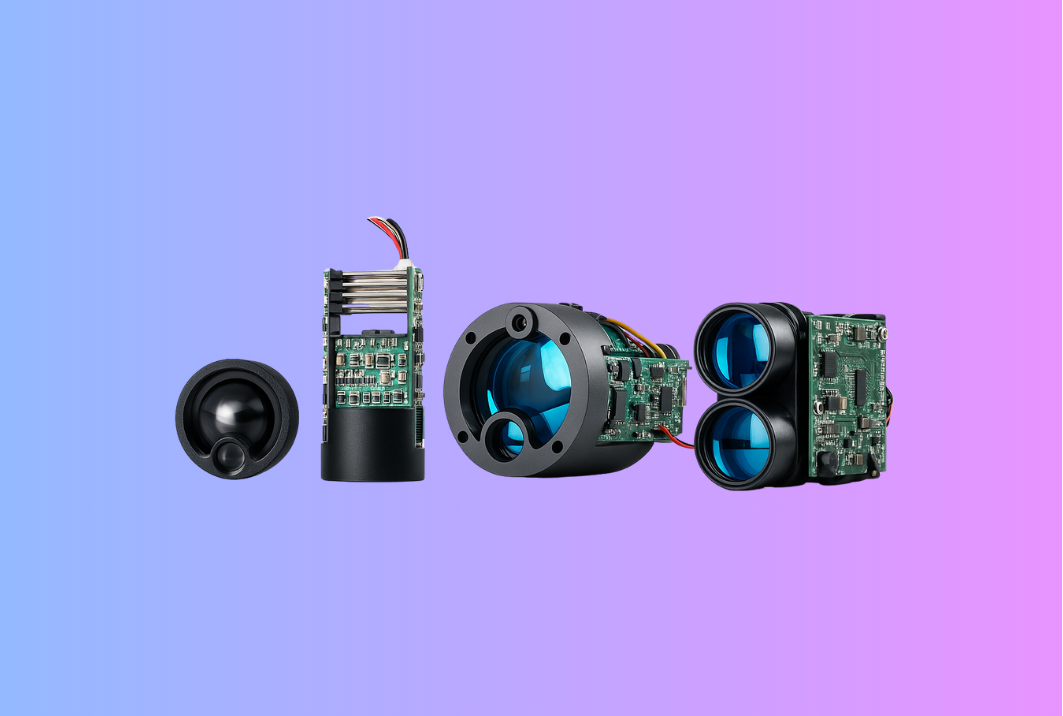
When brands plan a new golf, hunting or industrial laser rangefinder module, the first questions are usually about range, accuracy and size. Only later do they ask where the product will actually be used. A compact module that works perfectly in a European test lab may behave very differently on a Himalayan ridge, in a Middle-East desert, or on a tower in a tropical monsoon belt.
Table of Contents
ToggleFor B2B buyers and system integrators, climate is not a cosmetic detail. It affects warranty cost, downtime, user safety and brand reputation. If your rangefinder line is meant to support global distributors or professional users, you need a design that survives more than just mild spring weather.
This article looks at how to engineer laser rangefinder modules for harsh climates, focusing on high altitude, desert dust and monsoon-level humidity. The perspective is that of a China-based OEM/ODM manufacturer supplying configurable laser rangefinder modules and complete device designs to brands worldwide.
1. Why climate should be an early design parameter
Many rangefinder projects start with a generic environment assumption: “–10 to +50 °C, light rain, occasional shock.” That might be fine for consumer golf devices, but it is not enough for:
- high-altitude hunting optics in North America and Central Asia;
- desert operations where sandstorms and UV exposure are routine;
- tropical and coastal markets with constant humidity, salt fog and monsoon rain;
- industrial or defence users who mount rangefinders on vehicles or towers 24/7.
If these scenarios are even a possibility in your distribution roadmap, they should influence design from day one, not as an afterthought. Otherwise you risk releasing a first generation that looks great on paper but generates high RMA rates in your fastest-growing regions.
From an OEM perspective, it is far cheaper to design for harsh climates up front—using the right sealing concepts, materials and derating rules—than to retrofit fixes after the first real winter or sandstorm season.
2. Mapping climate profiles to technical requirements
The phrase “harsh climate” covers very different stress profiles. You can think in terms of three representative environments.
2.1 High-altitude and alpine environments
In mountains and high plateaus, rangefinders face:
- low temperatures and rapid day/night swings;
- lower air pressure, which affects convection cooling and sometimes corona discharge risk on high-voltage parts;
- intense UV radiation, accelerating plastic aging and coating degradation;
- snow, sleet and condensation cycles.
Devices are often powered on from cold, used with gloves, and mounted on metal rifles or tripods that conduct cold into the housing.
2.2 Desert and semi-arid environments
In deserts and dry grasslands, the challenges are different:
- high daytime temperatures with very hot sun-exposed housings;
- large amounts of fine dust and sand that can infiltrate gaps;
- mechanical erosion from wind-blown sand on exposed optics;
- occasional sandstorms with both dust and ESD events.
Here, UV and abrasive particles attack external surfaces, while dust infiltration threatens buttons, zoom mechanisms and internal optics.
2.3 Monsoon, tropical and coastal environments
In tropical and marine climates, the dominant stresses are:
- high average humidity, often 80–100%;
- frequent heavy rain and condensation when moving between air-conditioned interiors and hot outdoors;
- salt fog near coasts, driving corrosion;
- fungal growth (mold) on glass surfaces and rubber parts.
Under these conditions, “waterproof” means more than surviving a quick splash. Long-term moisture management becomes a central design challenge.
A robust laser rangefinder platform does not need three completely different versions, but it must recognise where requirements diverge and where a common solution can work across multiple climates.
3. Optical windows and coatings for difficult environments
The front window is the first line of defence for any laser rangefinder module. It protects the transmit and receive optics from dust, rain and mechanical damage while letting the beam and return signal pass with minimal loss.
3.1 Material choice
Common window materials include coated glass, polycarbonate, and specialty plastics. In mild conditions, optical plastics are attractive because they are light and easy to mould. In harsh climates, however, the balance shifts:
- High altitude and desert: glass offers better scratch resistance against wind-blown sand and less UV yellowing over time.
- Monsoon and coastal: glass resists moisture pickup and mold better than many plastics, especially with appropriate coatings.
For premium and industrial products, extra-hard coatings on glass can further improve abrasion resistance, but they must be selected carefully to avoid micro-cracking in temperature cycling.
3.2 Anti-reflective and protective coatings
Coatings are not only about transmission; they also influence cleanability and long-term stability. When designing for harsh climates, consider:
- Hydrophobic or oleophobic coatings that make it easier for users to wipe away rain, fingerprints or dust without scratching the surface.
- UV-stable AR stacks tuned to your wavelength (e.g., 905 nm) but tested for several thousand hours of UV exposure.
- Mold-resistant coatings in tropical environments, which reduce organic residue that fungi can grow on.
Work closely with coating vendors and your OEM partner so that the coating specifications are tied to your actual climate profiles, not just generic “outdoor” use.
4. Sealing, IP rating and controlled breathing
It is tempting to think “just make it IP67 and we’re done.” In reality, sealing strategy is more nuanced, especially for devices that see pressure and humidity cycles.
4.1 True sealing vs vented designs
A fully sealed housing with O-rings, welded seams and no vent is robust against rain and splashes, but it traps air and any residual moisture inside. In monsoon climates, even a small amount of trapped moisture can condense repeatedly on internal optics as temperatures change, fogging the view and affecting measurement signal.
Many harsh-environment designs instead use:
- robust sealing against liquid water;
- membrane vents that equalise pressure but block liquid water and dust;
- desiccant packs or moisture-absorbing materials inside.
This approach must be tuned carefully for each product volume and material; otherwise the vent can become a hidden failure point or compromise EMC shielding if not integrated correctly.
4.2 Mechanical interfaces and moving parts
Buttons, battery doors, dioptre adjustments and zoom rings are all opportunities for dust and water ingress. In high-volume consumer products, simple rubber keypads may suffice. In harsh climates, consider:
- metal or high-quality polymer doors with positive latches and double seals;
- mechanical designs that “wipe” seal surfaces as they move, reducing grit buildup;
- minimising the number of openings by using external charging contacts or sealed batteries in some industrial designs.
IP ratings like IP65 or IP67 are a good baseline, but they should be backed by realistic use simulations—for example, repeated opening and closing of battery doors in dusty environments, not just static lab tests.
5. High-altitude design: cold, pressure and UV
At high altitude, lower air pressure reduces convective cooling. Electronics and laser diodes may run hotter than expected even though ambient air feels cold. Therefore:
- thermal simulations should consider reduced convection coefficients for 3,000–5,000 m altitude;
- derating of laser current should include altitude as a parameter, not just ambient temperature;
- vents and seals must handle pressure changes without letting moisture in.
Cold start behaviour is also critical. Users may store devices in vehicles overnight at –20 °C, then expect instant operation. Battery chemistry, display choice and mechanical clearances all matter. Elastomers stiffen; lubricants thicken; focus mechanisms can bind.
Intense UV at altitude accelerates aging of plastics, rubber eyecups and coatings. Selecting UV-stabilised materials and testing them under accelerated UV exposure reduces the risk of cracked housings or sticky rubber after two or three seasons.
6. Desert design: dust, sand and thermal extremes
Desert environments combine fine dust that creeps into every gap with coarse sand that can scratch optics and jam mechanisms.
To handle dust, designs should:
- avoid long, narrow slots in housings where dust can accumulate;
- use labyrinth seals around rotating parts such as focus rings;
- prefer tactile switches under sealed keymats rather than exposed clicky buttons.
Thermal expansion is another challenge. Dark housings under direct sun can reach 60–70 °C even when air temperature is lower. Difference in expansion between plastic, metal and glass can stress seals and adhesives. Simulation and prototyping should explore worst-case temperature combinations, not just average air temperatures.
For modules embedded in vehicles or weapon-mounted optics, consider sand-blast exposure tests where devices are subject to directed streams of abrasive dust. This gives early warning about weak points in coatings and mechanical interfaces.
7. Monsoon and tropical design: humidity, condensation and mold
In monsoon zones and tropical jungles, devices are constantly exposed to humidity close to 100%, heavy rain and rapid shifts between air-conditioned interiors and hot outside air.
Mitigation strategies include:
- combining robust external sealing with internal desiccants and vent membranes;
- using corrosion-resistant metals (stainless steel screws, treated springs) and plating;
- selecting plastics and adhesives that resist hydrolysis and fungal growth;
- avoiding organic residues on internal surfaces by choosing low-outgassing materials.
Optics are particularly vulnerable to mold. Once fungal growth appears on internal lens surfaces, cleaning is laborious and often not cost-effective. During design, work with your OEM to specify anti-fungal measures and to ensure assembly areas are clean and humidity-controlled.
8. Electronics and power design for temperature extremes
Across all harsh climates, temperature is the unifying stress. It affects component lifetime, battery performance and measurement stability.
For the laser rangefinder module and its host electronics, consider:
- using wide-temperature components (–40 to +85 °C where needed);
- applying derating rules on voltage, current and power dissipation;
- designing PCBs with attention to thermal paths and hotspots;
- implementing firmware that monitors internal temperature and adjusts PRF or disables high-stress modes when necessary.
Battery strategy should match climate profiles too. In cold environments, Li-ion cells may lose capacity sharply; primary lithium cells (CR2, CR123A) or special low-temperature packs can be better for some hunting or mountaineering markets. In hot deserts, thermal management around the battery compartment, including reflective housing colours, becomes more important.
9. Verifying harsh-climate performance with structured testing
Design intent is not enough; harsh-climate claims must be backed by testing and validation. A typical programme for a global rangefinder line might include:
- thermal cycling across the full specified range, including rapid transitions;
- high-humidity storage and operation tests for monsoon scenarios;
- dust chamber tests using fine test dusts;
- salt fog exposure for coastal markets;
- UV exposure tests on housings and coated optics;
- long-duration operational tests at derated PRF levels to confirm stability.
Where appropriate, tests can be aligned with relevant IEC/ISO environmental standards. But the goal is not just to tick boxes; it is to understand how your particular design behaves over years of use and to feed that knowledge into future revisions.
An experienced OEM partner can share test rigs and procedures built for other products—such as industrial sensors or rangefinder module integration projects—so you do not start from zero.
10. Working with a China OEM partner on harsh-climate rangefinder platforms
Designing for harsh climates is a cross-disciplinary task. Optics, mechanics, electronics, firmware and even logistics all play a role. Working with a China-based OEM/ODM manufacturer that has done similar projects reduces risk and time to market.
Gemin Optics supports B2B partners by offering:
- configurable laser rangefinder modules whose cores are already characterised over wide temperature and humidity ranges;
- mechanical design options for sealed and vented housings tuned to different IP and climate requirements;
- advice on material choices, coatings and sealing based on field experience in high-altitude, desert and monsoon markets;
- shared test plans and reliability programmes that align with your target environments and warranty promises.
By thinking in terms of platforms, you can define one core engine and a few climate-specific housing and sealing options. That way, you can serve European golf resorts, Middle-East hunting markets and Southeast-Asian industrial users from a common technical base with manageable SKUs.
CTA – Make Climate Part of Your Next Laser Rangefinder Module Design
Harsh environments are not edge cases anymore. As your brand grows beyond its home market, your laser rangefinder modules will find their way to mountain ridges, desert ranges and tropical job sites. Designing specifically for these climates—rather than hoping a mild-weather design will “probably be fine”—is one of the most powerful ways to protect your reputation and margins.
If you are planning a new rangefinder line or upgrading an existing one for global use, consider partnering with an OEM that treats climate as a first-class design parameter. Explore Gemin Optics’ configurable laser rangefinder modules and talk with our engineering team about high-altitude, desert and monsoon-ready architectures that match your roadmap for the next 3–5 years.