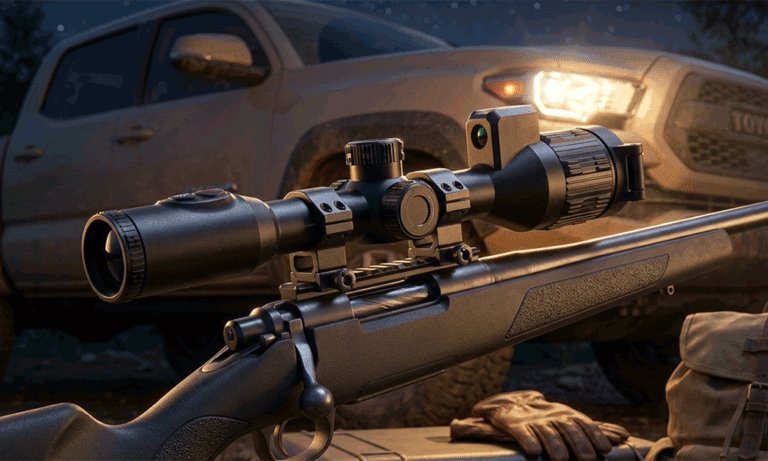
For most brands, golf rangefinders, hunting rangefinders and construction distance meters have grown up as three separate product lines. Each has its own hardware, firmware and supply chain. That looks normal—until you add up the engineering cost, certification work and inventory you are carrying for what is, at heart, the same basic function: measuring distance with a laser.
Table of Contents
ToggleA multi-mode laser rangefinder platform takes a different approach. Instead of three unrelated devices, you build one shared core and adapt it with firmware, optics and user interface to serve golf, hunting and construction markets. The module, battery system and a large part of the housing stay the same; what changes is the behaviour and the branding on top.
From an OEM/ODM perspective, this platform strategy can cut time-to-market, reduce risk and give your brand a clear roadmap for the next 3–5 years. In this article we look at how to design such a platform, where you can safely share hardware, and where each application still needs its own tuning. The discussion is based on Gemin Optics’ experience building configurable laser rangefinder modules for different industries.
1. Why think in platforms instead of single devices?
If you only launch one golf rangefinder model, a dedicated design may be fine. But as soon as you have several SKUs—and especially if you also sell to hunting and construction channels—the disadvantages appear.
You need separate engineering teams to maintain slightly different circuits. You repeat the same CE/FCC/laser safety work. You manage multiple supplier lists and BOMs. When a critical component goes end-of-life, you must redesign three boards and re-qualify three products.
A multi-mode platform solves many of these problems by treating the rangefinding core as a shared asset. It lets you:
- amortise R&D across larger volume;
- simplify certification and maintenance;
- negotiate better purchasing terms on shared components;
- introduce new features (for example, Bluetooth logging) once, then roll them across modes.
From the user’s perspective, they still see focused tools: a dedicated golf rangefinder, a rugged hunting device, a site-ready construction meter. Under the hood, however, you operate a single laser rangefinder engine tuned by software.
2. Different markets, different expectations
Before you design a platform, you need a clear picture of how the three main use cases differ. The table below summarises typical expectations.
| Feature / Market | Golf | Hunting | Construction |
|---|---|---|---|
| Typical range | 5–400 m, flag and hazards | 10–1,200 m, animals and terrain | 0.05–200 m, walls and structures |
| Priority | Flag lock, slope, compact size | Long range, low-light performance, robustness | Accuracy, repeatability, data logging |
| Target reflectivity | Flags, trees, bunkers | Fur, foliage, rocks | Concrete, steel, glass |
| UI style | Simple icons, quick readings | More manual control, multiple modes | Numeric, often with units, memory and Bluetooth |
| Regulations | Tournament rules, slope on/off | Hunting laws, sometimes export controls | CE/FCC, jobsite safety norms |
A good multi-mode design acknowledges these differences instead of pretending one firmware can satisfy everyone. The key is to decide which parts are truly shared and which must be configurable per mode.
3. Building the common core: hardware and optics
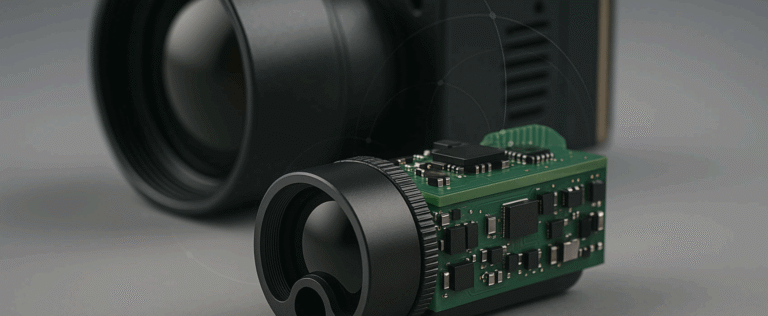
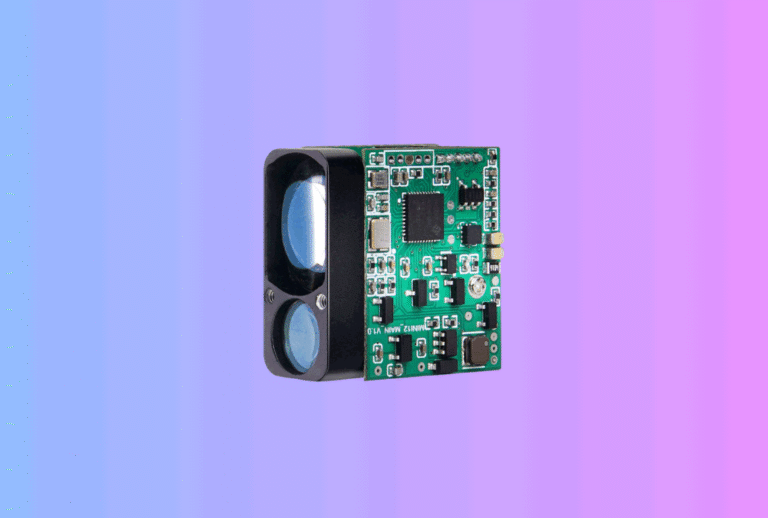
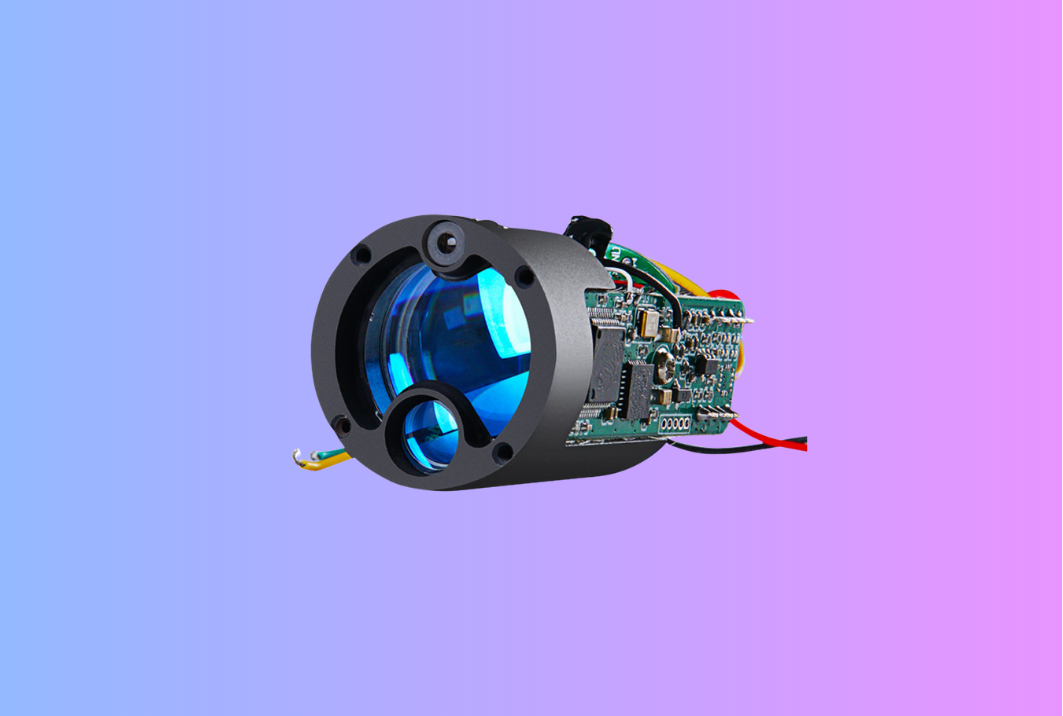
The heart of the platform is the laser rangefinder module. For most brands, this will be a compact ToF (time-of-flight) engine with its own optics, laser diode, receiver and processing MCU. Around it you design power management, user interface electronics, housing and connectivity.
From a platform perspective, three design choices are critical.
Sensor and optics performance. You need enough energy and sensitivity to cover the longest range scenario—usually hunting on dark, non-cooperative targets—without creating eye-safety headaches. That often means designing for a slightly higher performance class and then derating for golf and construction firmware. Optically, a good compromise is a beam divergence and receiver FOV that still give reliable flag detection in golf mode but do not saturate on large construction targets.
Battery and power budget. Golf and hunting users care about weight and pocket size; construction users often accept slightly larger tools if they last longer and have brighter displays. A shared battery platform (for example, replaceable CR2 or a small Li-ion pack) simplifies logistics, but you should design firmware power profiles for each mode. Golf mode may sleep aggressively between shots; hunting and construction modes may stay awake longer for scanning or continuous measurement.
Mechanical platform. Ideally, you define one “skeleton” that can accept different external shells. Golf and hunting devices may share a horizontal, monocular style body, while a construction meter might shift the same core into a vertical, pistol-grip or boxy housing with an extra reference base. As long as the optical axis and module position are consistent, calibration and assembly processes can be reused.
By locking these three elements, you create a stable platform that can be produced and certified at scale, while still leaving ample room for differentiation.
4. Mode design: golf, hunting and construction on one platform
With hardware fixed, the main differentiation happens in firmware and user interface.
4.1 Golf mode: flags, slopes and speed
Golfers want fast, confident readings on flags and common hazards. A typical golf mode on a multi-mode device will:
- prioritise near, small, vertical targets against cluttered backgrounds;
- implement “flag lock” or vibration feedback when the device is confident;
- apply incline/decline calculations for slope distance, with an option to disable slope for tournament play.
The ranging core may fire pulses rapidly and use digital filtering to reject distant trees behind flags. User interface is simple: a handful of icons, maybe a colour OLED, but minimal menus.
For a brand working with Gemin Optics, for example, the same hardware used in golf rangefinder modules can be configured with a golf-specific firmware profile while still sitting on the shared platform.
4.2 Hunting mode: long-range, low-light and target priority
Hunting needs are different. Animals move; foliage and terrain cause multiple echoes; shots might be taken at dawn or dusk. A hunting mode on the same platform typically offers:
- extended range to non-cooperative targets like deer or boar;
- first-target and last-target priority options (to see either animal in front of brush or a hillside behind it);
- scanning mode that updates distance continuously as the user pans.
Display and reticle choices may also shift. Where golf users like bright, coloured icons, hunters may prefer subdued, high-contrast graphics that do not blow out their night vision. Waterproofing, recoil resistance and low-temperature behaviour are more critical here too, even though the hardware base is the same.
4.3 Construction mode: accuracy, units and data
Construction users treat the device as a measuring tool, not sport gear. A construction mode emphasises:
- repeatable accuracy on flat, textured surfaces such as walls, slabs and ceilings;
- clear numeric display with selectable units (m, ft, in, fractional);
- area and volume calculations, indirect height measurements using tilt;
- memory, Bluetooth and sometimes cloud connectivity for storing readings.
The measurement engine does not need thousand-metre range here; in fact, derating maximum energy can simplify certification and extend battery life. But stability over temperature, close-range performance and well-documented error behaviour become crucial.
By structuring firmware into three such profiles, your platform can present itself as dedicated golf, hunting or construction products while sharing 70–80% of its internal design.
5. Controlling complexity: menus, mode switching and SKUs
One temptation with a multi-mode design is to expose every mode in one device: a “do everything” rangefinder that can switch between golf, hunting and site measurement. On paper this looks efficient; in practice it often confuses end users and complicates support.
A cleaner strategy is to treat the platform as a family of SKUs. You ship golf-only devices with just the golf profile, hunting units with appropriate hunting profiles, and construction meters with range and functions tuned to the jobsite. Internally, firmware may still share large blocks of code, but you configure and lock the mode set per SKU.
For special channels—say, a distributor who sells both golf and hunting products—you can use hidden service menus or PC tools to enable additional profiles at the factory, while keeping the on-device UI simple and branded correctly.
This approach keeps your catalogue clean while letting your engineering team maintain one codebase.
6. Certification, eye safety and regional rules
A real advantage of a shared platform is unified certification. CE, FCC, RCM and other approvals typically depend on the core electronics and RF emissions, which are common. Laser safety certification (IEC 60825-1) can also be handled once, as long as your worst-case mode does not exceed the chosen class.
Still, each application has its own regulatory nuances. For example:
- Golf devices with slope must support disabling that function for tournament play.
- Some hunting markets restrict certain range and ballistic functions or apply export controls to high-performance gear.
- Construction devices may need certified accuracy statements or compliance with local metrology rules.
A robust platform design keeps laser output and optical paths within the same class across all versions, then handles application-specific obligations in firmware and labelling. That way, you avoid having to reclassify the laser every time you introduce a new SKU.
7. Manufacturing, testing and after-sales on a platform
On the factory floor, a multi-mode laser rangefinder platform simplifies both assembly and testing. You can standardise jigs, calibration routines and burn-in profiles. Devices are then flashed with their respective golf, hunting or construction firmware and subjected to a short application-specific functional check.
This also streamlines after-sales. Because the same module and main PCB are used across variants, authorised service centres can:
- swap faulty cores with known-good modules;
- reflash firmware to restore mode sets;
- keep a smaller stock of spare parts covering more SKUs.
For brands that plan structured refurbish programmes—especially in golf and hunting—this modular architecture reduces waste. Units returned from the field can be diagnosed at module level; where optics and housing are still good, only the core may need replacement, preserving cosmetic investment and reducing environmental impact.
8. Working with Gemin Optics on a multi-mode rangefinder roadmap
Designing a platform instead of a single device requires close cooperation between your brand, your engineering partners and your manufacturing base. Gemin Optics supports this through:
- configurable laser rangefinder modules that can be tuned for different ranges and applications;
- OEM design services that combine optics, mechanics and firmware into a coherent platform;
- long-term supply planning, so the same core can serve multiple generations of golf, hunting and construction products.
Because we also work on industrial applications and rangefinder module integration, we understand both consumer-facing usability and deeper engineering requirements such as derating, EMC and reliability.
9. CTA – Build your next laser rangefinder line on a shared platform
Single-purpose designs made sense when volumes were uncertain and technologies were immature. Today, the smart move for most brands is to treat the laser rangefinder as a platform and build dedicated golf, hunting and construction products on top of it.
A well-designed multi-mode laser rangefinder platform can:
- reduce engineering and certification costs;
- simplify inventory and after-sales;
- give you a clear roadmap for successive product generations.
If you are planning to refresh your golf rangefinder line, enter the hunting segment, or add construction distance meters to your portfolio, it may be the right time to rethink your architecture. You can review Gemin Optics’ OEM-ready laser rangefinder modules and then contact our team to discuss how a shared core, plus application-specific firmware and UI, could support your brand over the next 3–5 years.