OEM Thermal Monocular: The Definitive Guide to Building Your Product Line
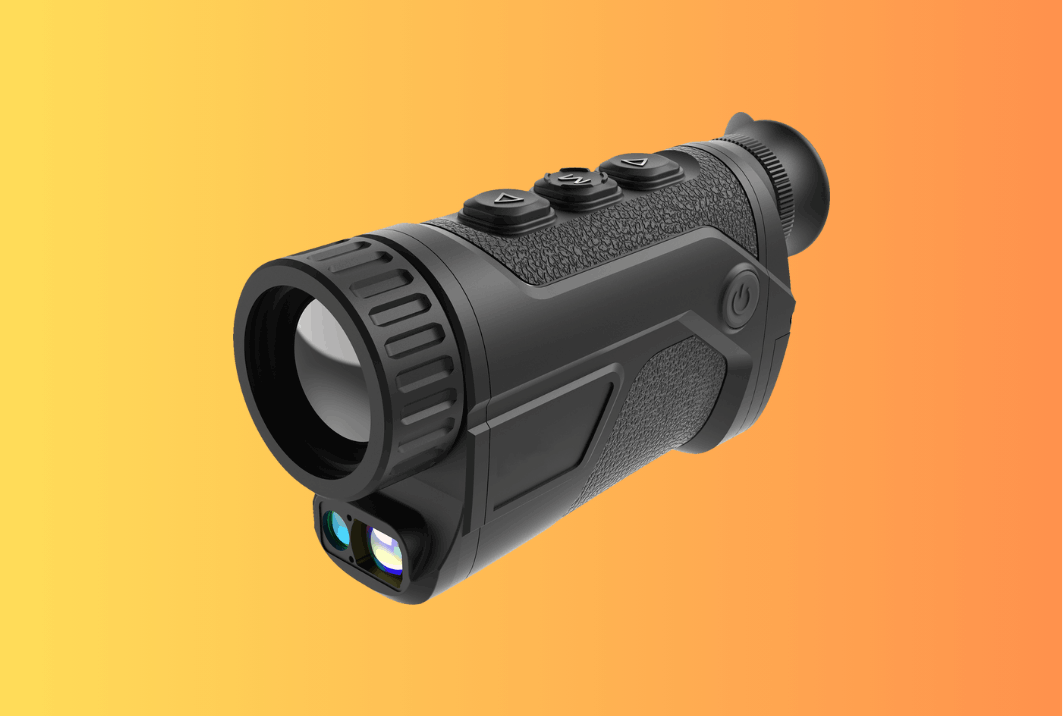
Developing a new handheld thermal device requires navigating a complex landscape of technical specifications, supply chain logistics, and market demands. This guide is for original equipment manufacturers (OEMs), distributors, and brand owners aiming to launch a market-ready thermal monocular. We’ll cover the critical design decisions—from sensor and optics selection to firmware customization and compliance—to help you build a competitive product line efficiently and profitably.
Table of Contents
ToggleExecutive Summary
For product managers and engineering leads, here are the key takeaways for developing a successful OEM thermal monocular:
- Core & Optics Drive Everything: The choice of thermal sensor (resolution, pixel pitch, NETD) and germanium lens (focal length) is the primary driver of cost, performance, and the ultimate detection range of the device.
- User Experience is the Differentiator: For a handheld device, ergonomics, intuitive controls, low boot-up time, and long battery life are paramount. These factors often determine brand loyalty beyond raw specifications.
- Firmware Is Your Secret Weapon: A flexible Software Development Kit (SDK) and tunable Image Signal Processor (ISP) from your module supplier can cut your development timeline by months. This enables customization of on-screen displays (OSD), power modes, and unique features.
- Application Dictates Design: A monocular for hunting has different requirements (long range, specific color palettes) than one for law enforcement (wide field of view, recording) or industrial inspection (high sensitivity). Define your target market first.
- Partnership Streamlines Success: Working with an experienced ODM partner like Gemin Optics de-risks the entire process, from component sourcing and integration to navigating complex export controls and international certifications.
Use Cases & Buyer Scenarios
The ideal Thermal Monoculars design depends entirely on the end-user’s mission. A single hardware configuration rarely satisfies every market segment.
Scenario 1: Outdoor & Hunting Markets
Hunters and outdoor enthusiasts prioritize long-range detection and clear identification. For this segment, a monocular must be rugged, lightweight, and simple to operate in low-light conditions with gloved hands. Key design considerations include larger objective lenses (e.g., 35mm to 50mm) for increased magnification, high-contrast color palettes (like “white-hot” and “black-hot”), and near-silent operation to avoid spooking game. Shutterless cores or finely-tuned non-uniformity correction (NUC) events are highly valued.
Scenario 2: Security, Surveillance & Law Enforcement
Security professionals require reliable performance for situational awareness and evidence gathering. This means a wider Field of View (FOV) for scanning areas like a parking lot or perimeter is often more important than maximum range. Features like onboard video recording, Wi-Fi streaming to a command center, and a quick-swap battery system are critical. The housing should be durable (e.g., IP67 rated) and discreet. Fast boot-up times (under 5 seconds) are non-negotiable for rapid response scenarios.
Scenario 3: Industrial, Maritime & First Responders
In these applications, the monocular is a diagnostic tool. Firefighters use it to see through smoke, and industrial technicians use it to spot overheating electrical components. Here, thermal sensitivity (NETD) is paramount for discerning subtle temperature differences. Features like isotherm palettes (highlighting specific temperature ranges) and hot-spot tracking become key selling points. For maritime use, a nitrogen-purged, corrosion-resistant housing is essential.
Spec & Selection Guide
Choosing the right components is a balancing act between performance, cost, and size. The global thermal imaging market is projected to reach $14.1 billion by 2028, driven by the increasing accessibility of high-performance sensors (Fortune Business Insights, 2023). Let’s break down the core components.
Key Parameters Explained:
-
Thermal Core (Sensor): This is the engine of the device.
-
Resolution: Measured in pixels (e.g., 384×288 or 640×480). Higher resolution provides a clearer image and better effective range, but at a higher cost.
-
Pixel Pitch: The distance between pixel centers, measured in microns (µm). The industry standard is moving from 17µm to 12µm, allowing for smaller, lighter lenses to achieve the same performance.
-
NETD (Noise Equivalent Temperature Difference): A measure of thermal sensitivity, in milliKelvins (mK). A lower NETD (e.g., <25 mK) allows the sensor to detect smaller temperature differences, resulting in a more detailed image, especially in low-contrast conditions like fog or high humidity.
-
-
Objective Lens: Made of Germanium, which is transparent to long-wave infrared radiation.
-
Focal Length: A longer focal length (e.g., 50mm) provides higher magnification and longer detection range but a narrower FOV. A shorter focal length (e.g., 19mm) offers a wider FOV for better situational awareness but less range.
-
-
Display: The internal screen the user looks at. OLED displays offer superior contrast and deeper blacks, while LCOS displays are a more cost-effective option. The display resolution should ideally match or exceed the sensor’s native resolution to avoid downscaling.
Comparison Table: Monocular Tiers
| Feature | Entry-Level (e.g., Pest Control) | Mid-Tier (e.g., General Hunting) | High-End (e.g., Security/LE) |
| Sensor Resolution | ≤384×288 | 384×288 | ≥640×480 |
| NETD | <40 mK | <30 mK | <25 mK |
| Lens Focal Length | 19–25 mm | 25–35 mm | 35–50 mm+ |
| Display | LCOS, ≥800×600 | OLED, ≥1024×768 | High-res OLED, ≥1280×960 |
| Key Features | Basic palettes, digital zoom | Onboard recording, Wi-Fi, LRF option | Advanced ISP, integrated LRF, GPS |
| Target Detection Range | ~1000m | ~1800m | ~2500m+ |
Simple Decision Matrix
Use this flow to guide your initial product definition:
-
IF your market is highly cost-sensitive and for short-range observation (<1000m)…
-
THEN select a ≤384×288, <40mK core with a <25mm lens and LCOS display.
-
-
IF your primary application is hunting or general-purpose observation at medium-to-long ranges…
-
THEN a 384×288, <30mK core paired with a 35mm lens and OLED display is the sweet spot.
-
-
IF your product must deliver uncompromising performance for professional users…
-
THEN invest in a 640×480, <25mK core with a ≥50mm lens and high-resolution OLED.
-
Figure Idea 1: A labeled exploded-view diagram showing the key components of a thermal monocular: Germanium Lens, Thermal Core, Processing Board, Display, Battery, and Housing.
Integration & Engineering Notes
Moving from a bill of materials to a finished product requires careful engineering. This is where an ODM partnership adds immense value.
Electrical & Interfaces
The heart of the system is the main processing board, which connects the Thermal camera module, display, user interface buttons, and power management system. Communication with the thermal core is typically handled via a UART or SPI interface. A USB-C port is now standard for both charging the internal Li-ion battery and for offloading recorded videos and photos.
Optics & Mechanics
The housing design is critical for both durability and user experience. Magnesium alloys offer a premium feel and excellent heat dissipation, while reinforced polymers can reduce weight and cost. Achieving an IP67 rating for water and dust protection requires careful design with O-rings and gaskets. The lens focusing mechanism must be smooth and precise, and a standard 1/4″-20 tripod mounting socket is essential.
Firmware/ISP/Tuning
This is where you define your brand’s unique user experience. The firmware dictates everything the user sees and does. An ODM partner can help:
-
Customize the On-Screen Display (OSD): Add your logo, custom reticles, or unique status indicators.
-
Tune Image Algorithms: Adjust parameters for Automatic Gain Control (AGC) and Detail Enhancement to create a signature “look” for your image.
-
Program Button Functions: Define short-press vs. long-press actions for functions like changing color palettes, activating zoom, or taking a picture.
-
Integrate Sensors: If you opt for a model with a built-in Laser Rangefinder Module, the firmware must fuse that data seamlessly into the display.
Testing & Validation
Rigorous testing is non-negotiable. Standard validation procedures include:
-
Environmental: Temperature and humidity cycling, drop testing, and water ingress testing (IP rating).
-
Functional: Battery runtime tests under various operating modes (e.g., Wi-Fi on/off).
-
Optical: Verifying optical alignment and image quality for every unit using a blackbody radiator and test charts.
Compliance, Export & Certifications
Bringing an electronic product to the global market requires adherence to multiple standards.
-
CE & FCC: Certifications for electromagnetic compatibility required for sale in the European Union and the United States, respectively.
-
RoHS: Restricts the use of specific hazardous materials in electrical and electronic products.
-
Export Controls: This is critical for thermal imaging technology. Thermal cores with a refresh rate greater than 9Hz are often subject to strict export regulations, such as the U.S. Export Administration Regulations (EAR). Partnering with an ODM who understands global logistics and dual-use goods classification is essential to avoid legal and financial penalties.
Business Model, MOQ & Lead Time
An ODM partnership is designed to be flexible and scalable.
-
Minimum Order Quantity (MOQ): This typically ranges from 50-100 units for an initial pilot run to 500+ units for full-scale mass production. Sample units (1-5) are available for initial evaluation.
-
Lead Time: Expect 2-4 weeks for configured samples and 8-12 weeks for mass production following final design approval.
-
Private Label & Customization: We can provide a “white-label” product that you can brand as your own, complete with custom packaging, user manuals, and startup screens.
Simple ROI Model for a Distributor
This example illustrates the potential profitability for a channel partner bringing a new thermal monocular to market.
| Metric | Value | Assumption |
| Per-Unit Landed Cost | $800 | From ODM partner for a mid-tier unit |
| Wholesale Price (to dealers) | $1,200 | Sets a healthy 33% margin for the distributor |
| MSRP | $1,999 | Competitive retail price point |
| Distributor Gross Profit Per Unit | $400 | $1200 – $800 |
| Initial Batch Investment (100 units) | $80,000 | A typical MOQ |
| Total Gross Profit (on batch) | $40,000 | $400 * 100 units |
| Return on Investment (ROI) | 50% | ($40,000 / $80,000) * 100 |
Figure Idea 2: Graph illustrating the inverse relationship between lens focal length (x-axis, in mm) and Field of View (y-axis, in degrees).
Pitfalls, Benchmarks & QA
Avoid these common mistakes to ensure a successful product launch.
Common OEM Mistakes:
-
Poor Ergonomics: Unbalanced weight or awkwardly placed buttons lead to user fatigue and negative reviews.
-
Underpowered Battery: Failing to account for the power draw of features like Wi-Fi and video recording, resulting in disappointing runtimes.
-
Mismatched Display: Using a low-resolution display that can’t render the full detail captured by the sensor.
-
Slow Boot-Up: In many applications, the device must be ready in seconds. Slow firmware is a critical failure.
-
Ignoring Export Laws: Attempting to ship controlled 30/60Hz thermal products without the proper licenses.
-
Noisy Image: Inadequate electrical shielding can introduce noise into the video signal, degrading image quality.
-
Overstating Range: Marketing detection ranges that are only achievable in perfect, unrealistic conditions.
Field Benchmarks: DRI Ranges
The industry uses the “Johnson’s Criteria” to standardize performance claims. For a human-sized target (1.8m x 0.5m), the ranges are defined as:
-
Detection (D): The distance at which an object is visible on-screen (e.g., a few pixels).
-
Recognition (R): The distance at which you can classify the object’s type (e.g., human vs. animal).
-
Identification (I): The distance at which you can identify a specific object or individual.
A quality system like our Thermal Binoculars with a 640×480 core and 50mm lens might achieve a detection range of over 2500 meters, a recognition range of ~800 meters, and an identification range of ~400 meters. Always be clear about which DRI metric you are marketing.
FAQs
-
What is the single biggest cost driver in an OEM thermal monocular? The thermal core and the germanium objective lens together account for the majority of the bill-of-materials cost. Higher resolution sensors and larger lenses increase the cost significantly.
-
How much customization is possible with an ODM model? A great deal. While the core electronics may be based on a proven reference design, you can typically customize the housing design and color, button layout, branding/logos, on-screen display, and packaging to create a unique product.
-
What is the typical warranty and repair process for OEM devices? We offer a comprehensive manufacturer’s warranty. The process is typically structured in tiers, with local distributors handling Level 1 support and repairs, and our central facility managing more complex hardware issues.
-
Why is 12µm pixel pitch replacing 17µm? A smaller pixel pitch allows for a physically smaller and lighter lens to achieve the same native magnification as a larger lens on a 17µm sensor. This leads to more compact, lightweight, and cost-effective device designs.
-
Should I choose a shuttered or shutterless thermal core? Shuttered cores use a mechanical shutter to periodically recalibrate the sensor, providing the highest possible image uniformity. This is the standard for most applications. Shutterless cores manage this correction electronically, offering completely silent and uninterrupted operation, which is a key advantage in tactical or hunting scenarios.
-
How do you ensure quality control across a mass production run? Through a multi-stage process including incoming quality control (IQC) on all components, in-process quality control (IPQC) during assembly, and a final 100% functional test and optical calibration for every finished unit before it ships. Our facilities are ISO 9001 certified.
-
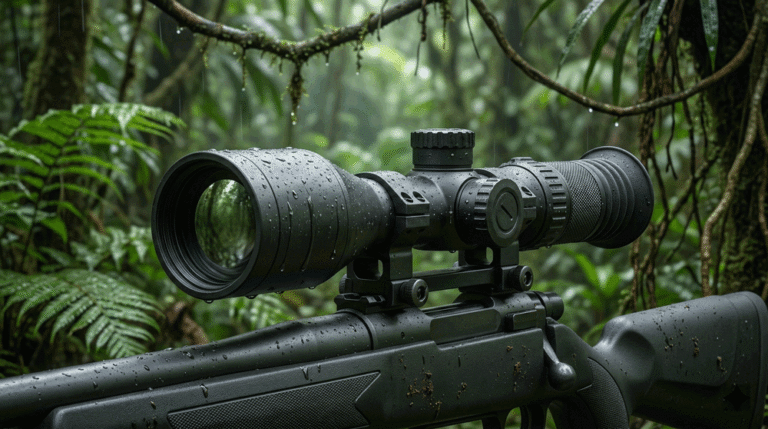
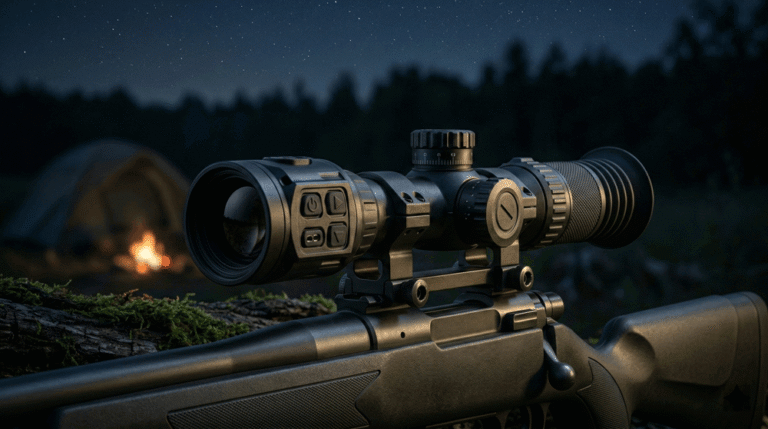
Are thermal monoculars more popular than thermal rifle scopes for hunting? Both are popular, but they serve different purposes. Monoculars are used for scanning and spotting game without pointing a weapon. They are often used in tandem with traditional day scopes or dedicated Thermal Rifle Scopes. Offering both in your product line addresses the complete hunting workflow.
Call-to-Action
Ready to build your next market-leading thermal monocular? Our engineering team is prepared to guide you from concept and component selection to scaled production and global logistics.
Contact Gemin Optics today to discuss your OEM/ODM project requirements and get an evaluation sample in your hands.