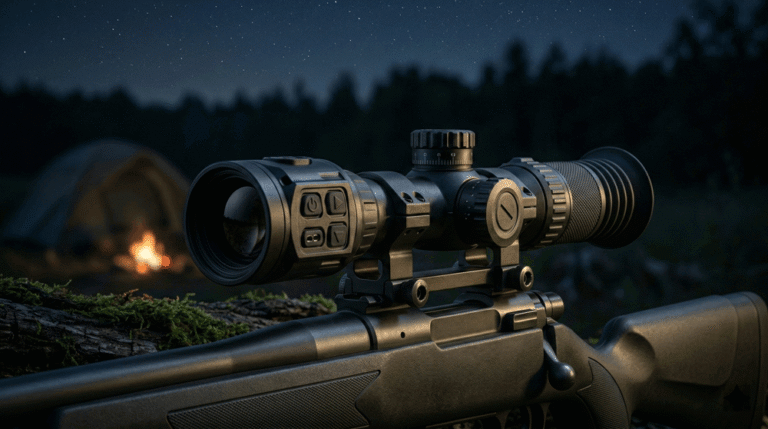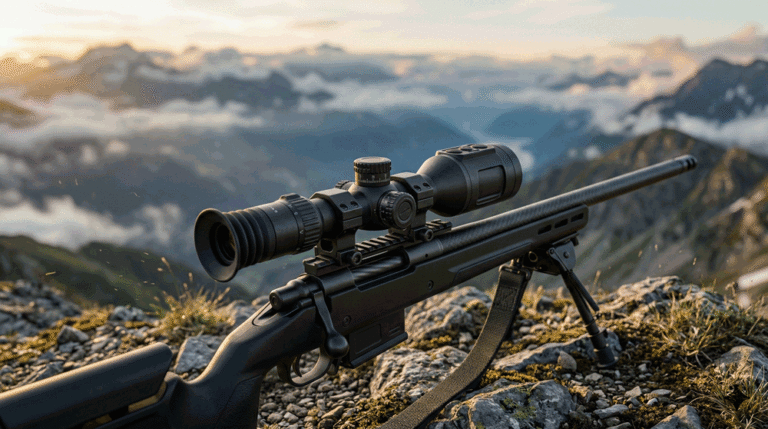
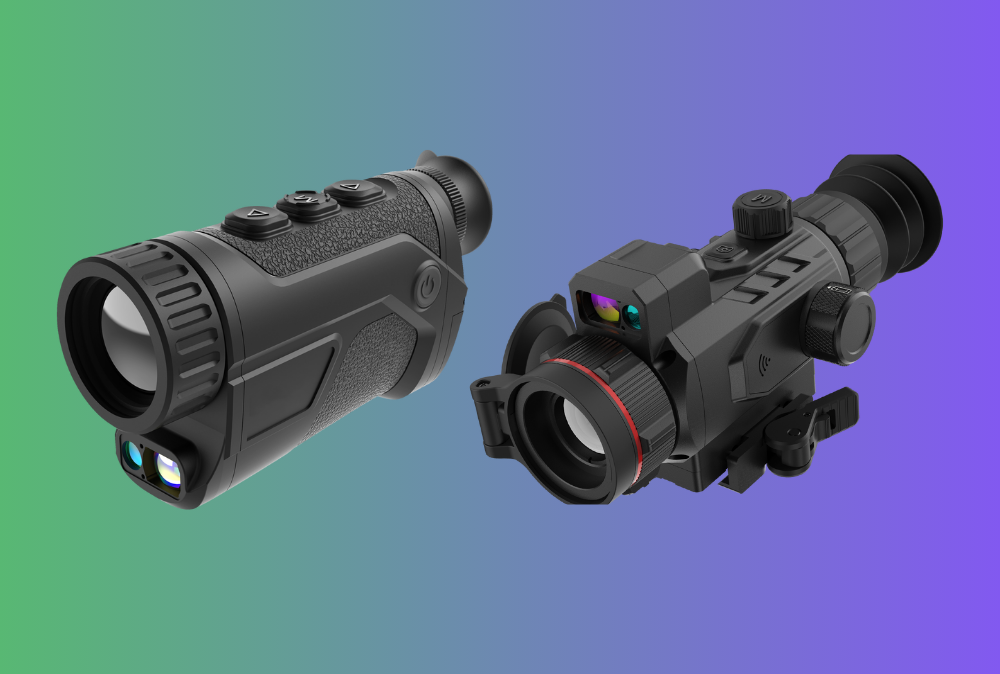
For many brands, golf laser rangefinders, hunting optics and industrial measuring tools are managed as separate product lines, with different teams, suppliers and BOMs. Yet under the housing, most of these devices are built on the same building blocks: a laser rangefinder core and, increasingly, a thermal imaging core.
Table of Contents
ToggleThis is where platform thinking becomes valuable. Instead of treating each product as a one-off, OEMs can design shared cores that serve golf LRFs, hunting optics and industrial instruments with different firmware, mechanics and accessories on top. Done correctly, platform thinking reduces R&D cost, shortens time-to-market and makes long-term lifecycle management much easier.
This article looks at platform thinking from an engineering and procurement perspective. It focuses on how to structure shared cores, what to keep common, what must be customized per vertical, and where a China-based partner such as Gemin Optics can support with mature laser rangefinder modules and thermal imaging modules.
1. Why platform thinking matters for thermal and LRF products
Historically, many brands have sourced separate designs for each vertical:
- Golf laser rangefinders as one family.
- Hunting scopes and clip-ons as another.
- Industrial tools (distance meters, survey instruments, safety systems) as a third.
This approach seems simple at the start but becomes expensive and fragile over time. Each line has its own:
- sensor and optics variants,
- PCB layouts and firmware stacks,
- test procedures and certifications,
- spare parts and service rules.
Platform thinking restructures this landscape. Instead of three unrelated families, you build one or two core platforms—for example, a 905 nm rangefinder core and an LWIR thermal core—and reuse them across:
- handheld golf rangefinders,
- hunting scopes with integrated LRF,
- industrial distance meters, alignment tools and safety sensors.
The differentiation then happens in housings, interfaces, UI and accessories, not in the core physics.
2. What exactly is a “core” in this context?
In practical engineering terms, a core is the smallest subsystem that:
- contains the essential sensing and signal-processing functions, and
- exposes a stable, documented interface to the rest of the device.
For thermal and LRF products, two types of cores are particularly important.
2.1 Laser rangefinder core
A laser rangefinder core typically includes:
- the laser diode and driver,
- receive optics and detector,
- timing and signal-processing electronics,
- safety monitoring and basic control logic.
In Gemin Optics’ case, this is formalised as modular laser rangefinder modules with defined optical apertures, ranges and communication protocols (UART, SPI or CAN). Housing, display and user-input logic then sit outside the core.
2.2 Thermal imaging core
A thermal imaging core (or thermal camera module) usually includes:
- VOx microbolometer sensor,
- lens assembly,
- shutter or shutterless calibration mechanism,
- image-processing pipeline (AGC, NUC, palettes),
- video and control interfaces.
These are packaged as thermal imaging modules that can be integrated into golf/hunting optics (for example, thermal rangefinding scopes) or industrial systems such as industrial thermal cameras.
Once cores are defined this way, reusing them across verticals becomes a matter of mechanical and firmware integration, rather than re-inventing the sensing hardware each time.
3. Comparing verticals: golf, hunting and industrial
Platform thinking does not mean pretending that all markets are identical. Golf devices, hunting optics and industrial tools face different constraints. The key is to understand where they overlap and where they diverge.
3.1 High-level requirement comparison
| Aspect | Golf LRFs | Hunting optics | Industrial tools |
|---|---|---|---|
| Typical range | 300–1,200 m (flags, trees) | 500–2,000 m (animals, terrain) | 30–3,000 m (targets, structures, equipment) |
| Environment | Daylight, mild weather | Day/night, rain, fog, cold, recoil | Wide range; dust, vibration, industrial EMC |
| Form factor | Compact handheld monocular | Rifle-mounted scope / clip-on / bino | Handheld meters, tripod units, fixed sensors |
| UI style | Simple, icons + single button | More complex menus, multiple modes | Menus, numeric readouts, sometimes PLC links |
| Compliance focus | Eye safety, consumer regulations | Eye safety, weapon regulations | Industrial safety, EMC, sometimes ATEX |
The table shows that while form factor and UI differ, the underlying distance measurement or thermal imaging requirements often have large overlap.
For example, a 1,000–1,500 m 905 nm rangefinder core with good signal processing can be configured for:
- golf (flag priority, slope compensation, vibration feedback),
- hunting (priority on strong targets behind grass or branches),
- construction and surveying (reflector and non-reflector modes).
Similarly, a 384×288 or 640×512 thermal core with interchangeable lenses can support:
- hunting scopes and monoculars,
- golf rangefinders with thermal overlay for fog,
- industrial hotspot detection tools.
4. Designing a shared LRF core platform
A practical way to implement platform thinking is to define one or two LRF core platforms, each optimised for a range band and optical aperture, and then configure them differently for each vertical.
4.1 Core-level design
At the core level, the design should be:
- agnostic of housing: no assumptions about monocular vs scope vs fixed mount;
- configurable by firmware: measurement modes, filtering and output formats adjustable via parameters;
- standardised in interfaces: consistent pinout and protocol across product families.
Key design choices include:
- laser wavelength (typically 905 nm or 1,535 nm),
- optical path (aperture size, alignment features),
- timing resolution and maximum pulse rate,
- built-in safety monitoring and power limits.
4.2 Firmware profiles per vertical
On top of the core, firmware profiles can be created for each use case:
- Golf profile: near-target priority (flag lock), enhanced stability on small reflective targets, slope and “plays like” distance features.
- Hunting profile: background-priority or last-target modes to ignore grass and branches, extended range on low-reflectivity targets.
- Industrial profile: configurable averaging, continuous measurement modes, output scaling for PLC or SCADA systems, error codes useful for diagnostics.
The underlying laser rangefinder module remains the same; only the firmware configuration and external HMI change. This reduces validation effort because the core signal path is already proven.
4.3 Mechanical and optical adaptation
Mechanically, the same core can be embedded in:
- compact golf rangefinder housings,
- combined thermal + LRF scopes,
- rugged industrial instruments with IP65+ ratings.
The platform should include well-documented mounting references (for example, reference surfaces, screw patterns) so each vertical can design its housing without re-qualifying the optical and electrical internals.
5. Designing a shared thermal imaging core platform
Thermal cores are another natural candidate for platform thinking.
5.1 Core capabilities
A robust thermal imaging module platform includes:
- sensor options (256×192, 384×288, 640×512);
- lens families for different FOVs;
- configurable frame rates and output formats (analogue, digital, network);
- basic image-processing functions (AGC, NUC, palettes, scene modes).
This same platform can support:
- hunting scopes and monoculars,
- thermal add-ons for golf or multi-sport optics,
- industrial inspection tools and online monitoring cameras.
5.2 Vertical-specific requirements
Even with common cores, each vertical adds its own requirements:
- Golf / multi-sport: compact housing, low power consumption, simple overlays (for example, thermal layer behind distance reticle).
- Hunting: recoil resistance, reticle control, picture-in-picture, video recording, integration with LRF for ballistic corrections.
- Industrial: temperature calibration, radiometric outputs, integration into industrial thermal camera systems or automation networks.
By keeping radiometric capabilities and APIs consistent in the core, the same module can be packaged differently, from handheld tools to fixed-mount inspection cameras.
6. System architecture for reuse: layering and interfaces
True platform thinking depends on clean system architecture. A common pattern is to separate the system into layers:
- Sensor and core layer – thermal or LRF cores with fixed, documented behaviour.
- Module layer – mechanical mounting, connectors, basic I/O and protection.
- Application layer – housing, HMI, battery, radios, application-specific algorithms.
In this structure, layers 1–2 are shared across verticals, while layer 3 diverges. The benefits are:
- changes in application features rarely require core redesign;
- core validation is reused across products;
- supply and obsolescence management focus on a smaller number of critical items.
For OEM buyers, this also simplifies RFQs: you can specify which core platform you want (for example, “384×288 thermal module platform A, lens option 35 mm”) and then discuss customisations mainly at the application layer.
7. Commercial and operational benefits for OEMs
From a business point of view, platform thinking enables several tangible advantages.
7.1 Reduced R&D and validation cost
Developing one robust rangefinder or thermal core is costly. Spreading that cost across golf, hunting and industrial applications:
- lowers per-unit engineering cost,
- reduces the number of different designs to test and certify,
- focuses firmware investment on shared libraries instead of one-off code.
Validation of key behaviours—such as range accuracy, thermal drift, shock resistance—can be reused, with additional application-specific tests layered on top.
7.2 Shorter time-to-market
When a new vertical opportunity appears (for example, a customer asks for a golf + hunting hybrid device, or an industrial safety tool), OEMs with platform cores can respond quickly:
- choose an appropriate core and lens combination;
- design a housing and UI tailored to the new use case;
- leverage existing calibration, QA and production flows.
Projects that would otherwise take 12–18 months can sometimes be realised in 6–9 months because the core technology is already proven.
7.3 Simplified lifecycle and service
Spare parts, repair flows and training all benefit from shared cores:
- service centres learn one set of diagnostics for multiple product lines;
- spare modules can be stocked centrally and allocated across verticals;
- obsolescence management affects several products at once, making redesign investment more justifiable.
For buyers who manage large portfolios—golf brands, hunting-gear houses, industrial tool OEMs—these efficiencies directly support better margins and more predictable long-term support.
8. Boundaries and risks of platform thinking
Platform thinking is not a universal solution. There are real boundaries:
- Extremely high-end defence or surveillance applications may require sensors or lasers that cannot be shared with consumer golf products.
- Aggressive miniaturisation targets can force bespoke designs that diverge from the common core.
- Regulatory constraints may prevent sharing certain architectures across controlled and unrestricted markets.
There is also a risk of over-standardisation, where all products feel too similar or cannot address specific niche requirements. Managing this balance is part of good platform governance:
- lock down cores where physics and standards dominate;
- preserve flexibility in optics, mechanics and firmware for differentiation.
9. How Gemin Optics supports platform-based roadmaps
Gemin Optics has structured its product development around shared cores that can be reused across multiple verticals:
- 905 nm and 1,535 nm laser rangefinder modules suitable for golf, hunting and industrial distance measurement;
- a family of thermal imaging modules that underpin hunting optics, handheld scanners and industrial cameras;
- system-level OEM/ODM solutions that combine these cores into finished devices or semi-finished platforms.
For OEM buyers, this means:
- a smaller number of validated building blocks to integrate;
- transparent roadmaps for sensor, optics and core electronics;
- support for new product ideas that can plug into the same core platforms.
Golf rangefinder projects, thermal hunting scopes and industrial monitoring tools can therefore be launched and maintained in a coordinated way instead of as separate one-off developments.
10. Conclusion – Building a coherent core strategy
Platform thinking for thermal and LRF cores is not just an engineering philosophy; it is a practical tool for managing cost, risk and time-to-market across golf, hunting and industrial product lines. By defining stable, well-documented cores and reusing them intelligently, OEMs can:
- reduce duplicate development,
- speed up launches in new verticals,
- simplify lifecycle and service, and
- improve resilience against component and regulatory changes.
For brands planning their next generation of golf rangefinders, hunting optics and industrial tools, the key step is to map existing and future products onto a small set of core platforms and then choose partners who can support that roadmap.
Gemin Optics works with OEM customers to design and maintain such core platforms, combining laser rangefinder modules, thermal imaging modules and application-layer design into coherent, long-term programmes rather than isolated projects.