
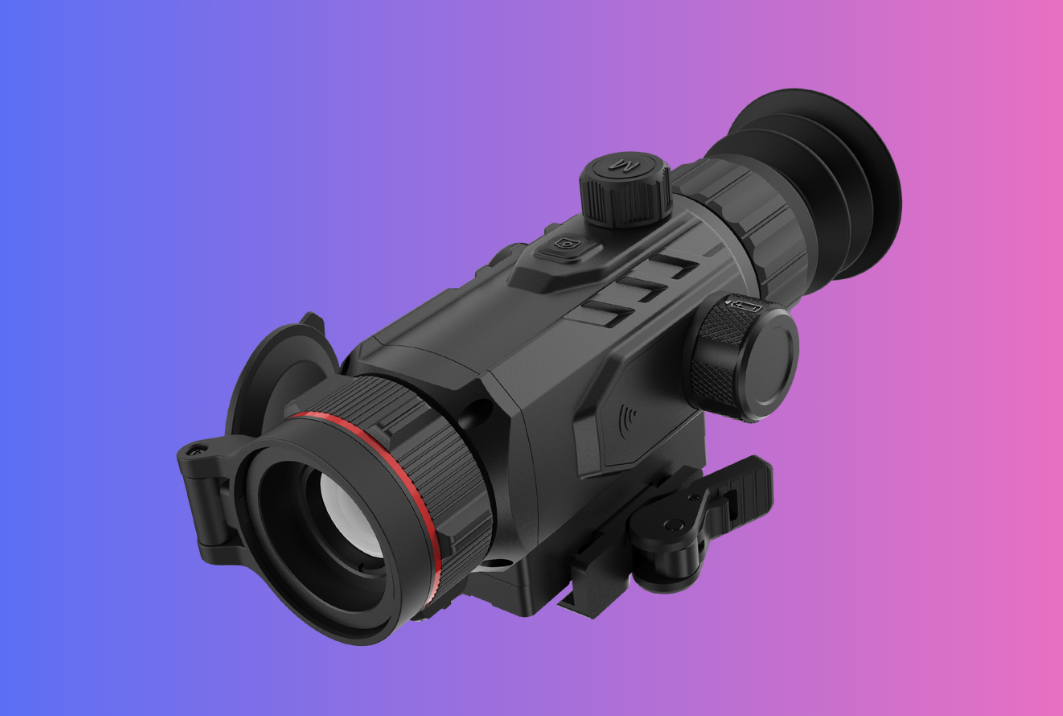
Private-Label Thermal Brands are no longer a “nice-to-have” category expansion for outdoor and inspection retailers—they are a margin and differentiation strategy. If you are building a private-label thermal monocular or thermal scope program for big-box shelves and Amazon-style marketplaces, the technical product spec is only one part of the purchase decision. Large retailers evaluate your ODM/OEM factory on retail readiness: warranty terms, returns handling, compliance documentation, packaging standards, barcode integrity, labeling accuracy, and the supplier’s ability to scale without batch drift.
Table of Contents
ToggleThis article is written for product managers, sourcing teams, and integrators who want to launch (or fix) a private-label thermal line with fewer chargebacks, fewer returns, and faster onboarding.
1) The Real Problem: Big-Box and E-Commerce Buyers Don’t Buy “A Thermal Device”—They Buy a Risk Profile
For independent dealers, a good product and a fair price can be enough. For big-box and e-commerce retailers, the risk model is different:
- Returns are a forecasting problem. A 6–10% return rate can erase category margin once reverse logistics, refurbishment, and customer support are included.
- Chargebacks are operational. Packaging, labeling, and barcode non-compliance triggers deductions and delayed payments.
- Reputation is fragile. A few weeks of “blurry image,” “won’t power on,” or “battery died in the field” reviews can permanently suppress conversion.
- Compliance is non-negotiable. Retailers want complete documentation sets for the target market (EU/UK/US/others), and consistent labeling practices.
This is why private-label thermal brands often fail in execution, not concept. You can hit a 384×288 or 640×512 datasheet target and still fail retail onboarding because the factory cannot deliver stable firmware, consistent QC, and standardized packaging assets.
From a sourcing perspective, the winning supplier is not just a Private-Label Thermal Brands China manufacturer, but a partner that can run a “retail program” with discipline—SKU governance, change control, and documented after-sales processes.
2) What Is a Private-Label Thermal Brand?
A private-label thermal brand is a retailer- or marketplace-led brand (or a DTC brand supplying retailers) that sells thermal products under its own trademark while leveraging an OEM/ODM supplier for engineering and manufacturing.
OEM vs ODM in Private Label (Practical Definition)
- OEM: You select an existing platform (e.g., handheld thermal monocular platform) and customize branding, packaging, and minor options (lens, UI language, accessories).
- ODM: You co-design the device: housing, optics configuration, UI/UX, firmware features, accessory ecosystem, and test standards—then scale production under your brand.
In big-box and e-commerce, many programs start OEM-style for speed, then shift to ODM once the retailer needs clear differentiation (unique UI, better ergonomics, improved battery strategy, or a rangefinder variant).
Why Thermal Is a Special Case for Retail
Thermal products combine:
- optics + sensor + image processing
- batteries + power management
- firmware + UI/UX (and sometimes mobile apps)
- mechanical durability requirements (drop, water ingress, recoil/shock for scopes)
This complexity creates multiple failure modes—and returns. Therefore, big buyers expect a supplier to prove repeatability, not just performance.
3) Key Specs and Design Choices Retailers Actually Care About
Retailers do not evaluate specs the way engineers do. They translate specs into sell-through, review scores, and warranty exposure. Below are the factors that most directly drive those outcomes.
3.1 Detector Resolution and the SKU Ladder
Common retail-friendly resolution tiers:
- 256×192: entry-tier price points; best for short-range scanning and value buyers.
- 384×288: “sweet spot” for many outdoor users; stronger clarity without premium cost.
- 640×512: premium tier; highest expectation on image quality and stability.
Retail strategy implication: build a clean SKU ladder (Good/Better/Best) with meaningful differentiation that customers understand. If two SKUs look the same in real use, you will get price compression and higher return rates (“I paid more but see no difference”).
If you are sourcing from a Private-Label Thermal Brands OEM supplier in China, require the factory to provide side-by-side field captures and a consistent tuning profile across batches (not “golden sample only”).
3.2 NETD (Sensitivity) and Scene Performance
NETD is often quoted, often misunderstood, and frequently abused in marketing. In retail programs, what matters is consistent perceived contrast in realistic conditions (humidity, light rain, background clutter, mixed temperatures). Use NETD as a screening metric, but validate with acceptance testing and scenario-based evaluation.
Practical guidance:
- For outdoor scanning products, ensure stable performance in low-contrast scenes (warm ground, foggy mornings, light drizzle).
- Require a defined “image tuning version” and change control to prevent mid-year firmware shifts that alter the product’s “look.”
If you are building around a module platform, consider starting with proven thermal imaging modules and aligning device tuning to the module’s stable pipeline. (See Gemin Optics’ thermal imaging modules: thermal imaging modules.)
3.3 Optics: Lens Options, FOV, and Customer Satisfaction
Lens choice is one of the largest drivers of user satisfaction because it defines real-world usability:
- Wide FOV (e.g., ~13–19 mm class): easier scanning; customers “find targets faster.”
- Mid FOV (e.g., ~25–35 mm class): balanced; commonly the best retail seller.
- Narrow FOV / longer focal length (e.g., ~50 mm class): longer-range identification, but harder to scan and more sensitive to hand shake.
Retail packaging and listing content must match the experience. If a device is narrow FOV and marketed as “easy scanning,” reviews will punish it.
3.4 Mechanical Robustness: IP Rating, Drop Testing, and Returns
Retailers strongly prefer clear ingress protection claims tied to recognized IP practices. IP ratings are defined under IEC’s ingress protection framework (commonly referenced through IEC 60529). IEC
For big-box:
- Target a realistic IP level based on design constraints (and test it).
- Avoid aggressive claims you cannot support (“waterproof” without qualification is a return magnet).
- Validate drop resistance with a documented test plan (surface, height, orientations, and pass/fail criteria).
3.5 Power System and Battery Strategy
Power complaints are one of the fastest paths to negative reviews. Retailers typically want:
- stable cold-weather performance
- predictable runtime in “normal brightness” and “max brightness”
- transparent charging behavior (USB-C expectations are now mainstream)
Common approaches:
- 18650: widely available; easier customer replacement; strong for global markets.
- 21700: higher capacity, larger cell; can improve runtime but affects ergonomics.
- Proprietary packs: better mechanical integration, but risk supply chain and customer dissatisfaction if packs are hard to replace.
For private label, think beyond the device: chargers, cables, spare batteries, and “what happens when someone loses the cap” all impact returns.
3.6 Firmware and UI/UX: The Hidden Retail Differentiator
Retail buyers rarely say “we want better UI,” but customer reviews do.
UI/UX elements that reduce returns:
- fast boot and predictable sleep/wake
- clear battery status and charging indicators
- “can’t get out of menu” prevention (simple navigation logic)
- language packs validated by native speakers
- stable zeroing logic for scope products (where applicable)
A disciplined ODM partner should offer:
- a published firmware roadmap
- bug triage SLAs during the sales season
- version-locking by SKU (no silent feature removals)
3.7 Adding a Rangefinder Variant Without Creating Compliance Pain
For higher-tier SKUs, adding an integrated laser rangefinder can materially improve differentiation (distance-aware hunting, surveying, or inspection workflows). But it introduces laser safety and labeling requirements. IEC 60825-1 is a common reference for laser product safety classification and requirements. IEC Webstore
If you are building “thermal + LRF” SKUs, align early with a supplier that can provide calibrated, stable laser rangefinder modules and a documentation pack suitable for your target markets. (See: laser rangefinder modules.)
4) Use Cases and Channel Scenarios: How Retailers Expect the Product to Behave
Below are typical scenarios big-box and e-commerce retailers evaluate—explicitly or implicitly through customer feedback loops.
4.1 Big-Box Outdoor Retail: “New-to-Thermal” Buyers
These customers:
- need quick success (scan, detect, identify)
- rely heavily on packaging, in-box guides, and simple controls
- return quickly if the device feels complicated or inconsistent
Design and content implications:
- include a “first 10 minutes” quick-start card
- highlight realistic usage expectations (range depends on conditions)
- keep UI simple and resilient to mistakes
4.2 Amazon / Marketplace: Listing-Driven Expectations
Marketplace buyers purchase through images, bullets, and reviews. They expect:
- the product delivered matches listing claims
- the unit works immediately
- accessories are complete and consistent (no “missing cable”)
Operational implications:
- enforce packaging QC (accessory checklists)
- lock listing claims to tested performance
- provide fast replacement workflows to protect review scores
4.3 Farm / Property / Security Use: Practical Reliability
Even when marketed as “outdoor,” many devices get used for:
- perimeter checks
- livestock monitoring
- night-time property scanning
That means:
- long standby needs
- reliable charging
- durability against casual drops and dust
4.4 Light Industrial and Maintenance Buyers (Cross-Channel Upsell)
Some retailers sell “prosumer” thermal devices that overlap with inspection use (electrical panels, motors, HVAC). If your program includes temperature measurement, you need a clearer position on accuracy, emissivity handling, and user instruction.
For industrial-focused product lines, consider a dedicated segment and supporting assets (training, use-case guides). Gemin also supports industrial formats such as industrial handheld thermal imagers and fixed monitoring solutions like online thermal monitoring systems.
4.5 Seasonal Peaks: Returns and Support Load Testing
Retailers care about what happens in the busy season:
- firmware bugs spike support volume
- return windows overlap promotions
- supply chain disruptions create substitution risks
A credible ODM/OEM supplier should show you:
- peak-season support plan
- spare parts buffer strategy
- RMA triage and root-cause feedback loop
5) How to Choose a China Factory / Manufacturer / Supplier for Private-Label Thermal Brands
This is the section where big buyers separate “a supplier” from “a program partner.” Use the checklist below as a structured scorecard.
5.1 Warranty Terms and the Real Cost of Returns
Ask for:
- standard warranty duration by SKU tier (and what is excluded)
- DOA definition and window (e.g., 7/14/30 days)
- process for advanced replacement vs repair
- failure analysis reporting cadence (monthly/quarterly)
Best practice: tie warranty terms to a documented QC plan and acceptance test procedure (ATP). If the supplier cannot define ATP clearly, your warranty exposure is uncontrolled.
5.2 Returns Policy and RMA Operations (Retail Reality)
Retailers expect you to handle:
- serial number capture and traceability
- refurbish vs scrap decision rules
- accessory replacement handling
- cosmetic grading if units are resold (where allowed)
Minimum operational requirements:
- SN format governance + barcode label quality
- RMA intake form template
- standard troubleshooting scripts (so support responses are consistent)
5.3 Packaging Standards, Barcode Integrity, and Retail Chargebacks
Barcodes are not “just a label.” They are the bridge into retailer inventory systems and marketplace catalogs. EAN/UPC barcode standards are widely used for consumer products. GS1
For big-box and e-commerce, validate:
- UPC/EAN placement rules (scan zones, quiet zones)
- carton labeling (master carton vs inner packs)
- SKU-to-barcode mapping governance (no mid-run swaps)
- print quality and verification (scan grade checks)
Common failure modes that trigger deductions:
- wrong barcode type for the retailer region
- inconsistent GTIN assignment
- low-contrast printing or damaged labels
- mismatched SKU between device, box, and listing
5.4 Multilingual Packaging, Manuals, and Labeling Compliance
Retailers typically require:
- multilingual outer box panels (region dependent)
- multilingual user manuals (or QR code + hosted manuals, if accepted)
- safety statements aligned to product features (battery, lasers, RF, etc.)
- consistent terminology across box, manual, and listing
Operational expectation: the supplier should provide editable source files (AI/PDF), not only final prints, and should be able to run controlled revisions without breaking barcode/label integrity.
5.5 Certifications and “Compliance Pack” Delivery Discipline
Your retailer (or marketplace) will ask for:
- declarations of conformity (where applicable)
- test reports for relevant features (RF, safety, EMC)
- RoHS documentation for EU markets (if applicable)
- labeling rules and user information disclosures
CE marking and conformity assessment are tied to EU harmonization legislation and require a structured procedure and documentation set. Internal Market SMEs+1
If you sell into the U.S. with RF features (Wi-Fi/Bluetooth), FCC processes and equipment authorization requirements may apply depending on the design. Federal Communications Commission+1
You do not want to discover documentation gaps after you have printed 20,000 boxes.
5.6 Quality System, Change Control, and Batch Consistency
Private label fails when:
- factories change components without notice
- firmware updates alter image tuning mid-season
- suppliers cannot reproduce “golden sample” performance
Require:
- controlled BOM and approved vendor list (AVL)
- engineering change notice (ECN) procedure
- sample retention policy (per lot)
- AQL sampling + key functional tests (boot, display, charging, core functions)
- defined calibration/verification steps (and records)
If you are working with a private label thermal scope Chinese factory, ask for recoil/shock testing methods and traceability of optic alignment checks (misalignment creates both returns and reputational damage).
5.7 Retail Readiness Deliverables: A Simple Scorecard
| Area | What a Big Buyer Wants | What You Should Request from the Factory |
|---|---|---|
| Warranty | predictable terms + fast resolution | warranty policy, DOA rules, escalation SOP |
| Returns/RMA | traceable, efficient reverse flow | SN system, RMA form, refurb criteria |
| Packaging | standardized, scan-ready | dielines, print specs, barcode verification plan |
| Manuals/Labels | multilingual, consistent, compliant | editable files, translation workflow, revision control |
| Compliance | complete, market-specific pack | test reports/DoC templates, labeling guidance |
| Quality | consistent batch output | ATP, AQL plan, ECN process, records |
6) Gemin Optics as Your OEM/ODM Partner for Private-Label Thermal Brands
Gemin Optics supports private-label thermal programs with a focus on “retail execution,” not only device performance. We work with brands and integrators that need a stable, scalable supply chain and the supporting assets that big-box and e-commerce channels demand.
6.1 Platform + Module Capability (Scale Without Losing Control)
A reliable private-label roadmap is easier when the supplier can support both:
- end-device programs (monoculars/scopes/handhelds), and
- underlying components for controlled integration.
If your strategy requires modularity or future variants, you can align your device plans with Gemin’s core portfolios, including:
- thermal imaging modules for stable integration baselines
- laser rangefinder modules for higher-tier distance-aware SKUs
- industrial handheld thermal imagers for professional channel extensions
- online thermal monitoring systems for fixed-site solutions where applicable
6.2 Retail Program Support: Packaging, Manuals, Barcodes, and Collateral
For “商超连锁 + 亚马逊/电商” private-label programs, the practical work is often:
- packaging structure + print specifications
- barcode placement + SKU mapping governance
- multilingual manuals and label sets
- standardized in-box inserts (quick start, warranty card, support QR)
- display and merchandising assets (when required)
A capable supplier should reduce your internal workload by providing standardized templates, controlled revision workflows, and packaging QC gates that prevent chargeback-triggering errors.
6.3 Quality, Documentation, and After-Sales Feedback Loops
In private label, the supplier’s maturity shows up after shipment:
- how quickly issues are triaged
- whether root causes are identified and corrected
- whether changes are controlled and communicated
Gemin’s OEM/ODM engagement model emphasizes:
- defined acceptance testing and quality gates
- version control for firmware and critical components
- documented support workflows to keep returns and negative reviews under control
If you need a Private-Label Thermal Brands OEM supplier in China that can support both engineering and retail execution, the partnership should look like a program—with governance, documentation, and accountability.
CTA: Launch Your Private-Label Thermal Brand With Retail-Ready Execution
If you are planning a Private-Label Thermal Brands program for big-box retail and e-commerce, we recommend starting with your channel requirements (warranty/returns, packaging, barcodes, compliance pack, and multilingual assets) and then locking the product specification to a stable, testable platform.
Gemin Optics supports private-label programs as a China manufacturer, OEM/ODM supplier, and engineering partner—helping you reduce onboarding friction, control returns, and scale with consistent quality. Submit your OEM/ODM requirements here.