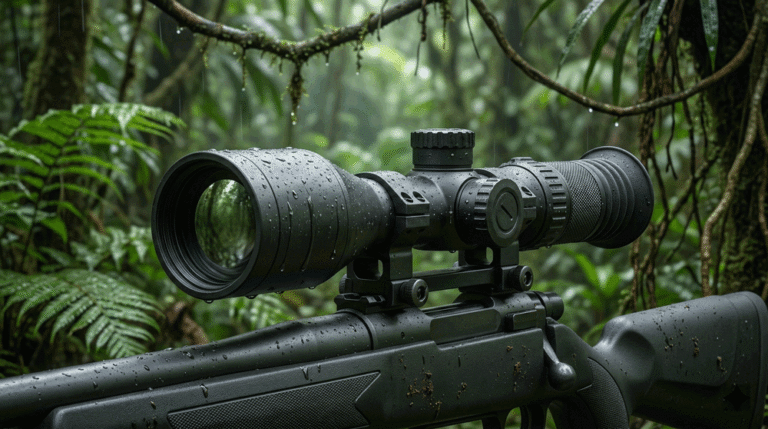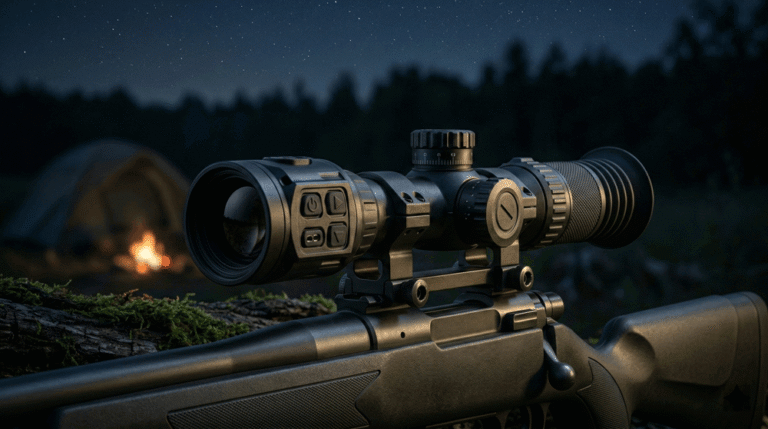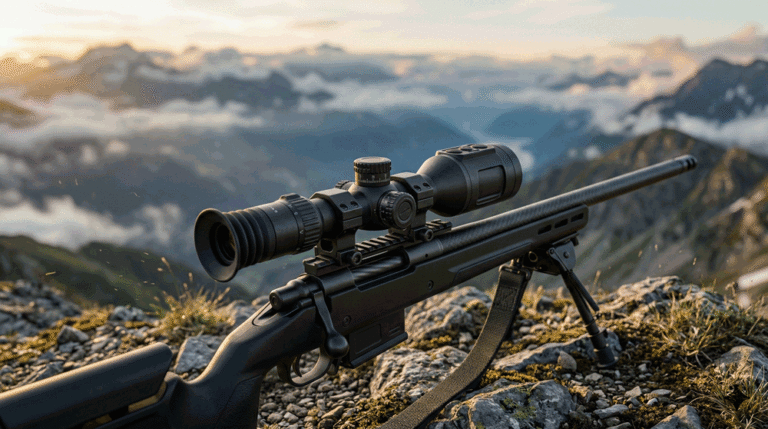
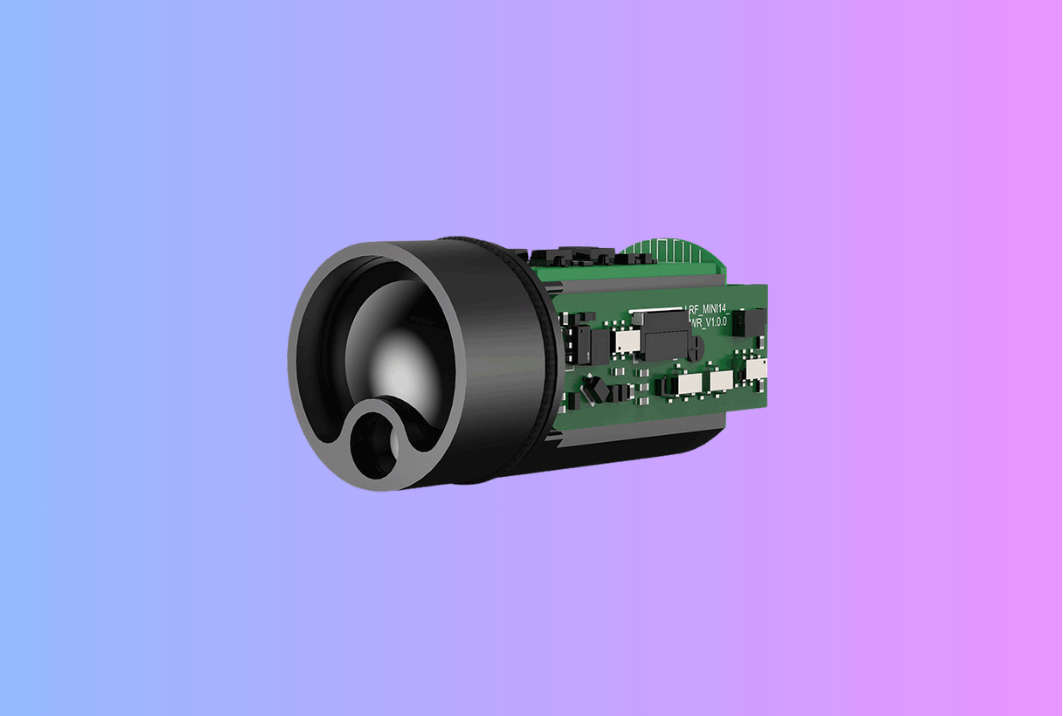
A modern time of flight sensor lives or dies by range confidence—the probability that a displayed distance is real, repeatable, and timely. This guide explains why wavelength choice (905 nm vs 1535 nm) dominates confidence in bright sun, fog, rain, and brush, and how to co-design optics, timing, detectors, and UI so handhelds and compact optics deliver trustworthy locks in the field.
(Category: Laser Rangefinder Modules · Search intent: integration how-to / commercial investigation · Region: global)
Executive Summary
-
- 905 nm leverages mature Si APDs, lower cost, and good detector SNR; 1535 nm enables higher eye-safe launch energy (Class 1) and better sun-glare immunity—but requires pricier InGaAs detectors and glass.
-
- Confidence (Pd) rises when SNR × target coverage × decision discipline are maximized. Wavelength changes all three via emission budget, reflectivity, and ambient background.
-
- In clear air and bright sun, 1535 nm wins for long-range compact optics; in light fog/drizzle or short-range golf/outdoor units, well-tuned 905 nm can match or beat it on ROI.
-
- Publish Pd vs distance on 10–20 % targets and on bark/fabric proxies—buyers believe curves, not “max range.”
-
- Keep IEC 60825-1 Class 1 intact after any wavelength switch; re-compute single/multiple-pulse AEL, divergence, and labeling per FDA Laser Notice No. 56.
Use Cases & Buyer Scenarios
Scenario 1 — Golf/consumer handhelds (50–400 m, noon sun)
Retail price and battery life matter more than extreme range. A 905 nm engine with Si APD, 1.0–1.2 mrad divergence, and first-target bias offers the best mix of cost, UX, and confidence on flags/poles. Reuse housing, seals, and UI patterns proven on the Laser Rangefinder Module.
Scenario 2 — Compact hunting optics (100–800 m, brush + dawn/dusk)
Foreground clutter and low-light shots punish SNR. 1535 nm allows higher Class 1 launch energy and lower solar background, lifting confidence in last-target/brush mode—valuable when integrated with overlays in Thermal Rifle Scopes.
Scenario 3 — Tripod/vehicle platform (800–2,000 m, mixed weather)
With larger apertures, narrow divergence (0.6–0.8 mrad), and sync to GNSS/camera stacks, either wavelength can deliver long range. 1535 nm’s eye-safe headroom often simplifies optics and keeps confidence higher under sun. If night operations are planned, align timing with the HUD in a Thermal Monoculars accessory.
Spec & Selection Guide (the heart)
1) What “range confidence” means (and how to measure it)
Confidence (Pd) is the probability that your engine returns the correct range within a tolerance (e.g., ±0.5 m at 200 m) and below a latency gate (e.g., 180 ms 95th). It is driven by:
-
SNR: launch energy, path losses, reflectivity ρ\rho, detector QE, and ambient background.
-
Target coverage: beam divergence × reticle alignment × jitter/occlusion.
-
Decision discipline: clustering, gates, first/last bias, verify bursts, and the confidence score shown to users.
Report Pd vs distance for 10–20 % panels and for natural targets (bark/fabric) at noon; include latency 95th and mWh/100 ranges.
2) Wavelength physics that matter in the field
| Factor | 905 nm | 1535 nm (≈1550 nm) | Field impact |
|---|---|---|---|
| Detector | Si APD (low noise, cheap) | InGaAs APD (higher noise, costly) | 905 wins on BOM; 1535 needs careful gain/TECs |
| Class 1 headroom | Modest | High (retina less sensitive) | 1535 supports higher pulse energy safely |
| Solar background | High (silicon sees it well) | Lower | 1535 improves sun immunity |
| Common optics | Plastic + standard AR | Glass + IR coatings | 905 cheaper; 1535 more robust/opto-grade |
| Atmospheric window | Good | Good; slightly more water-vapor features | Both fine in clear air; fog favors neither strongly |
| Retroreflectors | Strong | Strong | Similar on flags/prisms |
| Fur/bark reflectivity | Moderate | Slightly lower (material-dependent) | Tune pulse width/matching at 1535 |
Bottom line: 1535 nm’s eye-safe headroom and lower solar background can yield higher Pd at long range or in harsh sun, while 905 nm wins on cost, size, and supply chain.
3) SNR model you can ship
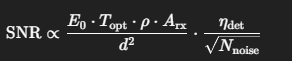
-
E0E_0: eye-safe launch energy (higher at 1535)
-
ToptT_\text{opt}: optics transmission (AR, window, filters)
-
ArxA_\text{rx}: receiver aperture, matched to divergence
-
ηdet\eta_\text{det}: detector QE (higher at 905 with Si)
-
NnoiseN_\text{noise}: ambient photons + APD/amp noise (lower at 1535 in sun)
Design move: at 1535 nm, spend headroom on shorter τ × more pulses instead of brute force peak power; then use matched filtering to recover range precision.
4) Divergence, spot size, and jitter
Handheld wobble (~1–2 mrad) dominates misses more than beam physics. For both wavelengths, the pragmatic window is 0.9–1.3 mrad for handhelds; go narrower only with tripod UX. Keep TX/RX bores within ≤0.2 mrad post-stress so “first/last” decisions track the reticle.
5) A practical comparison table (ship this to PMs)
| Parameter | 905 nm handheld | 1535 nm handheld | Notes |
|---|---|---|---|
| Detector & amp | Si APD + transimpedance | InGaAs APD + cooled/low-noise amp | Design budget shifts to analog at 1535 |
| Eye safety (Class 1 AEL) | Lower | Higher | 1535 allows more launch energy safely |
| Solar background | Higher | Lower | 1535 less glare-limited |
| Optics & window | Lower cost | Higher cost, better IR AR | 1535 prefers glass + coatings |
| Typical divergence | 1.0–1.2 mrad | 1.0–1.2 mrad | Choose by scene, not wavelength |
| Best scenes | Golf/short-to-mid range | Long-range sun; cluttered last-target | Tune τ and burst N accordingly |
| BOM/ASP | Lower | Higher | Offset with premium “confidence” pitch |
6) Mini decision rules
-
If your bill of materials must hit consumer price points, then start with 905 nm; invest in glare-tested UI and clustering to raise Pd.
-
If your roadmap demands >800 m in sun from a compact optic, then plan 1535 nm with InGaAs and publish Pd gains.
-
If brush and backstops dominate misses, then whichever wavelength you choose, add verify bursts when cluster spread (σ) is large.
Integration & Engineering Notes
Electrical & Interfaces
Make the engine wavelength-agnostic to the host:
-
SET_MODE(FIRST|LAST|SCAN) -
SET_BURST(N),SET_TAU(ns),SET_GATE(params) -
GET_RANGE()→{range, confidence, n_valid, sigma, mode} -
GET_STATS()→ latency (mean/95th), mWh/100 ranges -
GET_ENV()→ temperature, estimated ambient background
Isolate TX energy store from HUD logic so long bursts don’t brown-out the display—vital in bright-sun scenarios described in our OLED/UI guide and relevant to optics that live beside a Thermal camera module.
Optics & Mechanics (mounting, alignment, sealing)
-
Windows & AR: for 905 nm, low-cost AR can work; for 1535 nm, use hard-coat IR AR (R ≲ 0.5 % each surface) and blackened baffles to suppress internal sparkle.
-
Filters: a narrowband filter (e.g., 10–20 nm FWHM) lifts SNR at both wavelengths; 1535 nm benefits most in sun.
-
Sealing: nitrogen purge + O-rings; reuse test-proven seal stack from our weatherized optics so confidence isn’t lost to fogging—same discipline we apply to compact systems like Thermal Binoculars.
-
Boresight control: post-drop and thermal drift ≤ 0.3 mrad.
Firmware/ISP/Tuning (AGC, filtering, clustering)
-
Matched filtering around the shipped pulse width τ\tau (e.g., 10–20 ns).
-
Ambient-aware thresholds: sample background between pulses; raise thresholds in high irradiance (noon). 1535 nm needs less rise than 905 nm.
-
Clustering: group TOF candidates by proximity; compute amplitude, σ, skew; apply first/last bias then verify when σ is wide.
-
Confidence score (0–100):

- UI cadence: human-friendly 5–8 Hz update even if the engine samples faster; don’t teach users to chase flicker.
Testing & Validation (bench → field)
Panels (cooperative): 10 %, 20 %, 80 % at 50/100/200/400/800 m.
Natural targets: bark poles; brown fabric (fur proxy); brush wall with/without backstop.
Bright sun: ≥ 100 klx, handheld sweep 5–10°/s.
Weather: light drizzle/spray; fog box with Mie-like scatter; −10 °C frost → +40 °C heat-soak.
Acceptance gates (illustrative)
-
905 nm golf SKU: Pd ≥ 90 % on poles @ 150 m (First-Target); latency 95th ≤ 180 ms; energy within ±5 % after temp cycling.
-
1535 nm hunting SKU: Pd ≥ 80 % on fur/bark behind grass @ 300 m (Last-Target + verify); false backstop ≤ 10 %.
-
Scan (both): perceived 5–8 Hz; stability ±0.5 m on steady target.
Compliance, Export & Certifications
-
IEC 60825-1 Class 1: 1535 nm gains AEL headroom because retinal hazard is lower; 905 nm requires tighter current/τ/f controls. In both cases, classify with single and multiple-pulse rules and record divergence (full-angle 1/e²).
-
FDA Laser Notice No. 56: align U.S. filings to your IEC report; update when firmware modifies burst timing or optics change transmission.
-
Labeling: keep Class-1 labels near the aperture; manuals should explain modes and conditions plainly. If the SKU shares a chassis with day/night gear (e.g., accessories that pair with Thermal Clip-On Sight or Thermal Pistol Sights), duplicate label locations in the combined guide.
-
CE/FCC/RoHS: separate streams, but keep a single Technical File that connects eye-safety claims to markings and firmware versions.
Pitfalls, Benchmarks & QA
Assuming 1535 nm always outranges 905 nm. Not if you starve the InGaAs chain or ship wide divergence. Fix: spend headroom on τ and pulses, and test Pd curves, not “max range.”
Chasing tiny divergence on handhelds. 0.6 mrad looks great on paper and misses in shaky hands. Fix: 1.0–1.2 mrad with disciplined clustering.
Publishing only “max range.” Buyers reject billboard numbers. Fix: publish Pd vs distance on 10–20 % panels and natural targets.
No bright-sun testing. Noon irradiance punishes 905 nm more. Fix: test ≥ 100 klx; tune thresholds and filters.
Skipping multiple-pulse rule after firmware updates. Timing tweaks can break Class 1. Fix: lock signed timing tables; re-classify after changes.
Ignoring optics drift. AR/filters vary by lot; windows shift with stress. Fix: incoming QA + post-stress divergence checks.
Benchmark recipe (one day). Five units per wavelength; panels at 50–800 m; brush wall with/without backstop; noon sun; drizzle/fog box. Record Pd, latency 95th, mWh/100 ranges, and confidence distribution. Present one sheet: “905 vs 1535 nm—Pd curves and energy.”
FAQs
Will 1535 nm give me longer range in fog?
Not automatically. Fog scatter is Mie-dominated; both wavelengths degrade. Confidence improves more from burst strategy, gating, and UI than from wavelength alone in light fog.
Can I keep a common housing and switch wavelengths later?
Yes—if you design the window, AR stack, and receiver field stop to serve both bands and reserve PCB area for the InGaAs chain. Plan different TX timing tables but identical APIs.
Does 1535 nm always mean better eye safety?
It offers more headroom for Class 1, but you still must prove AEL across worst-case τ, f, burst N, and divergence. Keep labels and reports synchronized.
Is Si APD obsolete?
No. For golf/consumer price points and ranges ≤ 400–600 m, a tuned 905 nm chain is hard to beat on ROI.
How should I present “confidence” to end users?
Show a 0–100 score or thin bar. When < 60, prompt “Steady and rescan.” Publish the definition in your manual to cut support calls.
Business Model, MOQ & Lead Time (OEM/ODM)
-
MOQs: 200–300 pcs for 905 nm catalog optics; 500–1,000 pcs for 1535 nm custom windows/filters.
-
Lead time: EVT in 4–6 weeks (905) with catalog glass; add 6–10 weeks for 1535 nm optics and InGaAs chain.
-
Deliverables: Pd curves vs distance for 10–20 % panels and natural targets, timing table (CSV), divergence certificate, eye-safety file, and SDK with mode defaults.
-
Channel economics: Confidence curves and Class-1 paperwork support $5–$20 ASP uplift; a single-SKU housing with dual wavelength options lowers tooling and accelerates roadmap into day/night bundles.
Tiny distributor ROI (illustrative)
| Assumption | 905 nm | 1535 nm |
|---|---|---|
| Ex-works | $95 | $155 |
| Landed | $8 | $10 |
| Distributor sell | $155 | $229 |
| Gross per unit | $52 | $64 |
| Monthly run | 900 | 600 |
| Monthly gross | $46,800 | $38,400 |
Call-to-Action (CTA)
Need an apples-to-apples Pd comparison and an eye-safe timing table you can defend? We’ll help you prototype both wavelengths, tune burst/τ and clustering, and publish confidence curves buyers trust—on your existing platform alongside optics that pair cleanly with Thermal Clip-On Sight accessories.
Sources
-
IEC 60825-1 — Safety of Laser Products (Ed. 3). Classification, AEL, limiting apertures, multi-pulse rules. (IEC Webstore)
-
FDA — Laser Notice No. 56. U.S. recognition of IEC 60825-1 conformance; product report guidance. (U.S. FDA Guidance)
-
RP Photonics — Eye Safety / Laser Pulses / Beam Divergence. Background on AEL, pulse trains, and divergence definitions. (RP Photonics Encyclopedia)
-
Edmund Optics — Atmospheric Transmission & NIR Materials. Practical notes on 905 vs 1550 nm windows/filters. (Edmund Optics Knowledge Center)
-
Thorlabs — APD Tutorials (Si vs InGaAs). Detector noise/QE considerations for 905 and 1550 nm receivers. (Thorlabs Tutorials)