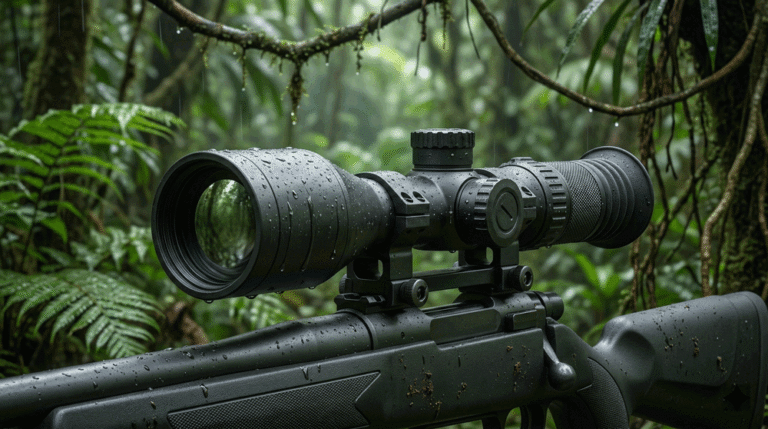
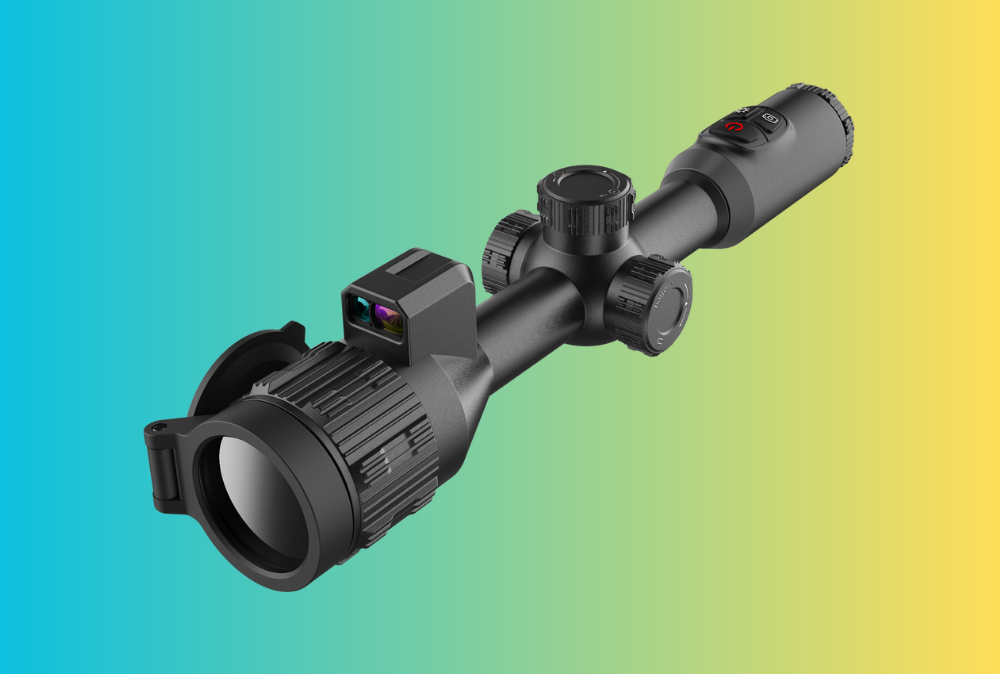
When a hunter buys a Thermal Hunting Scope, they see a tool that helps them make clean, confident shots at night.
When a B2B buyer places a purchase order, they see something bigger: a product that must meet legal requirements, environmental expectations and growing demands for ethical sourcing.
Table of Contents
ToggleFor European and North American customers especially, it is no longer enough for a scope to be accurate and durable. It must also be made in a way that respects people, protects the environment and can stand up to audits from regulators, insurers and end users.
This article explains how ethical and sustainable manufacturing can be built into the entire thermal optics supply chain—and how a responsible Chinese manufacturer can give B2B partners true “peace of mind delivery” instead of just a good price.
1. Why ethics and sustainability matter for Thermal Hunting Scopes
Thermal hunting optics sit at the intersection of several sensitive topics:
- advanced electronics and infrared technology
- export controls and dual-use regulations
- wildlife management and hunting ethics
- cross-border supply chains involving metals and minerals
Because of this, brands that sell Thermal Hunting Scope lines in Europe or North America face scrutiny from:
- retailers with sustainability and ESG policies
- financial institutions and insurers
- government agencies enforcing RoHS, REACH and other rules
- increasingly conscious hunters who care about where gear comes from
If a brand cannot answer simple questions—“Where are your scopes made?” “Are workers treated fairly?” “Do you comply with EU chemical laws?”—its long-term position in premium channels is at risk. Ethical manufacturing is not marketing fluff; it is a licence to operate.
2. Compliance as a foundation: meeting global regulations
The first layer of responsible manufacturing is basic legal compliance. For thermal optics, that usually means:
- RoHS and REACH for hazardous substances in electronics and materials
- WEEE obligations for recycling in many EU markets
- CE and FCC for electromagnetic compatibility and safety
- Laser safety standards when integrating rangefinders
- Export control regulations for certain resolutions or dual-use applications
A serious manufacturer treats these as design constraints, not afterthoughts. For example, component selection for a hunting scope draws on the same restricted-substance database used in our industrial devices and thermal camera modules.
Proper documentation is equally important. B2B partners need:
- declarations of conformity and test reports
- material composition statements for housings, PCBs and cables
- confirmation that lasers used in any thermal scope with rangefinder meet IEC safety classes
When your supplier can provide these documents promptly, it becomes much easier to pass retailer onboarding, government tenders or corporate ESG checks.
3. Responsible sourcing of materials
Thermal hunting optics use specialized materials:
- germanium or other infrared-grade lens materials
- solder alloys and PCB substrates
- aluminium and engineering plastics for housings
- batteries and charging electronics
An ethical supply chain addresses several risks around these materials.
3.1 Conflict-free and traceable metals
Responsible manufacturers work with suppliers who can declare that metals are sourced from smelters audited under recognised programmes (for example, conflict-free or RMAP-compliant smelters). While hunting scopes are not the largest consumer of tin or gold, using traceable supply helps customers align with their own conflict-minerals policies.
3.2 Chemical safety and worker exposure
Adhering to RoHS and REACH is not only about passing customs checks; it also protects workers in the factory and recyclers at end-of-life. Using low-halogen PCBs, lead-free solders and compliant coatings reduces exposure to harmful substances throughout the product lifecycle.
3.3 Long-term availability of components
Sustainability is also about avoiding waste. When a manufacturer designs a Thermal Hunting Scope around stable, commonly available components, B2B partners can obtain spares and support repairs for many years. That prevents hundreds of units from becoming e-waste simply because a proprietary connector or display is no longer available.
4. Worker welfare and safe factories
Ethical manufacturing begins on the factory floor. For a thermal scope producer, this means:
- complying with local labour laws on working hours, social insurance and contracts
- providing clean, safe working environments with adequate lighting and ventilation
- training workers on ESD protection, chemical handling and equipment safety
- implementing grievance mechanisms and anti-harassment policies
Regular internal audits and third-party inspections help verify these commitments. Manufacturers who are proud of their practices are usually willing to host customer visits or share photos and videos of production areas—something we actively encourage with B2B partners touring our thermal rifle scopes assembly lines.
Over time, a stable, well-treated workforce is also a quality advantage: experienced technicians assemble and calibrate scopes more consistently than constantly rotating labour.
5. Environmental footprint: designing greener Thermal Hunting Scopes
A hunting optic may be small, but its environmental footprint spans materials, energy and logistics. There are several levers a responsible manufacturer can pull.
5.1 Energy-efficient production
Modern SMT lines, reflow ovens and environmental chambers consume significant power. Investing in energy-efficient equipment, optimising process parameters and monitoring consumption reduces the carbon intensity of each Thermal Hunting Scope produced.
Where possible, factories can also join local renewable-energy programmes or install rooftop solar to offset part of their electricity use.
5.2 Waste reduction and recycling
By standardising PCB panel sizes, lens blanks and housing designs across product families, a manufacturer can reduce scrap. Off-cuts of aluminium or plastic are collected and sent to certified recyclers.
In packaging, switching from foam to recyclable cardboard inserts, using soy-based inks and avoiding unnecessary plastic film lowers waste at the dealer and end-user level.
5.3 Product durability as sustainability
The single most important environmental decision is to build scopes that last. A Thermal Hunting Scope that survives ten seasons of use is far greener than one that fails after two and must be replaced.
That is why rigorous testing—like the processes described in our previous article on quality control, and implemented daily on our thermal clip-on sights and other optics—is not only about warranty costs; it is about reducing lifetime resource consumption.
6. Product design for serviceability and long life
Sustainability is not just about how products are made; it is also about how they can be maintained and repaired.
6.1 Modular architecture
Using modular design—sensor core, power board, display module, housing—allows many failures to be fixed by replacing one subassembly instead of scrapping the whole scope. This approach draws on the same modular families of thermal camera modules used in our industrial and security lines.
For B2B partners, this means:
- lower lifetime TCO for fleets of scopes
- easier regional repair networks
- less waste and better sustainability metrics
6.2 Firmware upgradability
A sustainable scope also needs a sustainable firmware path. Clear, documented update procedures reduce the risk of bricked devices and help avoid unnecessary replacements. When bugs are fixed or new features are added, existing users benefit without buying entirely new hardware.
6.3 Access to spare parts
Responsible manufacturers commit to keeping critical spare parts—battery caps, eyecups, mounts, control knobs, lens covers—available for a defined number of years. This is particularly important for long-term B2B deployments such as outfitter fleets or security cross-over applications where the Thermal Hunting Scope must remain in service for many seasons.
7. Transparency and traceability for B2B partners
Ethical and sustainable manufacturing only truly matters if it can be demonstrated. B2B buyers increasingly ask for:
- supplier codes of conduct
- audits or self-assessment questionnaires on labour and environment
- evidence of ISO-style quality and environmental management systems
- traceability data on key components and batches
A manufacturer that already maintains detailed records for quality control can extend those systems to CSR and sustainability data. For example, the same serial-number-based traceability that links a scope to its test results can also link it to the batch of germanium lenses or PCBs used in that production run.
This level of transparency builds trust with large retailers, distributors and OEM partners who must report on their own supply chains in ESG or modern-slavery statements.
8. Balancing ethics with performance and price
Some buyers worry that “sustainable” automatically means “too expensive.” In reality, many ethical practices save money over time:
- reduced scrap and rework from higher first-pass yield
- lower warranty costs from durable design
- fewer disruptions from labour disputes or regulatory issues
For example, by using common core platforms across hunting, monocular and industrial products, we can spread R&D and compliance costs over larger volumes. That allows B2B partners to offer competitive Thermal Hunting Scope pricing while still meeting Western expectations for ethical manufacturing.
The goal is not to make the most expensive optic; it is to make the most responsible and reliable one at each price tier—whether that tier is an entry-level farm infrared scope for rifle or a flagship predator scope with integrated rangefinder.
9. How Gemin Optics embeds social responsibility into Thermal Hunting Scope manufacturing
As a China-based manufacturer exporting to demanding markets, Gemin Optics has built ethical and sustainable practices into its core operations:
- Shared platforms: hunting optics share technology with industrial systems and thermal monoculars, spreading the cost of compliance and ESG initiatives.
- Documented processes: quality and environmental management procedures are audited and can be shown to B2B partners on request.
- Responsible sourcing: key suppliers are evaluated not only on cost and lead time, but also on compliance and traceability capabilities.
- Worker focus: investment in training, safety and welfare results in low turnover and higher skill levels on the assembly line.
For OEM/ODM collaborations, these foundations extend to custom projects as described on our thermal rifle scopes OEM/ODM solutions page. That means your private-label scopes can be promoted not only as high-performing, but also as ethically produced.
10. Communicating sustainability to your own customers
Once your Thermal Hunting Scope supply chain is ethically and sustainably managed, you can confidently tell that story to your own customers:
- include brief CSR and environmental notes in catalogues and web pages
- prepare one-page summaries for retailer and government tenders
- train sales staff to answer basic questions about sourcing and compliance
The key is to be specific and factual. Phrases like “RoHS-compliant electronics,” “modular design for repairability” or “tested for long service life to reduce waste” carry more weight than vague “green” claims.
When you can back those statements with real data from your manufacturing partner, ESG-conscious hunters and procurement teams will feel comfortable choosing your brand.
11. CTA – Work with a Thermal Hunting Scope manufacturer you can trust
Ethical and sustainable manufacturing is no longer optional for brands selling into Europe, North America and other regulated markets. A Thermal Hunting Scope that performs brilliantly but cannot pass an audit, or that is linked to poor labour practices, is a long-term liability.
By integrating compliance, responsible sourcing, worker welfare, environmental management and durable product design into everyday operations, Gemin Optics aims to be the kind of manufacturing partner that protects—not risks—your reputation.
If you are planning a new thermal product line, private-label project or OEM collaboration and want ethics and sustainability built into the supply chain from day one, you can reach our team via the Gemin Optics contact page. Together we can design Thermal Hunting Scope solutions that satisfy hunters in the field, regulators at the border and ESG auditors in the boardroom.