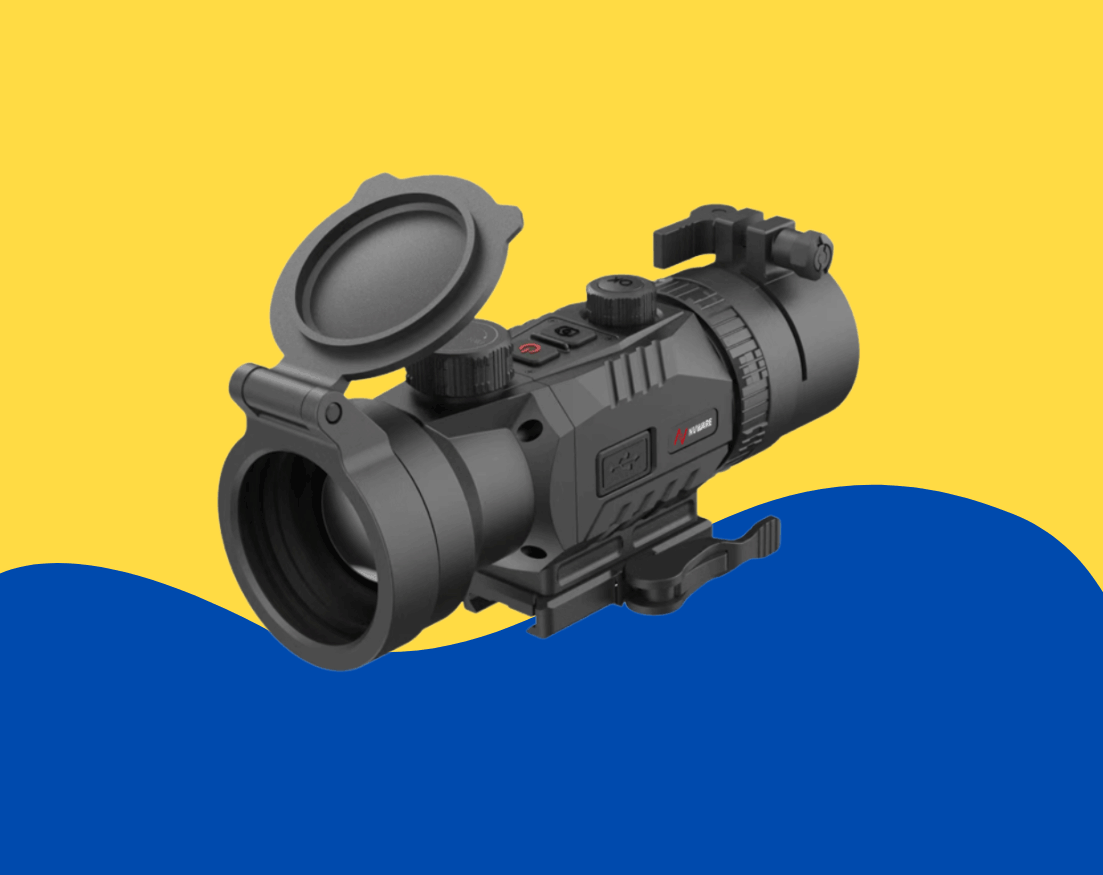
The OEM/ODM Playbook: Scaling Your Thermal Optics Brand
Table of Contents
ToggleLaunching a new thermal imaging product line or scaling an existing one involves immense complexity, from sensor integration to international compliance. For ambitious brands, distributors, and startups, an OEM/ODM partnership is the most strategic path to market. This playbook guides you through the process of selecting the right partner and navigating the co-development journey to build a successful, profitable thermal optics brand.
Executive Summary
For brand leaders and product managers evaluating a manufacturing partner, these are the essential takeaways:
-
- Partnership Over Price: The most successful outcomes are built on a partner’s engineering depth, supply chain stability, and transparent communication—not just the lowest unit cost.
-
- Differentiation is Key: A true ODM partner enables brand differentiation through custom industrial design, unique firmware features (e.g., user interfaces, reticles, color palettes), and tailored performance tuning.
-
- De-Risk Your Roadmap: Leveraging a mature partner’s established platform de-risks your investment by offloading the immense challenges of low-level engineering, global sourcing, and regulatory certification.
- A Phased Approach Wins: A structured, four-phase process (Discovery, Design, Validation, Mass Production) is critical for managing timelines, budgets, and quality, ensuring a predictable path from concept to customer.
Partnership Models & Buyer Scenarios
The right partnership model depends on your in-house capabilities, business goals, and desired speed-to-market.
The Established Optics Brand
An established brand in the hunting or outdoor space looking to add Thermal Monoculars or binoculars to their portfolio is a classic OEM/ODM candidate. Their goal is to leverage their existing brand equity and distribution channels. They need a reliable partner who can deliver a high-quality, brand-aligned product line quickly without diverting their core R&D resources. Speed-to-market and manufacturing reliability are their top priorities.
The Technology Startup
A new startup with a strong brand vision and venture funding but no in-house hardware engineering or manufacturing is a perfect fit for a full-service ODM partnership. They need a partner who can translate their vision into a tangible product—from industrial design and electronics engineering to final assembly and testing. This turnkey approach allows them to focus on marketing, sales, and software innovation while their partner handles the hardware complexity.
The Large Distributor or Retailer
Large distributors often seek to launch a private label thermal optics brand to capture higher margins and build customer loyalty. They require a proven, off-the-shelf product platform (often called “white label”) that can be branded with their logo and packaging. For them, the key is a field-tested, reliable product that minimizes support and warranty issues, backed by a partner with the capacity for high-volume production.
Partner & Platform Selection Guide
Choosing a partner is more important than choosing a single product. Evaluate potential partners on their capabilities, processes, and platform maturity.
Key Partner Evaluation Criteria:
-
Engineering Depth: Does the partner have a multidisciplinary engineering team (mechanical, electrical, optical, firmware)? Can they solve complex problems or are they just an assembler?
-
Supply Chain Management: A partner’s ability to manage the supply chain for critical components, especially the Thermal camera module sensor, is paramount. The global thermal imaging market’s growth relies heavily on this stability (Markets and Markets, 2024).
-
Quality Management System (QMS): Look for certifications like ISO 9001 and ask for details about their QA process, from incoming component inspection to final product testing.
-
Communication & Project Management: A dedicated project manager and clear, consistent communication are the bedrock of a successful co-development project.
Comparison of Partnership Models
| Aspect | OEM (Original Equipment Manufacturer) | ODM (Original Design Manufacturer) | Private Label (White Label) |
| Design Input | You provide the complete product design. The partner is your factory. | Collaborative design. Partner provides a platform you customize. | Partner provides a finished product. You add your brand. |
| IP Ownership | You own all design and tooling IP. | Typically shared or belongs to you, depending on the agreement. | Partner owns the product design IP. |
| Time-to-Market | Longest (18-24+ months) | Medium (9-15 months) | Fastest (2-4 months) |
| NRE Costs | Highest | Medium | Low to None |
| Best For | Companies with full R&D teams seeking a contract manufacturer. | Brands wanting a unique product without building from scratch. | Brands prioritizing speed and a proven, low-risk product. |
Simple Decision Flow
Do you have a complete, manufacturing-ready product design?
  └── Yes: Pursue an OEM (contract manufacturing) model.
  └── No:
      Do you need significant product differentiation (custom shape, UI, features)?
        └── Yes: The ODM model is your best path.
        └── No:
            Is your main goal speed-to-market with a proven product?
              └── Yes: A Private Label solution is the ideal choice.
The Co-Development Process: From Concept to Scale
A structured ODM process transforms an idea into a market-ready product. It is typically broken into four distinct phases.
Figure 1: The Four-Phase ODM process ensures a structured and predictable path from initial concept to full-scale manufacturing.
Phase 1: Discovery & Specification
This is the most critical phase. The output is a detailed Product Requirements Document (PRD) that becomes the project’s blueprint. It defines:
-
Target audience and use cases.
-
Key performance specifications (e.g., sensor resolution, NETD, lens, range).
-
Must-have features (e.g., video recording, Wi-Fi, integration of a Laser Rangefinder Module).
-
Target bill of materials (BOM) cost and MSRP.
-
Industrial design concepts and brand guidelines.
Phase 2: Design & Prototyping
The partner’s engineering team translates the PRD into a functional product. This involves:
-
Industrial & Mechanical Design: Creating the external housing, ensuring ergonomics and durability.
-
Electronics Engineering: Designing the mainboard, power management, and component layout.
-
Firmware Development: Building the user interface (UI), image processing algorithms, and core logic.
-
Initial Prototypes: Producing the first functional units for review and initial testing.
Phase 3: Validation & Pilot Run (DVT/PVT)
Prototypes undergo rigorous testing to ensure they meet the PRD specifications.
-
Design Validation Testing (DVT): Lab-based tests for environmental durability (temperature, humidity), shock/vibration (recoil testing for Thermal Rifle Scopes), waterproofing (IP rating), and battery life.
-
Production Validation Testing (PVT): A small production run (e.g., 50-100 units) using the final tooling and assembly processes to validate manufacturing consistency and quality.
-
Compliance Pre-scans: Testing for CE/FCC emissions to catch any issues before final certification.
Phase 4: Mass Production & Lifecycle Management
Once the PVT build is approved, the project moves to full-scale production. A good partner doesn’t stop at shipping; they provide ongoing support, including managing firmware updates, addressing any field issues, and planning for end-of-life component management.
Compliance, Export & Certifications
Navigating global regulations is a major hurdle that a capable ODM partner handles for you. They should manage the entire certification process for:
-
Electronics: CE (Europe), FCC (USA), IC (Canada), RCM (Australia).
-
Safety & Environmental: RoHS (Hazardous Substances), WEEE (Waste Electrical and Electronic Equipment).
-
Export Controls: High-performance thermal devices (e.g., with refresh rates >9Hz) are often subject to export controls. Your partner must have the expertise to manage this licensing and ensure compliance for your distribution regions.
Business Model, MOQ & Lead Time
-
Non-Recurring Engineering (NRE): For ODM projects, there is typically an upfront NRE fee to cover a portion of the development, tooling, and prototyping costs. This investment secures a unique product for your brand.
-
Minimum Order Quantity (MOQ): For private label products, MOQs might start around 100-200 units. For custom ODM projects, MOQs are typically higher, often starting at 500-1,000 units for the first production run.
-
Lead Time: Be realistic. A full ODM cycle from PRD to mass production can take 9-15 months. The mass production phase itself typically has a lead time of 10-14 weeks.
Brand ROI Model Example
This simplified model illustrates the business case for launching an ODM thermal scope.
| Metric | Assumption |
| NRE Investment | $100,000 |
| Unit Cost (at volume) | $800 |
| Target MSRP | $2,499 |
| Channel Margin (40%) | $1,000 |
| Net Revenue per Unit | **$1,499** |
| Gross Profit per Unit | **$699** |
| Breakeven Volume | ~143 units ($100,000 / $699) |
This shows that after the initial NRE, the product can become highly profitable, with the breakeven point reached early in the product’s lifecycle.
Pitfalls, Benchmarks & QA
Avoid these common missteps when engaging an OEM/ODM partner.
-
Choosing on Price Alone: This is the #1 mistake. A low unit price often hides poor engineering support, low-quality components, or an unstable supply chain.
-
An Incomplete PRD: “We’ll figure it out later” is a recipe for delays and cost overruns. A detailed PRD is essential.
-
Ignoring Lifecycle Management: Not planning for post-launch firmware updates or support can damage your brand’s reputation.
-
Poor Communication: Lack of a clear project lead on both sides leads to misunderstandings and missed deadlines.
-
Underestimating Compliance: Certification is not a rubber stamp; it’s a complex process that can take months.
QA Benchmarks: A professional partner’s QA process should be built on industry standards like AQL (Acceptable Quality Limit). They should be able to provide detailed reports on production line tests, including image quality checks, waterproofing tests for every unit, and batch testing for shock and vibration.
FAQs
-
What’s the key difference between OEM, ODM, and Private Label? Think of it as a spectrum of customization. OEM is when you bring a complete design to a factory. ODM is a collaboration where you customize a partner’s existing platform. Private Label is taking a partner’s finished product and simply adding your brand.
-
Who owns the intellectual property (IP) in an ODM project? This is defined in the development agreement. Typically, the brand owns the unique industrial design and any custom firmware developed for them. The partner retains the IP for their underlying platform technology.
-
What are typical NRE costs for a new thermal device? NRE can range widely from $50,000 to over $300,000, depending on the complexity of the project, whether new tooling is required, and the level of engineering customization involved.
-
How is warranty and after-sales service handled? The partnership agreement defines the process. Typically, the partner provides a warranty for the manufactured product (e.g., 1-2 years), and you (the brand) manage the Level 1 support with your end customers.
-
Can we customize the firmware and UI on your products? Absolutely. This is a primary benefit of an ODM partnership. We can customize everything from the startup splash screen and reticle designs in a Thermal Clip-On Sight to the entire menu structure and button layout to align with your brand’s user experience goals.
-
How do you ensure a stable supply of critical components like sensors? We maintain strategic relationships and long-term supply agreements with leading sensor manufacturers. Our global sourcing team actively manages the supply chain to mitigate risks and ensure production continuity for our partners.
Build Your Brand on a Foundation of Trust
Choosing an OEM/ODM partner is one of the most important strategic decisions you will make. It’s a long-term relationship that requires trust, transparency, and shared goals. The right partnership empowers your brand to focus on what you do best—marketing, sales, and connecting with customers—while relying on a foundation of proven engineering and manufacturing excellence.
Ready to build your brand’s future? Schedule a partnership consultation to discuss your product roadmap with our expert team.