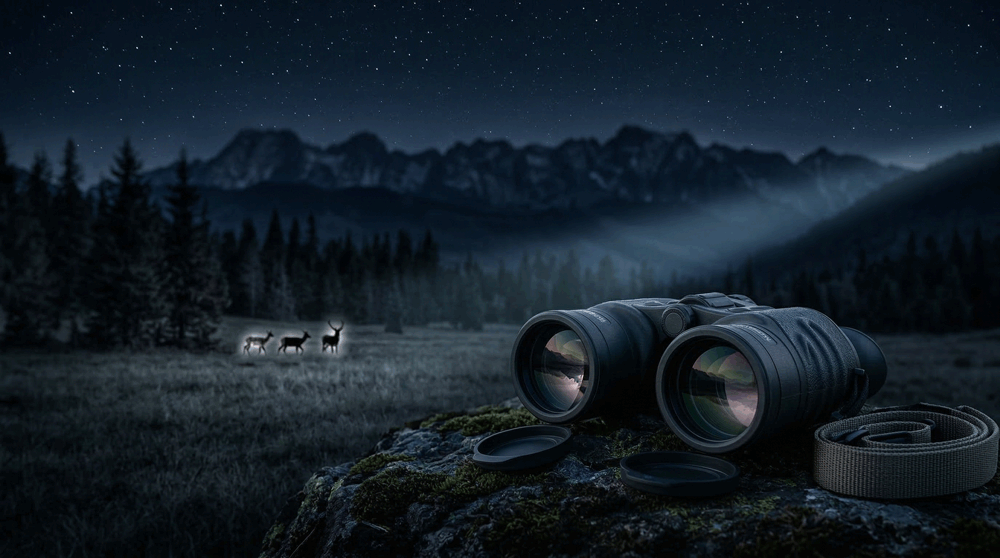
Thermal binoculars are the “premium experience” category in handheld thermal. They’re bought less for raw specifications and more for confidence over time: reduced fatigue, better situational awareness, more natural viewing, and a workflow that feels stable in real field use.
Table of Contents
ToggleThat’s exactly why thermal binoculars are easy to mis-buy in B2B channels. If a dealer sells a binocular SKU using monocular-style talking points (“highest resolution,” “longest distance”), the customer often discovers the real decision drivers later: comfort, balance, eye box, control logic, runtime behavior, recording reliability, and whether the product still feels good after an hour of scanning. When those drivers aren’t aligned, returns show up as “not as expected,” even when the device is technically fine.
This pillar article is a B2B-first blueprint for selecting, positioning, and validating thermal binocular terminal products—so distributors can stock confidently, dealers can demo cleanly, and your brand can keep the SKU stable across batches.
For category context, reference your landing page Thermal Binoculars. For operational repeatability in OEM/ODM supply chains, align expectations with Manufacturing & Quality and keep dealer-facing files centralized via Downloads.
Why thermal binoculars are a different purchase than monoculars
A thermal monocular is a tool you pull out, scan quickly, and pocket again. A thermal binocular is often a long-session device. Users wear it, hold it for longer, and depend on it for steady observation rather than quick checks.
That changes what “value” means:
- Comfort and fatigue matter as much as image detail.
- Stable controls matter more than feature quantity.
- Long-run behavior (battery, NUC feel, heat management) becomes a real differentiator.
- Dealers need a demo that feels “premium immediately,” not “learnable eventually.”
B2B channels also treat binoculars differently because they are higher-ticket and more sensitive to preference. If the customer doesn’t like the feel, they return it. A binocular program wins when it makes “feel” predictable through clear tier positioning and disciplined product identity.
Start with the use case, not the spec sheet
A thermal binocular should be selected and sold by mission. In B2B, you want one primary mission per SKU, because mission clarity makes dealer demos short and return rates lower.
Common missions for thermal binoculars:
- Long scanning sessions for hunting and wildlife observation
- Patrol and perimeter monitoring for security teams
- Search tasks where comfort and two-eye viewing reduce fatigue
- Evidence capture workflows where recording reliability and metadata matter
Each mission has different priorities. A security buyer may accept a heavier device if recording, timestamps, and file management are reliable. A hunting buyer may accept fewer “smart features” if the device feels light and simple in hand for two hours.
If you don’t lock the mission, you’ll try to build “one binocular for everyone,” and the product will be expensive, complicated, and hard to demo.
The first product decision: true binocular vs bi-ocular experience
Some products are true binocular optical systems; others provide a binocular viewing experience through a single thermal channel. In the terminal-product world, buyers often don’t care about the internal architecture—they care whether it feels like binocular viewing and whether the image is comfortable over time.
For a B2B program, the key is to decide what promise you’re making:
- If your promise is maximum comfort and premium viewing, you must prioritize eye box, diopter stability, and long-session usability.
- If your promise is value and practicality, you can accept simpler architectures, but the “binocular feel” must still be convincing in real scanning.
This is also where you should decide whether your binocular line is meant to be a premium flagship (higher margin, fewer SKUs, strong dealer demo) or a volume product (clear tier ladder, tight positioning, strong price-value story).
DRI planning: make range claims teachable and defensible
Thermal binocular buyers routinely over-interpret range claims. The best B2B brands don’t fight this with longer brochures—they fight it with consistent language and scenario planning.
A practical approach is to standardize internal thinking around DRI:
- Detect: something warm is present
- Recognize: likely class (animal/person/vehicle)
- Identify: confident detail (what exactly it is)
You don’t need to flood customers with DRI tables. You do need to keep your own team and dealers aligned so you don’t sell detection as identification.
Here is a practical planning matrix you can use to map mission → DRI expectation → lens/FOV direction. This is the only table in this article.
| Mission | What “good” feels like | DRI emphasis | Lens/FOV direction | Common return risk if mis-sold |
|---|---|---|---|---|
| Long hunting scans | low fatigue, fast target pickup | Detect + Recognize | wider-to-mid FOV | “too narrow / tiring to scan” |
| Wildlife observation | longer holds, calm viewing | Recognize + Identify | mid FOV | “expected more detail at distance” |
| Security patrol | stable view + reliable recording | Recognize | mid FOV + stable UI | “recording unreliable / battery weak” |
| Evidence capture | files, timestamps, workflow | Recognize + workflow | mid FOV, strong recording | “files missing / no trust in metadata” |
| Open terrain spotting | reach without frustration | Recognize + conditional Identify | narrower FOV | “shaky at zoom / hard to scan” |
This table is powerful because it forces the channel story. If your SKU is scanning-first, you stop advertising it like a long-range spotter. If your SKU is evidence-first, you stop pretending recording is optional.
Optics and FOV: binoculars sell comfort before they sell “zoom”
In binoculars, FOV is not only about how much you can see. It’s about whether scanning feels natural. A narrow-FOV binocular can be impressive for distant observation, but it becomes tiring as a primary scanner. A wide-FOV binocular can feel effortless, but customers will over-zoom and then complain about detail if dealers oversell range.
For B2B terminal products, the most stable approach is to define a tier ladder by FOV:
- A scanning-friendly binocular (wider FOV)
- A balanced binocular (mid FOV)
- A reach-oriented binocular (narrower FOV)
Then you select sensor tier and processing to make each FOV tier credible. This avoids the classic failure: one expensive SKU that tries to satisfy all users and ends up delighting none.
Sensor tier and image processing: avoid “NETD theater”
Binocular buyers can be sensitive to image feel: noise, edge harshness, smoothing, and how the scene looks during panning. This is where many suppliers play spec-sheet games—quoting one number while changing processing defaults across batches or firmware.
For B2B programs, you want to lock image identity, not chase one number:
- Stable default tuning (not constantly changing “better looking demo mode”)
- Predictable NUC behavior (interruptions feel intentional, not random)
- Panning comfort (no excessive smear or jitter)
- Low-contrast usability under realistic humidity and background clutter
A binocular that feels stable and comfortable will outperform a binocular with a slightly “better” spec line that feels harsh or inconsistent.
Ergonomics is the primary buying trigger
Thermal binoculars are bought because they’re easier to use over time. Ergonomics is not “nice to have.” It is the product.
B2B programs should explicitly evaluate:
Weight and balance
A heavier device can still feel good if balance is controlled. A lighter device can feel bad if it’s front-heavy. Dealers will feel this instantly in demos.
Grip and control reach
Users often hold binoculars for long periods. Controls must be operable without shifting grip or using two hands.
Neck strap comfort and attachment points
Strap points that feel weak create anxiety. Comfortable strap geometry increases adoption. It’s also a dealer talking point that differentiates “premium” from “gadget.”
Diopter and eye interface stability
Diopter drift is a silent dissatisfaction driver: users think the image is “not sharp” and blame the device. This is especially important for multi-user scenarios.
Ergonomics is also why binoculars win in security patrol: long observation sessions are common, and two-eye viewing reduces fatigue. Your channel story should highlight that advantage—if the product actually delivers it.
Power architecture: runtime truth matters more in binoculars
Binocular users often run longer sessions than monocular users. They also expect a premium product to behave predictably: no surprise shutdowns, no “battery indicator lies,” no unstable charging.
A B2B-friendly binocular battery strategy should be:
- easy to keep demo-ready (dealers hate “dead demo units”)
- predictable in cold behavior (many use cases are night and winter)
- recoverable in the field (swap or power bank support)
- stable under long-run heat (no throttling surprises)
If the product is built for evidence workflows, runtime becomes even more critical because recording drains power and buyers will blame the device when files cut off mid-session.
Recording and evidence workflow: decide if you’re selling “proof” or “experience”
Some thermal binocular customers don’t care about recording. Others buy because they must document findings—security patrols, inspections, professional field work.
If you position a binocular toward evidence, recording is not a feature. It is a workflow promise. That means you need:
- reliable start/stop behavior
- clear recording indicators
- file integrity (no corruption, no “missing files”)
- metadata behavior that is consistent (timestamp strategy, file naming)
- fast file access without breaking scanning flow
If your binocular is hunting-first, recording can remain secondary—just don’t let it pollute scanning UX or become a hidden battery drain that drives complaints.
Durability: binoculars get handled more than you think
Binoculars are carried, adjusted, wiped, and moved between environments repeatedly. The real durability issues that drive returns are rarely “it broke.” They’re “it became untrustworthy”:
- port covers loosen
- buttons become sticky after dust/wet handling
- lens/focus behavior becomes gritty
- internal fogging appears after temperature transitions
- charging becomes intermittent
If you claim IP ratings, keep them as a baseline, but validate real use cycles that mirror your markets (wet handling + charging + drops + temperature transitions). Dealers don’t want test language; they want confidence language.
Software stability: dealers hate “UI drift”
Binoculars are sold by demo and supported by dealer training. If firmware updates change control mapping, palette order, standby behavior, or NUC feel, dealer training breaks. Broken training creates support tickets and return disputes.
So for B2B terminal products, treat core behaviors as stable contracts:
- quick controls remain consistent
- state indicators remain consistent
- palette switching behaves consistently
- recording workflow doesn’t change silently
Updates can exist, but they must be controlled: visible versioning, release notes, and regression testing on dealer-critical actions.
Dealer demo design: sell comfort, not max zoom
A dealer demo should make the customer feel the premium value immediately:
- comfort of two-eye viewing
- quick controls and state clarity
- stable image feel during panning
- honest range language (recognize vs identify)
- optional recording demonstration only if it’s a selling point
Avoid demos that rely on extreme digital zoom. Extreme zoom sets expectations you cannot fulfill consistently across terrain and conditions, and it turns binoculars into “spec theater.”
A good demo sells confidence and comfort, which is why binoculars exist in the lineup.
RFQ and acceptance: control drift like a product identity problem
Even though you’re writing terminal-product blog content, the B2B buyer wants to know how to avoid “batch feels different.” That’s where RFQ/acceptance discipline becomes part of your trust story.
Your acceptance pack should lock:
- baseline firmware/build ID
- default settings baseline (especially NUC policy and enhancement defaults)
- runtime reference mode definition
- control mapping and quick control behavior
- recording workflow integrity if it’s part of positioning
- durability cycle sanity checks (ports, doors, wet handling)
This is how a distributor avoids the painful scenario: early demo units are great, later shipments feel different, and the channel loses trust.
If you want an operational anchor for repeatability, point buyers to Manufacturing & Quality.
Common B2B mistakes that create binocular returns
Most binocular return problems are predictable:
Selling a reach-oriented binocular as a scanning tool.
Using detection range numbers as identification promises.
Overweight devices sold without acknowledging long-session fatigue.
Recording marketed heavily without validating file workflow reliability.
Charging and port design treated as accessory issues rather than durability risks.
Firmware changes pushed without dealer training updates.
The fix is not adding more features. The fix is choosing a clear mission per SKU, validating the right behaviors, and making dealers’ scripts honest and simple.
FAQ
Why do thermal binoculars get “not as expected” returns more than monoculars?
Because binoculars are bought for comfort and premium feel. If ergonomics, weight balance, UI speed, or long-run behavior disappoints, users return even when image quality is acceptable.
What matters more for binocular selection: resolution or lens/FOV?
For most B2B programs, lens/FOV and mission fit matter first. Resolution matters, but a “reach” binocular mis-sold as a scanner will still fail in the channel.
How should dealers talk about binocular range?
Use simple DRI language: detection is not identification. Sell a useful recognition band and explain that conditions change results. This increases trust and reduces disputes.
Do binoculars need recording to sell?
Not always. Recording is essential for evidence workflows, optional for hunting-first programs. If you include it, it must be reliable and easy, or it will become a support burden.
What is the biggest reason binocular SKUs “feel different” across shipments?
Defaults and firmware drift: NUC policy, enhancement tuning, control mapping, and battery behavior changes. Lock baseline configuration and require controlled change notices.
Call to action
If you tell us your target markets (hunting vs security), preferred SKU ladder (scan-first vs balanced vs reach), and whether recording is a core selling point, we can turn this blueprint into a publishable buyer guide plus a dealer demo script and an RFQ-ready acceptance outline.
For program discussions, use CONTACT.