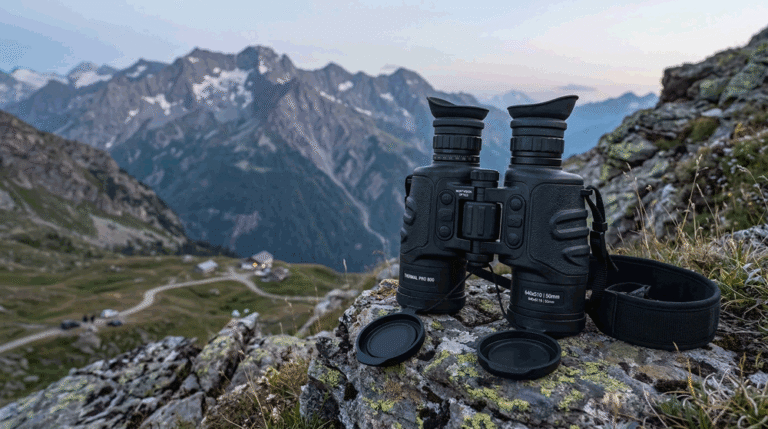

In B2B thermal binocular channels, support speed often shapes partner confidence more than the original sale. A distributor or dealer can accept that occasional issues happen. What usually creates frustration is uncertainty about what happens next. If one problem unit sits too long in review, the damage is often not the unit itself, but the delay around the decision.
Table of Contents
ToggleThat is why a replacement unit and advance swap policy matter. For thermal binocular products, a clear policy helps dealers, distributors, and import partners understand when a replacement is likely, when the original unit must return first, and how the supplier balances support speed with operational control.
Why Replacement Policy Matters
A weak replacement policy creates a familiar pattern. The channel partner reports a problem. The supplier asks for more information. The case moves slowly because no one knows whether the correct outcome is replacement, return-first review, repair, spare-part support, or credit. Even when the final decision is reasonable, the process feels uncertain.
For thermal binocular products, this matters because channel partners often carry limited stock and need fast support to protect their own relationships downstream. One unresolved case can block a dealer demonstration, delay a replenishment conversation, or weaken confidence in the product line as a whole.
A strong replacement policy reduces that friction. It does not promise that every issue will be solved the same way. It makes clear which cases justify replacement, which cases justify advance swap, what evidence is needed, and how the original unit will be handled afterward. That clarity helps both sides work faster.
What the Policy Should Do
A useful replacement policy should do four things.
First, it should define when a replacement unit is appropriate.
Second, it should define when the original unit needs to return first.
Third, it should explain when advance swap is possible.
Fourth, it should keep every case traceable enough for later review, warranty control, and quality learning.
The goal is not to replace every reported problem automatically. The goal is to resolve valid issues at the right speed and with the right level of control. If the supplier moves too slowly, channel confidence weakens. If the supplier moves too loosely, stock control and claim discipline weaken. A good policy sits between those two failures.
Replacement vs Repair
Replacement and repair are related, but they are not the same support path. Replacement means the customer receives another usable unit in place of the reported one. Repair means the original unit remains the main subject of service and is restored or reviewed before final closure.
This difference matters because not every issue should lead to the same response. Some cases are commercially better solved by replacement because the local partner needs continuity fast. Other cases need inspection or repair first because the symptom is unclear, the failure type needs confirmation, or the value of the unit makes early swap less suitable.
For thermal binocular products, this distinction is especially useful in channel planning. Dealers and distributors become easier to support when they know that the supplier is not improvising between “maybe repair” and “maybe replace.” Instead, the product line follows a visible support logic.
What Advance Swap Means
Advance swap usually means the supplier sends a replacement unit before the original unit has completed the normal return-and-review cycle. It is a faster support response, but it also carries more risk for the supplier, so it should be controlled more carefully than standard replacement.
In practice, advance swap is most useful when commercial urgency is high and the case evidence is strong enough that waiting for full return processing would create more channel damage than benefit. This may happen with important distributor accounts, dealer demo stock, launch orders, or cases where the failure type is already well understood.
For thermal binocular products, advance swap works best when it is treated as a structured channel-support tool, not a casual exception granted only through pressure. Partners should understand when it is possible and what return obligations still apply afterward.
When Replacement Makes Sense
Replacement usually makes sense when the reported issue clearly blocks normal product use and the case enters with enough information to support a confident decision. It also makes sense when replacement solves the commercial problem faster and more cleanly than a longer diagnostic cycle would.
For thermal binocular products, common replacement-eligible cases may include clear startup failure, no-power condition, obvious repeated functional issue on newly delivered stock, or a high-confidence field failure affecting active dealer or distributor inventory. In some cases, replacement also makes sense when the issue fits a known pattern that has already been reviewed previously.
The key point is that replacement should follow visible logic. Partners should not feel that replacement depends on mood, pressure, or personal relationship alone.
When Advance Swap Makes Sense
Advance swap should be more selective than standard replacement. It is best suited to cases where time matters more and the available evidence is already strong enough to justify faster action.
For thermal binocular products, advance swap may be reasonable when a key distributor needs uninterrupted demo or sales support, when a dealer-facing launch unit fails, when a current evaluation or channel event would be damaged by waiting, or when a repeated known failure type appears in a commercially sensitive account. It may also be useful when the supplier wants to protect a strategically important relationship while deeper review continues in parallel.
Advance swap works best when the business can approve it quickly through defined rules, not only through internal escalation.
When Return First Is Better
Not every case should receive fast replacement. In many situations, return-first review is the better path. This is especially true when the reported issue is vague, the evidence is limited, the product identity is unclear, or the failure may involve misunderstanding, wrong configuration, or conditions that cannot be confirmed remotely.
For thermal binocular products, return-first handling is also more suitable where the issue may involve partial function, visible wear from heavy use, shipping uncertainty, or account history that requires stricter claim control. A unit that is “not working properly” without a clear symptom often needs structured review before the supplier commits another unit.
This does not mean the supplier is being unhelpful. It means the business is protecting long-term support discipline. A strong policy is not always the fastest on every case. It is the clearest and fairest over time.
Eligibility Rules
A replacement policy becomes much easier to operate when eligibility rules are visible. These rules help the channel understand what information must exist before a replacement or advance swap decision can be made.
Typical eligibility checks include product identity, shipment history, serial or batch reference, timing of issue report, visible symptom description, support status, and whether the problem fits a recognized case category. In some cases, the supplier may also consider the account’s role in the channel, the urgency of local use, or whether the unit is standard stock, demo stock, or private-label stock.
For thermal binocular products, eligibility should never stay so vague that every case turns into a negotiation. The clearer the intake rule is, the less time both sides waste later.
Evidence Needed
A strong replacement workflow starts with evidence. The evidence does not need to become excessive, but it should be good enough to support a responsible decision.
For thermal binocular products, useful evidence may include serial-label photos, short video of the startup sequence, visible image behavior, photos of the product exterior, packaging photos where transit damage is suspected, and confirmation of included accessories if the issue relates to bundle completeness. If the case involves field use, a short note on the observed failure conditions is also helpful.
The goal is simple: strong evidence at the beginning makes faster decisions possible and reduces unnecessary back-and-forth. It also makes later inspection and quality trending more useful.
Shipping Damage Cases
Shipping-damage cases often need their own support logic. If the unit arrives visibly damaged and the evidence is captured early, the supplier may decide more quickly on replacement or advance swap because the issue is already visible and commercially urgent.
For thermal binocular products, this is particularly important where a distributor or dealer has just received new inventory and needs a quick solution to avoid delaying local launch or customer delivery. The supplier should still verify the case, but shipping-damage paths usually benefit from faster handling than vague field-failure cases.
A strong policy treats shipping damage as a defined case type, not as a generic defect report.
Accessory and Bundle Cases
Not every reported issue justifies full unit replacement. If the real problem is a missing charger, incomplete accessory pack, wrong cable, wrong strap, or other bundle mismatch, the correct response is often component replacement rather than full-unit swap.
For thermal binocular products, this distinction matters because overusing full replacement increases cost and slows the support system. A good policy separates bundle issues from core unit failures and lets the supplier solve them at the right level.
This improves response speed while preserving replacement-ready stock for the cases that genuinely need it.
Demo and Loan Units
Demo units and loan samples often deserve a faster support path because they directly affect channel development. If a dealer or distributor loses its active demo binocular, the commercial impact can be larger than the cost of the unit itself.
For thermal binocular products, the replacement policy may therefore allow faster advance swap decisions for showroom demo units, field trial units, or structured sample-loan units, especially when the account is active and the failure is well documented. The supplier should still track these cases carefully, but the response logic can be more proactive than for normal warehouse stock.
A serious evaluation should not stall because one support decision is sitting in a vague queue.
Replacement Unit Source
The business should also define where replacement units come from. Some may come from service reserve stock. Some may come from normal finished-goods inventory. Some may come from regional support stock held near key markets. In rare cases, controlled demo pool stock may be used if the commercial situation justifies it.
This matters because replacement speed depends on actual stock structure, not only on written policy. A supplier may promise rapid replacement, but if no support-ready inventory exists in the right place, the response still feels slow.
For thermal binocular products, replacement planning should therefore connect with regional stock planning, service stock logic, and demo-asset management. Support promises should be operationally realistic, not just commercially attractive.
Return of the Original Unit
If advance swap is approved, the original unit still needs a defined return path unless the supplier clearly waives it. That return path should include timing, labeling, case identification, accessory expectations, and who is responsible for shipping the unit back.
For thermal binocular products, this matters because advance swap without return discipline quickly becomes silent stock loss. The channel partner should know whether the original unit must come back before the case is fully closed and how that return should be prepared.
Fast support does not remove the need for controlled recovery.
Return Inspection
Returned units should still be inspected after replacement or advance swap. This supports failure confirmation, claim quality, trend review, and future policy improvement.
For thermal binocular products, returned-unit review helps the business separate real product failure from transit damage, usage misunderstanding, incomplete evidence, or bundle-level confusion. It also improves future replacement decisions. If many fast-swap cases later confirm the same failure, the supplier may strengthen that path. If not, eligibility rules may need tightening.
In other words, replacement speed and technical learning should support each other.
Internal Disposition
After the returned unit is inspected, the business still needs an internal disposition decision. Some units may be repaired and kept for service use. Some may be scrapped. Some may support supplier corrective action, CAPA review, or claim recovery. Some may return to a demo or training role if the issue was not product failure at all.
For thermal binocular products, this distinction matters because customer-facing resolution and internal stock disposition are not always the same event. The channel may already be satisfied while the supplier still needs to complete the internal quality cycle.
A strong support policy keeps those two layers aligned without confusing them.
Private Label Cases
Private-label programs often need stricter replacement rules because visible product identity matters more. A technically similar unit may not be commercially acceptable if the labels, packaging, or branded presentation differ from the customer’s approved version.
That means the supplier should define whether private-label replacements must match the full branded form, whether temporary neutral replacements are ever acceptable, and how urgent support will be handled if branded stock is limited. These answers should be visible before the first difficult case appears.
For thermal binocular products, this matters because channel trust in private-label business depends on support consistency, not only technical equivalence.
Advance Swap Risk Control
Advance swap is valuable, but it still needs a few visible risk controls. These usually include stronger evidence requirements, clearer product identity, defined return obligations, and internal approval for repeated or higher-value cases.
The purpose is not to make advance swap difficult. The purpose is to keep it sustainable. If the supplier offers it too loosely, the system becomes vulnerable to confusion, weak returns, or avoidable stock loss. If the supplier never offers it at all, serious partners may conclude that the support model is too slow for active channel work.
For thermal binocular products, the best model is usually selective speed: fast where the case is clear and commercially meaningful, controlled where the risk is higher.
Policy Communication
A replacement policy is only useful if channel partners understand it. The supplier should therefore explain the key logic early enough that distributors and dealers know what to expect before a real case appears.
This does not require publishing every internal detail. It does mean that account managers, distributor contacts, and support-facing partner teams should understand the basic rules: what information is needed, which cases may qualify for replacement, when advance swap is possible, and what the return obligations are.
For thermal binocular products, this is especially useful during onboarding and training. Clear expectations reduce friction later.
Replacement Policy Matrix
A simple matrix helps make the support model practical.
| Case type | Typical response | Main control point |
|---|---|---|
| Clear shipping damage | Replacement or fast review | Arrival evidence |
| Missing accessory or bundle issue | Part replacement | Bundle confirmation |
| Clear functional failure | Replacement or return-first depending on urgency | Serial, symptom, evidence |
| Demo or sample failure | Faster swap path | Channel urgency |
| Vague or inconsistent issue | Return first | Stronger inspection need |
| Private-label issue | Replacement under branded control | Version and identity match |
This kind of structure helps support teams move faster while staying consistent.
Common Mistakes
Several mistakes appear repeatedly. One is promising replacement too quickly without enough identity or evidence. Another is delaying obvious replacement cases so long that channel trust weakens. Another is using full-unit replacement for simple bundle issues that could be solved faster at lower cost. Another is approving advance swap without clear return discipline.
A further mistake is ignoring private-label differences and assuming any technically similar unit is commercially acceptable. For thermal binocular products, that usually creates avoidable friction in exactly the accounts that need the most stable support.
The strongest replacement policies are not the loosest. They are the ones that keep fast support compatible with real operational control.
Conclusion
Thermal binocular replacement unit and advance swap policy are essential parts of practical B2B after-sales support. A strong policy helps the supplier act faster on clear cases, helps the channel know what to expect, and keeps replacement logic tied to evidence, product identity, and return control.
For suppliers, this improves support discipline and protects channel trust. For distributors and dealers, it reduces uncertainty and speeds up recovery in commercially important situations. For both sides, it turns replacement handling into a more professional and predictable process.
The most useful principle is simple: move fast where the case is clear, stay controlled where the risk is higher, and make every replacement decision traceable. That is what makes replacement policy valuable.
FAQ
What is an advance swap in a thermal binocular support program?
It is a support option where the supplier sends a replacement unit before the original unit has completed the normal return and inspection cycle.
Should every failed binocular receive a replacement?
No. Some issues need return and inspection first, and some problems can be solved through accessory or bundle correction rather than full-unit replacement.
What information is usually needed before replacement is approved?
Usually product identity, serial or batch reference, shipment history, a clear symptom description, and usable evidence such as photos or video.
Why are demo units often handled faster?
Because a failed demo or loan sample can directly affect distributor or dealer confidence, so faster swap logic may make more commercial sense.
What is the biggest replacement-policy mistake?
A common mistake is either replacing too loosely without control or moving too slowly on clear cases and damaging partner trust.
CTA
If you are building a thermal binocular product program for distribution or dealer channels, a strong replacement and advance swap policy will improve support speed and partner confidence. For project discussion, please visit CONTACT.