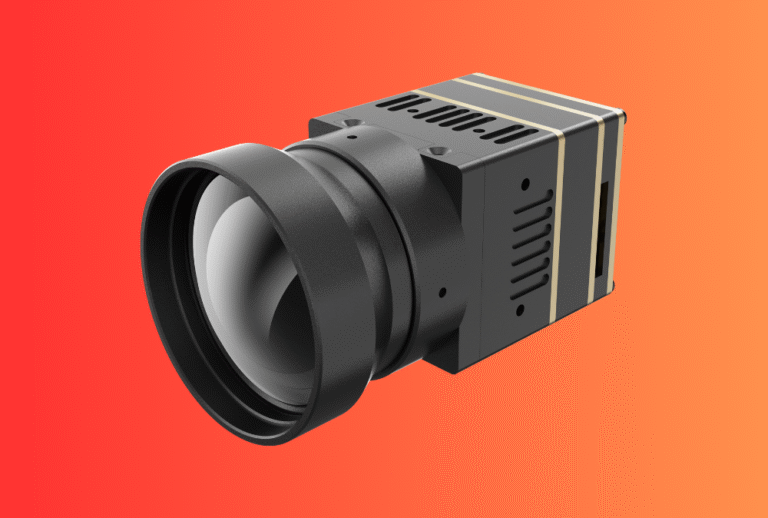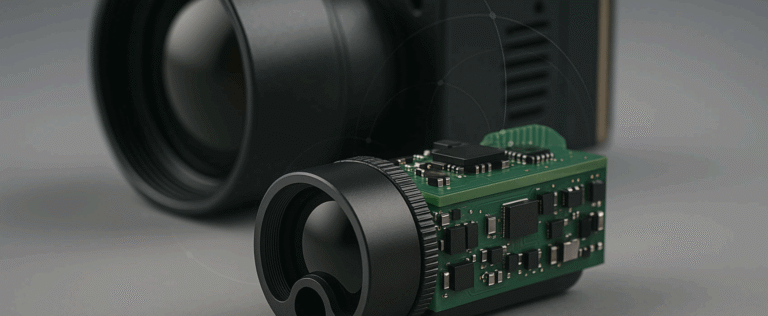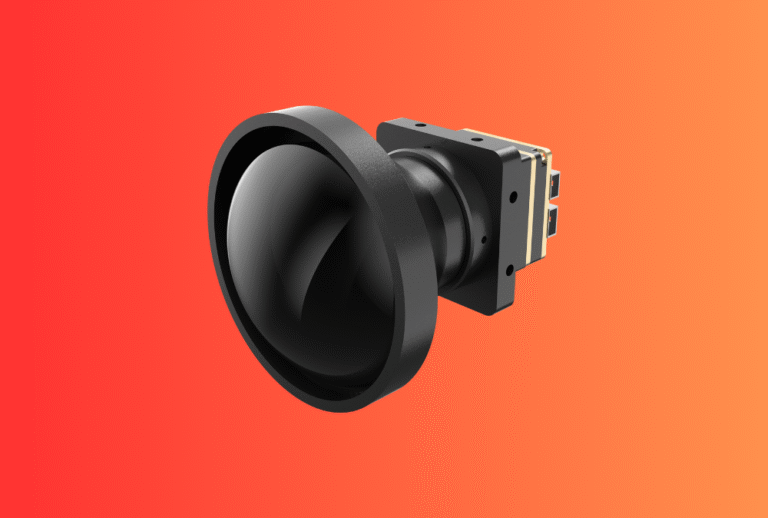
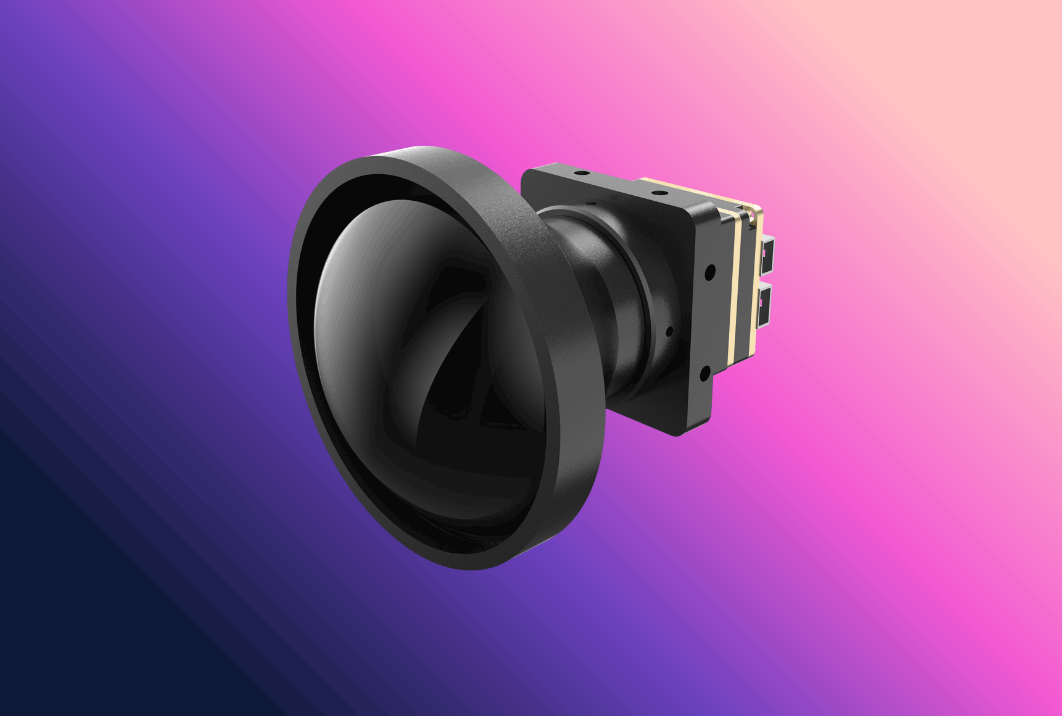
Thermal Camera Module Platform: Build Once, Scale Many
Lead: If you treat a thermal camera module as a one-off part, you’ll end up with one good product. Treat it as a platform—with common ISP, SDK, optics, and QA—and you can launch a family: Thermal Monoculars, Thermal Binoculars, Thermal Clip-On Sight, even Thermal Rifle Scopes. This guide shows OEM/ODM teams how to architect a scalable module that ships faster, integrates cleaner, and reduces lifecycle risk.
Table of Contents
ToggleExecutive Summary
- Platform first: Unify sensor/ISP, SDK, and mechanical datum so the same thermal camera module powers multiple end products with minimal re-validation.
- Radiometric + shutter strategy: Decide early between shuttered vs. shutterless and radiometric vs. non-radiometric paths—these choices drive calibration, CPU budget, and export rules.
- Interfaces that future-proof: Lock a small set of electrical/IO profiles (e.g., USB-UVC, CSI-2, UART/CAN) plus a telemetry schema so partners can drop in features like a Laser Rangefinder Module without rewriting middleware.
- Compliance is design input, not output: Dual-use/export (EAR/EU) and CE/FCC/RoHS choices impact frame rate, labeling, and even SKU strategy—capture them in PRD phase.
- Document the platform: Provide a single SDK, mechanical guide, thermal/focus procedures, and production test specs to slash DVT cycles for every derivative.
Use Cases & Buyer Scenarios
1) “One Core, Many Devices” Roadmap
A brand wants a shared module to power three launches over 12 months: a handheld monocular, a binocular, and a clip-on. Common ISP/SDK enables re-use of palettes, AGC, reticles, and media pipelines, while mechanical datum (M2 screws, focus helicoid, connector pitch) allows quick ID variants.
2) Edge-AI Industrial Analytics
A utility integrator embeds the module into a mobile inspector device and a fixed “hot-spot” monitor. Radiometric output and stable timestamping feed edge models that detect anomalies and generate work orders. Same module; two product lines.
3) UAV & Gimbal Payload Kits
A drone OEM bundles the module with stabilized gimbal + MAVLink telemetry; the module overlays range from a Laser Rangefinder Module and writes JSON sidecars for mission logs. The identical core later ships in a handheld with only UI/packaging changes.
Spec & Selection Guide
What matters—and why
-
Sensor format & pixel pitch: 384×288 or 640×480 at 12 µm are mainstream; 1280×1024 is emerging for long-range recognition. Higher resolution extends D/R/I distances but increases compute, optics size, and cost.
-
NETD (sensitivity): ≤35 mK is a practical “premium” target for bad weather and low-contrast scenes; ≤40 mK fits value builds.
-
Shuttered vs. shutterless: Shuttered modules simplify NUC but cause brief freezes; shutterless needs stronger modeling and careful temperature compensation.
-
Radiometric vs. non-radiometric: Radiometric enables measurement/analytics but requires calibration tables, emissivity workflows, and QA time.
-
Optics & F/#: Faster lenses (f/1.0–f/1.1) lift SNR; longer focal lengths extend range but narrow FOV and add mass.
-
Refresh rate: 25–50 Hz feels natural for panning; some destinations limit >9 Hz commercial exports—tie your frame-rate to SKU/region planning.
-
I/O & SDK: Prioritize USB-UVC (for PCs/apps), MIPI-CSI-2 (for SoMs), and UART/CAN for telemetry; expose a stable C API and JSON telemetry.
Reference platform options
| Parameter | Platform A (Value) | Platform B (All-rounder) | Platform C (Long-range) |
|---|---|---|---|
| Resolution / Pitch | 384×288 / 12 µm | 640×480 / 12 µm | 1280×1024 / 12 µm |
| NETD (typical) | ≤40 mK | ≤35 mK | ≤35 mK |
| Shutter | Shuttered | Shutterless + periodic FFC | Shutterless (advanced drift model) |
| Radiometric | Optional | Yes | Yes |
| Lens (typical) | 25–35 mm f/1.0 | 35–50 mm f/1.0 | 50–75 mm f/1.0 |
| Refresh rate | 9/25 Hz (regional SKUs) | 25/50 Hz (export-aware) | 50 Hz (export-controlled) |
| I/O | USB-UVC + UART | CSI-2 + USB-C + UART/CAN | CSI-2 + USB-C + GigE (optional) |
| Avg power | ~2.8 W | ~3.6 W | ~5.0 W |
Decision flow (keep it simple)
Start
├─ Need radiometry? ─ Yes → Plan calibration tables + emissivity UI
│ No → Non-rad path; simpler QA
├─ Motion freeze acceptable? ─ Yes → Shuttered (simpler NUC)
│ No → Shutterless + temp model
├─ Recognition >1 km? ─ Yes → 640/50 mm or 1280/75 mm
│ No → 384/35 mm or 640/35 mm
└─ Target region restricts >9 Hz? ─ Yes → 9 Hz SKU + export notes
No → 25/50 Hz with EAR/EU review
Integration & Engineering Notes
Electrical & Interfaces (UART/USB/CAN/MAVLink/SDK)
-
Buses: CSI-2 to SoMs (Jetson, NPU boards), USB-UVC for quick apps; UART for module telemetry; CAN for robust multi-board systems.
-
Time & sync: Provide a monotonic device clock and include it in telemetry; when fusing an LRF, timestamp both streams and define a boresight matrix in the SDK.
-
Power: Separate rails for sensor/ISP, encoder, radios, and LRF driver; allocate hold-up capacitance to ride through LRF pulse droop; add brown-out detection.
Optics & Mechanics (mounting, alignment, sealing)
-
Datum & boresight: Define a mechanical zero (pins/shoulders) so lenses and LRFs align repeatably; keep LRF-to-thermal boresight error ≤0.5 mrad @100 m.
-
Focus & drift: Specify focus torque, backlash limits, and thermal expansion behavior; provide service menu for field FFC/boresight trims.
-
Sealing: IP66–IP67 target—double O-rings at window and eyecups; Gore vent for pressure equalization; nitrogen purge port to avoid internal fogging.
Firmware/ISP/Tuning (AGC, palettes, fusion, ranging)
-
AGC: Offer linear, histogram, and adaptive modes; provide a “fog/rain” profile that preserves contrast without haloing.
-
Details & palettes: DDE/ACE sharpening must be conservative for real fog scenes; palettes: White-Hot, Black-Hot, Sepia, Ironbow, user LUT.
-
Fusion: For devices that combine thermal camera module + Laser Rangefinder Module, expose overlays (range box, azimuth), ballistic solver hooks (for hunting SKUs), and JSON logging.
-
Media: 1080p recording with on-frame metadata + sidecar JSON; optional RTSP for command centers.
Testing & Validation (bench → field, acceptance criteria)
-
Bench:
-
NETD verification (calibrated blackbody).
-
FFC/shutter stress: hot-start, cold-soak, and thermal drift cycles.
-
EMC pre-scan with LRF pulses and radios enabled.
-
-
Environmental: −30 °C…+55 °C operation; thermal shock −20↔+40 °C; 1.5 m drops; salt-fog for coastal specs.
-
Field: D/R/I testing on ISO targets; fog/rain trials; radiometric accuracy vs. reference; ranging accuracy ±1 m ≤500 m and ±0.5% beyond (if fused LRF).
Compliance, Export & Certifications
-
CE/FCC/RoHS: Plan EMC (EN 55032/55035), safety (EN 62368-1 if applicable), radio (Wi-Fi/BLE), and RoHS/REACH.
-
Export controls (examples; not legal advice):
-
U.S. BIS EAR: Many thermal cameras/modules fall under ECCN 6A003; license requirements and the use of frame-rate-increasing software are controlled. Confirm destination/usage before committing SKU frame rates.
-
EU Dual-Use: Regulation (EU) 2021/821 governs dual-use exports; always check the latest consolidated text and Annex updates when planning shipments.
-
-
Laser integration: If you pair the module with an LRF, EU presumption of conformity relies on EN 60825-1:2014/A11:2021 (harmonized under LVD). Ensure correct class labeling and technical file.
Business Model, MOQ & Lead Time (OEM/ODM)
-
MOQs: 50–100 units per finalized SKU; EVT/PVT pilots from 10–20 units.
-
Sampling lead time: 2–4 weeks for standard optics; add 3–6 weeks for custom housings or special lenses.
-
Mass production: 6–10 weeks ARO for standard configs; earlier PO for specialty lenses or 1550 nm LRFs.
-
Private label options: Branding (splash/logo), palette set, reticles, packaging, multilingual IFU; optional “pro kit” (hard case, charger, batteries, rail).
-
Documentation pack: SDK/API, electrical & mechanical guide, boresight & FFC procedures, EMC report excerpts, repair manual, parts list.
Simple distributor ROI example (illustrative)
| Item | Value |
|---|---|
| Ex-Works module cost (640/50 mm, radiometric) | $620 |
| Wholesale to device maker | $840 |
| MSRP of finished handheld | $1,399 |
| Device maker gross margin/unit | ~$559 |
| Distributor margin on finished device | ~$250 |
| Annual volume (goal) | 1,000 units |
| Total gross profit (device maker) | ~$559,000 |
Assumptions vary by region, warranty, and marketing co-op.
Pitfalls, Benchmarks & QA
-
Mixing shuttered and shutterless cores across SKUs without planning different ISP/NUC strategies → Standardize or fork your ISP pipeline early.
-
Under-documented telemetry (no timestamps, units, temp refs) → Publish a JSON schema with units, timebase, and coordinate frames.
-
Skipping boresight drift validation (temperature/shock) for LRF fusion → Test −30→+55 °C and post-drop; give a field zeroing routine.
-
Aggressive sharpening that looks great indoors but fails in fog → Tune on adverse scenes; cap DDE to avoid haloing.
-
No EMC margin around LRF pulse driver → Isolate the rail, add hold-up caps, and pre-scan at worst PRF/peak.
-
Export assumption errors (“we’ll do 50 Hz everywhere”) → Define region-specific frame-rate SKUs and validate EAR/EU implications.
-
Radiometric promises without calibration budget → Schedule blackbody time, emissivity UI, and QA limits per temperature band.
Field benchmarks—what to publish
-
Detection / Recognition / Identification distances (Johnson criteria concepts) with target dimensions, ambient, humidity, and wind.
-
For radiometry: temperature accuracy across 0–50 °C at two emissivities and three distances.
-
For fused LRF: accuracy ±1 m ≤500 m, ±0.5% beyond; report boresight residual at 100 m and 500 m.
FAQs
1) What’s the practical NETD target today?
Aim for ≤35 mK for premium and ≤40 mK for value lines; it strongly influences performance in fog/drizzle.
2) Do we really need radiometric output?
If you do inspection/analytics or need absolute temperatures, yes. For pure observation, non-radiometric looks cleaner and is simpler to certify.
3) How do we avoid image freezes from FFC?
Use shutterless mode with a good drift model and allow manual “quiet FFC” in low-risk moments; or hide shutters behind UI expectations (e.g., brief icon + audio tick).
4) What’s the best interface set for long-term support?
USB-UVC for universal apps, CSI-2 for SoMs, and UART/CAN for telemetry. Keep your SDK stable and versioned semantically.
5) Can we log range/azimuth overlays from an LRF?
Yes—time-sync via the SDK and write a JSON sidecar with range, azimuth/compass, and GPS if present. See Laser Rangefinder Module for integration options.
6) Which devices can this module scale into?
Handheld Thermal Monoculars and Thermal Binoculars, as well as Thermal Clip-On Sight and Thermal Rifle Scopes; even Thermal Pistol Sights share much of the pipeline when you platformize correctly.
7) Is the market growing enough to justify a platform?
Yes. Independent analysts put the broader infrared/thermal imaging market around $7–8 B in 2024, with continued growth into 2030—strong justification for families rather than one-offs. MarketsandMarkets+1
Call-to-Action (CTA)
Building a product family around one core? Our Thermal camera module program standardizes ISP, SDK, and optics so your team can ship monoculars, binoculars, clip-ons, and scopes on a single platform. Share your target ranges, frame-rate regions, and radiometry needs—we’ll return a platform spec and EVT sample plan.