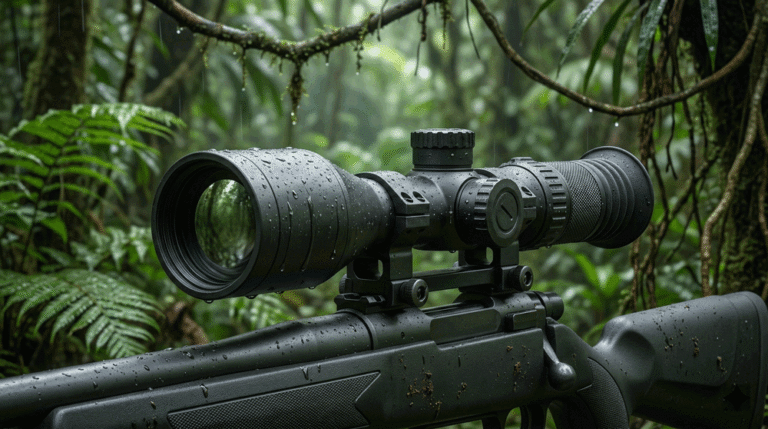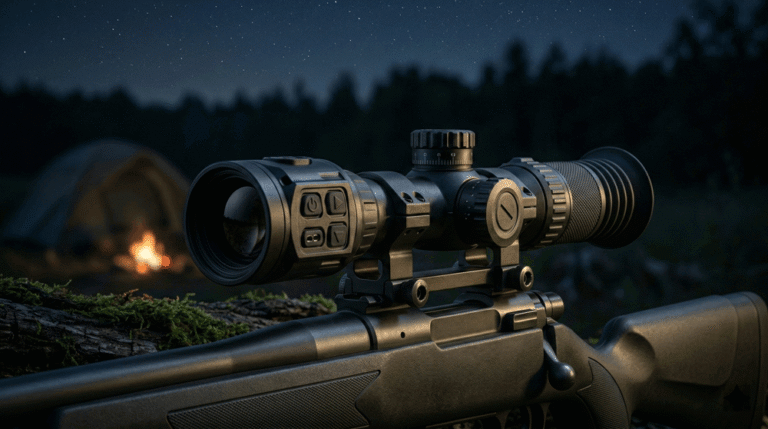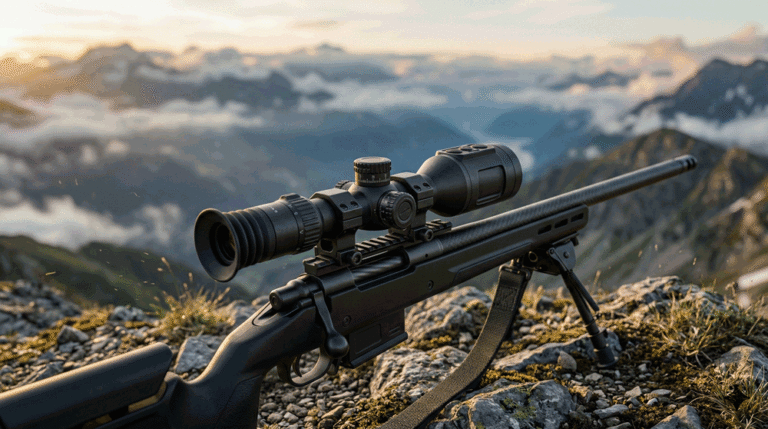
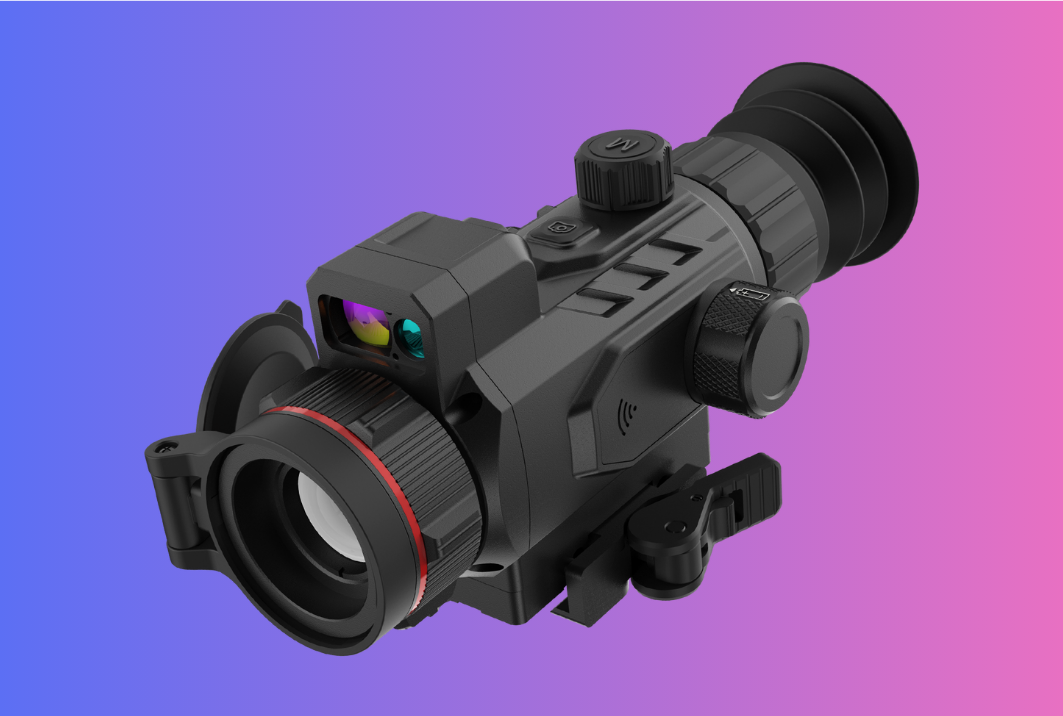
For a dealer, the real value of a Thermal Hunting Scope is not just the margin on a single optic. It is the ability to offer a complete ladder of products that fits different hunters, budgets and rifles—so that every customer who walks into your store, visits your website or calls your sales team can find “the right thermal” without leaving your brand.
Table of Contents
ToggleThis article looks at thermal optics through the eyes of distributors and dealers. Instead of starting from technology and pushing products outward, we start from your customers’ business reality and build a product line backward from there.
1. Why dealers need a structured Thermal Hunting Scope portfolio
Thermal technology has moved from niche to mainstream. Entry-level sensors are cheaper, software is better, and awareness among hunters continues to rise. That growth is good news, but it also creates problems for dealers:
- shelves filled with overlapping models that confuse buyers
- race-to-the-bottom pricing on low-end imports
- difficulty upselling customers from introductory optics to higher-margin products
A structured thermal hunting scopes portfolio solves these issues. You define clear tiers—entry, mid and premium—and make sure each tier has a distinct role, price band and user profile. The customer journey is then easy to explain:
- “Start here” options for newcomers.
- “Workhorse” scopes for serious local hunters.
- “Flagship” systems for demanding or professional use.
A clear ladder also improves your online visibility. When your content is organised by user intent—entry-level guides, comparison articles, Q&A around premium models—it is easier for both human readers and AI search systems to understand and recommend your pages. 优化内容以纳入AI搜索答案_2025-10-08
2. Segmenting your customers: who will buy which Thermal Hunting Scope?
Before you choose models, segment your market. Most dealers serving hunting communities will recognise at least three main groups.
2.1 Everyday hunters: Best Budget Thermal Hunting Scope Options for Everyday Hunters
These are recreational hunters who go out on weekends, manage small properties or control local pests. They want a clear performance upgrade over lights and basic night-vision, but they have a hard ceiling on price.
For them, your messaging should revolve around:
- dependable entry-level performance at typical shooting distances
- intuitive controls and simple zeroing
- long-term reliability rather than the lowest possible price
This is where your Best Budget Thermal Hunting Scope Options for Everyday Hunters sit: honest, reliable tools that make night hunting accessible.
2.2 Workhorse users and semi-professionals
This group includes outfitters, intensive hog hunters, varmint shooters and serious enthusiasts. They hunt more nights per year and quickly feel the limits of very cheap optics.
They value:
- better image quality in difficult weather
- longer detection and identification distances
- compatibility with semi-auto platforms and accessories
Most of your mid-range thermal hunting scope sales will come from this segment.
2.3 Long-range predator and specialist users
Finally, there are hunters who live for predators and long shots. They call coyotes on open fields, run extended stands and may shoot 250–400 m regularly. For them, terms like best thermal rifle scope and best thermal scope for coyote hunting are not marketing phrases but real questions.
They are willing to invest in premium sensors, larger lenses and sometimes in integrated ranging and ballistic solutions. This is where your flagship tier lives.
3. Designing the entry-level Thermal Hunting Scope tier
Your entry tier sets the tone for your brand. It is usually the first touchpoint for new thermal customers, so it must be simple, robust and honest.
3.1 Technical baseline for entry models
An entry-level Thermal Hunting Scope does not need to match the performance of your premium optics, but it must be good enough that buyers do not regret choosing thermal. Practical guidelines include:
- 256×192 or 384×288 sensor with 19–25 mm lens
- base magnification around 1.5–2× for wide field of view
- straightforward menu with few critical settings
- battery life sufficient for a full evening session
In this bracket you are competing directly with many re-branded imports that chase the absolute lowest price. Differentiation comes from consistency, after-sales support and honest specifications. Rather than promising to be the “cheapest on the market”, position these units as your best budget thermal scope or “entry infrared scope for rifle” options: dependable tools that cover real hunting distances inside 150–200 m.
3.2 Positioning and upsell path
Each entry model should naturally point upward to a mid-tier alternative. You might emphasise:
- clearer image at higher zoom on the mid-tier model
- better performance in fog and humidity
- additional profiles for multiple rifles
That way, when a customer asks for “the cheapest thermal you sell”, your staff can explain the trade-offs and many buyers will voluntarily step up one tier.
4. Designing the mid-range workhorse segment
The mid segment is the backbone of your thermal hunting scopes business. It must serve varied conditions, platforms and quarry.
4.1 Feature set for the all-rounder
For mid-tier models, a good starting spec is:
- 384×288 sensor with 25–35 mm lens
- 2–3× base magnification with smooth digital zoom
- multiple reticles and zero profiles
- picture-in-picture (PIP) for precise aiming
These scopes should deliver image quality that many hunters will happily use for years. They become your de facto best thermal scopes for general hunting.
4.2 Thermal scope for AR-15 and semi-auto platforms
Within the mid tier, consider at least one model optimised as a thermal scope for ar15:
- slightly more compact housing and lighter weight
- mounting height matching AR optics (1.5–1.93″ above rail)
- controls placed where a support-hand thumb can reach them
An AR-focused model lets you speak directly to the large community of AR-15 hog and predator hunters, and gives your sales staff a clear answer when customers ask which model best fits their rifle.
5. Creating premium and flagship segments
At the top of the ladder are the optics that serious hunters talk about on forums and bring to competitions and guided hunts. These define your brand reputation.
5.1 Long-range dedicated scopes
Flagship dedicated scopes often use 640×512 sensors with 35–50 mm lenses. They offer:
- confident identification of animals beyond 300 m
- excellent detail retention at higher zoom
- advanced image modes and dynamic contrast
This is where you place your best thermal rifle scope models—optics that truly stand apart in open fields and big country. For predator hunters, market them as your best thermal scope for coyote hunting, with real-world examples of how far identification remains safe and ethical.
When you add optional LRF and ballistics, the product becomes a complete thermal scope with rangefinder solution. For many users at this level, integrated ranging is worth the extra cost because it shortens the equipment chain they must manage in the dark.
5.2 Premium clip-on and multi-rifle solutions
Another key part of the premium tier is the clip on thermal scope. A high-quality clip-on allows customers who already own expensive day optics to convert several rifles to night use with one device.
Your OEM partner can help you build a family of thermal clip-on sights that preserve day-scope zero, handle various objective diameters and support common mounting standards. A well-engineered clip-on with excellent collimation will naturally earn the label of best thermal clip on in your range.
6. Platform and form-factor choices across the line
A coherent product line is not just about price tiers; it is also about form factors that work together instead of competing with each other.
6.1 Dedicated scopes vs clip-ons
Dedicated thermal scopes should dominate your entry and mid tiers, because they deliver the most performance per dollar for a given resolution. They are ideal when a rifle is primarily used for night hunting.
Clip-ons belong mainly in the upper tier, where users already own high-end day optics and multiple rifles. They trade some cost and complexity for flexibility and are often purchased by experienced shooters who understand their advantages and limitations.
6.2 Supporting optics: monoculars and scanners
Many dealers also carry handheld scanners or monoculars to complement rifle optics. A hunter might:
- scan with a monocular to find targets
- switch to the rifle’s Thermal Hunting Scope only when ready to shoot
Gemin’s thermal monoculars and related handhelds fit naturally into this supporting role. Selling scope + scanner bundles can increase ticket size and strengthen customer loyalty, because the system works better than any single component.
7. Engineering building blocks you should expect from your OEM partner
From a dealer’s perspective, it is tempting to treat optics as sealed boxes. But understanding the internal building blocks helps you evaluate long-term reliability and your partner’s ability to expand the line.
7.1 Thermal imaging modules
Most scopes are built around core assemblies that combine the sensor, infrared lens and processing electronics. By basing several models on a common family of thermal camera modules, your OEM can:
- reuse proven electronics and firmware across tiers
- simplify spare parts and warranty service
- shorten time-to-market for new configurations
During factory visits or online technical calls, ask how these modules are qualified: NETD measurements, temperature cycling, non-uniformity correction and long-term stability tests.
7.2 Laser rangefinder modules and fusion
For higher-end scopes, especially those marketed as best thermal scopes for long-range use, accurate ranging is critical. Integrating compact laser rangefinder modules inside certain models lets your brand offer tightly integrated thermal scope with rangefinder solutions at the top of the line.
Good OEMs will explain how they align the laser and thermal axes, how they calibrate range readings, and how ballistic calculators are implemented in firmware.
7.3 Mechanical and environmental design
Consistent boresight, recoil rating and IP-level sealing are essential across all price tiers. Entry models may use simpler housings, but even a best budget thermal scope should withstand typical calibres and weather conditions without drifting zero.
8. Merchandising, margin and lifecycle planning for dealers
A well-designed portfolio should be profitable and manageable across multiple seasons.
8.1 Stocking and demo strategy
For each tier, decide which SKUs you will always stock and which will be special orders. Many dealers keep:
- at least one live demo unit of their main Thermal Hunting Scope models
- printed or digital comparison charts to explain differences quickly
- mounts and demo rifles in the store so customers can shoulder and test the scopes
Hands-on experience is often the deciding factor between an entry unit and a mid-tier model.
8.2 Margin and rotation
Entry models provide volume; mid-range scopes often deliver the best percentage margins; premium units offer high absolute profit per piece. Plan your pricing so that staff are rewarded—not penalised—for moving customers toward higher-value options that better fit their needs.
Over time, new sensor generations will appear. By working with a partner that uses modular cores, you can refresh the mid and premium tiers while keeping mounting interfaces and accessories stable. That lets you sell “upgrade paths” rather than single devices.
9. Why co-designing your Thermal Hunting Scope line with a China OEM makes sense
From the outside, it may look as if all thermal scopes come from the same catalogue. In reality, dealers who invest in OEM/ODM cooperation can shape their own line around local market needs.
A partner like Gemin Optics offers:
- complete thermal rifle scopes for different tiers and calibres
- dedicated clip-ons (mentioned earlier) and handhelds
- engineering teams who understand hunting use cases as well as industrial and defense requirements
Instead of simply rebadging finished goods, you can work together on reticles, firmware options, button layouts and even model-specific bundles that match your region’s hunting culture. This “standing in the customer’s business shoes” approach is what turns a catalogue into a tailored product line.
10. CTA – Design your next Thermal Hunting Scope line with us
A coherent Thermal Hunting Scope portfolio—covering entry-level tools, mid-range workhorses and premium long-range systems—helps dealers stay profitable in a crowded market. When each model has a clear role, clear target user and clear upsell path, your sales teams can guide hunters with confidence and your brand earns trust season after season.
If you are planning or refreshing your thermal product line, Gemin Optics can support you from sensor module selection to final packaging, drawing on experience across hunting, security and industrial markets. To discuss dealer-focused line design, regional requirements and OEM/ODM cooperation, you can contact our engineering and sales team and start mapping a product ladder that truly fits your customers—from entry level to premium segments.