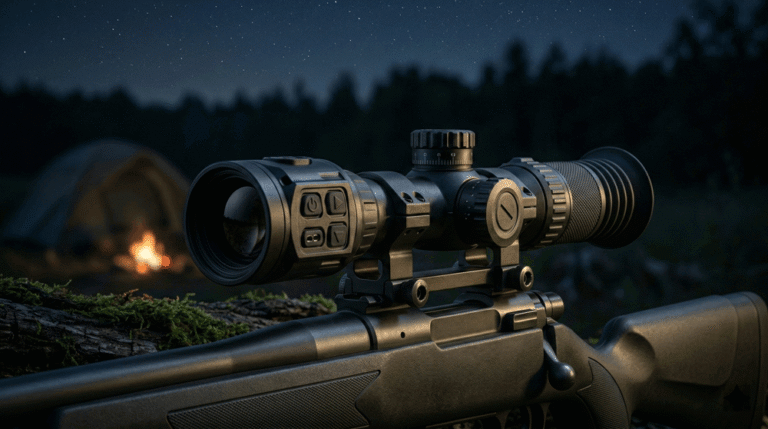
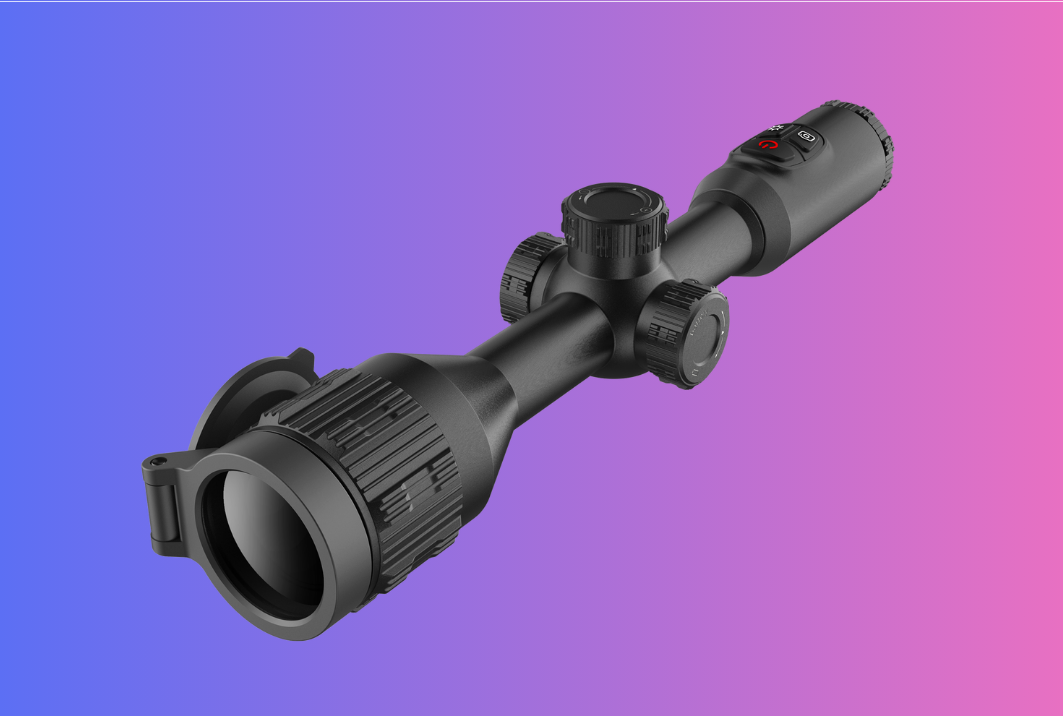
For B2B buyers, choosing a Thermal Hunting Scope supplier is not just a product decision; it’s a risk management decision. Sensors, lenses and housings are important, but so are delivery reliability, quality stability, compliance and the simple question:
Table of Contents
Toggle“Can I trust this partner to tell me the truth when something goes wrong?”
If you are building a long-term business in night-hunting optics—whether under a global brand or your own private label—stable supply and honest communication are worth as much as any spec sheet. This article looks at Thermal Hunting Scope sourcing through a risk-management lens, and how the right OEM relationship turns uncertainty into predictable, manageable variables.
1. Why risk management matters in Thermal Hunting Scope sourcing
Thermal hunting optics are complex systems:
- global supply chains for sensors, optics and electronics
- regulatory and export-control considerations
- hunting seasons that concentrate demand into a few critical months
A single weak link—late shipments, a faulty component batch, a compliance issue—can:
- empty your shelves during peak season
- damage your reputation with dealers and outfitters
- tie up cash in returns, rework and obsolete stock
Good risk management does not eliminate surprises, but it ensures that when they happen, you have buffers, processes and a partner who communicates early and clearly. That is the core of “stable supply + honest communication” for B2B customers.
2. The main risk categories in Thermal Hunting Scope sourcing
Before you can control risk, you need to map it. In thermal optics, the key categories are:
Lead-time and capacity risk
Will your supplier be able to deliver 200 scopes in October, not in January? Are they dependent on a single critical component with long lead times?
Quality and performance risk
Will scopes hold zero, survive recoil and perform consistently in your climate? Or will you suddenly see a spike in RMAs on what should be the best budget thermal scopes in your line?
Compliance and regulatory risk
Are materials RoHS/REACH compliant? Are lasers and wireless modules certified properly? Can a shipment be delayed at customs for missing documents?
Communication and expectation risk
Will you hear about issues early, or only after delays become critical? Can you trust the forecast and capacity promises you receive?
Effective risk management addresses all four, not just the “obvious” one of price.
3. Lead-time and capacity risk: planning for stable supply
Thermal optics depend on specialised components: infrared sensors, germanium lenses, displays, batteries. Many of these have long or variable lead times. To manage this:
3.1 Share honest forecasts
Risk management is a two-way street. If you expect to sell 500 units across your Thermal Hunting Scope line in a season, and you tell your OEM “maybe 1,000 or 2,000,” they cannot plan properly.
Sharing realistic ranges allows your partner to:
- reserve production slots on SMT and assembly lines
- pre-order critical components like sensors and displays
- scale staff and test capacity ahead of time
In return, you should expect transparent discussions about what volumes are truly feasible in given time windows.
3.2 Understand platform reuse
Suppliers who build on common platforms can stabilise supply more easily. For example, a manufacturer that uses the same core and imaging pipeline across thermal rifle scopes and other products can aggregate component demand and avoid small, risky purchases.
As a buyer, ask which other lines share the same core technology. The more widely a component is used, the lower the risk that your scope becomes “stranded” by a single supplier issue.
3.3 Build smart buffers, not panic stock
Rather than doubling your order “just in case,” work with your OEM to place earlier, smaller orders that create rolling buffers. This:
- smooths factory utilisation
- reduces your own inventory risk
- gives more time to detect and react to any early quality issues
In risk management terms, time is often a better buffer than raw volume.
4. Quality and performance risk: avoiding unpleasant surprises
A Thermal Hunting Scope that fails in the field is not just a defective product; it is a reputational incident. A few badly performing batches can destroy dealer trust, especially if you position models as the “best thermal scopes” in their price band.
4.1 Look behind the finished scope
Ask how your partner qualifies the building blocks:
- Do they use proven thermal camera modules with their own test history?
- How are optics, sensors and PCBs tested before assembly?
- What environmental and recoil simulations are used?
A factory that can clearly explain its test methods is usually one that sees quality as a process, not a slogan.
4.2 Agree on measurable acceptance criteria
Risk management likes numbers. For each Thermal Hunting Scope family, define:
- acceptable pixel maps (dead/hot pixel thresholds)
- boresight stability ranges after recoil testing
- minimum thermal sensitivity and image quality metrics
These criteria should feed into both factory QA and your own incoming inspection.
4.3 Watch for consistency, not perfection
No system is flawless, but good suppliers show stable, low failure rates and clear responses when anomalies arise. If you see sudden spikes in warranty returns on a certain lot, your partner should quickly:
- identify the affected batch via serial and component tracking
- share root-cause findings transparently
- propose corrections (rework, replacement, process changes)
Honest communication here turns a risk event into a trust-building exercise instead of a blame game.
5. Compliance and regulatory risk: keeping shipments moving
Thermal hunting optics cross multiple regulatory domains: electronics, radio, lasers, export controls. Failure to comply can mean seized shipments or forced rework.
5.1 Documented conformity
Your OEM should provide, on request:
- CE/FCC and other EMC test reports
- RoHS/REACH declarations for materials
- laser safety classification for any thermal scope with rangefinder designs
For partners who also sell clip-on solutions, similar documentation should cover their thermal clip-on sights.
5.2 Export control awareness
Some sensor resolutions or frame rates may fall under dual-use or export-control regimes. Responsible manufacturers know these thresholds and help you understand what is allowed in each market.
Risk arises when a supplier ignores such rules or “hopes customs won’t ask.” Reputable partners will err on the side of compliance—even if that means saying “no” to certain configurations.
5.3 ESG and supply-chain transparency
Large retailers and institutional buyers increasingly ask about ethical sourcing and environmental impact. Being able to show:
- conflict-mineral declarations
- labour and safety practices in the factory
- long-term support for repairs and recycling
reduces the risk that your Thermal Hunting Scope line is excluded from tenders or contracts for non-technical reasons.
6. Communication and expectation risk: the human side
Many sourcing crises are not caused by the underlying event (a sensor shortage, a shipping delay) but by how late and how poorly it is communicated.
6.1 Define communication rules up front
As part of your risk plan, agree with your OEM on:
- who is the main day-to-day contact on both sides
- what escalation path exists for urgent issues
- how quickly critical information (e.g., a line-down incident) must be shared
This prevents both “too many emails” and “no one told us until it was too late.”
6.2 Encourage bad news early
A culture of honest communication means hearing about potential problems while there is still room to respond—perhaps by re-allocating units across markets, pulling forward another batch or adjusting launch plans.
If a supplier consistently hides issues or over-promises, your risk exposure grows with every order. A partner willing to say, “This batch might slip by two weeks; here’s why and what we’re doing,” is far more valuable in the long term.
6.3 Align marketing with manufacturing reality
Marketing teams love ambitious claims: “best thermal rifle scope ever,” “never misses a shot.” Risk-aware sourcing leaders make sure that product positioning matches what the factory can reliably deliver at scale.
Over-hyping an early run of a new Thermal Hunting Scope before validation is finished is a classic way to turn manageable teething issues into a PR crisis.
7. Practical tools to manage sourcing risk
Beyond choosing the right partner, you can adopt specific tools to reduce sourcing risk.
7.1 Dual-sourcing vs platform focus
In theory, dual-sourcing every component reduces dependence. In practice, splitting tiny volumes between multiple factories can increase complexity and reduce each supplier’s commitment.
A more effective approach is often:
- single-sourcing at the platform level, but
- ensuring that platform is based on standardised cores and components used across multiple products (for example, the same engine behind scopes and thermal monoculars)
That way, even if one variant is delayed, you have alternatives that share accessories, training and service infrastructure.
7.2 Contractual clarity
Clear agreements about minimum order quantities, lead times, delay penalties (if any) and warranty terms turn vague expectations into concrete obligations. They also give both sides confidence to invest in tooling and inventory.
7.3 Joint risk reviews
Schedule periodic reviews where you and your OEM partner discuss:
- upcoming peak seasons and forecast changes
- any supply, quality or compliance issues encountered
- lessons learned from previous launches
These conversations are where real “win-win” thinking emerges, as both sides look beyond the current PO to the long-term partnership.
8. How Gemin Optics approaches risk-managed Thermal Hunting Scope supply
As a China-based OEM/ODM manufacturer, Gemin Optics builds risk management into its cooperation with hunting brands and distributors. Key elements include:
- Platform-based design. Our hunting optics draw on the same core families as our industrial imaging products and thermal camera modules, giving component suppliers steady demand and reducing your exposure to one-off designs.
- Traceable production. Serialised tracking of batches, components and test results makes it easier to isolate and correct issues if they arise.
- Transparent communication. We are upfront about lead times, capacity and any constraints, so partners can plan marketing and inventory realistically.
- OEM/ODM frameworks. On our thermal rifle scopes OEM/ODM solutions we outline co-development and long-term cooperation models that let both sides share risk and reward.
For many customers, Gemin’s role is not only “scope factory” but also risk-management partner: advising on portfolio design, launch timing and long-term support strategies.
9. CTA – Source Thermal Hunting Scopes with managed risk and honest communication
In a competitive market, it is tempting to chase the lowest quote or the flashiest spec sheet. But for B2B buyers, the real value of a Thermal Hunting Scope supplier lies in stable supply, predictable quality, solid compliance and honest, timely communication.
Risk management is not about eliminating uncertainty; it is about choosing a partner who will face it with you. If you are building or refreshing a thermal hunting optics line and want to discuss sourcing strategies, platform options or OEM/ODM cooperation, you can reach Gemin Optics via the contact page.
Together we can design a Thermal Hunting Scope programme—and a supply chain—that supports your hunters in the field and protects your brand, season after season.