The thermal imaging industry is quietly reshaping how industrial plants handle safety, maintenance, and energy efficiency. Global thermal imaging revenues are forecast to reach around USD 7.7 billion by 2031, with compound annual growth in the high single digits. The Insight Partners Within that, handheld imagers are one of the fastest-growing segments: the handheld thermal imager market alone is projected to climb from about USD 3.7 billion in 2021 to USD 9.1 billion by 2031, at nearly 10% CAGR.
Table of Contents
ToggleThose numbers tell a simple story: the next decade belongs to handheld, connected thermal energy cameras—not just fixed systems hiding in control rooms.
For OEM/ODM buyers, distributors, and integrators working with China-based factories, this shift raises hard questions:
- What will customers expect from a “modern” thermal imaging camera in five years?
- How do you design handheld devices that fit into IIoT platforms and predictive maintenance workflows—not just one-off inspections?
- How should your own product roadmap evolve to stay ahead of the thermal imaging industry?
This article walks through where the market is heading and why your next thermal energy camera strategy should be “handheld + connected by design”.
1. The New Context: Thermal Imaging Industry Meets IIoT and Predictive Maintenance
1.1 From niche tool to standard practice
For years, thermal cameras were used mainly by specialists in electrical testing, building diagnostics, or military and security. Today, several trends are pushing them into mainstream industrial use:
- Stricter maintenance standards. The 2023 edition of NFPA 70B makes infrared thermography of all electrical equipment a mandatory, periodic inspection method rather than just a recommendation, with maximum intervals of 12 months. Rozel
- Predictive maintenance adoption. Thermal imaging is widely recognized as a non-contact technique for spotting early failures in electrical and mechanical systems, long before traditional alarms trigger.
- Falling hardware costs. Volume production and better sensor technology have brought prices down while improving resolution and sensitivity.
As a result, the thermal imaging industry is no longer just selling cameras; it is selling data streams that feed risk-based decision making.
1.2 Why handheld is central to the next wave
Handheld devices are growing faster than the overall thermal imaging market, with multiple reports projecting high single-digit to nearly double-digit CAGR for portable imagers.
That growth reflects reality on the plant floor:
- Many assets (motors, bearings, valves, small panels) are still best covered by route-based handheld inspections.
- Even when fixed thermal imaging systems monitor critical assets, technicians still need handheld cameras for root-cause analysis and ad-hoc checks.
- Contractors, field service teams, and small plants often start with handhelds before they invest in permanent systems.
In other words, the “center of gravity” for the thermal imaging industry is now a connected, handheld device that fits in every technician’s toolkit.
1.3 Connectivity as a growth engine
Market analysts repeatedly highlight integration with IoT, cloud platforms, and AI as key growth drivers for thermal imaging.
At the same time, continuous thermal monitoring research points to IoT-enabled sensors that send temperatures to central platforms for aggregated analysis and alarms.
Put simply: the camera is becoming a smart node in an IIoT network, not a standalone gadget.
2. What Do We Mean by “Thermal Imaging Industry” and “Thermal Energy Camera”?
2.1 The thermal imaging industry in one sentence
When we say thermal imaging industry, we are talking about the worldwide ecosystem of:
- Sensor designers and foundries (uncooled microbolometers, optics, lenses).
- Camera manufacturers and China thermal camera factories that build handheld and fixed devices.
- Software, AI and IIoT vendors that analyze and route thermal data.
- OEM/ODM partners who embed thermal imaging into larger systems for industrial, automotive, security and energy applications.
The industry is transitioning from selling “pictures of heat” to selling real-time thermal information that flows into cloud analytics, maintenance systems and even trading or ESG reports.
2.2 What is a “thermal energy camera”?
The term thermal energy camera isn’t a formal standard, but in industrial practice it usually means a thermal imaging camera that focuses on energy-related applications:
- Finding heat losses in steam systems, boilers and district heating.
- Detecting insulation failures in buildings and process lines.
- Checking combustion efficiency in furnaces and kilns.
- Supporting energy audits and carbon-reduction programs.
From a hardware perspective, a thermal energy camera is still a thermal imaging camera for industrial use—operating in the long-wave infrared band, typically 8–14 µm, with radiometric calibration so it can measure temperature, not just show relative contrast.
What changes is the software and workflow: pre-configured palettes, analytics and reports optimized for energy KPIs.
3. Technology Trends Driving the Next Handheld, Connected Thermal Energy Camera
3.1 Sensors: better performance at lower cost
Uncooled microbolometer sensors now offer resolutions from 160×120 at the low end up to 640×480/512 and beyond, with thermal sensitivity (NETD) often in the 40–60 mK range at room temperature.
For the thermal imaging industry, the implications are clear:
- Entry-level devices can be cheaper without being useless, opening new markets in SMEs and field services.
- Mid-range handhelds can offer more pixels and better NETD for similar price points as yesterday’s entry models.
- Expert-grade cameras can combine high resolution with fast frame rates for demanding industrial tasks.
For OEM and ODM buyers working with a Chinese thermal energy camera manufacturer, this means you can design a tiered product line (entry, mid, expert) built on a shared sensor platform.
3.2 Handheld form factors get smarter
The handheld category itself is diversifying:
- Classic pistol-grip cameras remain the default for industrial inspections.
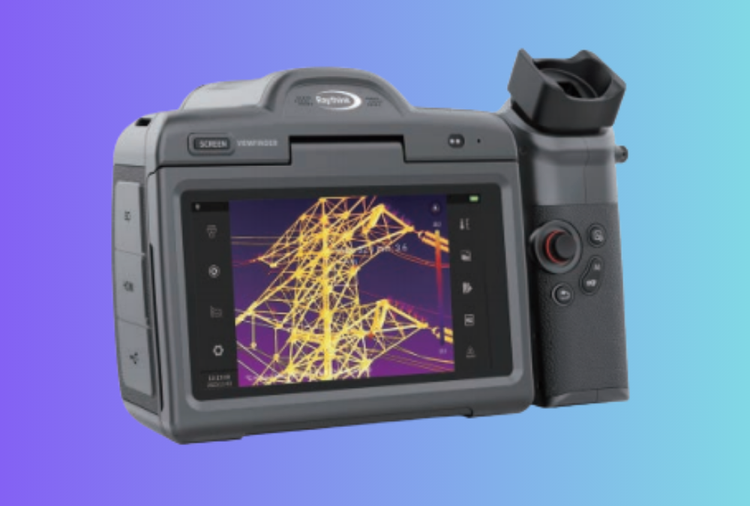
- Smartphone-centric devices like FLIR’s ONE Edge Pro clip onto or connect wirelessly to phones and tablets, allowing flexible positioning and remote viewing.
- Compact imagers integrated into multimeters or clamp meters let technicians capture thermal data alongside electrical measurements.
What all of these share is portability. The best thermal energy camera for many tasks is one a technician can grab quickly, point with one hand, and get usable data in seconds.
3.3 Connectivity: Wi-Fi, Bluetooth and IIoT hooks
Connectivity is where the next generation stands out:
- Many modern thermal cameras support Wi-Fi and Bluetooth connectivity, enabling direct links to smartphones, tablets, or plant Wi-Fi networks.
- Some models upload images automatically to mobile apps or cloud storage, where technicians can tag and share results in real time.
- IoT-oriented products use wireless links to edge gateways, then route data into IIoT platforms for dashboards and alarms.
For the thermal imaging industry, that means new value propositions:
- Subscription software and cloud analytics layered on top of hardware.
- Fleet management for cameras across multiple sites or countries.
- Data integration into existing CMMS, EAM, or energy-management systems.
Any China thermal imaging camera supplier that cannot offer credible connectivity options will increasingly be left behind.
3.4 AI and analytics on top of thermal data
As thermal imaging meets IoT, AI becomes the obvious next layer:
- Market research points to AI-enhanced thermal imaging as a key driver, using pattern recognition to classify faults automatically.
- Industry articles describe cloud-based platforms that analyze thermal images from multiple sites to spot anomalies, generate work orders, and support predictive maintenance decisions.
From a B2B perspective, AI will not replace thermographers, but it will:
- Flag suspicious patterns quickly.
- Reduce manual image review effort.
- Standardize severity assessments across plants and regions.
For OEMs and integrators sourcing from Chinese factories, this means ensuring that thermal energy cameras provide clean, well-tagged data that AI systems can ingest: radiometric measurements, timestamps, asset IDs, and metadata—not just pretty color pictures.
3.5 Safety and standards remain non-negotiable
As the thermal imaging industry innovates, compliance still underpins trust:
- NFPA 70B, now a standard, expects documented infrared inspections for electrical equipment at prescribed intervals, with proper procedures and interpretation.
- ISO 18434 outlines how infrared thermography should be used in machinery condition monitoring, stressing trained personnel and standardized methods.
- For optical safety (relevant when cameras include high-intensity illuminators or laser pointers), IEC 62471 provides guidance on photobiological risk classification.
A China thermal imaging manufacturer serving global OEM/ODM customers must therefore combine innovation with clear documentation, calibration records and alignment to these frameworks.
4. How Handheld, Connected Thermal Energy Cameras Change Industrial Workflows
The big question for B2B buyers is not just “what will the next device look like?” but “how will it change the way we work?”
4.1 Predictive maintenance and NFPA 70B compliance
In a modern maintenance program:
- Technicians walk inspection routes with handheld thermal energy cameras.
- Images and measured temperatures are pushed via Wi-Fi or Bluetooth to a mobile app or cloud platform in real time.
- Remote engineers review data, classify severity, and generate work orders in the CMMS.
- Data is archived to show compliance with NFPA 70B’s requirement for regular infrared inspections.
This is a very different workflow from the old model of “take pictures, go back to the office, plug into a PC, generate a PDF”. The handheld device is the front end of a connected maintenance pipeline.
4.2 Energy management and ESG reporting
As companies face pressure to reduce energy use and carbon emissions, thermal imaging plays a growing role in:
- Identifying insulation failures, steam leaks, and heat losses in industrial plants.
- Spotting inefficient equipment or poorly tuned combustion systems.
- Providing visual evidence for energy-efficiency projects and ESG audits.
Market analysis suggests that integration of thermal imaging with energy-management and IoT platforms is a key driver for future adoption.
In this context, a connected thermal energy camera:
- Uploads tagged images to an energy-analytics cloud.
- Feeds dashboards that rank sites and systems by energy loss.
- Helps justify investments in insulation, upgrades, or process changes.
4.3 Distributed workforces and remote experts
Many industrial companies now rely on distributed field technicians and centralized experts. Connected handheld cameras fit this model perfectly:
- A field technician or contractor uses a thermal imaging camera for industrial use to capture images and short video clips.
- The camera streams data over a mobile device to experts in another city or country, who can guide on-the-spot decisions.
- For OEMs, this enables remote commissioning, warranty support and troubleshooting without always sending engineers on-site.
This is especially valuable for Chinese OEM suppliers supporting international distributors and integrators: local teams can collect thermal data, while the factory’s engineering team reviews it remotely.
4.4 Blending handheld and fixed thermal imaging
Connected handhelds don’t replace fixed systems; they complement them:
- Fixed thermal cameras and continuous thermal monitoring systems watch critical assets 24/7 and send alarms via IIoT platforms.
- Technicians respond with handheld cameras to confirm and diagnose issues in detail.
A forward-looking OEM/ODM portfolio covers both sides:
- Fixed thermal imaging modules integrated into plant networks.
- Handheld thermal energy cameras that plug into the same data and analytics stack.
5. What OEM/ODM Buyers Should Ask from a China Thermal Imaging Manufacturer
If you build or private-label products in the thermal imaging industry, you should treat “handheld + connected” as baseline—not optional. That means updating your supplier checklist.
5.1 Core imaging performance
Even the most connected camera must get the basics right:
- Uncooled LWIR sensor with appropriate resolution (e.g., 256×192 to 640×512+) and NETD for your target markets.
- Temperature ranges covering both maintenance and energy-efficiency work (low range for buildings, higher ranges for electrical and process equipment).
- Optics and FOV combinations that match typical working distances in your customers’ plants.
5.2 Connectivity and data structures
For handheld connected devices, push your China thermal energy camera supplier to deliver:
- Wi-Fi and Bluetooth connectivity options, ideally with open documentation.
- APIs or SDKs so you can build your own mobile apps and cloud connectors.
- Structured radiometric data formats (e.g., temperature matrices, metadata) so your analytics stack gets full value.
5.3 Software and integration
Ask potential OEM/ODM partners:
- Do they offer reference mobile apps and PC software, or are you expected to develop everything from scratch?
- Can they support integration with third-party IIoT or CMMS platforms?
- How do they handle firmware updates and long-term security patches?
5.4 Industrialization, calibration, and compliance
Because your cameras will operate in critical infrastructure, you also need:
- Documented calibration processes against traceable blackbody sources.
- Environmental tests aligned with relevant IEC or equivalent standards, including ingress protection.
- Support for regional approvals (CE, FCC, and, where necessary, ATEX/IECEx for hazardous areas).
Only suppliers that can combine innovation with disciplined quality and documentation will survive as the thermal imaging industry becomes more regulated.
6. How Gemin Optics Fits into the Future Thermal Imaging Industry
Gemin Optics is a China-based developer and manufacturer focused on thermal imaging and laser rangefinding technologies for OEM/ODM partners worldwide. While market data and standards come from independent authorities, Gemin Optics designs its roadmap around those same trends.
6.1 Modules as building blocks
Instead of locking you into fixed products, Gemin Optics offers thermal imaging modules that can be configured into:
- Handheld thermal energy cameras for maintenance and energy audits.
- Embedded cameras for continuous thermal monitoring of critical assets.
- Multi-sensor devices combining thermal imaging with laser rangefinder modules for distance-aware measurements and asset mapping.
You can use internal links such as:
- thermal imaging modules for core sensors and optics.
- laser rangefinder modules for distance-measurement building blocks.
- industrial handheld thermal imagers when you need ready-to-brand devices for field teams.
6.2 Handheld + connected by design
Because the industry clearly points toward handheld, connected devices, Gemin Optics focuses on:
- Compact, rugged housings suitable for industrial environments.
- Interfaces that support Wi-Fi, Bluetooth or wired Ethernet integration via your own electronics.
- SDKs and documentation so you can connect cameras to your cloud, SCADA, or mobile apps.
For distributors and brand owners, this means you can launch Chinese thermal energy camera lines that feel modern and IIoT-ready, not legacy.
6.3 OEM/ODM partnership model
Gemin Optics works as a China OEM/ODM supplier rather than just a component vendor:
- Jointly defining spec sheets to match your target verticals and price points.
- Adapting mechanics, user interface, and feature sets for your brand.
- Planning lifecycle and compatibility so you can offer stable product families over many years.
In other words, you are not just buying cameras—you are co-creating your place in the future thermal imaging industry.
7. Work with a China Thermal Imaging Industry OEM/ODM Supplier You Can Trust
The direction is clear: the thermal imaging industry is moving toward handheld, connected thermal energy cameras that slot naturally into predictive maintenance, energy management and IIoT strategies.
For B2B buyers, the winners will be those who:
- Use independent market and standards data to shape their roadmap.
- Design product lines where handheld connected cameras and fixed systems work together.
- Choose China manufacturers, factories and suppliers with genuine engineering depth, not just catalog pages.
If you’re planning your next generation of industrial thermal cameras—whether as a plant owner or as an OEM/ODM brand—Gemin Optics can help you turn “handheld + connected” into a concrete product plan that fits your customers and your budget.
You can start by mapping your inspection routes, energy-audit needs and IIoT architecture, then work with Gemin Optics to choose the right modules, optics and connectivity options for your next thermal energy camera platform.