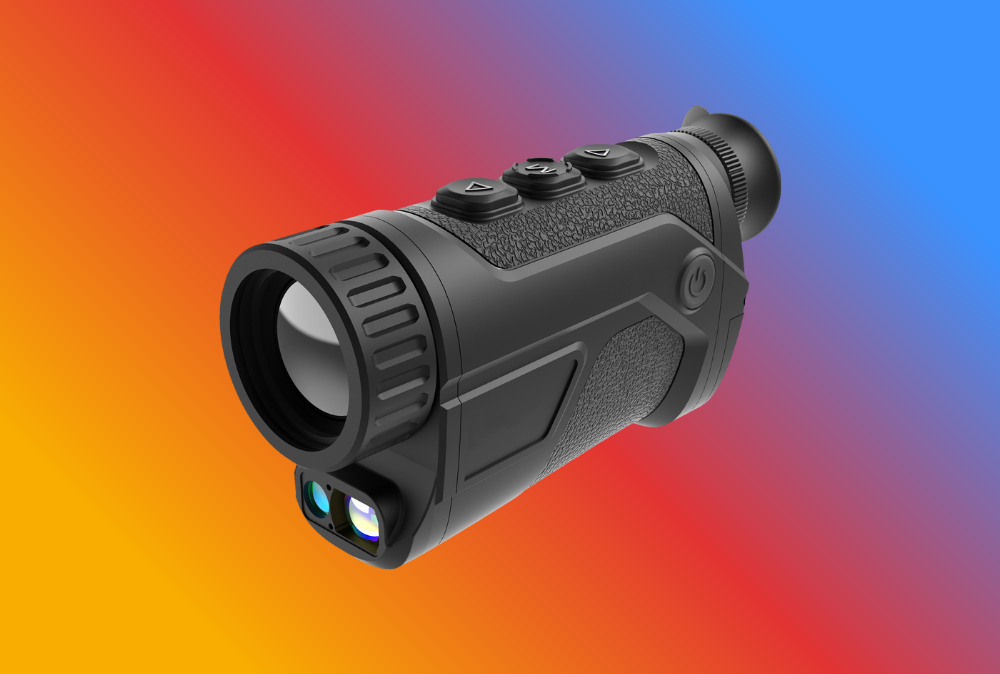
A thermal monocular with rangefinder is one of the most powerful tools you can add to a modern hunting kit. It compresses “spot, range, decide” into a single device, and it lets hunters scan, measure distance and plan shots without constantly swapping between optics. For OEM and private-label brands, the challenge is not only to build the hardware, but to turn that hardware into complete hunting kits with a workflow and user experience that dealers can easily explain and end users instantly understand.
Table of Contents
ToggleThis article focuses on how to design, bundle and position a thermal monocular with rangefinder as the core of a hunting package. It looks at field workflows first, then works backwards into modules, optics, UX, accessories and packaging. Throughout, we treat the product as part of a system built around your thermal imaging module, laser rangefinder module and the rest of your hunting optics line, not as an isolated gadget.
1. Why a thermal monocular with rangefinder changes the hunting workflow
Traditional night hunting workflows are fragmented. The hunter may scan with a separate thermal monocular, switch to a stand-alone laser rangefinder, then move to a riflescope for the shot. Every hand-off is a chance to lose the target, misread distance or make a rushed decision. In bad weather, on uneven ground or when shooting from a vehicle, that friction can turn into missed opportunities or poor shot placement.
A well-designed thermal monocular with rangefinder changes that sequence. The hunter scans with the monocular, spots a heat signature, taps a button to range the target and instantly knows whether the shot is viable. If they are using a matching thermal rifle scope or a conventional scope with a known ballistic table, they can make a confident decision with fewer steps and less mental load. In other words, the monocular becomes the central decision tool of the kit, not just an add-on.
From a brand perspective this is important because it changes what you are selling. You are no longer offering “a thermal monocular” and “a rangefinder” as two SKUs. You are offering a thermal rangefinding monocular workflow that makes a hunter more efficient and more ethical, and you can build complete “hunting kits” around that idea.
2. Start from field workflows, not from the spec sheet
Before you choose sensor resolutions or rangefinder power, map out the real workflows you want to support. Those workflows are slightly different for each segment, but they all follow some version of spot → range → decide.
For open-field wild boar or coyote hunters, the thermal monocular with rangefinder is often used from a vehicle, a high seat or a field edge. The hunter scans wide areas, marks multiple animals in a sounder or group, and needs fast, reliable distance readings to pick the right target and avoid over- or under-estimating range. Here the workflow demands wide field of view for scanning, plus a rangefinder that locks quickly in mixed backgrounds.
In woodland stalking or mixed farmland, the same thermal monocular with rangefinder may be used on the move. The hunter is walking, often in darkness, scanning and reading distance repeatedly as they pick paths, choose shooting positions and check backstops. In this case, ergonomics, weight, strap systems and single-handed control are just as important as pure performance numbers.
When you describe these workflows clearly, it becomes easier to design product variants. One variant of your thermal monocular with rangefinder can be tuned for open-country predators, another for European woodland stalking, and a third for short-range pest control around farm buildings. All three can share the same thermal imaging module platform, but their optics, rangefinder specs and accessories will differ because their workflows are different.
3. Build on the right thermal and rangefinder platform
With workflows defined, you can choose a platform that matches them. At the core of any thermal monocular with rangefinder lies your combination of thermal imaging module and laser rangefinder module. The way you assemble and calibrate those two modules has a direct impact on detection, ranging reliability and user trust.
On the thermal side, you decide what resolution, pixel pitch and NETD class is appropriate for each hunting kit. A high-end open-field kit built around a 640-class thermal camera module with a mid-to-long focal length lens will give hunters more detail at distance, which matters for picking out specific animals in a sounder or judging body size. A more compact kit based on a 384 or 256 core with a wider field of view may be a better match for close-range woodland or farmyard work, where speed and context are more valuable than extreme reach.
On the rangefinder side, the laser rangefinder module has to be chosen and integrated with hunting realities in mind, not just impressive numbers on paper. Minimum and maximum range, beam divergence, update rate, eye-safety class and return filters all affect how confident a hunter can be when ranging through brush, over crops or across water. A solid hunting-class thermal monocular with rangefinder does not need the longest possible range; it needs a repeatable, believable range in the distances where people actually shoot.
Calibration between the thermal channel and the rangefinder is equally important. The user must feel that the distance reading they see corresponds to the exact hot spot they are holding on. That means careful alignment and a reticle or aiming marker in the thermal image that is truly tied to the LRF beam, plus a procedure for verifying and adjusting that alignment in service.
4. Design the spot–range–decide UX, not just menus
Once your hardware is fixed, the big differentiator is user experience. A thermal monocular with rangefinder that checks every box in the datasheet but forces the hunter through three or four awkward steps for every range reading will not earn a place in their core kit. Your goal is to make the “spot–range–decide” cycle feel natural and almost automatic.
The first design decision is how the hunter holds and operates the device. Many right-handed shooters will hold the rifle with their right hand and the monocular in their left. Buttons that trigger the laser, switch palettes and adjust brightness or zoom should therefore be reachable with one gloved thumb, without shifting grip. A recessed, tactile main range button near the top of the housing often works best; secondary functions can sit in a simple row where they can be memorised quickly.
Display design also matters. The distance reading from the laser rangefinder module must be big enough to read quickly, but not so large that it covers the target. You can let the user choose between a central overlay, a corner readout or a semi-transparent band, and you can give them the option to display either the last reading, the best of several readings or an average. For some hunting styles a “last shot hold” approach is ideal; for others, a continuous scan mode with a smooth update rate is better.
Finally, consider how your thermal monocular with rangefinder integrates into the rest of the kit from a UX perspective. If the hunter is using a matching thermal rifle scope, you might provide simple distance-tagging functions or Bluetooth links for future ballistic integration. If they are using a conventional scope, your documentation can at least show quick reference tables that tie typical distances from the monocular to holdover marks in the scope reticle. The point is to design for the real decisions the hunter has to make, not just for menu depth.
5. Turn the device into complete hunting kits
A strong way to sell a thermal monocular with rangefinder is to stop treating it as a single SKU and start designing complete hunting kits around it. Kits reduce cognitive load for the buyer and the dealer: each package represents a clear use case, with everything needed to support that use case in the field.
One natural kit is the entry-level farmland kit. Here the thermal monocular with rangefinder is paired with a simple padded neck strap or harness, a compact power solution and a cleaning kit. The documentation focuses on crop protection, pest control around buildings and short-to-medium-range shots. The thermal lens is on the wider side and the rangefinder is tuned for typical shots out to perhaps a few hundred metres. This kit is easy to explain, easy to price and ideal for new thermal buyers.
A second kit is the open-country predator or hog kit. In this bundle the thermal monocular with rangefinder has a longer lens and a higher-end sensor. You might add a small tripod or window-mount, a rugged carry case and quick-reference cards for distance vs holdover. The story here is about scanning large fields from vehicles, high seats or ground blinds, picking the right animal and making clean shots in wind. This kit lends itself to cross-selling with a matching thermal rifle scope and can carry a higher margin.
A third kit is the stalking and mixed woodland kit. This one emphasises light weight, comfortable harnesses and silent operation. The thermal monocular with rangefinder is configured with a relatively wide field of view and a rangefinder optimised for shorter distances in clutter. Accessories might include a chest rig or bino harness that keeps the device close to the body, anti-fog solutions and a quick-start card on reading thermal images in woodland. Together they create a coherent offer for deer stalkers or boar hunters who walk long distances at night.
You can also imagine more specialised bundles such as professional predator control kits for land managers and outfitters. These might add spare batteries, external power packs, vehicle charging solutions and more advanced documentation, all built around the same thermal monocular with rangefinder platform.
6. Accessories and packaging that support real use
Accessories are where a thermal monocular with rangefinder either becomes a trusted partner or ends up in a drawer. Thoughtful choices here can dramatically change how your hunting kits are perceived.
Carry options are the first piece. A simple neck strap is not enough for long nights. Many hunters now prefer bino-style chest harnesses that keep weight centred and reduce swinging. If you design your thermal monocular with rangefinder housing with the right attachment points, you can offer branded harnesses or at least recommend compatible ones. For vehicle-based hunting kits, padded cases and quick-attach window mounts help the device earn a permanent place in the truck.
Power accessories should reflect your runtime claims honestly. If your thermal imaging module platform and display offer, for example, six to eight hours under typical conditions, include at least enough batteries or capacity to cover one realistic session. Clear labelling of expected runtime in different modes helps set expectations. For premium kits, an external power option with a robust cable and mounting system can be a strong differentiator.
Packaging and in-box documentation are also part of the UX. A hunting-focused thermal monocular with rangefinder deserves more than a generic folded leaflet. A well-designed quick-start guide that walks through the “spot–range–decide” workflow, shows the meaning of icons in the user interface, and gives simple examples of ethical shot decisions at different ranges will be read and remembered. A separate card can list basic maintenance and storage tips to help protect the laser rangefinder module and thermal optics in rough conditions.
7. UX details that separate serious tools from gadgets
Many thermal monoculars with rangefinders fail not because of bad hardware but because of small UX missteps. Paying attention to details will help your hunting kits stand out in a crowded market.
Button mapping is one of those details. A common mistake is to overload a single button with too many press-and-hold combinations, or to place multiple critical controls in a tight cluster that feels identical with gloves on. A better approach is to give the range button a unique shape or position, keep palette switching on a separate control and reserve long presses for less-frequent actions such as Wi-Fi or recording. Hunters should be able to operate the device in the dark after one evening of practice.
Another crucial detail is start-up time and behaviour. During a night hunt, a thermal monocular with rangefinder may be switched on and off repeatedly to save battery and preserve dark adaptation. A device that takes too long to boot, or always forces the user through the same splash screen and confirmation prompts, will feel clumsy. If your thermal imaging module platform allows a low-power sleep state with instant wake, highlighting that in your hunting kits can be a genuine selling point.
You should also think about the alignment between the monocular and the rest of the kit’s optics. If the hunter is using a matching thermal rifle scope, you can offer simple visual cues or naming conventions that make switching between devices intuitive. If they are using daylight scopes, your documentation can suggest how to align the thermal monocular with familiar reticle subtensions and how to avoid parallax traps when estimating distance over rolling terrain.
Finally, consider how firmware updates and future features will reach the user. If you add improved ranging algorithms or new palettes to your thermal monocular with rangefinder, can the user or dealer apply them easily via a simple app or USB connection? Long-term support and clear versioning help you present the device as a serious tool rather than a disposable gadget, which matters to both hunters and dealers.
8. Documentation, training and dealer enablement
A thermal monocular with rangefinder is a relatively sophisticated tool. Many end users will never read a full manual, but they will listen carefully to a dealer’s explanation and watch a two-minute video. Structuring your documentation and training around that reality will make your hunting kits much easier to sell.
At the basic level, every kit should include a concise printed guide that explains the difference between thermal imaging and traditional night vision, describes how the thermal monocular with rangefinder fits into the hunting workflow, and outlines a few simple drills for practising. These drills might include scanning a field and ranging multiple landmarks, or comparing thermal readings with known distances on a range so that users build intuition.
For dealers and distributors you can go a step further and produce short training modules that walk through each kit: farmland pest control, open-country predator management, woodland stalking and so on. Each module can show where the thermal monocular with rangefinder sits relative to handheld thermal monocular and thermal rifle scope offerings, and how to upsell accessories without overcomplicating the story.
Online, your product pages should be structured as part of a thermal hunting hub. The page for your primary thermal monocular with rangefinder model can link to educational pieces on thermal vs digital night vision, to detailed specifications for the underlying thermal imaging module and laser rangefinder module, and to kit-specific landing pages describing how the bundle works in real hunts. This internal linking not only supports SEO, it also mirrors the way real customers explore your range.
9. From device to ecosystem – a strategy and CTA for OEM brands
For many brands, the first step into this space is a single stand-alone thermal monocular with rangefinder. That is understandable, but it also leaves a lot of value on the table. The real opportunity is to build a coherent ecosystem where that monocular sits at the centre of complete hunting kits that share modules, accessories and workflows.
From an OEM point of view, that ecosystem starts with your core modules: a flexible thermal imaging module platform, a reliable laser rangefinder module, and, if relevant, matching thermal rifle scopes and other thermal devices. Around those cores you design housings, optics and power systems tuned to specific hunting personas. You then wrap them in UX, accessories, documentation and dealer training that form a complete story for each kit.
If you approach it this way, “thermal monocular with rangefinder” stops being a generic product category and becomes a signature of your brand’s hunting solutions. Distributors can put a farmland kit, an open-country predator kit or a woodland stalker kit on the counter and explain exactly who each one is for. Hunters understand how the device fits into their existing rifle setups. Guides and outfitters see a clear upgrade path for clients.
The next step is to define which hunting scenarios you want to own, and then to map those scenarios back into concrete product and content plans. Once you know whether you are building for predators on open farmland, boar in mixed woodland, deer in mountains or pest control around farms, you can specify the right thermal and rangefinder modules, optics and accessories. Then you can create the pages, brochures and training materials that make your thermal monocular with rangefinder hunting kits the obvious choice whenever someone decides it is time to modernise their night-time gear.