Thermal Rifle Scopes OEM/ODM: Sourcing Guide for Brands & Distributors
Table of Contents
ToggleIf you want to buy Thermal Rifle Scopes for your brand or business, you need to know the main technical details and the whole buying process. You should make your needs clear and learn about the costs before you pick an OEM/ODM partner. This way, you can avoid expensive mistakes and start your project faster. Good planning helps you look at suppliers and choose better options.
Key Takeaways
-
Learn about important details like sensor resolution and pixel pitch. These help you get good images with thermal rifle scopes.
-
Make clear goals and needs before talking to suppliers. This helps make buying easier and stops expensive errors.
-
Pick scopes with lower NETD values for clearer pictures. This is very helpful in fog or darkness.
-
Plan your project steps with care. Watch lead times from NDA to mass production so you do not get late.
-
Check local rules by looking for CE and FCC certifications. These are needed to sell in the US and EU.
Audience & Sourcing Goals
Who Should Use This Guide
This guide is for people who work for brands, distributors, or system integrators. If you want to start your own thermal optics line, this guide will help. It is also helpful if you want to add new products to your list. Many companies want to sell private label products or custom items. Sometimes, you need to meet special rules for your area or customers. This guide shows you the steps and details to make good choices.
Sourcing Objectives
You want to start your project fast and not make mistakes. Having clear technical specs and an easy process saves time and money. When you know what to ask, you can compare suppliers better. You can lower your risk by learning about the steps and costs. This guide helps you set goals like starting faster, lowering risk, and talking better with suppliers. You will also learn how to pick the right features and plan for support after you sell.
Use Cases for Thermal Rifle Scopes
Thermal Rifle Scopes can be used for many business needs. Some buyers want cheaper models for big orders. These usually come from makers who offer low prices and want you to buy a lot. Other buyers want scopes that are not too cheap or too expensive. These work well for most outdoor uses. The best models are for pros and hunters who want great image quality and extra things like WiFi or video. You might also want special features, packaging, or bundles for your area. How tough the scope is and how good the sensor is can help you decide.
Key Specs for Thermal Rifle Scopes OEM/ODM
Sensor Resolution & Pixel Pitch
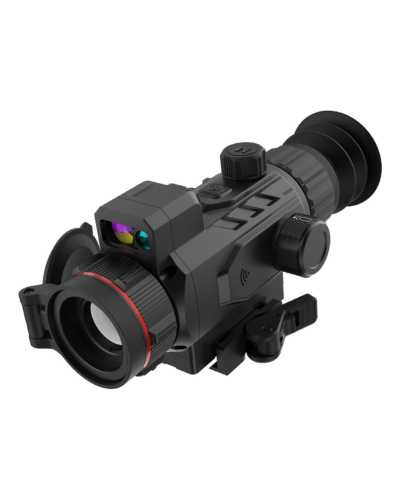
When you choose Thermal Rifle Scopes for your brand, you should start with sensor resolution and pixel pitch. Top models in 2025, like the NocPix Ace S60R and Pulsar Thermion, use sensors with a resolution of 640×512 and a pixel pitch of 12 µm. These specs help you get sharp images and spot targets at long distances. The market for 640×512 scopes keeps growing, with more brands adding features like laser rangefinders and AI tracking.
-
640×512 sensor resolution gives you clear images.
-
12 µm pixel pitch makes scopes smaller and lighter.
-
More pixels help you see small details and use digital zoom without losing quality.
Tip: If you want to offer compact scopes with good battery life, choose models with a 12 µm pixel pitch.
How Pixel Pitch Affects Image Quality
-
Smaller pixel pitch means smaller sensors and lighter scopes.
-
Larger pixels collect more heat, so you get better images in tough conditions.
-
Smaller pixels can hit limits in performance, so balance is important.
-
Smaller pixels use less power, which helps battery life.
Higher pixel counts let you spot small targets farther away. You also get better recognition and identification, which is key for hunting and tactical use.
NETD & Image Clarity
NETD stands for Noise Equivalent Temperature Difference. It tells you how well the scope can see small changes in heat. High-performance Thermal Rifle Scopes have NETD values below 40 mK. The best scopes go even lower, under 25 mK. Lower NETD means less noise and clearer images, so you can see more detail.
-
Excellent: <18 – <25 mK
-
Good: <35 – <40 mK
-
Acceptable: <50 mK
If you want to sell scopes for professional use, pick models with NETD below 25 mK. For general outdoor use, NETD below 40 mK works well.
Note: Lower NETD values help users spot animals or objects in fog, rain, or darkness.
Lens, Field of View & Detection Range
The lens size and field of view decide how far and wide you can see. Most Thermal Rifle Scopes with a 35mm lens and 8x magnification can detect targets at 1300 meters or more. Bigger lenses let in more heat, so you get better detection and a wider view.
If you want to offer scopes for long-range hunting, choose larger lenses. For general use, a 35mm lens gives a good balance between range and size.
Callout: A larger lens helps users see farther, but it can make the scope heavier.
Refresh Rate & Recoil Rating
Refresh rate shows how fast the image updates. It matters when you track moving targets. Most Thermal Rifle Scopes for .308 Win recoil resistance use either 30Hz or 50Hz refresh rates.
|
Refresh Rate |
Description |
|---|---|
|
50Hz |
Preferred for fast-moving targets |
|
30Hz |
Common and usable |
A refresh rate above 30Hz gives you smooth images and less lag. If you want to sell scopes for hunting, pick models with 50Hz refresh rates. These work better when users move or shoot quickly.
Tip: Always check if the scope can handle .308 Win recoil. This shows the build quality and toughness.
Interface & Integration Options
System integrators and brands often need scopes that work with other devices. You should look for models with modular designs and multiple interface options.
|
Feature |
Description |
|---|---|
|
Modular Configuration |
Choose resolution, frame rate, and interfaces for your needs |
|
Multi-Interface Support |
USB, HDMI, Ethernet, UART for easy connection |
|
SDK Support |
Software tools for linking with other systems |
If you want to bundle scopes with apps or smart devices, pick models with SDK support and standard interfaces.
Compliance-Ready Features
You must make sure your Thermal Rifle Scopes meet rules for your market. Look for CE and FCC compliance for US and EU sales. IP67 rating means the scope resists water and dust. Scopes tested for .308 Win recoil show they can handle tough use.
-
CE/FCC compliance lets you sell in more regions.
-
IP67 rating protects against rain and dust.
-
.308 Win recoil rating proves the scope is strong.
Note: Always ask your supplier for test reports and certificates. This helps you avoid problems with customs and customers.
OEM/ODM Process & Timeline
NDA & Requirements
The first step is signing an NDA. This keeps your ideas safe. You tell the supplier what you need. You list things like sensor type and lens size. You also say who will use the scopes. If there are special rules, you mention them. The supplier uses this to make a plan for you. You check if the plan fits your needs.
Tip: Write down your must-have features before talking to suppliers. This helps you stay organized.
Sample & Field Testing
After you agree on what you want, you ask for samples. You test the Thermal Rifle Scopes outside. You see if they work in rain and dust. You check if they can handle recoil. You look at how clear the images are. You also check battery life. The supplier must meet high standards.
Here is a table that shows what you test for:
|
Requirement Type |
Details |
|---|---|
|
Waterproofing |
IPX7 |
|
Shock Resistance |
Over 1,000G |
|
Recoil Endurance |
MIL-STD-707A |
|
Certification |
ISO 9001 |
|
Compliance |
REACH/RoHS rules |
|
Testing Requirements |
1. Test for recoil and zero retention |
|
|
2. Check online sales claims |
|
|
3. Look at third-party ratings |
|
|
4. Visit the factory if needed |
You make sure the scopes stay accurate after recoil. You check if the supplier has good reviews. You might visit the factory to see how things are made. You confirm the scopes follow all safety rules.
Pilot & Mass Production
When you like the samples, you start pilot production. You order a small batch to check for problems. You test these units again. If they pass, you start mass production. You decide how many to make and when to get them. You watch the process to stop delays.
Note: Pilot production helps you find problems before you order a lot.
Lead Times & Milestones
You need to plan your project steps. Each part takes a certain amount of time. Here is a simple list:
-
NDA & Requirements: 1-2 weeks
-
Sample Production: 3-5 weeks
-
Field Testing: 2-4 weeks
-
Pilot Production: 4-6 weeks
-
Mass Production: 6-10 weeks
You set goals for each step. You check with the supplier at each goal. You keep notes on all tests and approvals. You make sure the supplier is on time.
|
Stage |
Typical Lead Time |
Your Role |
Supplier Role |
|---|---|---|---|
|
NDA & Requirements |
1-2 weeks |
Share needs, sign NDA |
Review, make plan |
|
Sample Testing |
3-5 weeks |
Test, give feedback |
Build, send samples |
|
Pilot Production |
4-6 weeks |
Approve, watch process |
Make, report |
|
Mass Production |
6-10 weeks |
Track, get shipment |
Build, deliver |
Internal Link Opportunities
You might want to learn about other products. You can look at modules for thermal imaging, laser rangefinders, and clip-on sights. These help you add more features to your scopes.
See also: [Thermal Imaging Modules], [Laser Rangefinder Modules], [Clip-On Sights]
Ask your supplier about these during the planning stage. This helps you make a full product line for your market.
Cost, MOQ & Lead Time
Cost Structure for Thermal Rifle Scopes
You need to know what makes up the total cost. The main parts are BOM, tooling, packaging, and warranty. BOM means the sensor, lens, housing, electronics, and display. Tooling costs come from making molds or special parts. Packaging adds more cost if you want custom boxes or manuals. Warranty costs depend on the support you want to give after selling. Each part changes your final price. You should ask your supplier for a clear list of costs.
MOQ & Sample Policy
Most suppliers have a minimum order quantity (MOQ). For Thermal Rifle Scopes, MOQ is usually 50 to 100 units for standard models. If you want custom features or your own brand, MOQ can be higher. Many suppliers let you buy 1-3 samples first. You can use these samples for testing and showing to customers. Always check the sample rules and ask about extra fees for custom samples.
Lead Time Management
You need to plan your schedule well. Making samples takes 3-5 weeks. Mass production takes 6-10 weeks after you approve samples. Shipping time depends on where you live and how you ship. You should talk with your supplier about each step. Set clear deadlines for every part. Good planning helps you avoid delays and keeps your project moving.
Cost Optimization Tips
You can save money by making smart choices when buying. Here are some good ways:
|
Strategy |
Description |
|---|---|
|
Use of Mature Systems |
Pick designs that work well to save on research costs. |
|
Optimized Process Design |
Make production steps better to use less material and waste. |
|
Equipment Selection |
Choose simple machines for easy parts to cut costs by 5%-15%. |
|
Operational Mode Maintenance |
Keep machines working in one way for better speed and fewer problems. |
|
Material Selection |
Pick the right materials, like aluminum bars or tubes, to balance quality and price. |
Work closely with your supplier to find the best mix of quality and cost. Small changes in design or materials can help your budget a lot.
Quality, Compliance & After-Sales
Quality Control & Testing
You want your Thermal Rifle Scopes to work well outside. Good suppliers test each scope for strength. They make sure the scope can handle hard recoil, like from a .308 Win rifle. They also check if it keeps out water and dust. Many use IP67 or IPX7 standards for this. You should ask if they test in hot and cold weather. These tests show if the scope will last a long time. Always look at the supplier’s quality steps before you buy.
Compliance for US/EU Markets
You must follow strict rules to ship Thermal Rifle Scopes to the US or Europe. Look for CE and FCC marks on the scope. These marks mean the scope is safe and meets radio rules. For shipping to other countries, you need special papers. The table below shows the main rules:
|
Requirement |
Description |
|---|---|
|
ITAR Compliance |
All products are subject to International Traffic in Arms Regulations, requiring proper authorization for export. |
|
Export Control Restrictions |
Shipping outside the United States is not authorized without compliance with ITAR. |
You should always check if your supplier gives these papers. This helps you avoid problems at customs.
After-Sales & Warranty
After you sell a scope, you must help your customers. Most OEMs give a warranty, but the time can change. You can find this in the product manual or listing. If a customer needs a repair, they should check the manual or website. Dealers help with returns, but only the maker does repairs. Sometimes, the maker will give a new scope if it cannot be fixed. Repair time depends on the season, how hard the fix is, and if parts are ready.
-
Warranty times are not the same for every brand.
-
Customers should use the manual or website for repair help.
-
Dealers help with returns, not repairs.
-
Repair time can change for many reasons.
-
Makers may give a new scope if repairs do not work.
Tip: Good after-sales help makes buyers trust you more.
IP Protection & Supplier Management
You should keep your ideas and brand safe. Sign an NDA before you share your designs. Pick suppliers who keep customer info safe. Visit the factory if you can. This lets you see how they work on your project. Keep good notes of all talks and deals. Strong supplier management helps you avoid trouble and keeps your business safe.
If you want to buy thermal rifle scopes, you should know what you need. Make a list of the features you want. Follow each step in the process. Plan for how much it will cost and make sure it meets the rules. Good customer service after the sale helps people trust your brand. If you want special bundles or guides, you can ask for help. Use the contact info below to talk to our team. We can give you solutions that fit your needs.
|
Contact Method |
Details |
|---|---|
|
|
info@geminoptics.com |
|
|
WhatsApp: +86 18205459523 |
FAQ
What is the typical MOQ for custom thermal rifle scopes?
Most suppliers set the minimum order quantity (MOQ) at 50 to 100 units for standard models. If you want custom features or branding, you may need to order more units.
How do you check if a scope meets US/EU compliance?
You should ask your supplier for CE and FCC certificates. Look for these marks on the product and packaging. These documents show the scope meets safety and radio standards.
Can you request samples before placing a bulk order?
Yes, you can ask for 1–3 samples. Use these samples for testing and showing to customers. Some suppliers may charge extra for custom samples.
What warranty do OEM/ODM suppliers usually offer?
Most suppliers offer a one- or two-year warranty. You should check the product manual or ask your supplier for details. Warranty terms can change based on the brand and model.
How do you protect your design and brand during sourcing?
Sign an NDA before sharing your ideas. Choose suppliers who keep customer information safe. Keep records of all talks and agreements. Visit the factory if possible.