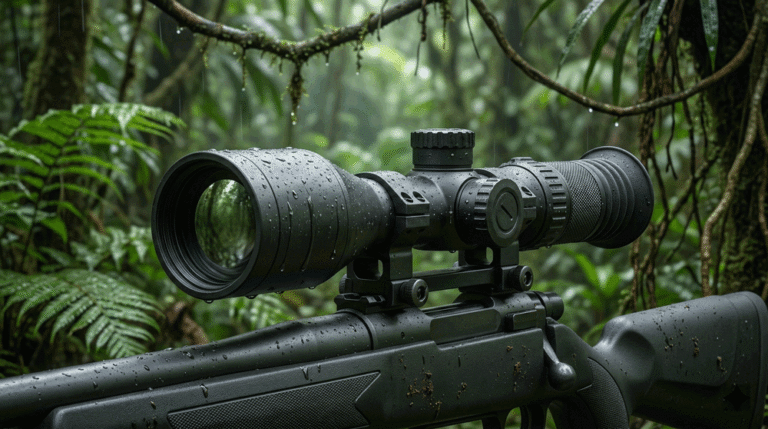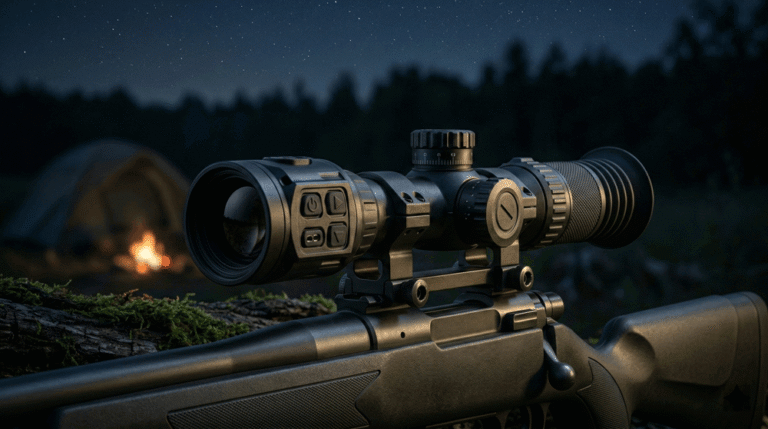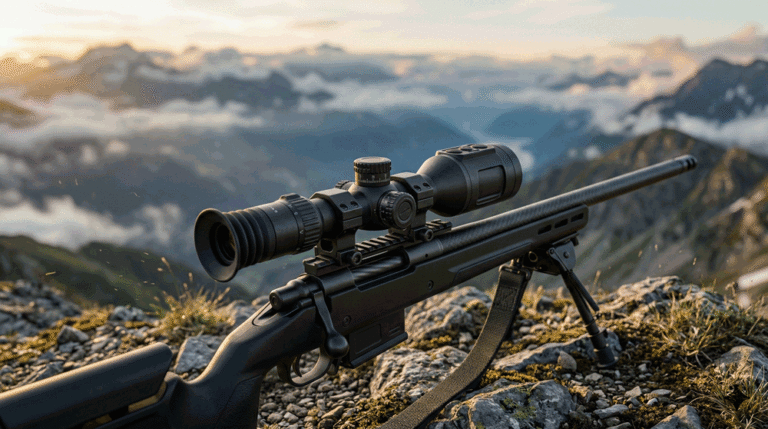
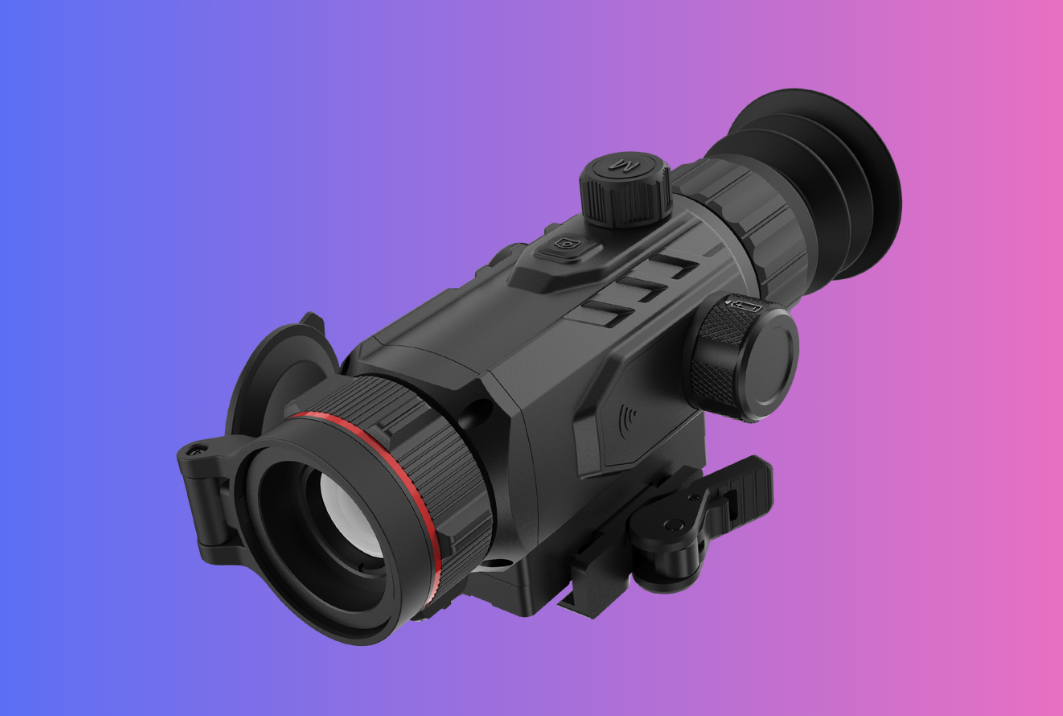
If you design or sell any thermal scope for hog hunting, you already know the category feels crowded: 25, 35 and 50 mm lenses, 384 thermal scope and 640 thermal scope cores, short and long housings, dozens of SKUs. On paper, most of them can “see hogs at 1,000 yards.” In the field, only a few combinations really fit how hogs behave and where people actually hunt them.
Table of Contents
ToggleThis article looks at the optics side of that reality. We’ll connect hog behaviour and common terrain to concrete choices in focal length, field of view (FOV), sensor resolution and platform, so you can build a portfolio that feels “tuned for pigs,” not randomly sliced by magnification numbers.
How Hog Behaviour Shapes the Optical Problem
Feral hogs are mostly nocturnal and crepuscular. Studies and outfitter guides consistently report that they feed and move most from dusk through night into early morning, especially in hot climates. That’s exactly when thermal optics shine: hogs’ warm bodies stand out as bright signatures against cooler ground and foliage.
Three behaviour patterns matter most for optics design:
- Sounders, not singles. Hogs often travel in groups of 5–20+ animals (“sounders”), spreading out across fields and pastures. A hunter needs to see the whole group, not just one animal.
- Close-ish engagement distances. Field reports and recent hog-hunting guides note that most thermal hog hunts emphasise volume over extreme range: sounders are commonly engaged between 80 and 250 yards, with occasional shots to 300+ in open agricultural country.
- Mixed terrain. On the same property, you may stalk along tree lines, shoot over open crop fields, and pick hogs out of brushy creek bottoms. The optic has to handle both close-in scanning and medium-range shot placement.
A thermal scope for hunting coyotes in wide-open prairie can tolerate a tight FOV and very high base magnification. A thermal scope for hog hunting in mixed fields and timber usually can’t. You need enough FOV to see several animals at once, but enough magnification to judge which ones are big sows vs smaller pigs and place shots precisely.
Translating Hogs and Habitat into FOV Requirements
Field of view is where the behaviour above meets physics. On a 12 μm 384×288 sensor, a 25 mm lens typically yields around 10–11° horizontal FOV (roughly 53–55 ft at 100 yards), while a 50 mm lens on the same sensor gives a much narrower 5–5.5° (about 27 ft at 100 yards).
Those numbers aren’t abstract. On a typical hog field:
- At 100 yards, a 10.5° FOV shows ~55 feet of width—enough to keep a medium sounder in frame.
- The same scope at 200 yards shows ~110 feet. You can still see several animals, track movement and switch targets.
- A 50 mm lens at 5.3° only shows ~27 feet at 100 yards and ~54 feet at 200 yards—great for zooming in on a single hog, but easy to lose situational awareness.
From a B2B standpoint:
- For primary hog rifles in typical fields and food plots, your “hero” FOV should live around that 9–12° band at base magnification.
- Narrower FOV should be positioned as long range thermal scope options for open, pressured properties or specialised shooters.
When you design a wide FOV thermal scope, you’re not “sacrificing range”—you’re matching reality. Many hog outfits in the U.S. South report that if you’re shooting pigs at 500–600 yards regularly, you’re either sniping unusually wary hogs or using vehicles in very open agricultural terrain. That’s a real but narrower use case that should sit in a distinct product tier.
Focal Length Choices: 25, 35 and 50 mm in Hog Country
Most rifle-mounted thermals for hog hunting cluster around three focal lengths: 25 mm thermal lens, 35 mm and 50 mm thermal lens. Each creates a different balance of FOV and base magnification for a given sensor.
25 mm: Workhorse for Mixed Terrain
On a 12 μm 384 sensor, a 25 mm lens yields ~2x base magnification and that 10–11° FOV we just discussed. Scopes like AGM’s Clarion 384 25 mm highlight that combination: “base magnification of 2x and a wider FOV (10.5° × 7.9° or 53 ft at 100 yards)” specifically pitched at night hunters.
For B2B planning, a 25 mm thermal scope for hog hunting should be your default recommendation for:
- Southeastern and South-Central properties with a mix of crops, pastures and tree lines;
- clients who walk a lot and value lighter, compact thermal scope housings;
- first-time buyers who haven’t yet defined their “typical” shot distance.
This focal length also pairs well with a separate thermal hunting monocular or thermal spotter for scanning, since the scope itself still offers enough FOV for tracking.
35 mm: Field Edge Specialist
Step up to 35 mm on a 384 and you’ll see FOV tighten into the 7–8° range, with base magnification around 2.5–3x. Detection range increases—some 35 mm 384 scopes advertise 1300–1500-yard human detection—but the main practical change is a more “zoomed in” feel that can help in open fields or when hogs are skittish and stay 200–300 yards out.
This should be your “open ag” hog optic:
- ideal for big wheat, corn or milo fields;
- good for outfits who often shoot from vehicles or towers;
- and a logical upsell above 25 mm lenses.
The trade-off is close-in scanning. Under 50 yards, a 35 mm 12 μm 384 can feel tight; some experienced hunters on forums caution against going too long in focal length for 384 because it makes scanning up close a “pain.”
50 mm: Niche but Powerful
On hog rifles, 50 mm thermals are almost always paired with higher-end 384 or 640 cores to justify cost and weight. Articles on lens sizes note that a 50 mm lens with 640×480 pixels can detect human-sized targets to roughly 2,000 m in ideal conditions.
Realistically, a 50 mm thermal hog hunting scope shines when:
- properties are extremely open and hogs avoid vehicles, forcing 300–500 yard shots;
- customers already own wide-FOV handhelds and want a tight thermal rifle scope for precision;
- or the same optic must double as a thermal scope for coyote hunting or longer-range varmint work.
For general-purpose hog packages, it should be framed as a specialised tier, not the default. Too many brands use 50 mm lenses to make brochure detection numbers look impressive, then discover that most night hunters complain about “tunnel vision” under 100 yards.
384 vs 640: Resolution, Magnification and FOV Trade-Offs
Resolution debates can eat entire forum threads, but from a portfolio perspective the differences are clear. Common cores like 384×288 and 640×480 (or 640×512) share the same lens focal lengths; what changes is pixel density and how you want to use it.
A 640 sensor carries roughly 3× as many pixels as a 384 of similar dimensions, which means more thermal data and finer detail. That translates into two practical advantages for hog hunting:
- at the same optical magnification, a 640 can show more detail on ears, snouts and background;
- digital zoom hurts image quality less, giving more usable magnification.
But on the same lens, a 384’s pixels cover a larger angular size, effectively giving higher base magnification. Experienced hunters often exploit that: some prefer a 384 thermal scope on the rifle and a higher-res 640 monocular for scanning, arguing that it’s better to “scan wide in high res and shoot on higher base magnification.”
For your thermal scope for hog hunting line-up, that suggests:
- 384 + 25 mm: excellent value all-rounder for typical 80–250 yard hog shots;
- 384 + 35 mm: mid-tier optic for open fields where higher base magnification helps;
- 640 + 25 mm: premium “detail” scope that keeps wide FOV but shows more anatomy and background—great for head/neck shots and tricky ID;
- 640 + 35/50 mm: flagship long range thermal scope for customers who truly shoot further or cross over into predator/varmint work.
From a cost perspective, 640 cores still run roughly $1,000–$2,000 more than 384 equivalents, depending on lens size. That price delta should be reserved for customers who will notice and pay for the extra detail: guides, outfitters, high-volume shooters and law-enforcement units.
Platform and Workflow: ARs, Bolts and Scanners
Optics don’t live on spec sheets; they live on rifles and in workflows. Three combinations dominate hog hunting:
- AR-style rifles with moderate barrels, where a thermal scope for AR-15 gives fast follow-up shots on sounders.
- Bolt-action or straight-pull rifles, often suppressed, used from stands or vehicles.
- Rifles plus thermal hunting monocular or binocular “spotters,” where the rifle optic is mainly for final aiming.
On ARs, the case for 25 mm and 35 mm lenses is strong: shooters often fire strings at multiple hogs, needing both awareness and shot placement. A thermal scope for AR-15 with 2–3x base magnification keeps them from constantly dialling digital zoom up and down as hogs rush closer or further.
On precision bolt guns, especially those shared between hogs and coyotes, a 35 or 50 mm optic on a 640 core can make sense. Users are more likely to take deliberate shots from rests or tripods at longer distances, where narrower FOV is acceptable.
When a hunter carries a separate thermal spotter, you can design the rifle optic tighter because they’re not scanning primarily through it. Many experienced night hunters now run 640 scanners and 384 riflescopes for exactly that reason: scan wide in high detail, then shoot on a slightly more zoomed-in image.
As a brand or OEM, recognise this pattern in your catalog:
- Offer at least one wide FOV thermal scope optimised for “scan and shoot through the same optics” use;
- Offer more magnified models clearly pitched as “best when paired with a scanner;”
- Make that pairing part of your sales story and dealer training, not a side note.
Designing a Hog-Focused Product Ladder
Once you understand behaviour, FOV and platform patterns, you can build a more coherent best thermal scope for hog hunting ladder instead of random magnification SKUs. For example:
- Tier 1 – Access / Volume Hog Guns
- 384×288, 25 mm, 2x base magnification, ~10.5° FOV.
- Lightweight, simple UI, aggressive price.
- Marketed for landowners and casual night hunters.
- Tier 2 – Core All-Rounder
- 384×288 or 640×480, 25–35 mm lens, 2–3x base.
- Better NETD, recording and app features.
- Pitched as the “guide’s choice” thermal scope for hog hunting in most terrain.
- Tier 3 – Open-Field / Dual-Use Specialist
- 640×480, 35 or 50 mm lens.
- Higher base magnification, optional integrated rangefinder.
- Marketed for big ag fields, pressured properties and crossover coyote hunters.
In channel conversations, that ladder sounds like:
“If your hogs are usually inside 200 yards, this 25 mm class optic is ideal. If they’re hanging out further in open country, step up to the 35 mm. If you’re also doing predator work at longer ranges, this 640 + 50 mm flagship is where you should be.”
That’s a much more intuitive B2B story than “we have five models from 1.5–7x with different lens numbers.”
Field-Testing Lens and FOV Decisions with Real Hog Hunts
E-E-A-T isn’t just about citing data; it’s about showing that product choices come from real experience. For hog scopes, that means running structured field tests with outfitters and dealers.
On typical properties:
- deploy test units across several nights with 25, 35 and 50 mm variants;
- log average engagement ranges, number of hogs seen vs shot, and how often users complained about “not enough” or “too much” magnification;
- capture video through each optic in identical scenarios for internal review.
Pair this with hog-behaviour background research—activity patterns, habitat use, reaction to lights and vehicles—published by wildlife agencies and hunting educators.
When you then brief distributors, you’re not just repeating marketing slogans; you can say:
“On three Texas properties over 15 nights we saw that 80% of hog shots were taken between 90 and 220 yards. In that band, our 25 mm and 35 mm lenses gave faster target acquisition than the 50 mm prototypes, which most testers found too narrow for scanning. That’s why we’re positioning 50 mm only as a dual-use coyote/hog scope.”
That kind of quantified narrative is exactly what serious B2B partners expect from a mature thermal imaging scope supplier.
What to Teach Dealers About Lens & FOV for Hog Customers
Finally, don’t keep this logic trapped in product management. Your dealers and pro-staff need a simple way to translate it for end users. A short training card might say:
- Ask where and how they hunt hogs. Timber + fields? Big ag flats? From vehicles, tripods or on foot?
- Tie terrain to FOV.
- Mixed terrain, shots inside 250 yards → recommend 25 mm 384/640.
- Open fields, frequent 250–400 yard shots → recommend 35 mm or higher-res 25 mm.
- Long, open shots plus coyote work → discuss 35–50 mm 640 “precision” scopes.
- Discuss scanning tools. If the customer already owns or plans to buy a scanner, you can put slightly more magnification on the rifle. If not, steer them toward wider FOV scopes so they can scan and shoot comfortably through one optic.
Reinforce this with real numbers (“this model shows 55 ft of field at 100 yards vs 27 ft on this one”) and with demo setups using steel or passive thermal targets at staggered ranges.
When every salesperson in your network can confidently connect thermal scope for hog hunting choices to hog behaviour and terrain, you’ve turned a dense engineering topic into a clear commercial advantage—and made it much more likely that buyers end up in the right glass the first time.