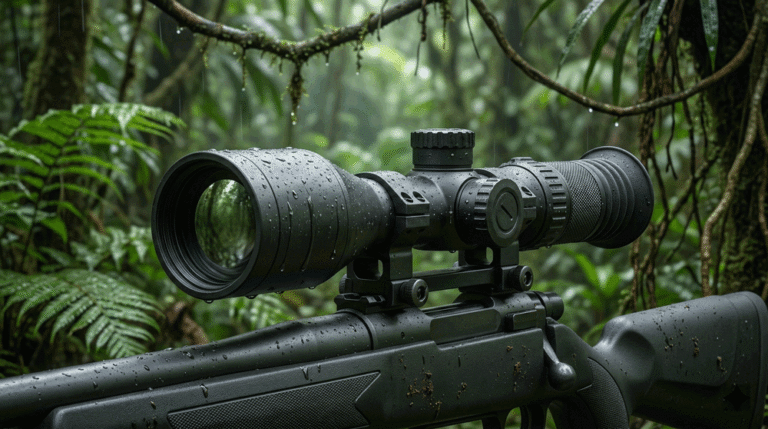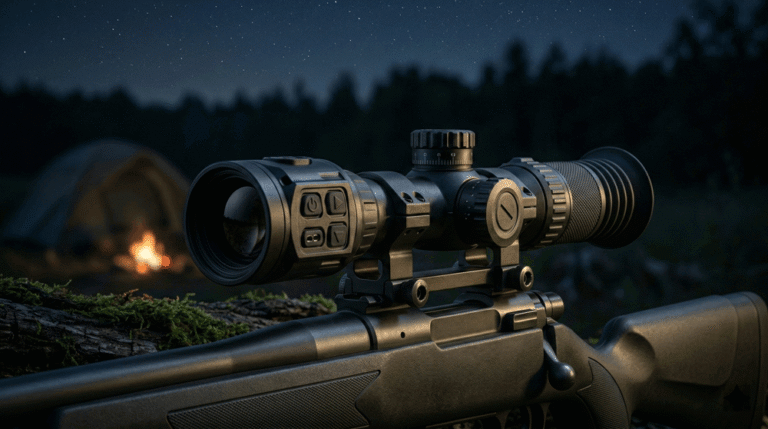
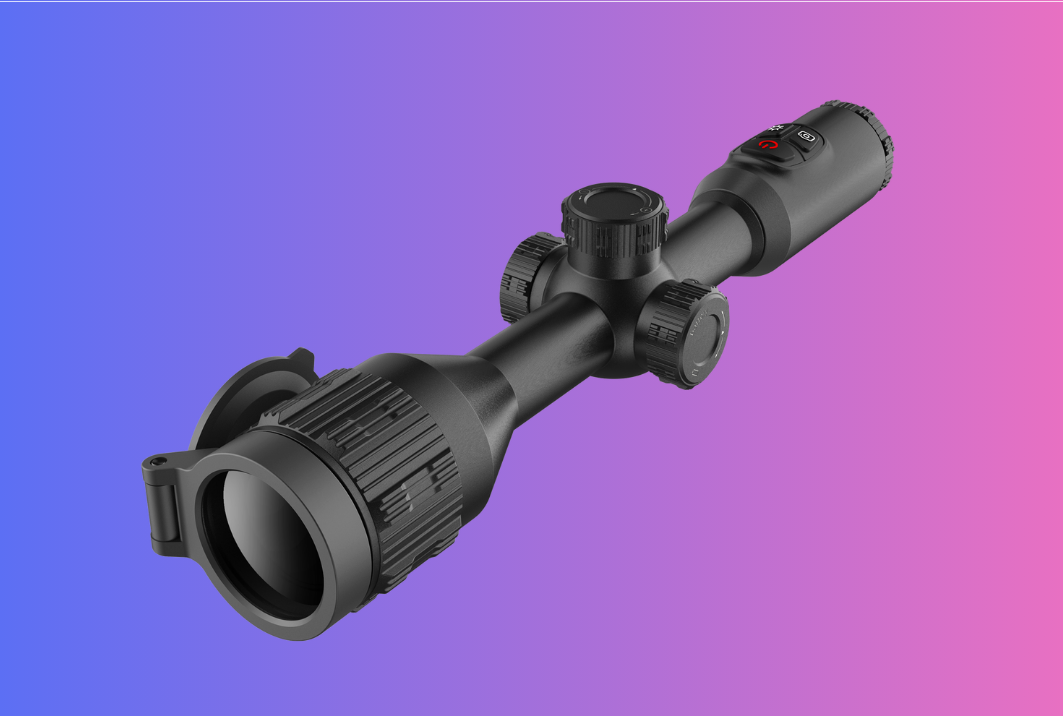
Walk any booth row at SHOT or IWA and you’ll see them: sleek rifles topped with a thermal scope with rangefinder. Sometimes the rangefinder is clearly a bulge on the objective bell; sometimes it’s almost invisible, buried behind the bezel. Marketing banners promise “one-shot solutions,” “instant ballistic holds” and “no more guessing.”
Table of Contents
ToggleFrom a B2B perspective, though, the question is more complicated. Integrated rangefinding adds cost, weight, electronics and regulatory overhead. It can also transform user experience, especially in the dark, where operating a separate device is clumsy. The real issue for an OEM or brand owner is not “can we integrate a laser?” but “for which customers and price points does a combo actually create value the channel can sell?”
This article looks at that decision in detail: technical realities, use cases, legal and safety frameworks, and portfolio pricing logic. The goal is to help you decide when a thermal scope with LRF should be a hero product in your line—and when a separate weapon-mounted rangefinder or handheld makes more sense.
What an Integrated Rangefinder Really Adds
A laser rangefinder does two things at its core: it emits a short pulse of infrared light, measures the time it takes to reflect off a target and return, and computes distance. In hunting and tactical optics, that pulse is usually eye-safe and invisible, conforming to Class 1 laser rangefinder limits under IEC 60825-1 so users aren’t exposed to hazardous energy.
When you integrate that module into a thermal rifle scope, you gain two immediate advantages that reviews and marketing copy repeatedly emphasise:
- the shooter can aim and range using the same sight picture, without lifting their head or repointing a handheld unit;
- the scope’s processor can feed that range directly into a ballistic calculator integration, generating an on-screen hold or turret recommendation.
For night hunters, that’s a big deal. In daylight, it is easy to bounce between binoculars, rangefinder and scope. At 2 a.m., under pressure, juggling a separate device is slow and error-prone. Reports from field testers of combo scopes like Pulsar’s Thermion 2 LRF note that integrated ranging is most noticeable when you need quick shots and can’t afford to take your eye off the animal.
What it does not automatically do is guarantee ethical hits or eliminate all guesswork. Range is only one variable; wind, angle and shot stability still matter. As a B2B supplier, you must present the feature honestly: an integrated rangefinder is a speed and workflow upgrade, not a magic wand.
Where Combo Devices Shine: Killer Use Cases
The most persuasive arguments for a thermal scope combo device come from real work, not brochures. Three segments in particular consistently benefit from integration.
Predator and Hog Hunting at Mixed Ranges
For serious night hunters running a thermal hunting scope or long range thermal scope, shots often fall between 80 and 300 metres, sometimes further on open fields. Estimating distance by eye in darkness is notoriously difficult; even seasoned shooters misjudge range when all they can see is a glowing coyote on a flat background. Field guides and blog reviews note that a built-in LRF allows hunters to “range instantly without losing focus on their target,” especially when opportunities are fleeting.
When your device can measure range and present either a corrected reticle or a simple holdover dot, you reduce one big source of error. This is especially valuable on platforms like thermal scope for AR-15 builds used for fast follow-up shots; the less the shooter has to touch external controls or change their cheek weld, the better.
Law Enforcement and Professional Users
Teams evaluating a law enforcement thermal scope are often working in complex environments: rooftops, mixed urban terrain, rural perimeters. For them, an integrated rangefinder supports both engagement and observation. A patrol officer can range a suspect across a parking lot; a marksman can confirm distance to a window or vehicle; a supervisor can relay accurate distances over the radio.
Compared to a handheld rangefinder, a rangefinding thermal sight avoids the “double aiming” problem—aim once with the gun, not once with a monocular and again with the rifle. OEMs that pair LRF data with recording and metadata (time, GPS, distance) can also help agencies with after-action review and evidence.
B2B Demonstrations and Dealer Training
From your own perspective, a thermal scope with rangefinder is a fantastic demo tool. On a range day, you can let dealers or key accounts watch the distance readout jump as they sweep across thermal scope targets, then take shots with correct holds. That immediate “aim, range, hit” sequence creates a compelling story they can repeat to their customers.
If your portfolio includes both rangefinder and non-rangefinder versions of the same core optic, the demo practically runs itself: show the base model, then step them up to the combo and let them feel the difference in workflow.
When a Separate Rangefinder Still Makes More Sense
If integration is so useful, why not put a laser in every scope? The answer shows up in dealer spreadsheets, not spec sheets. Integrated rangefinding brings trade-offs you must respect in your thermal scope portfolio.
Cost and Price Ladder Impact
Even at today’s prices, a good laser rangefinder module adds substantial bill-of-material cost: precision optics, laser diode, receiver, safety circuitry, calibration labour. Market analyses and manufacturer blogs often show retail deltas of several hundred dollars between otherwise similar models with and without LRF.
For brands positioning a “best thermal scope under $2000” or similar value tier, that extra cost can break their price architecture. Many hunting portfolios therefore reserve integrated rangefinding for upper-middle and flagship lines, while encouraging entry-level users to pair a basic scope with a separate handheld or rail-mounted rangefinder.
This is often healthier commercially. It preserves a clear feature ladder (“buy the base model now; move to the LRF version when night hunting becomes your main hobby”) and keeps your thermal scope pricing aligned with customer expectations at each rung.
Weight, Balance and Complexity
Integration adds hardware and often battery load. Reviews of combo glass scopes highlight increased weight and sometimes bulk as a key downside. Thermal housings are already heavier than equivalent day scopes; adding a rangefinder might push some rifles past what customers tolerate for all-night carry.
Complexity is less visible but equally dangerous. A thermal scope with rangefinder involves more firmware states, more failure modes and more potential for UI confusion. If a combined power system dies, the user loses both imaging and ranging. With separate devices, one can fail without killing the other; a shooter can keep using the scope if their handheld rangefinder dies, or vice versa.
Redundancy in Multi-Optic Setups
Security integrators and some LE units already deploy dedicated handheld thermal rangefinder devices for observation while weapon optics focus on engagements. In those architectures, baking another rangefinder into every rifle scope may be overkill; a better investment might be improving battery life, networking or image quality on the primary sight.
For these customers, consider offering modular options, such as a rail-mounted LRF accessory that talks to the scope or a premium “combo” only on designated marksman rifles, while standard carbines run simpler optics.
Engineering and Compliance Realities of Integration
From an OEM perspective, integrating a laser is not just a matter of bolting a module onto your existing thermal scope combo housing. It alters regulatory status, manufacturing, testing and after-sales support.
Laser Classification and Safety
Built-in rangefinders in consumer optics are almost always engineered to meet Class 1 requirements under IEC 60825-1, meaning they are considered eye-safe under reasonably foreseeable conditions. To achieve that, you must control:
- output power and pulse duration;
- beam divergence;
- possible reflections within the optical train;
- and failure modes that could increase emission.
You also need clear labelling and documentation: hazard pictograms, maximum output information, and user instructions consistent with EN/IEC laser safety guidance.
Skipping this work is not an option; for B2B buyers, especially in Europe and North America, poor documentation or ambiguous class markings are reasons to reject a device outright.
Optical Alignment and Parallax
The value of a rangefinding thermal sight depends on how accurately the laser follows the scope’s line of sight. Poor alignment or uncorrected parallax at different ranges can produce deceptive readings, which are worse than no reading at all.
High-end manufacturers sometimes integrate the LRF window into the objective bell or just beside it to keep the beam as close as possible to the thermal axis. Field reviews of products like the NocPix Ace H50R highlight this “seamless” integration as a design strength because it preserves alignment while avoiding awkward protrusions.
Practically, you’ll need a factory alignment process with adjustable mirrors or wedges and a calibration procedure repeated after recoil and environmental testing. That adds labour but is essential if you want dealers and agencies to trust the numbers they see in the HUD.
Power, Heat and Environmental Robustness
A thermal scope with LRF draws more power than a basic optic: the laser diode, receiver and additional processing consume energy and add heat near sensitive sensors. You’ll need to model these loads so that peak current for the laser doesn’t brown out the imaging core, and ensure that thermal management still keeps your NETD performance within spec under continuous use.
Battery strategy also matters. Some brands pitch “one battery for everything” as a key advantage of integrated systems, contrasting with separate rangefinders needing their own cells. That’s attractive, but if your scope goes dead precisely when a user hammers the range button on a cold night, they will see it as a design flaw, not a trade-off. Overspec your power system, and communicate realistic runtimes with rangefinder usage included.
Pricing Logic and Portfolio Positioning
Once engineering reality is clear, you face the strategic question: where does a thermal scope with rangefinder sit in your line, and how do you justify its price to B2B buyers?
Feature Tiers, Not Random Options
The cleanest approach is to treat LRF integration as a feature tier, not a one-off. For example:
- Tier 1: core thermal rifle scope models, no rangefinder, targeted at budget-conscious hunters and entry-level agencies.
- Tier 2: mid-tier models offering better sensors or ergonomics, still without LRF.
- Tier 3: flagship thermal scope with LRF variants, adding rangefinding, ballistic calculator integration, maybe better recording and networking.
That ladder lets distributors and retailers upsell naturally: “If you mostly shoot under 150 metres, Tier 2 is enough; if you’re regularly taking longer or more complex shots, Tier 3 with integrated ranging is worth the extra investment.”
Pricing data from various brands suggest that an integrated LRF can justify a retail uplift that covers module cost plus healthy margin, especially if the device also bundles features like wireless remote controls or smart apps.
Bundles vs A-La-Carte
To make that uplift feel fair, consider packaging. A flagship thermal scope with LRF should rarely be sold “bare.” Instead, bundle:
- a dedicated mount optimised for balance;
- a remote trigger for ranging;
- app connectivity for viewing range and ballistic data;
- a sturdy case and extra power options.
Dealers love bundles because they simplify selling; agencies appreciate that they’re not chasing small accessories later. Just be sure to keep a standalone SKU for integrators who don’t need your mount or case.
Dealer Experience and UX: Make the Combo Easy to Explain
From the dealer’s side of the counter, a thermal scope with rangefinder is only attractive if it’s easy to demo and support. UX therefore matters as much as sensor performance.
A good interface keeps the core shooting workflow intact: the shooter aims, presses one button to range, sees a distance and (if enabled) a simple hold indicator. Reviews of successful combos praise them for intuitive ranging, while users criticise designs where the shooter must dive into menus or multitask between buttons.
In your thermal scope dealer training materials, give staff a three-sentence script:
- “With this model you stay on target, tap this button, and your distance appears here.”
- “The scope can use that number to suggest a hold, or you can just use your own dope.”
- “You no longer need to juggle a separate rangefinder in the dark.”
Back this up with demo targets at multiple ranges so dealers can show the range readout stepping through realistic distances, not just flashing “50 m” on a single lane.
On the support side, document failure modes clearly. If the laser or receiver fails, can the user keep using the thermal image, or is the entire device disabled? How will your warranty handle partial failures? Dealers are more willing to stock electronic-heavy optics when they know what happens “on bad days.”
A Decision Framework for OEMs and Brand Owners
Bringing this together, you can think of integration decisions as a checklist rather than a yes/no debate. A thermal scope with rangefinder makes sense when most of the following are true:
- Your target users regularly shoot beyond distances where eyeballing range is reliable.
- They operate in conditions where juggling separate devices is genuinely painful (darkness, stress, moving targets).
- Your price ladder has room at the top for a premium tier without collapsing demand for mid-tier optics.
- Your organisation can handle laser safety compliance (IEC/EN 60825-1) and the associated documentation and testing.
- You have enough engineering bandwidth to manage the additional firmware complexity and long-term support.
If those boxes are mostly ticked, a flagship combo scope can anchor your line: the model your partners demo, the one your marketing features, the one that sets your brand’s perceived technical level.
If several boxes are empty—your buyers mainly shoot short, budgets are tight, or your team is already stretched—pushing LRFs into every SKU may be premature. In that case, consider starting with a separate weapon-mounted rangefinder accessory that interfaces with your scopes, then adding true combos later when your platform and market are ready.