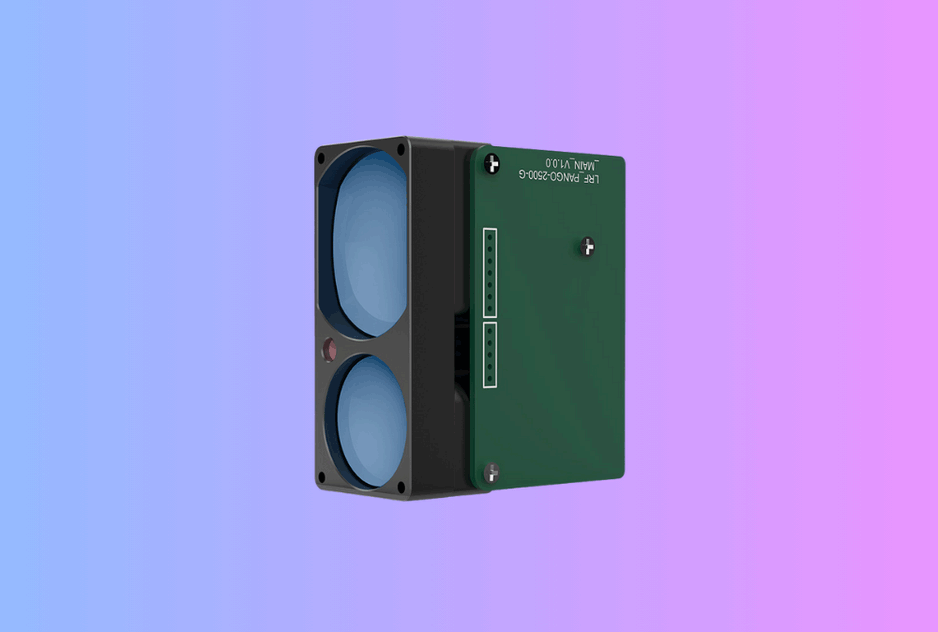
Buyers of a Laser rangefinder module ask the same nine questions, whether they come from golf, hunting, or mapping: How far does it really range, how fast, how stable, how safe, and what happens in sun, rain, or brush? This guide gives precise definitions, answer cues, and acceptance tests so sales and engineering respond consistently—grounded in hardware that ships on Laser Rangefinder Module and supported across Modules and Products.
Table of Contents
ToggleExecutive Summary
Answer the spec you are asked and supply the proof. Replace billboard “max range” with probability-of-detection (Pd) curves vs distance on 10–20% panels and natural targets. Quote latency at the 95th percentile, not the mean. Keep IEC 60825-1 Class 1 unchanged across modes. Publish energy per 100 ranges for battery questions, and show IP/fogproof test results, not adjectives. When buyers see numbers plus a 1-page acceptance card, deals close faster.
Use Cases & Buyer Scenarios
Scenario 1 — Golf buyers: “Snap to flag in sun”
They need fast locks on 50–350 m poles at noon. Provide first-target bias, divergence 1.0–1.2 mrad, glare-resistant digits, and tournament slope lock. Link to integration notes for flag UX under Rangefinder Module Integration.
Scenario 2 — Hunting/outdoor buyers: “Trust through brush”
They ask for last-target confidence at 100–800 m near dawn/dusk. Show Pd on bark behind grass, false backstop rate, and how verify bursts lift confidence. Align HUD language with observation devices like Thermal Rifle Scopes to cut training time.
Scenario 3 — Mapping/rig buyers: “Deterministic feed”
They want stable stream timing, CAN/UART details, and long-range sun performance. Provide message maps, latency budget, and tripod divergence ≤0.8 mrad. For fusion roadmaps, point them to Thermal + LRF Fusion & Ballistics.
Spec & Selection Guide (the heart)
Below are the nine specs that dominate buyer conversations. For each, you’ll find a plain definition, why it matters, answer cues, and a quick acceptance test buyers can repeat.
1) Range Confidence (not “max range”)
Definition. Probability that the module returns a correct distance within tolerance and a latency cap; noted as Pd(d, ρ, light).
Why it matters. Pd predicts field reality; “max range” does not. Panels (10/20/80%) and natural targets (bark/brush) tell different stories.
How to answer. “At 150 m on 20% panel in ≥100 klx, Pd is ≥90% with ≤180 ms 95th-percentile latency. On bark behind grass at 300 m, Pd is ≥80% with verify burst.”
Acceptance. Publish Pd curves and the CSV. Store golden logs under Downloads.
2) Accuracy & Repeatability
Definition. Accuracy = mean absolute error; repeatability = σ on a static target.
Why. Mis-scaled optics or jitter show here first.
Answer cue. “±0.5 m @150 m, ±1.0 m @300 m on 20% panel; σ ≤0.35 m in Scan on a steady mount.”
Acceptance. 30–50 shots per distance; 200 shots for σ; publish mean/σ and outlier count.
3) Latency & UI Cadence
Definition. Time from trigger to displayed range; UI cadence is the debounced update rate humans perceive (5–8 Hz).
Why. Users trust stability more than raw speed.
Answer cue. “95th ≤180 ms; UI shows stable digits at 6–7 Hz.”
Acceptance. Bench trace + on-camera video with timecode.
4) Divergence & FOV
Definition. Full-angle 1/e² beam spread and receiver field-of-view.
Why. Spot size \(s ≈ θ·d\) sets energy density and backstop risk; FOV must embrace returns.
Answer cue. “1.0–1.2 mrad for handhelds; FOV ≈2–3× θ. Tripod SKUs go ≤0.8 mrad.”
Acceptance. θ drift ≤0.1 mrad after stress; boresight error ≤0.2 mrad.
5) Eye Safety (IEC 60825-1 Class 1)
Definition. Accessible Emission Limit (AEL) for single/multiple pulses across pulse width τ, repetition rate f, burst count N, and divergence θ.
Why. Safety and legal market access.
Answer cue. “Certified Class 1; UI modes never alter τ/f/N. U.S. filings align with FDA Laser Notice No. 56.”
Acceptance. Signed timing tables; label photos; report hosted under Certificates.
6) Sun/Weather Robustness
Definition. Readability in ≥100 klx, IP rating (IEC 60529), and fogproof sealing.
Why. Noon sun and wet optics kill confidence faster than algorithms.
Answer cue. “Digits contrast ≥4.5:1 at ≥100 klx; IP67 dunk+spray; nitrogen purge; no fog after −10→+40 °C cycles.”
Acceptance. Sun-lamp video + IP + thermal-cycle logs; sealing process mirrors Thermal camera module builds.
7) Power Budget & Battery Life
Definition. Energy per 100 ranges at nominal settings; idle draw.
Why. Runtime drives retail reviews.
Answer cue. “≤35 mWh/100 ranges at Pd ≥90% (150 m, 20% panel); idle ≤15 mW; auto-sleep.”
Acceptance. Logged with coulomb counter; publish histograms.
8) Interfaces & Protocol (UART/CAN/USB)
Definition. Electrical signaling, message maps, and error handling.
Why. Determines cable length, EMI resilience, and serviceability.
Answer cue. “UART on-board; CAN 2.0B/FD for cables >1 m with 120 Ω ends; DBC/CSV provided.”
Acceptance. EMI (IEC 61000-4) with BER <1e-6 and hot-plug recovery; docs in Downloads.
9) Size, Weight, & Mounting
Definition. Module envelope, mounting points, recoil/vibration limits.
Why. Fit and survivability in pocket housings or optics rails.
Answer cue. “Compact RX aperture; M2.5 bosses; survives recoil to platform spec; drop-tested per IEC 60068.”
Acceptance. CAD + step file; test report summary.
| Buyer asks… | Say this (concise answer) | Prove it with… |
|---|---|---|
| “How far?” | Pd curves on 10/20/80% panels and bark/brush; not a single max | CSV + plots; video in sun |
| “How fast?” | 95th-percentile latency; UI cadence 6–7 Hz | Time-stamped logs + screen record |
| “How precise?” | ±0.5 m @150 m; σ ≤0.35 m | Panel tests; 200-shot σ |
| “Will sun kill it?” | Digits ≥4.5:1 @≥100 klx; anti-bloom | Sun-lamp video |
| “Safe?” | IEC 60825-1 Class 1; fixed τ/f/N across modes | Timing table + label photos |
| “Battery?” | ≤35 mWh/100 ranges; idle ≤15 mW | Power logs |
| “Cables?” | UART on-board; CAN for long/noisy runs | DBC/CSV; EMI immunity log |
| “Weather?” | IP67; nitrogen purge; no fog post-cycle | IEC 60529 + 60068 excerpts |
| “Mounting?” | M2.5 bosses; recoil/drop qualified | Mechanical test summary |
Integration & Engineering Notes
Electrical & Interfaces
Keep the host link deterministic: DMA-backed UART for on-board or CAN 2.0B/FD for harnesses with motors/heaters. Provide GET_RANGE() → {range, confidence, n_valid, σ, mode}, and GET_STATS() → latency mean/95th and mWh/100 ranges. Signed timing tables guarantee UI modes never change τ/f/N—the cornerstone of Class-1 safety.
Optics & Mechanics
Handheld divergence at 1.0–1.2 mrad balances coverage and energy density. Pair with FOV ≈2–3× θ and blackened baffles. Keep TX/RX boresight within ≤0.2 mrad after stress. Fogproof sealing matters more than clever DSP; reuse the sealing discipline you apply in Thermal Binoculars and Thermal Monoculars.
Firmware/Tuning
Do not smooth noise into confidence. Burst → histogram → cluster → bias (first/last) → verify if σ is wide → render debounced digits at 5–8 Hz with a 0–100 confidence bar. Keep definitions public in manuals under Support.
Testing & Validation
Panels: 10/20/80% at 50/150/300 m. Natural: bark and brush with/without backstop. Sun: ≥100 klx. Stress: −10→+40 °C cycles; IP67; ESD/EMI. Re-measure divergence and boresight after each stress sequence.
Compliance, Export & Certifications
IEC 60825-1 Class 1. Confirm AEL with worst-case τ/f/N/θ and stable apertures. FDA Laser Notice No. 56. Align U.S. filings with your IEC report. CE/FCC/RoHS. CISPR 32/35 for EMC, and RoHS declarations by part number. Ingress & environment. IEC 60529 (IP) and IEC 60068 series (thermal/drop/vibe). Keep label/record packs under Certificates and warranty terms at Warranty.
Business Model, MOQ & Lead Time (OEM/ODM)
Typical MOQs: 200–300 pcs for catalog optics; 500–1,000 pcs for custom windows/filters. EVT 4–6 weeks; custom glass adds 6–10 weeks. Deliver an acceptance card, SDK, timing CSV, and Pd plots that channels can reuse in sales decks. If you bundle with imaging, align overlays and UX across families, including Thermal Clip-On Sight and Thermal Pistol Sights.
| Deliverable | What it unlocks | Channel impact |
|---|---|---|
| 1-page Acceptance Card | Objective gates; vendor alignment | Fewer disputes; faster MP |
| Pd/Latency plots + CSV | Credible range story | Higher close rate; ASP uplift |
| Timing & Eye-safety file | Audit-ready Class-1 proof | Retail approvals |
Pitfalls, Benchmarks & QA
Don’t sell “max range.” It folds on bark and brush. Don’t quote averages. Humans feel the 95th percentile. Don’t let slope/scan alter emissions. Modes are UI math, not TX timing. Don’t skip bright-sun tests. ≥100 klx is a standard step. Don’t bury logs. CSV or it didn’t happen.
FAQs
Q: Which single slide closes most deals?
The Pd vs distance plot on 10/20/80% panels and bark/brush, annotated with latency and confidence thresholds.
Q: How do I compare 905 vs 1535 nm quickly?
Show Class-1 headroom, detector noise, and solar background in one mini-table; link to wavelength guidance, then pick by your market KPI.
Q: Can one SKU serve golf and hunting?
Yes—ship two presets (first-target and last-target+verify), keep divergence 1.0–1.2 mrad, and lock slope for tournaments. Cross-sell with observation families on Thermal Optics.
Q: Where do the docs live?
Spec sheets and message maps under Downloads; compliance at Certificates; support at Support.
Decision Flow — from question to proof
Start
  ├─ What did the buyer ask? (range / speed / sun / safety / power / cables / weather / size)
  ├─ Map to the 9 specs above
  ├─ Pull answer cue (one sentence) + matching proof (CSV, plot, video, report)
  ├─ Verify Class-1 invariance (τ/f/N/θ) and include label photo if relevant
  ├─ Attach acceptance card + Pd plots; send links to Downloads / Certificates
  └─ Log the ask/answer in CRM; add to FAQ if new
Call-to-Action (CTA)
Want these nine specs templated for your team? We’ll deliver a branded acceptance card, Pd/latency plots, timing files, and a short sales play that turns questions into proofs. Start a spec review via Contact and explore bundle options under Module Integration for OEMs.
Sources
- IEC 60825-1 — Safety of Laser Products (Ed. 3). Class-1 AEL, limiting apertures, and multi-pulse rules. (IEC Webstore)
- FDA — Laser Notice No. 56. U.S. recognition of IEC 60825-1; product report guidance. (U.S. FDA)
- IEC 60529 — IP Code. Definitions and tests for IPX5–IP67. (IEC Webstore)
- IEC 60068-2-14 — Environmental Testing: Temperature Cycling. Dwell and ramp guidance for components. (IEC Webstore)
- RP Photonics — Beam Divergence. Definitions and measurement notes for handheld beams. (RP Photonics)