
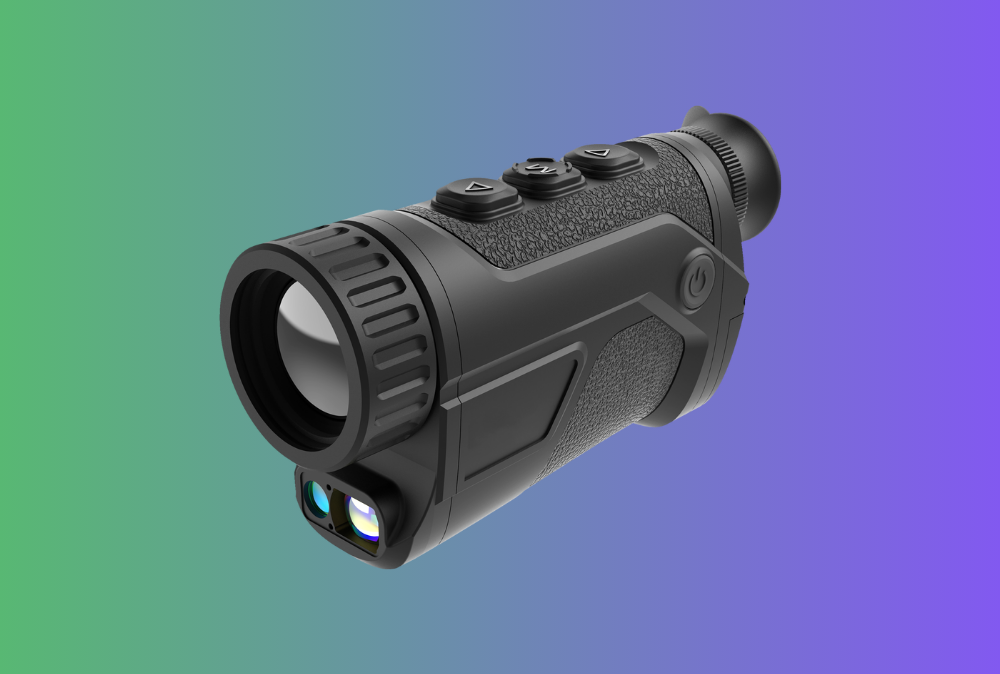
Most thermal brands focus almost entirely on new product launches: new sensors, new lenses, new “best-ever” lineups. But as the installed base grows, another asset quietly appears in your ecosystem: thousands of used thermal monoculars sitting in gun safes, patrol vehicles and dealer back rooms.
Table of Contents
ToggleHandled badly, this used inventory becomes a grey market that undercuts your new product sales and erodes pricing discipline. Handled well, a structured used thermal monocular for sale program becomes one of the most powerful tools you have to drive upgrades, protect your brand and keep dealers aligned with your roadmap.
This guide explains how to design and run trade-in and refurbishment programs for thermal monoculars so they fuel new sales instead of competing with them. We will look at program design, technical grading, pricing logic, OEM cooperation and the operational details that keep the channel healthy.
1. Why Used Thermal Monoculars Matter More Than You Think
Thermal devices are durable. A hunter or patrol team can easily use the same monocular for five or more seasons. That means each new generation of products leaves behind a trail of older but still functional optics. As your volumes grow, the number of used thermal devices increases much faster than you might expect.
If you ignore this pool of equipment, several problems emerge:
- Dealers quietly discount old stock and open-box units in ad-hoc ways.
- End users sell unwanted devices through classifieds and forums at any price they can get.
- Pricing for new models is constantly compared against bargains in the used market.
From a brand perspective, scattered used thermal monocular for sale listings can make your new products look overpriced and confuse buyers who do not understand generation differences.
A structured trade-in program does the opposite:
- It gives users an official path to upgrade at predictable values.
- It pulls used devices back into your controlled pipeline where they can be graded, refurbished and resold properly.
- It supports dealers with clear policies instead of leaving them to improvise.
In other words, a good trade-in system lets you manage the lifecycle of your optics portfolio, not just the launch phase.
2. Core Concepts of a Thermal Monocular Trade-In Program
Before you define processes and spreadsheets, you need a clear mental model of what a thermal monocular trade in program is supposed to achieve.
2.1 Dual Objective: Upgrade and Remarketing
A mature program always serves two objectives:
- Stimulate new sales by offering attractive upgrade deals when customers hand in older units.
- Remarket refurbished thermal monoculars in a controlled way, opening a lower price tier without harming your main product positioning.
If you focus only on upgrades and simply scrap old units, you lose the chance to monetize perfectly usable devices. If you focus only on refurbishing but do not tie it to upgrade incentives, you lose the flywheel effect that keeps new sales moving.
2.2 Controlled vs Uncontrolled Used Market
The goal is not to eliminate the free market—people will always sell second-hand optics—but to make your official channel the most predictable and trustworthy source of used thermal monocular for sale options.
That means:
- Clear grading standards and warranties for refurbished units.
- Transparent trade-in values tied to model and condition.
- Coordination with dealers so your program does not conflict with their own offers.
Once users see that official refurbished devices carry real backing (for example, via your Warranty policy) and that trade-in values are fair, many will prefer this path over unstructured peer-to-peer deals.
3. Mapping the Lifecycle of a Thermal Monocular
To design the program, think of a monocular’s life in stages:
- New sale – the device leaves your warehouse and enters the field.
- First owner use – normally 2–5 years, depending on usage and technology changes.
- Upgrade trigger – new generation launches, sensor improvements, or change in user mission.
- Trade-in event – device returns to your network.
- Refurbishment and grading – technical and cosmetic evaluation, repair if needed.
- Second sale – device resold as certified used or refurbished.
- End-of-life – eventually scrapped, cannibalized for parts, or used as training equipment.
Your program should give explicit rules for each stage, especially from step 3 onward. Without rules, dealers and users fill the gaps with their own assumptions, and every negotiation becomes a custom case.
4. Designing Trade-In Rules That Support New Sales
The heart of the program is the moment when a customer brings in an old monocular and walks out with a new one. That process must be simple for the buyer and clear for the dealer.
4.1 Eligibility: Which Models and Conditions Qualify?
You need to decide which categories of used thermal monoculars are eligible for trade-in:
- Only your own brand, or also competitors?
- Only certain generations, or “anything still operational”?
- Devices with cosmetic damage but full function, or only those in good cosmetic shape?
Many brands start by accepting only their own models, then carefully expand. Taking in competitor devices can be powerful: a user trading a competing monocular for your latest model is unlikely to switch back. But it also adds complexity to grading.
For condition, an easy rule is:
- Fully working units with minor cosmetic wear: eligible for trade-in credit and refurbishment.
- Units with known functional defects: eligible for reduced credit and parts salvage only.
- Severely damaged or obviously abused units: not eligible.
Write this clearly in your dealer manual and user-facing FAQs.
4.2 Valuation: How Much Credit to Offer
Trade-in credit must be attractive enough to trigger upgrades, yet conservative enough to leave margin for refurbishment and resale.
Consider:
- Original MSRP and current street price of the new device.
- Age of the unit and number of generations behind the current line.
- Typical resale price of similar used thermal monocular for hunting units in your target markets.
One practical approach is to define a value matrix:
- Year 1–2 old, current or previous generation: 40–50% of new MSRP as credit.
- 3–4 years old: 25–35%.
- 5+ years: 10–20%, mainly for parts and training pool.
You can adjust percentages by model tier: premium devices hold value better than entry-level ones. Whatever matrix you choose, keep it consistent so dealers know what to expect.
4.3 Tying Credit to Specific New Products
To support your roadmap, structure credit so it nudges users toward specific new models. For example:
- Extra bonus when trading toward your latest flagship.
- Standard credit when trading toward mid-range devices.
- Reduced or no credit when moving sideways into older stock.
This keeps the program aligned with your Thermal Monoculars lineup instead of accidentally accelerating sales of soon-to-be-retired SKUs.
4.4 Dealer Workflow
The process at the counter or in the webshop should be simple:
- Dealer or online form collects serial number, photos and condition notes.
- System proposes a trade-in value band.
- Dealer confirms after physical inspection.
- Customer receives discount on the new device; old unit is logged into the refurbishment pipeline.
To make this work at scale, many brands create a short “grading app” or portal, but even a structured spreadsheet and photo rules can be enough early on.
5. Technical Grading and Refurbishment Standards
Once devices return, your technical team—or your OEM—needs clear rules on how to grade and refurbish them.
5.1 Grading Categories
A simple three-tier grading scheme works well:
- Grade A – Certified Used
Light cosmetic wear, fully functional, latest firmware installed. Suitable for resale with standard used warranty. - Grade B – Refurbished
Noticeable cosmetic marks, minor repairs completed (e.g., eyecup replacement). Suitable for resale at lower price with shorter used warranty. - Grade C – Parts / Training Only
Functional issues or heavy damage. Used for cannibalizing parts, internal training, or employee equipment. Not sold as used thermal monocular for sale to the public.
Each grade should have clear acceptance criteria, ideally linked to your internal Manufacturing & Quality procedures so technicians apply the same standards used on new devices.
5.2 Refurbishment Steps
Typical refurbishment includes:
- Complete function test of sensor, lens, buttons, UI, and recording.
- NUC recalibration and pixel map update to clean up dead or hot pixels.
- Replacement of consumables: eyecups, lens caps, batteries if necessary.
- Cleaning of housing and optics; minor cosmetic touch-up if allowed.
- Firmware update and reset to factory settings.
Make sure your OEM partner supports these steps, especially calibration and firmware. If you run an thermal monocular OEM/ODM program, clarify in your contracts whether the factory can refurbish units for you or whether you prefer to build an in-house capability.
5.3 Documentation and Traceability
Treat refurbished units almost like new products in terms of traceability:
- Assign a new internal refurbishment batch number.
- Record major replacements (sensor, lens, main board).
- Store test results and photos.
This protects you if a batch later shows problems and allows you to refine your grading standards based on real failure patterns.
6. Pricing, Warranty and Channel Strategy for Refurbished Units
A refurbished thermal monocular line can be a powerful tool—but only if you position it correctly.
6.1 Pricing Logic
Your pricing should:
- Sit clearly below new devices of comparable performance.
- Stay above uncontrolled grey-market prices to reflect the value of testing and warranty.
- Avoid undercutting new entry models too aggressively.
For example, if a new mid-range monocular sells for 1,200, you might price a Grade A refurbished previous-generation unit at 800–900, and a Grade B at 600–700. The exact numbers depend on performance differences, but the structure should be easy for dealers to explain.
6.2 Warranty Terms
Warranty for used units should be shorter than for new ones but still meaningful: long enough to show confidence in your refurbishment process, short enough to reflect the remaining life of the hardware.
Common patterns:
- Grade A: 12 months limited warranty.
- Grade B: 6 months limited warranty.
- Grade C: no end-customer warranty (not sold to public).
Be explicit in your Warranty documentation and ensure all refurbished devices ship with updated paperwork or stickers indicating coverage.
6.3 Which Channels Should Sell Used Units?
You have several options:
- Direct online sales from your own site, creating a controlled storefront for used thermal monocular for sale offers.
- Selected dealers who agree to follow your pricing and disclosure rules.
- Auction or clearance partners for lower-grade units that you still want to move.
The safest approach is often to keep Grade A and B refurbished units within your own brand ecosystem (website and key dealers) and use secondary channels only for parts or training stock.
7. Working With OEMs on Refurbishment and End-of-Life
Your manufacturer plays a central role in the program, whether you refurbish in-house or outsource most of the work.
7.1 Access to Parts and Calibration Tools
Refurbishment requires spare housings, lenses, eyecups and sometimes sensors or main boards. Make sure your OEM commits to stocking critical parts for the expected life of each generation.
You should also clarify access to:
- Calibration tools and instructions for NUC and pixel mapping.
- Service manuals or at least controlled knowledge transfer to your technicians.
- Firmware tools or secure channels for loading updated software.
This is easiest if your relationship already includes structured documents and processes, rather than ad-hoc deals. Reviewing these expectations when you discuss new products—similar to how you treat your Thermal Monoculars — OEM/ODM projects—prevents surprises later.
7.2 End-of-Life Planning
Not every model deserves a long refurbishment life. Some older devices may lack parts, or their performance may be too far behind current products.
Work with your OEM to:
- Define last-time-buy dates for components.
- Decide which generations will continue to be accepted into the trade-in program and which will eventually shift to “trade-in for scrap only.”
- Plan communication so dealers know when a model is entering sunset for both new and refurbished sales.
A clean end-of-life schedule keeps you from drowning in obsolete units that are expensive to repair but hard to resell.
8. Communication Strategy: How to Market Used Programs Without Confusing Customers
If you simply add a “used” section to your website, you risk cannibalizing new sales. To avoid this, think carefully about how you present used thermal monocular for sale offers.
8.1 Positioning Refurbished Units as a Gateway
In your messaging, frame refurbished units as:
- A starter path into your ecosystem for budget-constrained users.
- A smart way to try thermal before committing to a premium model.
- Environmentally responsible reuse of high-quality optics.
Make it clear that new devices offer the latest sensors, ranges and UI, while refurbished units are reliable, verified tools that sit below them in performance and price.
8.2 Clear Labeling and Education
On product pages, use obvious labels like “Certified Used” or “Refurbished by Manufacturer.” Avoid vague wording that could be mistaken for new.
Educational content—blog posts, FAQs, short videos—can explain:
- How the trade-in program works.
- What grading means.
- Why refurbished units include warranty and quality checks that random classifieds do not.
Your About Us and Why Choose Us pages can also mention this lifecycle approach as evidence that you are committed to long-term support.
8.3 Dealer Training
Dealers need talking points that connect the trade-in program to their business:
- How accepting used units can free up capital and shelf space.
- How refurbished stock helps them serve budget customers without discounting new units.
- How official trade-in values simplify negotiation and protect margin.
With the right scripts, dealers will see the program as a tool, not as a threat.
FAQs: Used and Refurbished Thermal Monocular Programs
Q1: Won’t selling refurbished units hurt new product sales?
Not if you position them correctly. Refurbished devices typically attract more price-sensitive customers who might otherwise buy from classifieds or competing budget brands. With clear differentiation, they complement new sales rather than replace them.
Q2: How many generations back should we accept in trade-ins?
That depends on parts availability and performance. Many brands focus on devices within two or three generations of the current lineup. Older units may still be accepted but valued lower and used mainly for parts or training.
Q3: Can OEMs handle refurbishment for us?
Often yes, especially if they already manage your warranty repairs. You must, however, agree on grading standards, pricing, turnaround time and data sharing so refurbished units meet your brand’s expectations.
Q4: What is the biggest risk in used programs?
The main risk is inconsistency: vague grading, unpredictable trade-in values and unclear warranties. These quickly lead to disputes with dealers and customers. A written policy and tight coordination with your OEM and service teams are essential to avoid this.
Turn Used Thermal Optics Into a Growth Engine
A structured used thermal monocular for sale program is not a side project; it is a strategic lever. Done right, it accelerates upgrades, stabilizes pricing, reduces grey-market chaos and shows customers that you stand behind your products for years—not just at launch.
If you are ready to turn scattered used devices into a disciplined trade-in and refurbishment pipeline, start by mapping your current installed base, failure modes and dealer pain points. Then align with an OEM partner that can support calibration, parts and documentation across generations.
To explore how a lifecycle-driven approach could work for your handheld portfolio, you can review our Thermal Monoculars, see how we handle Manufacturing & Quality, and contact our team to design a trade-in and refurbished strategy that supports new sales instead of competing with them.