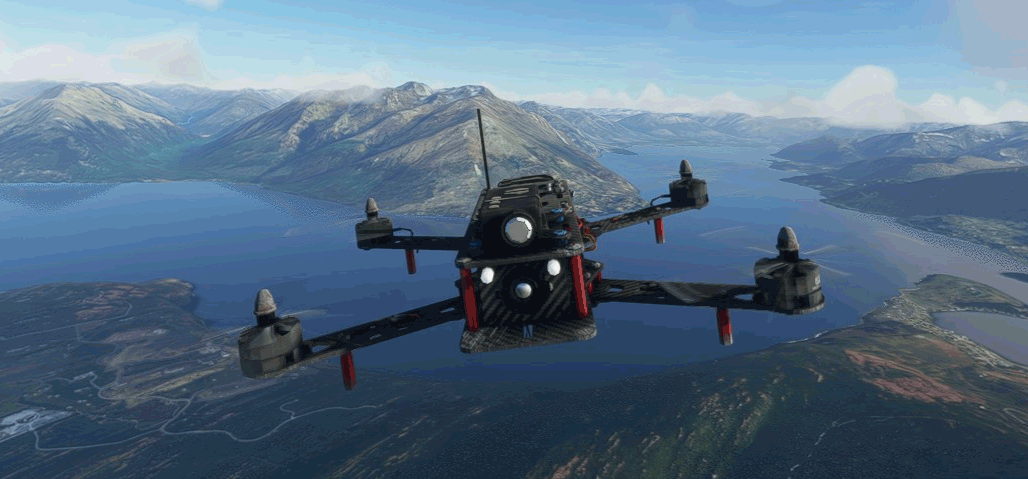
Picking a Laser Rangefinder Module for FPV isn’t just “more meters.” You’ll ship faster—and safer—when you match wavelength, beam divergence, and PRF to the actual flight envelope. This guide gives OEM/ODM teams practical rules, tables, and test scripts that survive the bench, the field, and channel compliance.
Table of Contents
ToggleExecutive Summary
Wavelength drives weather and eye-safety budget. 905 nm is compact and cost-efficient; 1550 nm supports higher eye-safe power and often retains range better in fog/rain—useful for inspection and public work.
Beam divergence sets near-field vs standoff behavior. Wider beams reduce blind spots for close, fast FPV; tighter beams help long-range precision but demand stable boresight and alignment. Definition: divergence is the angular expansion of a beam with distance (mrad).
PRF should sync with your OSD cadence. Higher pulse-repetition frequency smooths the HUD; too high risks aliasing or CPU overload—choose ranges that match speed and update rates.
Design Class 1 from day one. IEC 60825-1 defines laser product safety; Class 1 is considered eye-safe for reasonably anticipated use. US labeling can align via FDA Laser Notice 56.
Start with our Laser Rangefinder Module options. For fused night overlays, pair with a Thermal camera module to create a pilot-friendly HUD.
Use Cases & Buyer Scenarios
Fast freestyle and indoor demos
Goal: smooth obstacle cueing at 3–25 m, zero “dead zone.”
Pick: 905 nm, wider divergence (2–5 mrad), higher PRF (5–20 kHz), Class 1 labels for public venues.
Utility and rooftop passes in mixed weather
Goal: stable standoff at 20–150 m with fog/rain resilience.
Pick: 1550 nm with tighter divergence (0.5–2 mrad), PRF 2–10 kHz, robust power isolation. Data from automotive studies indicates 1550 nm maintains performance better in fog/rain.
Training fleets and public safety
Goal: repeatable HUD behavior and audit trails.
Pick: standardized PRF/OSD timing, per-serial acceptance clip + CSV, Class 1 and basic compliance binder.
Spec & Selection Guide
Key parameters with plain definitions and trade-offs
Wavelength (905 nm vs 1550 nm).
905 nm: compact, cost-efficient; silicon receivers common. 1550 nm: higher eye-safe power budget; literature shows superior range retention in fog/rain scenarios, benefiting long-range or public-safety missions.Beam divergence (mrad).
Angular expansion of the beam; sets spot size vs distance. Wider divergence = easier near-field coverage; tighter = better precision at range, but more sensitive to misalignment.PRF (pulse-repetition frequency).
Pulses per second. Higher PRF improves HUD smoothness; too high can cause aliasing or limit max unambiguous range/processing headroom—match to OSD update rate.Receiver and multi-echo.
Multi-echo reporting (first/strongest) with a confidence value helps through vegetation or mist and lets pilots trust the HUD.Range specification.
Always pair distance with target reflectivity and environment (e.g., “10 % Lambertian at 100 m, light fog”) so results are reproducible.Eye safety.
Plan IEC 60825-1 Class 1 and maintain label/DoC files; it streamlines public demos and distributor onboarding.
Comparison table—three archetypes you can RFQ side-by-side
| Archetype | Wavelength | Beam divergence | PRF | Typical range* | Interface | Eye safety | Notes |
|---|---|---|---|---|---|---|---|
| Close-in cueing | 905 nm | 2–5 mrad | 5–20 kHz | 3–40 m | UART/CAN | Class 1 | Indoor/freestyle; avoid near-field blind spots |
| Weather-tolerant standoff | 1550 nm | 0.5–2 mrad | 2–10 kHz | 20–150 m | CAN/Ethernet | Class 1 | Better fog/rain retention; inspection passes |
| Fusion with thermal | 905 or 1550 nm | 1–3 mrad | 5–15 kHz | 10–120 m | CAN + SDK | Class 1 | Distance + thermal hotspot HUD for night ops |
* Always state reflectivity and weather assumptions with range claims.
Decision rules
If flights are fast and close → choose wider divergence (2–5 mrad) and higher PRF (5–15 kHz) at 905 nm
If missions include fog or drizzle → favor 1550 nm with tighter divergence (0.5–2 mrad)
If HUD jitters at speed → raise PRF until OSD appears smooth; avoid aliasing bands
If public venues are involved → require IEC 60825-1 Class 1 labeling early
Always log event-time range and confidence to stabilize overlays and audits
Integration & Engineering Notes
Electrical & Interfaces
Power hygiene. Isolate from the digital VTX rail; LC-filter and budget 2× steady-state for cold starts.
Bus discipline. For noisy, multi-node rigs use CAN with 120 Ω termination at both ends; verify ~60 Ω across the bus when unpowered (two 120 Ω in parallel).
SDK fields. Publish
t_event,range_m,confidence,num_returns, andsupply_mvfor OSD and logs.
Optics & Mechanics (mounting, boresight, sealing)
Boresight that survives service. Use V-groove/dowel datums; do near/far two-point zero and log residuals.
Windows. AR-coated, non-vignetting at max gimbal angle; confirm clear aperture vs divergence.
Firmware/Tuning (filters, multi-echo, HUD)
Smoothing. Small moving-window filters; avoid heavy lag.
Multi-echo policy. Show first + strongest with confidence.
HUD minimalism. Range, confidence bar, and safety-derate icon if power is limited to keep Class 1.
Testing & Validation (bench → field)
Bench: 5/25/75/120 m against taped targets; record reflectivity.
Weather lane: mist/spray tests to compare 905 vs 1550; published studies report 1550 nm advantage in fog/rain.
Acceptance: per-serial 10–20 s clip + CSV with
t_event, range, confidence, PRF, supply mV.
Compliance, Export & Certifications
IEC 60825-1 governs laser product safety and classification; Class 1 is generally considered eye-safe for reasonably anticipated use.
Maintain a lightweight binder (classification worksheet, labels, warnings). If you later bundle with thermal for export, align the thermal SKU with the target region’s rules before quoting (EU dual-use, US frame-rate limits).
For ground verification kits in tenders, consider Thermal Monoculars or Thermal Binoculars to close the loop in the field.
Business Model, MOQ & Lead Time
Samples: 2–4 weeks standard optics; 4–6 weeks for custom divergence/apertures.
MOQ: 100–300 pcs baseline; more with custom windows/housings.
Deliverables: module, harness, low-noise buck, mounts, SDK, boresight guide, Class 1 files, acceptance checklist, and per-serial clip.
Mini ROI example—why spec clarity pays
| Driver | Before tuning | After wavelength-divergence-PRF match | Units/yr | Impact |
|---|---|---|---|---|
| Night mission aborts | 7% | 3% | 1,000 sorties | ↑ completion |
| Pilot onboarding time | 6 h | 4 h | — | ↓ training cost |
| NFF returns | 1.0% | 0.5% | 2,000 | −10 RMAs |
For fused HUD kits, combine Laser Rangefinder Module with our Thermal camera module—the acceptance script stays the same.
Pitfalls, Benchmarks & QA
Seven mistakes to avoid
Quoting max range without reflectivity/weather.
Picking divergence too tight—creates near-field blind zones.
PRF lower than OSD cadence—HUD “steps” at speed.
Oversmoothing—lag during fast approaches.
Shared noisy rails with VTX—banding/drops.
No CAN termination—bus errors; always 120 Ω ends.
No per-serial artifacts—hard RMAs later.
Benchmark recipe (copy-ready)
Distances: 5/25/75/120 m; Reflectivity: 10 % & 50 %; Weather: clear + light mist.
Metrics: mean error, stdev, HUD latency vs PRF, multi-echo hit rate, CAN errors.
Artifacts: 10–20 s video + CSV with
t_event, range, confidence, PRF, supply mV.
FAQs
1) Does 1550 nm always beat 905 nm?
Not “always,” but studies show 1550 nm supports higher eye-safe power and frequently retains range better in fog/rain; 905 nm wins on size/Cost and short-range cueing.
2) How do I pick divergence?
Freestyle/indoor: 2–5 mrad. Inspection/standoff: 0.5–2 mrad with sturdy boresight.
3) What PRF is “smooth” for FPV?
Often 5–15 kHz—but validate against your OSD frame rate to avoid aliasing
4) Do I need CAN?
UART is fine for simple rigs; CAN adds robustness on noisy, multi-node airframes—terminate 120 Ω at both ends.
5) What paperwork is needed for demos?
IEC 60825-1 classification sheet, label artwork, and warnings; Class 1 simplifies venue approval.
Send your airframe class, typical ranges, and demo environment. We’ll recommend a wavelength-divergence-PRF combo, provide Class 1 files, and ship a sample kit with acceptance scripts—built on our Laser Rangefinder Module line and ready to fuse with Thermal camera module.