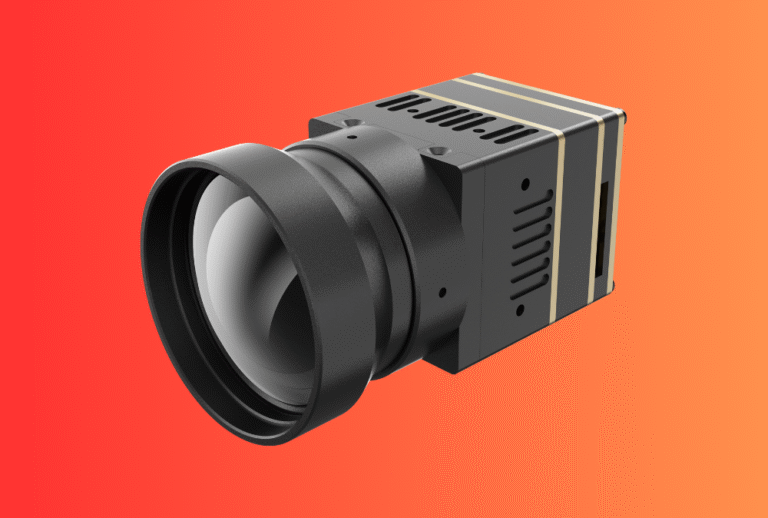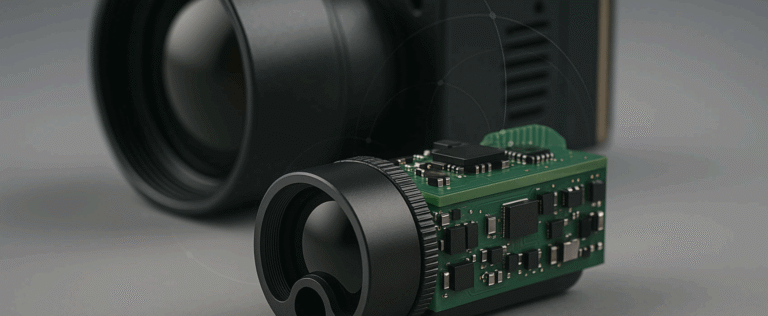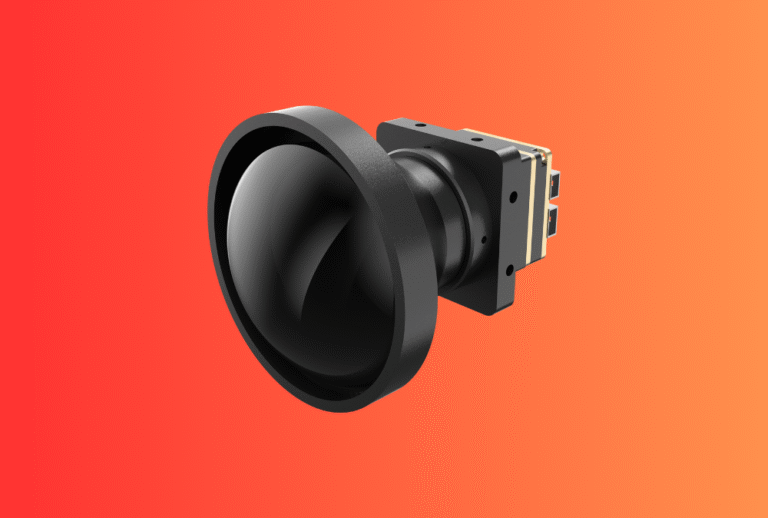
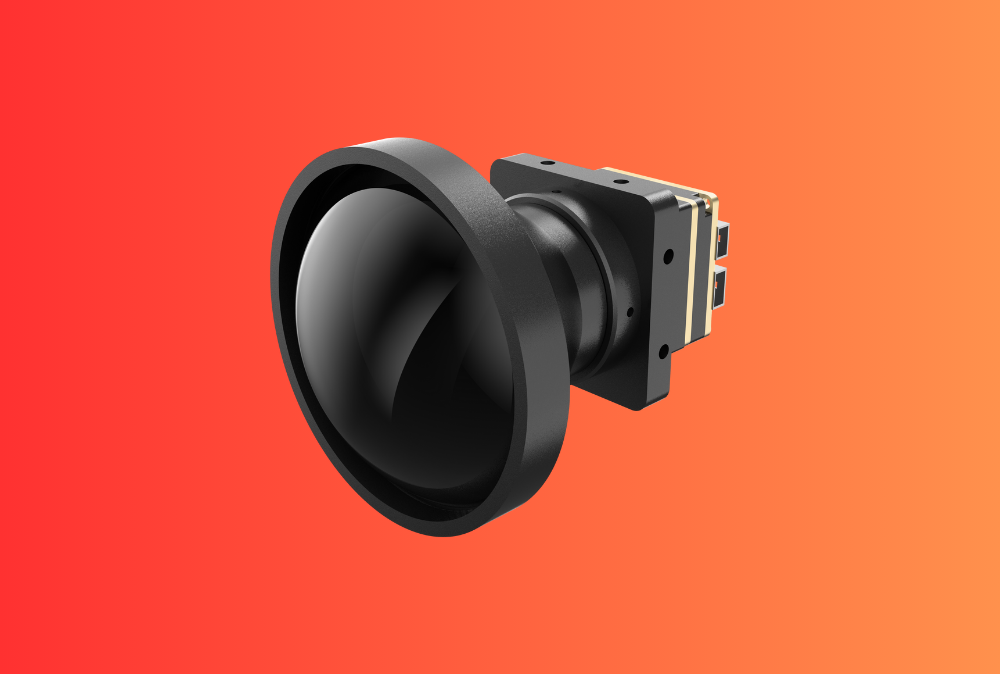
When people first encounter thermal technology, they usually meet it in the form of a finished product: a handheld thermal imager, a thermal rifle scope, a surveillance camera or an industrial online monitoring system. Inside almost all of those devices, however, sits the real “engine” of the system: a thermal camera module.
Table of Contents
ToggleFor OEM/ODM buyers, system integrators and hardware engineers, understanding what a thermal camera module is—and what separates a good module from a mediocre one—is far more important than memorising a few buzzwords. The module determines image quality, temperature accuracy, latency, reliability and how easily you can integrate the device into your own platform.
This article walks through the concept in depth. We will unpack the building blocks of a module, explain the difference between a thermal camera core, a thermal imaging module and a finished camera, and look at how modules are used in security, industrial monitoring, weapon sights, robotics and sensor-fusion systems. Throughout, we will also touch on related terms such as thermal imager module, thermal image sensor module, thermal imaging camera core, uncooled thermal camera module, and LWIR Infrared Imaging so that datasheets and marketing materials become easier to read.
1. From finished thermal camera to thermal camera module
1.1 The basic idea
At the simplest level, you can think of a thermal camera module as the thermal equivalent of a laptop mainboard or a smartphone camera assembly. It is not a complete consumer product, but it contains almost everything required to capture a thermal image:
- a sensor that converts invisible infrared radiation into electrical signals
- optics that focus the radiation onto the sensor
- electronics that amplify, digitise and process the signals
- firmware that produces a usable video stream and communicates with a host system
The module is delivered as a compact, factory-calibrated unit with clearly defined mechanical and electrical interfaces. OEM customers then design their own housings, power supplies, user interfaces and application-specific software around it.
If you visit Gemin Optics’ dedicated thermal camera module page, for example, you will see typical resolutions, lens options and interface configurations but not a finished handheld device; the expectation is that the module will live inside someone else’s product.
1.2 Module, core and complete camera—what’s the difference?
Suppliers often use several overlapping terms:
- Thermal camera core / thermal imaging camera core / thermal imaging core – the smallest functional unit that turns heat into a digital image or video stream. It usually consists of the sensor, immediate readout electronics and processing, often on a compact board-stack.
- Thermal imaging module / thermal imager module / thermal imaging camera module – a core plus optics, mechanical frame, standard connectors and mounting points. This form is closest to “drop-in ready” for integrators.
- Finished thermal camera – a complete product in a rugged housing with power supply, display or eyepiece, user controls, I/O connectors, regulatory labels and often IP-rated sealing.
Different manufacturers draw the boundaries slightly differently, but the question you should ask is always the same: how much integration work remains for my team, and how much has the module supplier already done?
If the datasheet talks about a high resolution thermal camera module with specific lens FOVs, on-board temperature measurement, communication protocols and reference mounting holes, you are usually dealing with a module rather than a bare board-level core.
2. Inside a thermal camera module: the main building blocks
To evaluate a module, it helps to understand what is physically and logically inside it. Although designs vary, most thermal imaging modules share four major subsystems.
2.1 Thermal image sensor module
The heart of the system is the thermal image sensor module (sometimes called a thermal sensor module or thermal image sensor module in specs).
Most commercial modules today use uncooled VOx (vanadium oxide) or a-Si (amorphous silicon) microbolometers. These are tiny resistive elements arranged as a 2D array—256×192, 384×288, 640×512 and increasingly 1024×768 are common formats. Each pixel slightly changes resistance when it absorbs infrared energy. The readout electronics measure these changes and reconstruct the image.
A key point is that these detectors work in the LWIR Infrared Imaging band, typically 8–14 μm. Unlike visible-light sensors, they respond to the thermal radiation emitted by objects at normal temperatures, not to reflected sunlight or artificial illumination. That is why a thermal device “sees” in complete darkness and often through smoke, haze or light foliage that would blind a visible camera.
The sensor package usually includes:
- the microbolometer die itself
- an optical window that passes LWIR wavelengths
- in some cases, a tiny shutter or flag used for on-the-fly calibration (non-uniformity correction, or NUC)
When you read about a thermal imaging camera core, this sensor assembly is the first critical piece you are paying for.
2.2 Optics and field of view
In front of the sensor sits a specially designed infrared lens. Because normal glass absorbs long-wave infrared, thermal optics use materials like germanium or chalcogenide glass and have anti-reflection coatings tuned for the LWIR band.
The lens determines both the field of view (FOV) and the amount of infrared energy reaching the detector. For example:
- a 9–13 mm lens gives a wide FOV suitable for handheld imagers or driver vision systems
- a 19–25 mm lens balances reach and FOV for general surveillance and weapon sights
- a 35–50 mm lens narrows the FOV, turning the module into a long-range observation or targeting tool
The combination of sensor resolution, pixel pitch and focal length defines how many pixels you get on a target at a given distance—the core of any detection/recognition range estimate. This is why the same thermal camera core can behave very differently once you change lenses.
Focus can be fixed, manually adjustable or motorised. Modules intended for rifle scopes, PTZ cameras or multi-purpose systems often use motorised focus so that software can drive autofocus or allow remote focusing from a control room.
2.3 Electronics and image processing
Raw signals from the microbolometer are extremely small and noisy. The module therefore includes several layers of electronics:
- analog front-end circuits that bias the detector and amplify its output
- high-resolution ADCs that digitise each pixel’s signal
- a microcontroller, DSP or system-on-chip that runs the image pipeline
The pipeline performs tasks such as:
- non-uniformity correction (compensating for pixel-to-pixel variability)
- bad-pixel replacement
- dynamic range and contrast management (AGC)
- noise reduction and sharpening
- color palette mapping
- digital zoom and picture-in-picture functions
On some radiometric modules the firmware also translates the pixel values into real temperatures, turning the device into a calibrated thermal sensor module suitable for industrial monitoring.
From the outside, you see the result as a clean, stable video stream. Depending on the module family, outputs may include MIPI, LVDS, BT.656, USB, Ethernet or proprietary interfaces, plus UART / RS-485 / SPI / I²C for command and control.
2.4 Mechanical design and thermal management
Although a typical uncooled thermal camera module runs close to ambient temperature, its own electronics do generate heat. Mechanical design must therefore address both structural and thermal concerns:
- a rigid frame or housing keeps sensor and lens aligned so that boresight is stable under shock and vibration
- heat spreaders or fins transfer waste heat away from sensitive areas
- mounting holes and datum surfaces allow OEMs to align the module precisely in their enclosures
Because thermal sensors are sensitive to temperature drifts, many modules include on-board temperature sensors and compensation tables. During production, suppliers run modules through calibration sequences at multiple temperatures; firmware then uses this data so that the image and temperature readings remain consistent over a wide operating range.
3. Uncooled thermal camera modules and LWIR infrared imaging
Historically, thermal cameras were cooled systems using Stirling engines or other cryogenic coolers, working in the mid-wave infrared (MWIR) band. Today, almost all volume OEM products use uncooled thermal camera modules based on LWIR microbolometers.
3.1 Why uncooled LWIR dominates commercial applications
For most security, industrial and outdoor applications, uncooled LWIR offers the best trade-off between performance, cost and complexity.
Compared with cooled systems, an uncooled thermal imager module has:
- much lower power consumption (no cryo-cooler)
- faster start-up and less maintenance
- far smaller size and weight
- significantly lower price, making large installations or consumer products feasible
NETD figures below 50 mK, and increasingly below 35 mK or 25 mK, give excellent contrast for detecting humans, vehicles, animals and hot equipment in real-world conditions. This is sufficient for:
- border and perimeter surveillance
- driver vision enhancement
- fire detection and process monitoring
- hunting optics and handheld observation devices
3.2 When cooled cores still matter
Cooled MWIR cores still shine in ultra-long-range surveillance, missile guidance and certain scientific or hyperspectral systems where extreme sensitivity and very narrow FOVs are essential. These are typically bespoke projects rather than catalogue thermal imaging camera modules. For the majority of OEM customers, the question is not “cooled or uncooled?” but “which uncooled module family is right for my product?”
4. Performance metrics that define a good thermal camera module
When you compare datasheets, each vendor will highlight different numbers. A practical way to cut through the noise is to group metrics into a few categories and tie them back to your use case.
4.1 Spatial performance: resolution, pixel pitch and FOV
Resolution and FOV together determine what your end user actually sees. A high resolution thermal camera module with 640×512 pixels and a 35 mm lens might clearly identify a person at 400–500 m, while a 256×192 module with a wide 9 mm lens may only offer confident ID at 80–100 m.
Pixel pitch affects the relationship between lens and sensor. A 12 μm pixel offers more pixels for a given focal length or, conversely, the same angular resolution with a shorter, more compact lens than a 17 μm pixel. This is one reason 12 μm microbolometers have become popular in weapon sights and handheld gear: they enable shorter systems without sacrificing range.
4.2 Contrast performance: NETD and processing
NETD values indicate how small a temperature difference the system can resolve. For example, a module rated at <30 mK will reveal subtler temperature gradients than one at <60 mK, especially in low-contrast scenes such as warm nights with minimal temperature difference between target and background.
However, NETD alone is not enough. The quality of non-uniformity correction, dynamic range control and noise filtering also plays a huge role. A well-designed thermal imaging core can produce crisp, low-noise images even if its NETD is not the absolute lowest on paper. Conversely, a sensor with impressive NETD can look muddy if firmware is poorly tuned.
4.3 Temporal behavior: frame rate and latency
Frame rate affects how smooth the image looks when panning or following moving targets. Many modules offer both 9 Hz variants (to comply with export regulations in some markets) and 25–50 Hz variants for unrestricted sales.
Latency, the delay between the real scene and the digital output, is rarely listed explicitly but matters greatly for applications like weapon sights, pan-tilt tracking and robotics. Integrators should test total system latency—including their own processing—to ensure control loops remain stable.
4.4 Radiometric accuracy
If you plan to use the module for temperature measurement, not just imaging, you must consider radiometric specifications:
- measurement range (for example, –20…150 °C, 0…550 °C, 300…2000 °C)
- accuracy (often ±2 °C or ±2% of reading in many industrial modules)
- repeatability and drift over time
These figures depend on careful factory calibration, stable mechanics and compensation algorithms. Radiometric thermal imaging camera modules cost more than purely imaging ones, but they unlock applications such as industrial inspection, early-fire detection and process control.
5. How OEMs use thermal camera modules in real products
Once you grasp what a module is and how its performance is defined, it becomes easier to see how they are used in different verticals.
5.1 Security and surveillance cameras
In perimeter and border security, a thermal module is often integrated into a fixed or PTZ camera that also carries a visible-light zoom block. The thermal imaging module enables detection and tracking in total darkness, through smoke or light fog, while the visible channel provides colour and detail under good lighting.
By building their products around a stable module family, camera manufacturers can offer multiple resolution / FOV variants without rewriting all of their image processing code. Gemin Optics’ customers, for instance, may design a PTZ system that accepts a certain thermal camera core as standard and then choose between several lenses and housings depending on range requirements.
5.2 Industrial monitoring and safety
In industry, modules become the core of both handheld and online systems. A handheld electrician’s imager might use a compact 256×192 module tailored for close-up work, while a continuous monitoring system aimed at transformers or conveyor belts might use a higher-resolution radiometric module.
On the system level, OEMs combine these cores with I/O modules, alarm logic and industrial communication buses to build complete monitoring solutions. Gemin Optics, for example, supplies modules into systems used in power distribution, petrochemical plants and bulk-storage safety; the devices built on top of them are often highlighted on solution pages and industrial blog content rather than on the thermal camera module page itself.
5.3 Outdoor observation, hunting and weapon sights
A huge number of finished products in the hunting market—rifle scopes, clip-ons, monoculars, binoculars and pistol sights—are built around OEM modules.
Brands use a common thermal imaging camera core across their product lines, adding different mechanics and UIs. For instance, an outdoor brand might integrate one module into its thermal rifle scopes, another into compact thermal monoculars, and yet another into thermal clip-on sights that attach directly in front of daytime optics.
For these applications, requirements include:
- robust recoil resistance and repeatable boresight
- low latency for moving targets
- compact size and weight
- support for reticles, picture-in-picture and recording functions
Using a mature module platform gives brands confidence that their optics will remain consistent across batches and future firmware updates.
5.4 Drones, robotics and autonomous systems
In robotics, a thermal imager module is often one of several sensors. On drones or ground robots, it works alongside visible cameras, radar and—increasingly—a LiDAR sensor module.
Here, integration requirements change slightly: the module must be light, low-power and capable of synchronisation with other sensors. Developers may also need access to raw data or 14-bit streams for AI processing. A module with flexible interfaces, small form factor and well-documented protocols makes this much easier.
6. Thermal camera module vs complete thermal camera: when to choose which
If you are designing a system and notice that suppliers offer both modules and finished cameras, how do you decide which is appropriate?
6.1 Reasons to choose a thermal camera module
You should lean toward a module when:
- you need a form factor or housing the supplier doesn’t offer, such as a custom handheld body, a specific PTZ configuration or tight integration inside your own machine
- you want full control over the user interface, branding and system-level features
- your volumes are high enough that designing mechanics, power and firmware around the module is worth the engineering time
- you plan to build a whole product family—several devices that share the same thermal imaging core but have different lenses, housings or I/O
In these cases, the module approach gives you far more flexibility and better long-term cost per unit.
6.2 Reasons to choose a finished thermal camera
Conversely, a complete camera is attractive when:
- your volumes are low and you do not want to take on extra development risk
- your application mainly requires placing a camera in the right location and networking it, not building a new device from scratch
- certifications, enclosures and user interfaces from the supplier already match your market
Even in those cases, knowing what sits inside the device—what thermal imaging camera module or core family it uses—helps you judge quality and future support.
7. Sensor fusion: thermal camera modules and LiDAR sensor modules
As automation and smart infrastructure expand, thermal modules rarely work alone. They are increasingly fused with other sensors to provide richer information. One of the most powerful combinations is thermal plus LiDAR.
A LiDAR sensor module measures distances and shapes by sending laser pulses and timing their returns. It produces a precise 3D point cloud but carries no inherent thermal information. A thermal camera module does the opposite: it sees heat and temperature patterns but has limited depth information.
When you combine them:
- the thermal module flags potential people, animals, vehicles or hot equipment
- the LiDAR module provides exact distance, height and sometimes even surface geometry
- fusion software assigns temperatures to 3D points, improving detection, classification and safety decisions
This is particularly valuable in:
- autonomous vehicles, where thermal helps detect pedestrians in darkness or through glare while LiDAR maps the environment
- industrial safety systems, where robots must avoid both humans and overheated machinery
- smart cities, where traffic cameras monitor both congestion and overheating transformers or cables
Suppliers like Gemin Optics support this trend through products and guides such as thermal camera module integration, rangefinder module integration and thermal + LRF fusion & ballistics. While those pages focus more on laser rangefinders than LiDAR, many of the integration principles—synchronisation, coordinate mapping, eye-safety and calibration—carry across.
8. Choosing a China thermal camera module supplier
For many global brands and system integrators, sourcing from a China-based OEM makes economic sense. However, there are big differences between suppliers that simply resell cores and those that truly engineer and manufacture modules.
8.1 Evaluate engineering depth, not just spec sheets
A capable OEM partner should be able to discuss:
- sensor sourcing, calibration processes and long-term availability
- optics design, including custom FOVs or focus mechanisms
- interface options and how they can be adapted to your host electronics
- firmware feature roadmaps and the ability to add application-specific functions
If discussions never go beyond a single generic datasheet, you are likely dealing with a trading company rather than a real manufacturer.
8.2 Look at manufacturing and quality systems
Ask potential partners to explain:
- their production line for thermal camera modules
- how they perform NUC calibration (blackbody setups, multiple temperature points, shutter or shutterless strategies)
- environmental testing for shock, vibration, humidity and temperature cycling
- traceability of components and finished modules
Gemin Optics, for example, outlines its production philosophy and quality processes on its Manufacturing & Quality page. Not every detail needs to be public, but the willingness to discuss QA in concrete terms is a positive signal.
8.3 Review documentation and integration support
Good module suppliers provide:
- detailed mechanical drawings, 3D models and PCB outlines
- electrical pinouts and typical connection diagrams
- protocol documents and example code for controlling the thermal imaging camera core
- application notes for common use cases (handhelds, weapon sights, PTZ, industrial systems)
For long-term programmes, it is also useful to have a clear picture of product lifecycle, last-time-buy arrangements and successor models.
8.4 Consider portfolio breadth and OEM/ODM experience
Brands planning to offer multiple product categories—such as rifle scopes, monoculars and clip-ons—benefit from suppliers whose portfolio already covers these areas. On Gemin Optics’ site, for instance, you can see application-level examples under Thermal Rifle Scopes, Thermal Monoculars, and OEM-focused pages like Thermal Rifle Scopes — OEM/ODM and Thermal Monoculars — OEM/ODM.
A partner with this breadth is more likely to understand practical issues—ergonomics, recoil, environmental sealing, end-user expectations—than one who only ships bare boards.
9. Gemin Optics as your OEM/ODM partner for thermal camera modules
Gemin Optics is positioned not just as a finished-goods brand, but as a technology partner for companies that want to build their own thermal products. The company focuses on thermal camera modules, rangefinder modules and complete OEM packages for hunting, surveillance and industrial markets.
For module customers, Gemin Optics offers:
- multiple families of thermal imaging modules covering common resolutions and FOVs
- both imaging and radiometric variants for observation and temperature monitoring
- interface flexibility (Ethernet, USB, MIPI, LVDS, UART and others depending on model)
- tight integration possibilities with in-house laser rangefinder modules for fused distance and temperature solutions
The goal is to let OEM/ODM partners build branded products—handheld imagers, scopes, PTZ cameras, industrial monitoring heads—without reinventing the core thermal technology. By sourcing the module from a specialist, you can focus on mechanical design, UX, analytics software and channel development.
If you explore the Why Choose Us and About sections, you will see that Gemin Optics actively collaborates with international partners on long-term programmes rather than treating modules as one-off commodity sales.
10. FAQ: common questions about thermal camera modules
Is a thermal camera module only for large manufacturers?
No. While big brands buy thousands of modules, smaller integrators and start-ups also use them to build niche products—custom inspection devices, robotics platforms, research instruments and more. What matters is that you are comfortable taking responsibility for the rest of the product (housing, power, regulatory work).
Can I swap modules from different vendors in one design?
In principle you can, but in practice differences in mechanics, pinouts and protocols make this non-trivial. Many OEMs standardise on one module family per product generation and design a clear migration path to the supplier’s next generation rather than trying to support many incompatible cores at once.
How difficult is radiometric calibration if I only buy a non-radiometric module?
It is possible for advanced teams, but not trivial. Accurate temperature measurement requires controlled blackbody sources, stable mechanics and compensation algorithms for lens transmission and environmental conditions. For most industrial users, it is more efficient to start with a radiometric thermal imaging camera module that has already been calibrated by the manufacturer.
Can thermal camera modules work outdoors in rain and dust?
The bare module is not weather-proof; it is meant to be integrated into an enclosure. It is the finished product—the housing, germanium window, seals and coatings—that must achieve IP ratings. Module suppliers can, however, advise on window materials, protective shutters and cleaning strategies so that outdoor systems remain reliable.
How does a thermal camera module differ from a visible-light camera module in integration terms?
At the electronic level they may both output digital video, but thermal modules have different optical materials, require more careful temperature compensation and usually involve different calibration procedures. They also have different FOV expectations; for instance, a high resolution thermal camera module with a 35 mm lens might match the angular field of a visible camera with a much shorter lens.
Work with a China thermal camera module manufacturer you can trust
For integrators and brand owners, the thermal camera module is the most critical single component in any thermal product. It dictates how your device performs in darkness, bad weather and high-demand industrial environments. It also shapes your product roadmap: a flexible, well-supported module family can underpin an entire range of products from entry-level devices to high-end systems.
Whether you are planning a new handheld imager, a next-generation weapon sight, an industrial monitoring head or a multi-sensor robotic platform, choosing the right module—and the right partner—is the foundation of success.
Gemin Optics invites OEM/ODM customers, system integrators and serious project teams to discuss their requirements in detail. Through the thermal camera module and Contact pages you can reach engineers who understand both the physics of LWIR Infrared Imaging and the practical realities of integrating a thermal imaging module into real-world hardware.
With the right collaboration, a small block of electronics and optics—the thermal camera module—can become the core of products that see the world in heat, protect critical infrastructure and open new frontiers in sensing and automation.