When a catalogue, tender or online listing promises “thermal monocular night vision”, most end users are not thinking about LWIR bands, NETD or pixel pitch. They are imagining a simple promise: “I will be able to see clearly at night, whatever happens.” For an OEM or private-label brand, understanding this mental picture is critical. If your thermal monocular night vision device does not match what users believe they are buying, you are not just losing one sale; you are creating bad reviews, warranty claims and skeptical dealers.
This article looks at “thermal monocular night vision” from the user’s side. It explains how non-engineers interpret the term, what they actually do with a monocular in the field, how your design choices shape their experience, and how you can communicate honestly without killing the magic. The goal is to turn a vague buzzword into a reliable promise across your thermal monocular night vision portfolio.
1. Why the phrase “thermal monocular night vision” is so confusing
The market has spent a decade mixing three different technologies under one umbrella. Traditional image-intensifier “green tube” devices, digital CMOS night-vision monoculars with IR illuminators, and long-wave infrared thermal monoculars are all sold using similar language. On marketplaces and even on some brand sites, you will see “thermal night vision monocular”, “IR night scope”, “infrared monocular” and “thermal monocular night vision” used almost as synonyms.
End users rarely distinguish between them. A hunter who has watched a review of a digital night-vision monocular might later buy a thermal monocular and be shocked by how different the image looks. A law-enforcement buyer may assume that any “night-vision monocular” will also perform like their unit’s older image-intensifier goggles. When the product arrives, they see a high-contrast thermal image that is fantastic for detection but does not show fine optical detail. From the brand’s side the spec sheet is accurate; from the user’s side the promise feels broken.
The first step is therefore to admit that “thermal monocular night vision” is really a bundle of expectations. It is less about the sensor technology and more about the ability to move, decide and act confidently in darkness. If you design only around the technology and ignore the expectations, you will always be fighting a perception gap.
2. A plain-language explanation of thermal monocular night vision
A good product page or OEM brochure should explain thermal imaging in the same simple language a dealer would use on the showroom floor. Instead of starting with “uncooled microbolometer”, start with the experience: a thermal monocular sees heat, not visible light. Every object emits long-wave infrared radiation that corresponds to its surface temperature. The sensor inside your thermal camera module measures those tiny differences and turns them into an image. Warm bodies appear brighter or darker depending on the palette you choose; cooler backgrounds recede.
From that description users can understand three key advantages without reading a single formula. First, a thermal monocular does not need moonlight, starlight or an IR torch; it works in complete darkness. Second, it continues to perform in conditions where standard optics struggle: light smoke, certain types of fog, cluttered brush where only a piece of the target is visible. Third, it highlights anything that is warmer or cooler than the environment, so a hog in a field, a person in woodland or a hot exhaust pipe stands out quickly.
The same plain language should also set limits. Thermal monocular night vision will not show colors, fine text or facial expressions the way a digital night-vision monocular or daylight binocular will. It cannot see through concrete walls or heavy metal; it only shows surface temperatures. Its image may look softer than an HD daytime video stream because you are seeing a low-contrast thermal gradient rather than sharp visible-light edges. When brands hide these facts, users eventually discover them on their own, and the trust cost is enormous.
A clear “how it works” and “what it does not do” paragraph, repeated consistently across your handheld thermal monocular and helmet mounted thermal monocular pages, can prevent a surprising number of support emails.
3. How different end users read “night vision”
Although they all buy “thermal monocular night vision” devices, hunters, police officers, SAR volunteers and civilian security users picture very different nights.
3.1 Hunters and outdoor users
The typical hunter buying a thermal monocular imagines themselves glassing a field or treeline, picking out animals long before they would be visible to the naked eye. In their mind, night vision means earlier detection, more confident identification and more ethical shots. Many already own traditional rifle scopes or even a thermal rifle scope, and the monocular is a scanning tool that keeps them from pointing the gun at everything that moves.
However, this user often expects the thermal view to look almost like a high-zoom daylight optic, only in black and white. When they encounter the softer outlines and high-contrast blobs typical of a low-NETD thermal sensor at long range, they may feel disappointed. On marketing pages it is easy to write “detection range 2000 m” and “identification range 700 m”, but the mental picture that sentence creates is a crisp, photograph-like animal at 700 m. In reality, the hunter may correctly recognize species and body size at significantly shorter distances under some weather conditions.
To align with reality, brands that serve hunters should build their thermal monocular night vision story around detection and search efficiency. Narratives that talk about covering a field in a few slow sweeps, picking up heat signatures hidden in crops, and navigating safely back to the truck using a wide-angle thermal monocular for hunting are much closer to lived experience. When you describe use cases rather than only numbers, the hunter adjusts their expectations before the first outing.
3.2 Law-enforcement and security
For patrol officers and security guards, night vision is less about trophies and more about survival. They want confidence that they can see a person hiding behind a car, a suspect running through an alley or a missing child in a dark park. A thermal monocular often shares duty with body-worn cameras, vehicle-mounted systems and conventional flashlights, so these users expect it to “just work” in all weather, at the press of a button.
In this segment the ergonomics and reliability of your helmet mounted thermal monocular or handheld device can matter more than small differences in resolution. Officers must be able to operate the controls with gloves, understand the palettes at a glance and trust that the unit will survive rain, dust and drops. When they read “night vision” in your brochure, they are reading “a tool I can rely on during a stressful call at three in the morning.”
If you design firmware and housings only for the hunting market, and then re-label the same device as a “tactical thermal night vision monocular” without adapting UI, ruggedness and support materials, you will earn a reputation for being a consumer gadget brand rather than a professional partner. Agencies pay attention to replacement rates, RMA statistics and long-term support; aligning your thermal imaging module architecture and your field accessories with those expectations is part of delivering on the “night vision” promise.
3.3 Search and Rescue and first responders
SAR teams, firefighters and mountain-rescue volunteers view night vision through yet another lens. For them, a thermal monocular night vision device is a way to reduce search time and risk. They may use it from helicopters, boats, 4×4 vehicles or on foot. They care deeply about the ability to pick up a small, warm human signature against a cold background, and they are often operating under extreme fatigue, bad weather and time pressure.
In this world, the perfect device is not the sharpest or the most feature-rich. It is the one that turns on every time, survives knocks, runs all night on a spare battery and can be handed from one team member to another without a long explanation. SAR users commonly pair a handheld monocular with UAV payloads built around a thermal imaging camera core or thermal image sensor module. They may use the handheld device to verify what the drone operator is seeing and to navigate through rough ground.
When they see “night vision” on your spec sheet, they assume you have thought through how your device behaves in rain, snow, high humidity and rapidly changing temperatures. A brand that pro-actively explains these behaviors and publishes clear operating guidelines is much more likely to be trusted by SAR leaders and procurement officers.
3.4 Civilian security and “tech enthusiasts”
The last large group of buyers consists of homeowners, marine users, hikers and gadget lovers who see thermal monocular night vision as an upgrade for safety and curiosity. They might want to scan their yard for intruders, watch wildlife without disturbing it, check for hot spots around a boat engine or simply enjoy the “Predator movie” look. Many of them have never seen a thermal image in person and their expectations are shaped almost entirely by marketing videos and cinema.
This group is especially prone to misunderstanding. If you oversell your entry-level budget thermal monocular as “military-grade night vision”, they may expect crisp detail at long distances and be upset when they receive a compact, wide-angle device optimized for short-range security work. They may also underestimate the learning curve involved in interpreting thermal images, for example mistaking a warm rock for an animal or being surprised by reflections.
Brands that serve this segment well usually invest in education. They host comparison pages such as a thermal vs night vision explainer, real-world demonstration videos and simple guides that show how to choose between a handheld thermal monocular, a digital night-vision monocular and traditional lighting. By framing “night vision” as a family of tools, they help civilians pick the right one and reduce unnecessary returns.
4. Turning expectations into technical choices
Once you understand what each user group believes “night vision” means, you can translate those expectations into concrete design decisions across your thermal monocular portfolio.
Sensor resolution is an obvious starting point. Higher resolution and smaller pixel pitch provide a more detailed thermal image, which directly affects recognition and identification distances. A hunter who needs to distinguish between boar and deer at 300 metres will benefit from a higher-resolution core, while a homeowner checking the garden may be perfectly satisfied with a lower-resolution, wide-angle sensor. Positioning these options as “open-field hunting”, “mixed woodland” or “home and farm security” is more intuitive than simply listing pixels.
Sensitivity, usually expressed as NETD, is another key factor. On paper, the difference between 40 mK and 20 mK may not sound dramatic to a non-engineer. In practice it can mean the difference between a faint, washed-out blob and a crisp, high-contrast animal on a humid night. If your thermal imaging module range covers several sensitivity classes, you can tune your thermal monocular night vision devices around real climate conditions in the target markets.
Lens and field of view decisions also flow from user expectations. A long-range open-field hunter might tolerate a narrower field of view in exchange for more magnification, while a forest hunter or SAR team will often prefer a wide, “big picture” view to avoid tunnel vision. The same thermal camera module can be paired with different focal-length lenses to create distinct variants, but the marketing language must clearly explain that choice: one model is a close-range, fast-scanning handheld thermal monocular; another is a long-range observation tool best used from fixed positions or tripods.
Refresh rate, latency and motion handling translate directly into a sense of comfort. A low refresh rate might technically satisfy some regulations, but if the user experiences lag when panning or tracking moving targets, they will describe the monocular as “slow” or “uncomfortable” rather than “regulation compliant”. Firmware running on your thermal imaging camera core must therefore be designed with user perception in mind, not only with power consumption and cost in mind.
Power management and ruggedness complete the picture. A device that shuts down mid-hunt or mid-shift because of an optimistic battery-life claim does not meet anyone’s definition of night vision. Nor does a device whose USB-C port fails after a few months of vehicle charging. Thoughtful choices in battery format, sealing, connectors and shock protection directly support the promise that this is a tool for serious night use rather than a fragile gadget.
5. Communicating thermal monocular night vision honestly
Design alone is not enough; you must also describe the product in a way that matches both the technology and the expectations. From an EEAT perspective, your content should sound like it was written by people who have actually used thermal and night-vision equipment in real scenarios.
One effective approach is to separate your key content hubs. A dedicated page for thermal monocular night vision can explain the concept, link to your various monocular models, and clearly differentiate them from digital night vision monocular products. Another page can serve as a thermal detection range guide that teaches users how to interpret “detection”, “recognition” and “identification” distances, with clear examples for human and animal targets.
Within each product page, promises should be anchored in scenarios rather than only metrics. Instead of “detection range 1800 m”, you might write that under typical conditions the device allows a hunter to detect a wild boar crossing an open field at roughly that distance, while reliable species identification will occur much closer. For a security model you could describe how, from a rooftop, guards can see a human heat signature approaching the building long before standard CCTV cameras pick it up.
Honest comparison to other solutions is another important element. When you mention that a thermal monocular night vision device does not depend on an IR illuminator and is therefore harder to detect at long range, you should also mention that digital night vision provides more natural detail at lower cost in some applications. Linking between your thermal product pages and your digital night-vision pages with clear anchor text builds internal authority and helps users choose the right tool.
Legal and ethical framing also belongs in your content if you want to be treated as a serious partner by dealers and agencies. Many countries have specific rules about hunting with thermal or night-vision devices. A short paragraph encouraging buyers to check local regulations, and perhaps a separate page summarizing major markets, shows that you understand the broader context. For law-enforcement sales, acknowledging data-protection and evidence-chain requirements around recorded thermal video positions you as a long-term collaborator rather than a pure hardware vendor.
6. Building a coherent thermal monocular night vision line
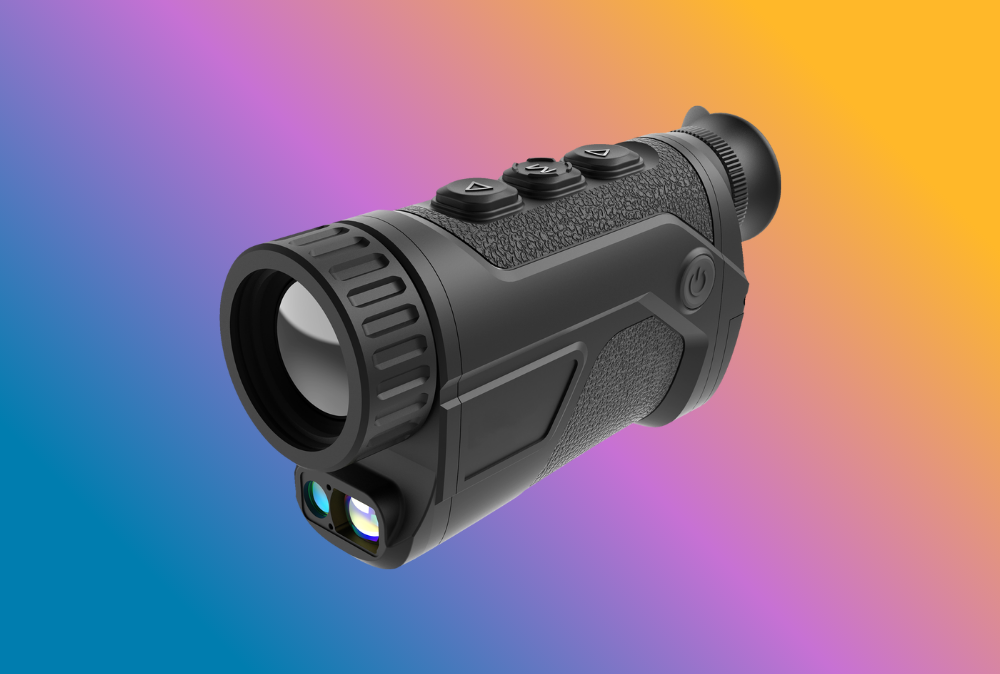
From an OEM and private-label perspective, thermal monocular night vision should be treated as a family of solutions built on a common module platform. That platform might combine your own thermal imaging module with optional laser rangefinder module units and application-specific housings.
At the entry level you might offer a compact, wide-angle handheld thermal monocular targeted at homeowners, hikers and general outdoor use. It can share the same sensor as your budget thermal monocular but with simplified firmware, intuitive menus and an emphasis on ease of use. Marketing content would highlight walking the dog at night, checking the yard or spotting wildlife, rather than long-range tactical scenarios.
The mid-range tier could focus on dedicated hunting models. These devices combine higher-resolution sensors, interchangeable pallets, more storage for video, integration with thermal rifle scope lines and possibly an optional laser rangefinder module for distance readouts. The story here is about covering a property efficiently, minimizing spooked game and making better shot decisions. In this tier, your thermal monocular night vision products need strong dealer support because many hunters still prefer to test optics in person.
The professional tier would then build on the same cores but with housings, UI and accessories tailored to law enforcement and SAR. Helmet-mount options, remote-viewing capabilities, secure wired and wireless outputs, and extended-temperature operation move these devices into a different league. Clear separation between civilian and professional ranges, even when they share modules, prevents confusion while allowing you to benefit from economies of scale.
Across all tiers, the underlying message should be consistent: “thermal monocular night vision” is not a single gadget but a carefully designed set of tools built on proven thermal imaging camera core and thermal image sensor module technology. Each variant is tuned for a particular idea of night vision, whether that is spotting a coyote on a prairie, finding a missing hiker on a ridge or watching over a backyard.
7. Key takeaways and next steps for OEM and private-label brands
From the user’s perspective, thermal monocular night vision is a promise about what they will be able to do in the dark. Hunters want faster detection and more ethical decisions. Officers and SAR teams want safer operations and better outcomes. Civilian users want security and curiosity satisfied without needing a graduate degree in optics. When your products and content respect those perspectives, expectations and technology finally align.
For an OEM or brand building its next generation of night-vision products, this means designing from the user outward. Start with concrete field scenarios, choose and configure your thermal imaging modules and thermal camera cores accordingly, and then describe the result in language that dealers and end users instantly understand. Be transparent about what thermal does brilliantly and where digital night vision or traditional optics may still be better.
If you are planning a new thermal monocular night vision line or refreshing an existing one, now is the time to close the gap between buzzword and experience. Use your module platform, your OEM manufacturing strengths and your understanding of end-user work to create handheld and helmet mounted thermal monocular solutions that genuinely earn their place in the field.
When you are ready to define specifications, integration options or private-label packages, reach out with your target markets, expected price ladder and desired feature sets. Together we can turn “thermal monocular night vision” from a vague marketing phrase into a family of devices that dealers trust, agencies rely on and end users instinctively reach for every time the lights go out.