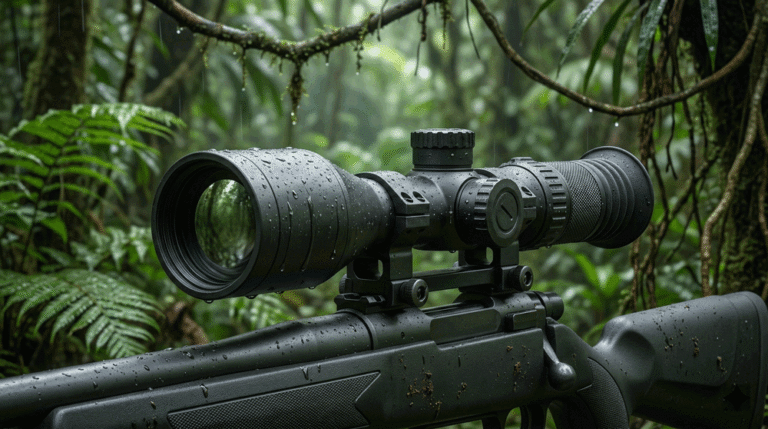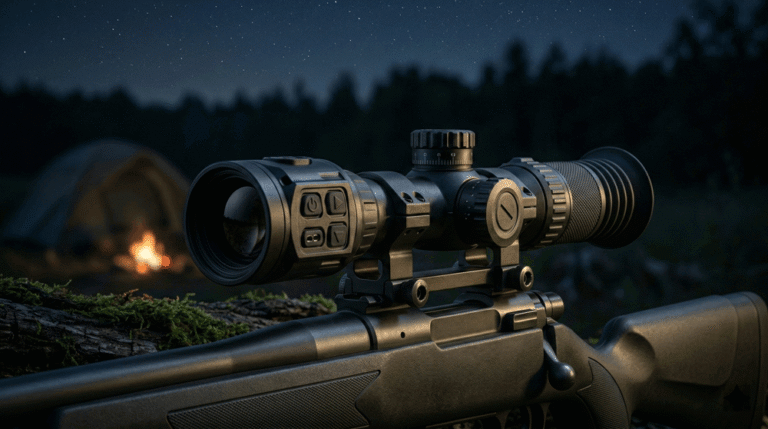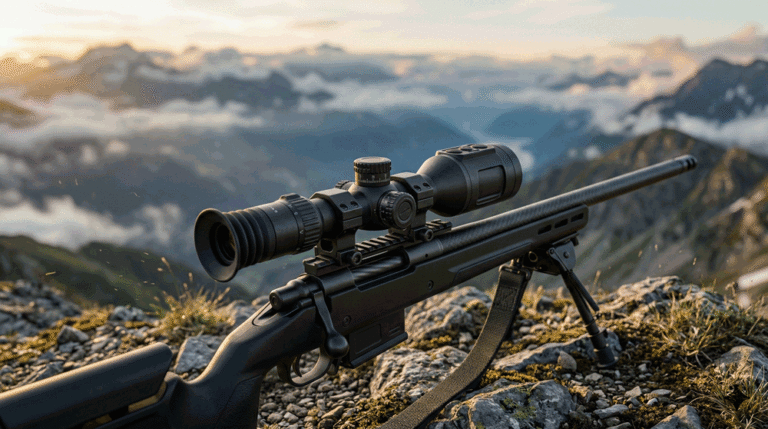
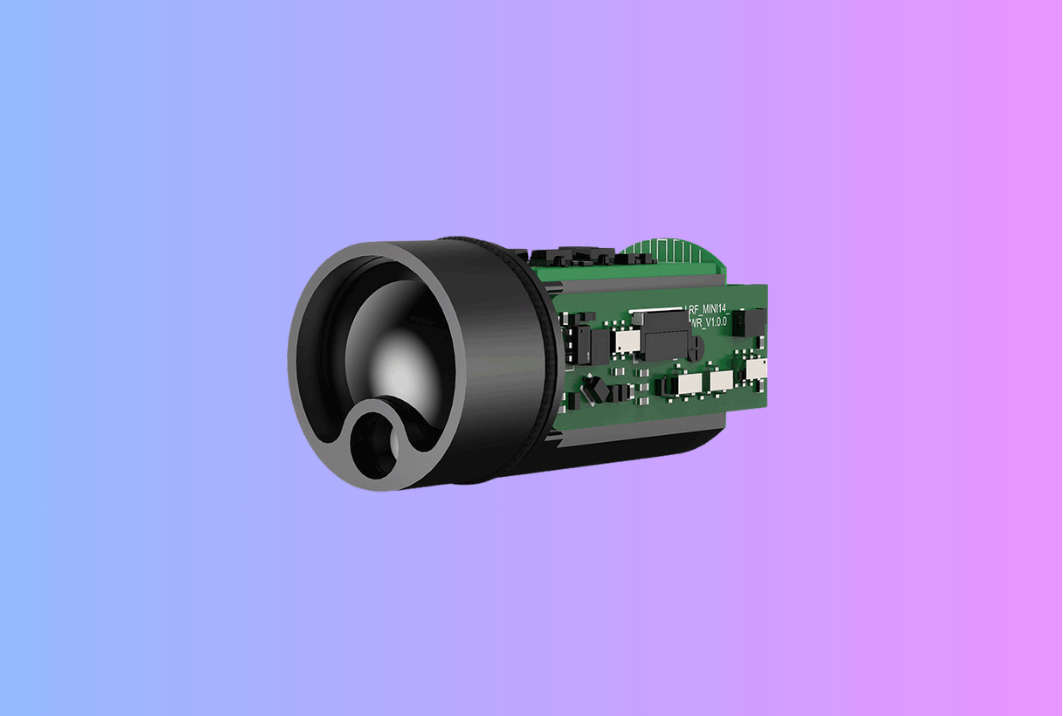
A tof distance sensor only succeeds when the optics, timing, and UI are matched to the scene. This guide compares golf and hunting requirements and shows how to choose or tune a handheld around a proven Laser Rangefinder Module, covering divergence and aperture choices, slope and scan UX, first-/last-target behavior, OLED display readability, and the acceptance tests buyers can repeat.
Table of Contents
ToggleExecutive Summary
Golf favors fast locks on small, cooperative targets in bright sun; hunting punishes receivers with clutter, wobble, and low light. Choose divergence around 1.0–1.2 mrad for handhelds, bias first-target for flags and last-target + verify for brush, and keep OLED digits legible at ≥100 klx. Slope must be a display feature, not an emission change, and tournament-legal lockouts should be provable. Publish Pd (probability-of-detection) curves, not “max range.”
Use Cases & Buyer Scenarios
Scenario 1 — Golf Handheld (50–400 m; noon sun; slope optional)
Pins and reflectors are compact and reflective; the user usually has a steady stance. A 905-nm engine with Si-APD, 1.0–1.2 mrad divergence, and first-target bias delivers the best ROI. Slope may be enabled for practice, but a tournament mode must lock it off without altering TX timing or Class-1 emission. Scan can help framing but is not the main event.
Scenario 2 — Hunting/Outdoors (100–800 m; brush; dawn/dusk)
Foreground clutter forces decisions, not just SNR. Use last-target with a short verify burst when cluster spread is wide, slightly longer pulse width with matched filtering, and a narrowband filter if glare is the blocker. If you mount range overlays into imaging products, reuse HUD language that users already know from Thermal Rifle Scopes.
Scenario 3 — Mixed Use (course by day, woods on weekend)
Ship one chassis with two presets. Default to Golf (first-target, thin reticle, pre/commit tones, slope HUD), and expose a Field preset (last-target + verify, slightly longer τ, stronger anti-bloom). Consider optional accessories for night observation, harmonized with Thermal Monoculars so users don’t relearn UI patterns.
Spec & Selection Guide
Golf vs Hunting — what truly differs?
| Dimension | Golf | Hunting | Why it matters |
|---|---|---|---|
| Primary mode | First-target | Last-target + verify | Flags vs animal behind grass/twigs |
| Divergence (full-angle 1/e²) | 1.0–1.2 mrad | 1.0–1.2 mrad (tripod ≤0.8) | Balance coverage with energy density & wobble |
| Pulse strategy | Micro-burst N=9–11; τ 10–16 ns | N=11–15; τ 12–20 ns + matched filter | Statistics vs low-ρ returns on fur/bark |
| HUD/UI | Thin reticle; 5–8 Hz; slope on/off | Confidence bar; two-stage tone; anti-bloom | Humans aim & trust differently by scene |
| Weather hardening | Rain/spray; IPX5–IP67 | IP67 + temp cycles; fogproof window | Confidence collapses when optics fog |
| Compliance nuance | USGA/R&A tournament lockout | Recoil/drop & label integrity | Retail + legal expectations differ |
Key definitions you will use in reviews
Beam divergence (full-angle 1/e²): sets spot size and backstop risk; report in mrad. Probability of detection (Pd): chance that the engine returns a correct distance within tolerance and below a latency gate. First-/Last-target: bias the chosen cluster to nearest/farthest compact group after histogram clustering. Scan: continuous sampling with a debounced HUD cadence (5–8 Hz perceived).
Small formulas and rules of thumb
Received power scales as \(P_r \propto \frac{E_0 T_\text{opt} \rho A_\text{rx}}{d^2}\), where \(E_0\) is eye-safe launch energy, \(T_\text{opt}\) transmission, \(A_\text{rx}\) receiver aperture, and \(\rho\) target reflectivity. Doubling the receiver clear aperture buys ~+3 dB; tightening divergence 1.2→0.9 mrad adds ~+3 dB if you still cover the target. Human wobble (~1–2 mrad) punishes anything narrower on handhelds.
If/Then selection rules (use in design reviews)
- If 90% of shots are flags at 50–350 m, then 905-nm + first-target + 1.0–1.2 mrad divergence + monospaced digits; slope optional with tournament lock.
- If animals behind light brush dominate, then last-target + σ-based verify burst; τ 12–20 ns + matched filtering; narrowband filter if glare-limited.
- If night overlays are on your roadmap, then align timing and HUD language with observation devices (binoculars/monoculars) for a shared learning curve like in Thermal Binoculars.
Integration & Engineering Notes
Electrical & Interfaces
Expose a compact API so hosts don’t re-implement the engine:
SET_MODE(FIRST|LAST|SCAN),SET_BURST(N),SET_TAU(ns),SET_GATE(params)GET_RANGE()→ {range, confidence, n_valid, sigma, mode}GET_STATS()→ latency (mean/95th), mWh/100 ranges, ambient estimate
Isolate TX energy from HUD/MCU supplies; rail sag shifts τ and degrades SNR. Signed timing profiles prevent firmware from breaking Class-1 envelopes when slope/scan UX changes.
Optics & Mechanics (mounting, alignment, sealing)
Keep TX/RX bores within ≤0.2 mrad after stress so the reticle represents the beam. Prefer glass windows with hard IR AR (R ≲0.5%/surface), blackened baffles, and nitrogen purge with an O-ring stack. Borrow sealing discipline from the weatherized work you do on the Thermal camera module line so fog never steals meters. Verify parallax on a 10 m grid by shifting eye relief ±10 mm.
Firmware/ISP/Tuning (filters, clustering, cadence)
Matched filtering around the shipped pulse width (10–20 ns) rescues weak returns. Burst → histogram → cluster by proximity → compute amplitude & cluster width (σ) → apply first/last bias → optionally fire verify when σ is wide. Render a debounced range and a 0–100 confidence bar; humans parse stability (5–8 Hz perceived) better than raw engine rate.
Testing & Validation (bench → field)
Panels: 10%, 20%, 80% at 50/100/200/400 m. Natural targets: bark poles; brown fabric (fur proxy); brush wall with/without backstop. Sun: ≥100 klx; handheld sweep 5–10°/s. Weather: drizzle/spray; fog box; −10 → +40 °C cycles. Recoil/drop: (hunting SKU) qualify to your chassis spec.
Acceptance gates (illustrative)
- Golf: Pd ≥90% on poles @150 m (first-target), latency 95th ≤180 ms, digits contrast ≥4.5:1 in sun.
- Hunting: Pd ≥80% on bark behind grass @300 m (last-target + verify), false backstop ≤10%.
- Scan (both): perceived 5–8 Hz; stability ±0.5 m on steady target.
Compliance, Export & Certifications
IEC 60825-1 Class 1. Keep Class-1 AEL intact under worst-case τ, repetition rate, burst length, and divergence. Changing slope/scan must not change emission. FDA Laser Notice No. 56. Align U.S. filings to your IEC report and update after timing changes. USGA/R&A. Distance-only devices are legal; features like slope must be disabled for competition under Local Rule. Expose a hardware/firmware lockout and a clear on-device indicator. Place labels near the aperture and mirror them in quick-start docs.
Business Model, MOQ & Lead Time (OEM/ODM)
MOQs. 200–300 pcs baseline; 500–1,000 pcs with custom windows/filters or special HUDs. Lead time. EVT with catalog optics: 4–6 weeks; custom glass adds 6–10 weeks. Ship an SDK, timing table (CSV), eye-safety file, and a one-page acceptance card (Pd curves & latency) that retailers can reuse.
| Assumption | Golf SKU | Hunting SKU |
|---|---|---|
| Ex-works | $99 | $159 |
| Landed (duty + freight) | $9 | $10 |
| Distributor sell | $159 | $229 |
| Gross per unit | $51 | $60 |
| Monthly run | 900 | 600 |
| Monthly gross | $45,900 | $36,000 |
Pitfalls, Benchmarks & QA
- “Slope mode” alters emission. Illegal and unsafe—slope is math/UX, not TX timing.
- Chasing narrow divergence on handhelds. <0.8 mrad looks great and misses more; stick to 1.0–1.2 mrad.
- Pretty HUD, noisy decisions. Decide after clustering, then render smoothly; don’t smooth noise.
- No sun tests. Validate digits at ≥100 klx and add anti-bloom logic.
- Skipping multiple-pulse rules after firmware updates. Re-classify when τ/f/N changes.
- Fogging optics. Seal, purge, and qualify to IP; re-measure divergence after stress.
FAQs
Q: Is 1535 nm always better?
No. It offers higher Class-1 headroom and lower solar background, but BOM and analog noise rise. For golf price points, a tuned 905-nm chain wins ROI.
Q: What scan rate should the HUD show?
About 5–8 Hz perceived. Faster flickers; slower feels laggy. The engine can sample faster under the hood.
Q: How do I present confidence to users?
Show a 0–100 bar or small number. Below 60, prompt “Steady and rescan.” Publish the mapping to stats in the manual.
Q: Can I reuse a golf housing for a hunting SKU?
Yes—if the window/AR stack and field stop suit both scenes, and recoil/drop specs are met. Paperwork and labels must be refreshed.
Decision Flow — from requirement to module pick
Start
  ├─ Primary scene? (golf / hunting / mixed)
  │     ├─ golf  → First-target + 1.0–1.2 mrad; slope toggle + tournament lock
  │     ├─ hunt  → Last-target + verify; τ 12–20 ns; narrowband filter if glare-limited
  │     └─ mixed → Two presets; shared chassis; signed timing tables
  ├─ Sun ≥100 klx? → Enable anti-bloom; verify OLED contrast ≥4.5:1
  ├─ Hand wobble >1 mrad? → Keep divergence ≈1.0–1.2 mrad; eye-box test on grid
  ├─ Publish acceptance: Pd curves (panels & natural), latency 95th ≤180 ms
  └─ Freeze optics + timing + UI + compliance file → Pilot → MP
Call-to-Action (CTA)
Need a golf-vs-hunting recommendation backed by Pd curves and Class-1 paperwork? We’ll help you size optics, tune τ and bursts, and ship HUDs that users trust—ready for retailers and field teams. If you plan accessories, we’ll align timing and overlays with Thermal Clip-On Sight and Thermal Pistol Sights so the family feels consistent.
Sources
- IEC 60825-1 — Safety of Laser Products (Ed. 3). Classification, limiting apertures, single/multiple-pulse rules. (IEC Webstore)
- USGA / The R&A — Distance-Measuring Devices. Tournament use; distance-only; slope must be disabled under Local Rule. (USGA)
- RP Photonics — Beam Divergence; Eye Safety. Definitions and practical implications for handheld beams. (RP Photonics Encyclopedia)
- Thorlabs — APD Tutorials (Si vs InGaAs). Detector QE, noise, and bandwidth trade-offs at 905/1535 nm. (Thorlabs)
- Edmund Optics — Outdoor Display Readability. Sunlight contrast tips for OLED/LCoS HUDs. (Edmund Optics)