Mounting is where thermal pistol sight programs either scale cleanly—or collapse into “doesn’t fit,” “too tall,” and “won’t hold zero” returns.
Table of Contents
ToggleIn B2B channels, the mount decision is not a small accessory choice. It determines your compatibility story, your dealer stocking burden, your demo simplicity, your holster reality, and your warranty cost curve. A platform with great thermal performance can still fail commercially if the mounting strategy creates friction that dealers can’t solve fast.
This article explains how to choose between RMR footprint mounting and Picatinny rail mounting for a thermal pistol sight program, and how to structure an OEM/ODM design so the mount decision becomes an advantage rather than a constraint. It builds on the platform framing from Thermal Pistol Sight OEM Platform Selection.
Why mount strategy is a business decision first
A pistol sight lives inside two ecosystems at once: the firearm ecosystem and the dealer ecosystem.
The firearm ecosystem is footprints, plates, slides, holsters, sight height, and recoil dynamics. The dealer ecosystem is what can be explained quickly, what can be stocked without chaos, and what produces the fewest “fit” problems after the sale.
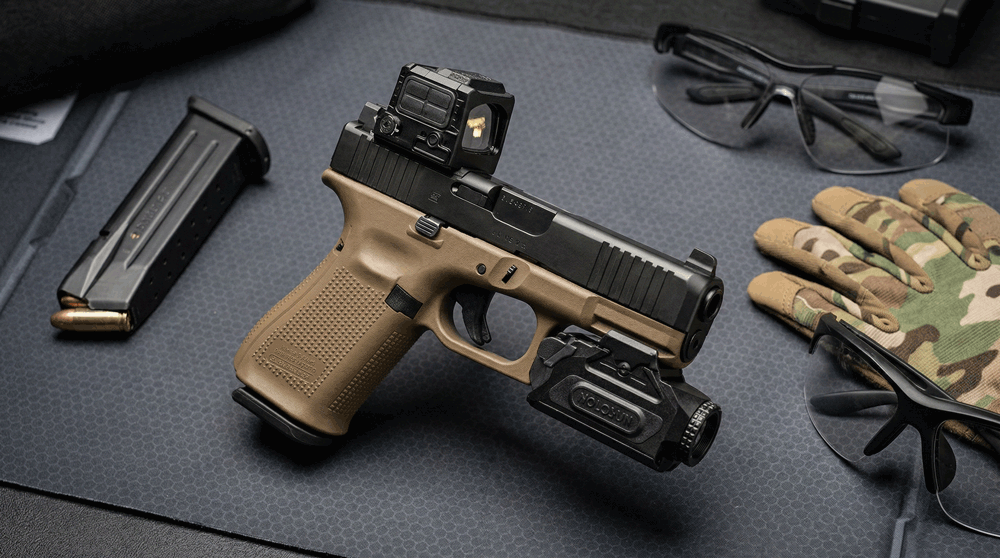
RMR footprint mounting wins when your buyer is pistol-first, wants slide mounting, and expects the product to behave like a handgun optic. Picatinny wins when your buyer is rail-first, wants rapid swapping across hosts, and is less constrained by holsters and height. A dual strategy can be powerful, but only if it doesn’t create inventory and QA complexity that your channel can’t manage.
The right mount choice is the one that matches your GTM truth: who you sell to, how they actually use it, and what your dealers can support.
RMR footprint: what you’re really buying
Choosing RMR is not simply choosing two screw holes. You are buying access to an installed base: slides cut for common micro red dot footprints, adapter plates already in dealer drawers, and a set of user expectations about height, holsters, and zeroing.
RMR is strongest for:
- Pistol-first adoption: customers already live in the pistol optic world and want minimal disruption.
- Holster and carry reality: lower height over bore and a more “pistol-like” package reduces adoption friction.
- Dealer simplicity: dealers already know the plate conversation; they can solve most fit issues with existing inventory.
But RMR creates engineering obligations that many thermal teams underestimate.
Slide-mounted thermal optics are heavier than typical red dots and experience high acceleration. That load goes into the screws, the plate interface, and the optic’s base. If your base design and fastener spec are not disciplined, you get looseness, stress cracking, or subtle drift that becomes “zero issues.” In thermal, “zero issues” tends to become a brand story fast.
So the real question is not “RMR or not.” The real question is: can your thermal pistol sight platform be RMR-ecosystem friendly while being slide-shock resilient?
Picatinny: what you’re really buying
Choosing Picatinny means you’re buying modularity and speed, not pistol-native ergonomics.
Picatinny is strongest for:
- PDW/carbine or rail-first use: rail mount is the natural environment.
- Fast swap behavior: users can move the thermal sight between hosts quickly.
- Dealer demo flexibility: dealers can mount it on a rail demo host without worrying about a customer’s slide cut or plates.
Picatinny also shifts your return profile. Many “fit” returns disappear because rails are standardized and mounting is familiar. But new friction appears:
Height over bore increases, which changes sight picture and can complicate training. The unit becomes less holster-friendly. On pistols, rail mounting often looks and feels like a compromise (bulk, forward placement, balance), and many customers who thought they wanted “pistol thermal” realize they wanted a slide optic experience instead.
So Picatinny is best when your GTM is honest: “this is rail-first thermal aiming,” not “this is a normal pistol optic.”
The most common channel mistake: mixing use cases without a plan
Many brands try to keep everyone happy by saying “supports RMR and Picatinny” without defining what the product is primarily for.
That creates predictable dealer pain. Dealers can’t explain the product clearly, so customers buy with a wrong mental model. Then returns appear as regret: “it’s too tall,” “doesn’t fit my holster,” “I thought it would mount like my red dot,” “why do I need a plate,” “why does it sit so high.”
A B2B program should choose a primary identity and treat the other mount type as a controlled option with clear boundaries.
If you are pistol-first, prioritize RMR as the primary mount and provide Picatinny as an accessory base for secondary use (PDW, demo). If you are rail-first, prioritize Picatinny as primary and offer an RMR solution only if you can support the plate ecosystem and accept the pistol ergonomics trade-offs.
Base height is not an aesthetic detail
For pistol sights, height over bore is operational.
RMR-mounted units generally allow a lower profile and a more familiar presentation. Picatinny-mounted units often sit higher and sometimes farther forward depending on the rail position. That affects:
- how quickly a user finds the sight picture,
- how the unit fits with suppressor-height irons or backup sight plans,
- how realistic holster use is,
- and how stable the platform feels during recoil recovery.
Even if your end customer is “hunting,” many buyers psychologically treat pistol optics as defensive-adjacent. They expect “fast presentation.” If height makes presentation awkward, they interpret it as “bad product,” not as a trade-off.
This is why mount selection belongs in platform selection, not after.
Fasteners, torque, and thread discipline decide whether “holds zero” becomes a story
RMR footprint systems live and die on fastener discipline. A thermal unit places more stress on the mounting interface than a typical micro red dot. If you don’t lock fastener spec, torque ranges, thread engagement, and anti-loosening strategy, you will get drift complaints.
Picatinny systems can also fail here, but they fail differently: clamp surfaces wear, levers loosen, rails vary slightly, and repeatability suffers when users remove and reinstall. Those failures usually show up as “return to zero” inconsistency.
In both mount types, the engineering requirement is the same: define a mounting method that typical users can execute repeatedly without relying on “perfect technique.”
That is the difference between a product that survives in a dealer channel and one that becomes an RMA generator.
A practical decision model for B2B brands
If you want a clean decision, you should answer two questions.
First: What is the dominant use case you are willing to defend publicly?
Pistol-first or rail-first.
Second: What is the dominant friction your channel cannot tolerate?
If your channel cannot tolerate fit problems and plate discussions, Picatinny wins. If your channel cannot tolerate height/holster complaints and wants pistol-native adoption, RMR wins.
Everything else—features, resolution, price—sits below those two questions because those two questions decide return patterns.
Dual-base designs: powerful, but only when disciplined
Dual-base systems (interchangeable base plates) can be excellent when executed well. They allow one thermal core to serve pistol-first and rail-first scenarios. Dealers can demo easily on rails while selling pistol configurations to end users. Distributors can standardize inventory around one core unit.
But dual-base systems create three real risks.
One risk is inventory confusion. If dealers need to stock multiple base kits, plates, and screws without clear bundling, the program becomes messy.
The second risk is QA complexity. If the base is user-swappable, you must ensure sealing integrity, torque repeatability, and alignment repeatability after swaps. Otherwise your RMA pattern becomes “after I changed the base, it moved.”
The third risk is field support burden. Customer conversations become longer. If the dealer is not trained, the customer will choose the wrong base and regret the purchase.
A dual-base design is best treated as a structured product system: default base, optional kit, explicit bundling rules, and clear dealer scripts.
One comparison table that reflects real channel outcomes
This is the only table in this article. It’s designed to make mount selection a GTM decision, not a spec-sheet debate.
| Decision axis | RMR footprint mount | Picatinny rail mount |
|---|---|---|
| Primary buyer fit | pistol-first users | rail/PDW users |
| Dealer “fit” friction | plate/footprint questions | minimal fit questions |
| Holster/ergonomics | generally better | often worse or not viable |
| Height over bore | typically lower | typically higher |
| Slide shock exposure | high (must be engineered) | lower (if rail-mounted on long gun) |
| Return patterns | “doesn’t fit,” “holster,” “plate,” “zero drift” if fasteners weak | “too tall,” “not pistol-like,” “return-to-zero” if clamp weak |
| Demo convenience | harder unless dealer has plate ecosystem | easy (mount on rail demo host) |
| Best program structure | RMR-default + optional rail base | Rail-default + optional RMR kit (only if you can support it) |
What to lock in the RFQ so mount doesn’t drift between samples and mass production
Mount drift happens when the base looks the same but small details change: screw supplier changes, coating thickness changes, clamp geometry changes, plate tolerance changes, or torque guidance changes quietly.
A sourcing RFQ should lock:
- footprint geometry and tolerance expectations,
- fastener spec (material, head type, thread engagement),
- torque window and anti-loosening method,
- return-to-zero expectations for rail mounts if removal is expected,
- and any sealing rules tied to the base interface if the base is removable.
You also want version governance: if base geometry or mounting hardware changes, it should trigger a controlled change notice. Mount changes are not small changes. They change the customer experience directly.
How to validate mount choice before you scale
Validation should match the mount type.
For RMR: validation must prove slide shock survivability and post-shock zero stability, plus repeatable torque behavior across typical users. It must also prove that the platform does not loosen under realistic firing cycles.
For Picatinny: validation must prove clamp repeatability and return-to-zero behavior across multiple mount cycles, plus resistance to loosening under vibration and handling.
For dual-base: validation must prove both, plus repeatability after base swaps and resealing behavior if relevant.
If you validate only under ideal installation, your first dealer wave becomes your real validation—and that is the most expensive place to run experiments.
Dealer enablement: mounting guidance is part of the product
Mount choice creates a predictable set of dealer questions. Your program must answer them in a one-page guide, not a 40-page manual.
For RMR, dealers need a clean footprint/plate story, torque guidance, and a “fit confirmation” checklist that prevents mis-installation.
For Picatinny, dealers need a clamp placement guide, torque/lever guidance, and a “return-to-zero expectation” script so customers don’t assume impossible absolute repeatability.
This is not extra work. It is how you prevent most early returns.
FAQ
Which mount is best for thermal pistol sights in dealer channels?
If you are pistol-first, RMR is usually the strongest path because it aligns with existing slide optic ecosystems and holster expectations. If you are rail-first (PDW/carbine), Picatinny is often better because it minimizes fit friction and speeds demos.
Why do RMR-mounted thermal sights get “zero drift” complaints?
Most often due to fastener discipline and mounting technique variation. Thermal units stress the interface more than red dots, so screw spec, torque window, and anti-loosening strategy must be engineered and validated.
Why do Picatinny-mounted pistol thermals get returned?
Commonly because of height and ergonomics expectations. Buyers want a pistol optic experience; rail mounts often feel tall, bulky, and holster-unfriendly unless the product is positioned honestly as rail-first.
Is dual-base worth it?
It can be, but only with disciplined bundling, clear dealer scripts, and validation of repeatability after base swaps. Dual-base adds QA and inventory complexity, so it must buy you real channel value.
What should procurement demand from OEM suppliers?
Evidence that the mounting system survives realistic cycles and remains stable: slide shock + post-shock zero stability for RMR, clamp repeatability + return-to-zero for Picatinny, and change control discipline for mounting hardware revisions.
Call to action
If you tell me your target buyer (pistol-first vs rail-first), your top 2–3 distribution markets, and whether you want a single-core dual-base program, I can convert this into an RFQ-ready mount appendix: footprint/tolerance language, fastener and torque spec structure, validation gates, and dealer-facing mounting scripts that reduce returns.
Related posts
- Thermal Pistol Sight OEM Platform Selection
- Thermal Pistol Sight Mounts: RMR vs Picatinny
- Thermal Pistol Sight Slide Shock Validation
- Thermal Pistol Sight Sight Height and Ergonomics
- Thermal Pistol Sight Zeroing and Multi-Gun Profiles
- Thermal Pistol Sight GTM and Warranty Pack