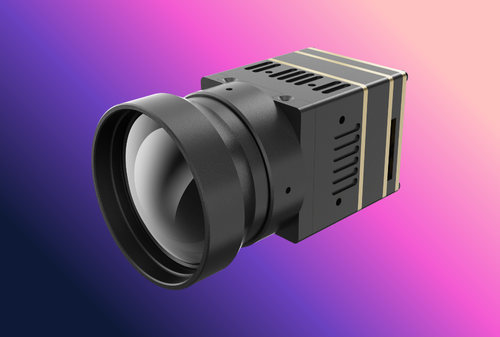
In thermal camera module projects, many OEM delays do not begin at mass production. They begin earlier, when one team believes the sample has already defined the product baseline, while another team still treats that same sample as only a temporary engineering reference. The result is familiar: pilot builds start, but hardware revision, lens setup, interface behavior, or software files are still drifting.
Table of Contents
ToggleThat is why golden sample and pilot build rules matter. For a thermal camera module supplier, a good sample is not enough by itself. The project needs one controlled physical reference and one controlled pilot-build path that turn engineering approval into repeatable integration.
Why Golden Sample Control Matters
A thermal camera module is rarely evaluated only once. It moves through several stages. First, the buyer checks whether the module basically works. Then the engineering team asks whether it can be integrated. After that, operations, quality, and purchasing start asking whether it can be built repeatedly, documented clearly, and supplied consistently. If the project does not define a golden sample, these stages often begin using different references without realizing it.
That problem becomes expensive quickly. One engineer tests a sample with one interface board. Another uses a newer firmware build. The mechanical team works from one outline file while the software team uses another command package. The supplier says the module “passed,” but the buyer still does not know which exact configuration actually passed. Pilot build then becomes less of a validation step and more of a search for what the approved baseline really was.
For thermal camera modules, this matters more than it first appears because the module often sits inside a larger OEM product. If the reference baseline is weak, enclosure design, cable routing, SDK integration, and production test planning all become harder. A strong golden sample system reduces that ambiguity and makes pilot build far more meaningful.
What a Golden Sample Should Do
A golden sample should do four jobs well.
First, it should represent the approved physical and functional baseline.
Second, it should connect clearly to the released file set.
Third, it should support cross-functional comparison during pilot build.
Fourth, it should stay under change control instead of drifting informally.
The goal is not to create a display-only sample that sits unused in a drawer. The goal is to create a working reference that the supplier and OEM buyer can trust when questions arise about image behavior, mechanical fit, interface configuration, lens setup, or supporting documentation.
For thermal camera modules, a strong golden sample becomes one of the most practical control tools in the entire project. It reduces interpretation, speeds up technical review, and helps the pilot build answer the correct question: can this defined module be built and integrated repeatably?
What a Golden Sample Means in a Module Project
A golden sample is not just a “good sample.” It is the approved reference configuration that represents the version the project is using as its baseline for the next stage. That distinction matters because many sample units may exist during development, but only one should carry the authority of the golden sample for a given stage.
In thermal camera module work, the golden sample may include more than the core board. It may include the lens configuration, interface board, cable set, firmware baseline, SDK package reference, outline drawing, connector definition, and power assumptions under which the module was approved. If these surrounding elements are not linked clearly, the “golden sample” becomes too incomplete to guide real integration.
That is why a useful golden sample should always answer one practical question: if the buyer compares the next build to this sample, what exactly is supposed to match? Until that is clear, the sample is still only an engineering sample, not a true golden sample.
Golden Sample vs Engineering Sample
An engineering sample and a golden sample are not the same. An engineering sample may prove a concept, demonstrate a preliminary interface, or help the OEM team learn the module. A golden sample is different because it has approval value behind it. It represents a defined project baseline.
This difference is especially important in thermal camera module projects because early engineering samples often contain temporary choices. The module may be functionally valid, but the optics may still be provisional, the interface harness may still be improvised, or the documentation may not yet be aligned with the actual build. If that sample is used later as if it were the formal baseline, confusion follows.
A stronger process keeps these sample roles separate. Engineering samples support learning. Golden samples support controlled decision-making.
What the Golden Sample Should Cover
A thermal camera module golden sample should cover the parts of the module package that actually matter to the OEM integration path. The exact scope depends on the project, but it normally includes the core module hardware, the lens or optics setup if part of the offer, the active interface path, the firmware or control baseline where relevant, and the supporting documents needed for engineering use.
In some projects, the golden sample may also include the host-side demo tool, the cable or adapter set, and the control notes the buyer used during acceptance. The point is not to overload the sample package. The point is to make sure the sample represents the real approved working configuration, not just a piece of the hardware.
For thermal camera modules, this is especially important because small supporting elements often affect integration heavily. A module that looks the same physically may behave differently under a different firmware build, a different lens alignment, or a different interface board revision.
Golden Sample Approval
A golden sample should be approved formally enough that both supplier and buyer know when the sample moved from “working evaluation unit” to “controlled reference.” If that transition remains vague, the project later wastes time arguing about which sample really represented the approved state.
A practical golden-sample approval usually identifies the module configuration, the associated file set, the project stage, the approval date, and any remaining conditional points. The approval should also state what the sample is approved for. Is it the baseline for software integration, pilot build, EVT, DVT, or initial production tooling? Those meanings are not identical, so the project should not leave them open to interpretation.
For thermal camera modules, approval works best when the physical sample and the document package are approved together. That keeps hardware, interface, and file references aligned from the beginning.
Golden Sample Labeling
The golden sample itself should be identified clearly. Without visible labeling, it can be confused with ordinary engineering samples, returned evaluation stock, or demonstration hardware. Once that happens, the whole value of the golden sample weakens.
A simple label or controlled tag is often enough, but it should show that the unit is the golden sample, indicate the project or customer, and identify the revision or approval stage. It may also link to the internal project number or baseline record if that helps cross-functional control.
For thermal camera modules, this matters because several physically similar samples may exist at once. Without clear labeling, the optics team may reach for one unit while the software team is referring to another. That creates the exact confusion the golden-sample system is meant to prevent.
Golden Sample File Pack
A physical sample becomes far more useful when it is linked to a controlled file pack. The file pack does not replace the sample. It gives the sample meaning and repeatability.
For thermal camera modules, that file pack may include the module identification sheet, mechanical outline, interface definition, power requirements, firmware or SDK revision note, sample acceptance record, optics note, and any special assembly or handling conditions that affect the approved baseline. The file pack should stay current with the sample rather than becoming a separate archive path.
This matters because a physical module alone does not explain itself. Over time, people change, memory fades, and the project becomes more complex. A strong file pack keeps the golden sample usable as a real engineering reference instead of a symbolic object.
Storage and Access Rules
A golden sample should be protected, but it should also remain accessible enough to be useful. If the sample is stored casually, it may be damaged, altered, or borrowed without trace. If it is locked away with no practical access, teams stop using it and go back to screenshots, old notes, or memory.
The best approach is controlled accessibility. The project should know where the sample is stored, who can take it out for review, and what condition check should happen before it returns to storage. If the sample includes accessories, cables, or interface hardware, those parts should remain tied to the correct sample instead of being mixed with general lab items.
For thermal camera modules, this matters because the sample is often needed during pilot build, mechanical review, software debugging, and cross-functional comparison. The storage rule should support that real use.
Golden Sample and Change Control
A golden sample should not drift quietly as the project changes. If the approved module baseline changes, the golden sample either needs to be updated or replaced under formal control. Otherwise, the sample turns into a misleading reference.
This is especially important for thermal camera modules because changes may happen in several layers. A module board revision may change. A lens mounting detail may change. A control package may update. An interface behavior may shift slightly with a new firmware baseline. If the golden sample still reflects the earlier condition while the project has moved on, teams start comparing against the wrong standard.
A strong project therefore links golden sample maintenance directly to change control. If the baseline changes, the sample status must change too.
Golden Sample and OEM Acceptance
The golden sample is closely tied to OEM acceptance. In many projects, the module is accepted first at an engineering level and then promoted into golden-sample status for the next build stage. If that connection is weak, acceptance remains too abstract to support real pilot work.
For thermal camera modules, the strongest sequence is simple: define the acceptance scope, approve the sample, freeze the relevant file set, label the physical baseline, and then use that exact package to support pilot build. That makes acceptance meaningful because it now points to one defined reference rather than only to a meeting conclusion.
When this sequence is missing, pilot builds often begin from mixed assumptions even though everyone believes the sample was already approved.
What Pilot Build Should Do
A pilot build is not only a small production run. It is a structured test of whether the approved module baseline can move through real build conditions, real handling, and real cross-functional execution without depending too heavily on engineer memory or temporary fixes.
For thermal camera modules, pilot build should answer several practical questions. Can the module be assembled or integrated consistently? Do the mechanical references still work in real build flow? Does the interface behavior remain stable across multiple units? Are the required files complete enough for production-adjacent teams? Can quality and engineering both judge the results against one common reference? If pilot build does not answer these questions, it is only a sample repetition, not a useful build validation step.
Pilot Build vs Engineering Trial
A pilot build is also different from a simple engineering trial. An engineering trial may only prove that one or two units can be made to work. A pilot build is broader. It tests whether the approved module can survive a controlled repeat scenario.
That distinction matters because many thermal camera module projects get trapped between these two stages. One strong engineer can make a few units work in the lab, but the project is still not ready for wider handover. Cables are still improvised, interface notes still live in email, and assembly assumptions are still too personal. Pilot build is where the project should start proving that the module can move beyond individual engineering memory.
A strong pilot build therefore checks repeatability and process readiness, not only unit-level functionality.
Pilot Build Entry Rules
The pilot build should not begin casually. The project should define entry rules clearly enough that the build starts from a stable baseline. Typical entry rules may include golden sample approval, active drawing set, interface definition, software baseline, acceptance criteria, and a build package complete enough for the teams involved.
For thermal camera modules, this is especially important because pilot work often exposes file weakness very quickly. If the project enters pilot build before the baseline is mature enough, the build becomes a catch-up exercise instead of a real validation step. That can still produce useful learning, but it should not be mistaken for a clean pilot confirmation.
A visible entry checklist improves the value of the build and makes the result easier to interpret later.
Pilot Build Scope
The pilot build should also define scope. How many units are being built? Which exact module configuration is included? Which software package supports the build? Are all pilot units expected to match the golden sample exactly, or are some defined variation points still under observation? If the scope is vague, the build result becomes hard to read.
For thermal camera modules, scope usually needs to include the core module revision, optics configuration, power assumptions, interface setup, and the file pack being used. If the buyer and supplier are working together, both sides should be able to identify the same pilot scope without hesitation.
A build without clear scope may still produce data, but it rarely produces strong project confidence.
Build Package Readiness
A pilot build depends heavily on build package quality. Even a strong golden sample cannot support the build properly if the associated documents are incomplete, outdated, or inconsistent.
For thermal camera modules, the build package may include outline drawings, connector definitions, cable references, assembly notes, power requirements, control software reference, inspection criteria, and handling rules. The exact content varies by project, but the principle is stable: the build should use controlled instructions, not scattered engineering memory.
This is one of the areas where pilot build creates real value. It shows whether the supplier’s or buyer’s documentation is strong enough to support repeat work.
Unit-to-Unit Consistency
One of the most important pilot-build checks is consistency across units. A module project should not be judged only by whether one pilot unit works. The project should ask whether several pilot units behave closely enough to justify the next stage.
For thermal camera modules, consistency may appear in image output, interface behavior, startup pattern, mechanical fit, connector seating, power behavior, or other integration-relevant factors. The buyer does not always need a large statistical program at this stage, but it does need enough evidence that the build can produce more than isolated success.
This is especially important in OEM work because the next decision is usually not “can one module work?” but “can this module become part of a repeatable product program?”
Pilot Build and Quality Review
A pilot build should also help quality move from observation to usable control. During pure engineering work, quality is often secondary. During pilot build, quality needs enough clarity to begin judging the module against defined expectations rather than only against engineering intent.
For thermal camera modules, that may include simple visual criteria, basic interface checks, startup confirmation, configuration control, and reference comparison against the golden sample. The goal is not full mass-production control at the first pilot stage. The goal is to begin building the quality logic that later production or assembly work will need.
This is one of the main ways pilot build helps bridge engineering and manufacturing.
Pilot Build and Software Baseline
A pilot build is not only a hardware event. It should also confirm that the software or control baseline used in the build remains stable enough across all pilot units. If the module hardware is consistent but the software baseline is drifting or being interpreted differently unit by unit, the pilot result becomes less trustworthy.
For thermal camera modules, this may involve confirming that the same SDK package, same command set, same configuration logic, or same firmware-controlled behavior is used consistently throughout the build. If one pilot unit was validated under one software baseline and another under a slightly different one, the project may think it has repeatability when it really has several small uncontrolled differences.
That is why hardware baseline and software baseline should stay linked throughout the pilot stage.
Pilot Build Feedback Loop
A pilot build should always create a controlled feedback loop. The project should not only build the units and note that they generally worked. It should record what did not go smoothly, what documentation was insufficient, what handling step remained too dependent on expert memory, and which issues need correction before the next stage.
For thermal camera modules, this is especially valuable because the pilot stage often reveals practical issues that earlier sample work did not expose. A cable note may be too vague. A connector instruction may be missing. A parameter description may still cause misinterpretation. A lens alignment reference may need tightening. These are exactly the kinds of issues the pilot stage is supposed to surface.
A strong pilot build therefore closes with a learning record, not only with a success declaration.
Golden Sample and Pilot Matrix
A simple matrix helps keep the control model practical.
| Control area | Main question | Main output |
|---|---|---|
| Golden sample scope | What exact configuration is the baseline? | Approved reference package |
| Sample file pack | Which documents define that baseline? | Controlled reference set |
| Change control | What happens if the baseline changes? | Updated or retired sample |
| Pilot entry | Is the project ready for controlled build? | Build start decision |
| Build scope | What exact units are being built? | Defined pilot set |
| Consistency review | Do pilot units match the baseline closely enough? | Repeatability evidence |
| Feedback loop | What needs correction before next stage? | Improvement action list |
This kind of structure keeps both the sample and the pilot process grounded in real project control.
Common Mistakes
Several mistakes appear repeatedly in thermal camera module projects. One is treating the best engineering sample as a golden sample without formal approval. Another is storing the physical sample but failing to link it to the correct file set. Another is starting pilot build before documentation, interface definition, or software baseline are stable enough. Another is completing a pilot build without checking whether the pilot units are actually consistent with one another.
A further mistake is letting the golden sample become outdated after changes occur. That creates one of the worst control failures: the project still has a reference, but it is the wrong reference. Pilot build then becomes harder to interpret, not easier.
The strongest projects are not the ones with the most samples. They are the ones that turn one approved sample into one controlled baseline and then test whether that baseline can survive repeat build reality.
Conclusion
Thermal camera module golden sample and pilot build rules are essential for moving from engineering success to repeatable OEM integration. A golden sample gives the project one approved baseline. A pilot build tests whether that baseline can be supported by documentation, software alignment, mechanical clarity, and multi-unit consistency.
For OEM buyers, this reduces ambiguity and makes next-stage decisions more reliable. For suppliers, it improves project control and reduces repeated misunderstanding between sample approval and build readiness. For both sides, it turns “the module works” into a more meaningful answer: “this defined module can now move into a controlled repeatable stage.”
The most useful principle is simple: do not let the best sample become the baseline by accident. Approve it, label it, link it to the right files, and then use pilot build to prove whether that baseline can survive real project execution.
FAQ
What is a golden sample in a thermal camera module project?
It is the approved physical reference configuration used as the baseline for the next project stage, such as integration work or pilot build.
Is an engineering sample the same as a golden sample?
No. An engineering sample may help development, but a golden sample has formal baseline status and is linked to an approved file set.
Why is pilot build important for thermal camera modules?
Because it tests whether the approved module baseline can be built, handled, and integrated repeatedly rather than only working once in a lab setting.
What should a pilot build prove?
It should prove baseline stability, documentation usability, multi-unit consistency, and whether the module is ready for the next controlled stage of the OEM project.
What is the biggest golden-sample mistake?
A common mistake is using a sample as the approved baseline without clearly defining its hardware configuration, supporting files, and project-stage meaning.
CTA
If you are building an OEM or integration project around a thermal camera module, stronger golden sample and pilot build control will make the path from evaluation to repeatable execution much clearer. For project discussion, please visit CONTACT.