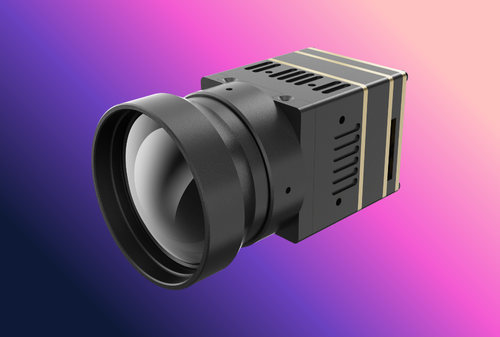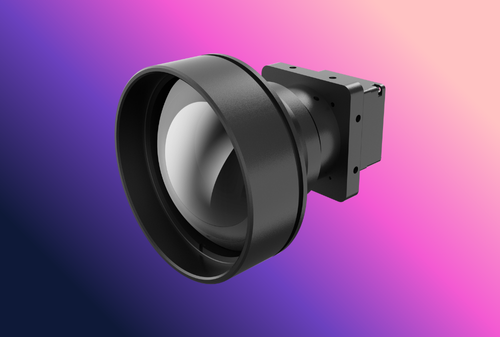
In thermal camera module projects, teams often focus on sensor choice, lens material, focal length, and interface design. Those are important, but they are not enough to guarantee a stable optical result. A strong module can still look weak if contamination enters the optical path or if cleaning is handled carelessly during assembly, inspection, or field support.
Table of Contents
ToggleThat is why contamination control and cleaning rules matter. For a thermal camera module supplier, lens cleanliness is not only a workshop concern. It is part of incoming quality, part of optical consistency, part of yield protection, and part of whether the OEM buyer receives modules that still match the approved baseline after real handling and integration.
Why Contamination Control Matters
A thermal camera module can be optically correct at the end of assembly and still become less consistent later if contamination is not controlled well enough. Dust, residue, handling marks, adhesive haze, fiber debris, cleaning streaks, and cavity contamination can all affect what the customer finally sees. These issues may not always create total failure. More often, they create uncertainty. One module looks slightly different from another. One pilot lot seems less clean than the original sample. One field return appears to have weaker image quality, but the root cause is not the sensor or the lens design. It is contamination somewhere in the optical path.
For thermal camera modules, this matters because the buyer is usually integrating the module into a larger OEM product. Once the module enters enclosure build, front-window assembly, receiving inspection, or service handling, contamination risk increases. If the project does not define cleaning and contamination rules clearly, the final optical result begins depending too much on operator habit rather than controlled process.
What These Rules Should Do
A good contamination-control guide should do four things.
First, it should define what kinds of contamination matter most to the module.
Second, it should reduce contamination entry during assembly, inspection, and storage.
Third, it should define safe cleaning methods that do not create more damage than they remove.
Fourth, it should help the OEM buyer keep the optical baseline stable across receiving, pilot build, and support activity.
The goal is not to create a sterile-lab burden for every project. The goal is to protect the optical path enough that the module remains a trustworthy OEM component instead of becoming a contamination-sensitive assembly risk.
What Counts as Contamination
Contamination is broader than visible dust. In practical thermal camera module work, contamination can include loose particles, fingerprints, skin oils, cloth fibers, adhesive residue, cleaning-fluid residue, haze, packaging debris, sealant overspray, and any other foreign material that changes the optical path or makes the front surfaces harder to evaluate consistently.
For thermal camera modules, contamination may appear on the lens surface, in the cavity between front window and lens, around the lens mount, on the IR window, or even on protective packaging elements that later transfer debris during unpacking. The exact form varies, but the effect is often similar: the module no longer behaves as cleanly or as predictably as the approved sample.
That is why contamination control must begin with a broad definition, not only with “visible dust.”
Why Thermal Modules Are Sensitive to Contamination
A thermal camera module is sensitive to contamination because the optical path is concentrated and the final product often depends on a clean front-end stack. Even a small amount of residue or particulate matter in the wrong place can create visible degradation, inconsistent incoming appearance, or confusion during engineering comparison.
For thermal camera modules, this matters more once a front window, enclosed cavity, or sealed housing is involved. A small contaminant that might be easy to remove during open-bench evaluation can become trapped and much harder to correct after final assembly. The OEM team may then question the lens, focus, or calibration, even though the real issue is simply contamination that entered the path too late to be cleaned easily.
This is one reason why contamination control belongs in design and process planning, not only at the end of inspection.
Cleanliness Starts With the Optical Path Definition
The first step in contamination control is defining where the critical optical path actually is. If the team does not know which surfaces and spaces are optically sensitive, it cannot protect them consistently.
For thermal camera modules, the critical path often includes the lens front surface, any optical cavity ahead of the lens, the IR window if present, the interface between lens and front housing, and sometimes the surrounding mount geometry if it is close enough to the optical field to matter. Once those sensitive areas are defined, the project can then set handling, packaging, and cleaning rules that make sense.
A useful rule is simple: protect the surfaces that the customer’s optical result depends on, not only the surfaces that are easy to see.
The Biggest Risk Is Often Process, Not Material
Many contamination problems are blamed on materials, but the bigger cause is often process. The lens material may be correct. The front window may be well chosen. Yet the module still shows optical contamination because the assembly flow allowed dust entry, poor wipe practices, or uncontrolled adhesive handling.
For thermal camera modules, this matters because OEM teams sometimes try to solve contamination through material upgrades when the real weakness lies in how the module is assembled, inspected, packed, and opened. A stronger contamination strategy begins by asking where contamination enters the process, not only what surface it lands on.
This is why the best contamination-control plans are process maps as much as cleaning instructions.
Handling Rules Matter Early
One of the simplest and most valuable controls is handling discipline. The more people touch or expose the optical area casually, the more likely contamination becomes. Once contamination is present, cleaning itself introduces additional risk.
For thermal camera modules, basic handling rules should define who may touch the optical area, what protective methods are required, how unpacking is performed, and how long the module may remain exposed before moving into the next controlled step. The module should not pass through multiple benches and hands without the project understanding what that does to optical cleanliness.
A small amount of discipline early often removes much more cleaning effort later.
Touch Contamination Is Highly Common
Fingerprints and skin oil are among the most common and most avoidable contamination sources. They often appear during fast handling, inspection, fixture loading, or casual movement of engineering samples.
For thermal camera modules, touch contamination is especially problematic because it can create difficult-to-clean residue or subtle haze that is not always obvious until later optical inspection. The module may still appear functional, but the delivered optical state is no longer clean enough for reliable comparison. This is one reason why gloves, tools, or controlled handling methods are not procedural overkill. They directly protect the optical baseline.
A module that is clean but often touched soon stops being a clean module.
Dust Control Must Be Practical
Dust control does not require an unrealistic manufacturing fantasy, but it does need to be practical and deliberate. If assembly, inspection, and packaging happen in a dusty or fiber-rich environment, the optical path will reflect that sooner or later.
For thermal camera modules, practical dust control may include cleaner work surfaces, reduced loose-fiber materials near the optical area, controlled unpacking, better storage covers, cleaner fixture zones, and avoiding airflow or packaging practices that repeatedly push debris toward the lens or cavity. The exact method depends on project scale, but the principle is consistent: keep the optical work area cleaner than general assembly space.
This often matters most during pilot build, where process discipline is still maturing.
Adhesive and Sealant Control
Adhesives and sealants are common in lens retention, front-window sealing, and enclosure build. They are also common contamination sources if poorly controlled.
For thermal camera modules, adhesive haze, squeeze-out, overspread, vapor effects, or residue transfer can all affect the optical path. The team should therefore treat adhesive application as part of contamination control, not only as mechanical assembly. The optical region should be protected from direct contact, indirect vapor contamination where relevant, and poor cure handling. This matters especially in compact front-end designs where the cavity between window and lens is small and unforgiving.
A strong module process does not only use the right adhesive. It uses it in the right way around optics.
Cavity Contamination Is a High-Risk Zone
If the final product includes a cavity between the front window and the lens, that cavity becomes one of the most contamination-sensitive regions in the entire system. It can trap fibers, dust, haze, or moisture and make later correction difficult.
For thermal camera modules, cavity contamination is particularly important because the final product may be sealed or semi-sealed, which means any debris entering before closure may remain there for the life of the unit. The project should therefore plan how the cavity is cleaned, inspected, and protected before final closure. It should also avoid process steps that reopen a cleaned cavity without a real reason.
A weak cavity process often produces contamination problems that no later wipe can solve.
Packaging Is Part of Contamination Control
A module that leaves the supplier clean can still arrive contaminated if the packaging strategy is weak. Packaging materials, protective covers, pouch interiors, and unpacking behavior all influence the optical result at receiving.
For thermal camera modules, packaging should protect the optical area from particle entry, abrasion risk, and careless direct contact during unpacking. If a protective cap, cover film, or cavity shield is used, it should be chosen and applied in a way that reduces debris transfer rather than creating more of it. The buyer should also understand how to remove that protection safely. Poor packaging discipline is one of the easiest ways to make a clean module look like a dirty module at incoming inspection.
This is why packaging belongs in the contamination conversation from the beginning.
Incoming Inspection Should Include Cleanliness Review
Incoming inspection should not only confirm model, revision, and quantity. It should also include a practical optical cleanliness review, especially when the module is being used for engineering baseline work, pilot build, or more controlled OEM validation.
For thermal camera modules, the cleanliness review should ask whether the optical surfaces and visible path appear consistent with the expected delivery state. The buyer does not always need a heavy cosmetic standard at receiving, but it does need enough discipline to prevent contaminated modules from entering the project quietly. If the project ignores this at incoming, later engineering comparisons become less reliable.
A cleaner receiving process protects not only quality, but also trust in the module baseline.
Cosmetic Review Is Not Enough
A visible cleanliness check is useful, but not sufficient by itself. Some contamination is obvious, but some forms of haze, residue, or optical-path debris may only become meaningful under the right lighting or viewing condition.
For thermal camera modules, this means the review method should be practical and repeatable enough to reveal meaningful contamination without becoming unrealistic. A module should not pass simply because the surface looked acceptable under casual room light. At the same time, the inspection should not become so severe that normal harmless micro-variation is treated like failure. The project needs a useful middle ground.
A stronger cleanliness rule defines what matters optically, not only what looks dramatic cosmetically.
Cleaning Should Be Rare, Not Constant
One of the most important principles in optical contamination control is that cleaning should not become the normal answer to weak process discipline. Every cleaning step carries some risk. If the module must be cleaned repeatedly because contamination keeps re-entering, the project still has a process problem.
For thermal camera modules, the better approach is to reduce contamination entry first, then clean only when necessary and under controlled rules. A module that is handled cleanly, packaged correctly, and assembled with better cavity discipline usually needs less cleaning and shows more stable optical results.
The best cleaning strategy is often fewer cleaning events, not more aggressive cleaning techniques.
Cleaning Must Match the Surface
Different optical surfaces and coatings do not respond equally well to the same cleaning method. A cleaning process that is safe for one front-end design may be too aggressive, too wet, too abrasive, or too residue-prone for another.
For thermal camera modules, the cleaning rule should match the actual lens surface, coating condition, and window material in use. The team should know what kind of wipe, swab, or cleaning fluid is appropriate, how much contact force is acceptable, and what kind of material should never be used. If the process leaves this vague, operators tend to improvise, and that is where damage or contamination spread often begins.
A clean-looking process is not necessarily a safe one. It must also be surface-compatible.
Cleaning Fluids Need Control
Cleaning fluid seems simple until it becomes a problem. Too much fluid, the wrong fluid, or fluid applied in the wrong way can leave residue, migrate into unwanted areas, or create additional cleaning marks.
For thermal camera modules, fluid control should therefore be explicit. The process should define what fluid is allowed, how it is applied, how much is used, and what must be avoided near lens edges, mounts, and enclosed optical regions. The team should not assume that more fluid gives a cleaner result. Often it only spreads contamination or leaves new residue behind.
A stronger process treats cleaning fluid as a controlled material, not as a casual helper.
Wipe Materials Can Create Their Own Debris
Cleaning wipes, tissues, swabs, and cloths can solve contamination or create it. Fiber shedding, abrasive content, residue transfer, and poor storage of wipe materials are all common problems.
For thermal camera modules, the cleaning material should be selected based on how it behaves on the actual optical surface, not only on what is easy to find on the line. A wipe that leaves fibers or creates streaks can be worse than the original contamination. This is especially important in front-window cavities or lens-adjacent zones where later removal becomes harder.
The safest rule is practical: the cleaning material should remove contamination without becoming the next contamination source.
Cleaning Direction and Method Matter
Optical cleaning is not only about what materials are used. It is also about how they are used. Poor wiping direction, excessive pressure, repeated dry rubbing, or random multi-pass cleaning can create streaks, spread residue, or worsen the result.
For thermal camera modules, the project should therefore define a simple, repeatable cleaning method. The exact method depends on the surface and the process, but it should reduce operator improvisation. A module cleaned one way by one person and another way by another person rarely gives consistent results. A stronger method supports both cleanliness and repeatability.
Cleaning should be procedural enough to protect the product, not personal enough to vary with every operator.
Do Not Recontaminate After Cleaning
A module that is cleaned correctly can still become contaminated again immediately if the next handling step is weak. This is one of the most common hidden losses in optical assembly.
For thermal camera modules, recontamination often happens when the cleaned unit is placed on a general workbench, exposed to a dusty fixture, touched during the next alignment step, or moved without protective coverage. That means cleaning and protection must be linked. A clean surface should move directly into the next controlled condition, not back into an ordinary environment.
The useful principle is simple: if cleaning is a reset step, the process after cleaning must protect that reset.
Front Window Cleaning Needs Special Care
If the OEM product uses an IR window, then the front window deserves its own cleaning rules. The window is often more exposed than the lens and may experience more frequent inspection, wiping, or customer-facing cleaning during the product life cycle.
For thermal camera modules, this matters because the front window can become the most visible optical surface in the whole product. If it is cleaned poorly, the customer may interpret the result as module weakness. The project should therefore define what level of assembly cleaning is needed before closure, what handling is safe after closure, and what field cleaning instructions are realistic if the product will be serviced or maintained.
A strong front-window process protects both optics and customer perception.
Cleanliness and Yield Are Connected
Contamination control also affects yield. If the process allows too much optical contamination, the line will spend more time on rework, more time on repeated inspection, and more time debating whether one unit is acceptable. Over time, that slows output and raises cost even if many units can still be recovered.
For thermal camera modules, this matters because the customer may never ask directly about contamination yield, but will care deeply if lot consistency, pilot timing, or perceived image cleanliness begins to drift. A stronger cleanliness process therefore improves not only optical quality, but also manufacturability and supply confidence.
A cleaner line is often a more efficient line.
Cleanliness Must Be Tied to the Project Stage
Like many other controls, contamination rules should reflect project stage. Early engineering samples may tolerate simpler but still careful handling. DVT and pilot stages usually require tighter discipline because the module is now serving as a more formal baseline. Production-facing lots should have the strongest and most repeatable contamination-control logic of all.
For thermal camera modules, this matters because the cost of contamination changes as the project matures. A dusty engineering sample is inconvenient. A contaminated pilot lot can disrupt qualification confidence. A contaminated production lot can weaken customer trust. The process should therefore become more controlled as the project becomes more serious.
Contamination Control Matrix
A simple matrix helps keep the rules practical.
| Control area | Main question | Main goal |
|---|---|---|
| Handling | Who touches the optical area and how? | Reduced direct contamination |
| Work area | Is the optical zone cleaner than general assembly space? | Lower particle risk |
| Packaging | Does the module arrive protected and unpack cleanly? | Better incoming cleanliness |
| Cavity control | Is the lens-window space protected before closure? | Lower trapped contamination |
| Cleaning materials | Are wipes and fluids safe for the actual surface? | Lower cleaning damage risk |
| Cleaning method | Is the cleaning process repeatable? | More consistent optical result |
| Post-clean protection | Does the module stay clean after cleaning? | Reduced recontamination |
This kind of structure helps the team treat cleanliness as a real process system instead of a last-minute inspection issue.
Common Mistakes
Several mistakes appear repeatedly in contamination control. One is assuming that optical contamination can always be fixed later by wiping. Another is using the wrong cleaning materials because they were convenient, not because they matched the surface. Another is treating the front window and cavity as ordinary enclosure regions instead of as critical optical zones. Another is letting modules move through too many hands and benches before final assembly.
A further mistake is cleaning too often because the process keeps reintroducing contamination. For thermal camera modules, the strongest projects are not the ones that clean most aggressively. They are the ones that let contamination enter least often and clean only when a controlled process really requires it.
Conclusion
Thermal camera module lens contamination control and cleaning rules are essential for stable OEM integration. They help the supplier and buyer protect the optical path from dust, touch residue, cavity contamination, adhesive haze, and cleaning-related damage by making cleanliness part of handling, packaging, inspection, and assembly control. A stronger process reduces optical uncertainty, improves lot consistency, and makes the delivered module easier to trust as a real project baseline.
For OEM buyers, this reduces incoming confusion, pilot variability, and late-stage optical surprises. For suppliers, it improves yield, lowers support friction, and helps the module reach the customer in a more stable delivered state. For both sides, it turns cleanliness from a cosmetic afterthought into a real product-control discipline.
The most useful principle is simple: do not ask only how to clean contamination away. Ask how to stop contamination from entering the optical path in the first place.
FAQ
Why is contamination control important for a thermal camera module?
Because contamination in the optical path can reduce image consistency, create incoming-quality doubt, and weaken confidence in the approved module baseline.
Is visible dust the only contamination risk?
No. Fingerprints, oils, fibers, adhesive haze, residue, and trapped cavity contamination can all affect optical performance and project consistency.
Should modules be cleaned often?
Not ideally. A stronger process focuses first on preventing contamination and uses cleaning only when necessary and under controlled rules.
Why is the cavity between window and lens such a high-risk area?
Because contamination trapped there is harder to remove later and can remain in the product for the life of the unit.
What is the biggest contamination-control mistake?
A common mistake is relying on repeated cleaning to fix a process that keeps allowing contamination back into the optical path.
CTA
If you are building an OEM or integration product around a thermal camera module, stronger contamination control and cleaning rules will improve optical consistency and reduce avoidable yield loss. For project discussion, please visit CONTACT.