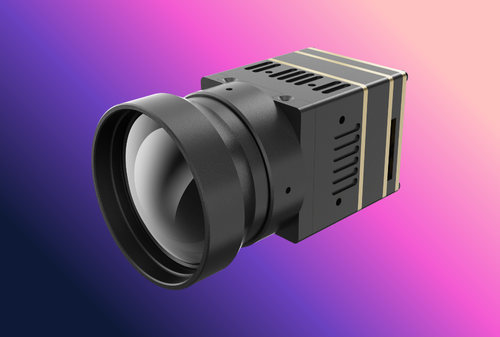
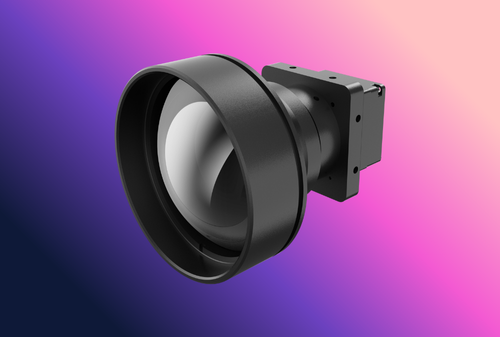
In thermal camera module projects, many delays are not caused by bad technology. They are caused by weak stage planning. The buyer thinks the module is already ready for pilot build, while the supplier still treats it as an engineering sample. Hardware moves ahead, but software, optics, files, and test readiness are still sitting in different stages.
Table of Contents
ToggleThat is why EVT, DVT, and PVT planning matter. For OEM buyers and module suppliers, these stages are not only development labels. They are control points that define what the module must prove before the next investment step begins.
Why Stage Planning Matters
A thermal camera module usually enters a larger system, not a standalone shelf product. That means the module has to survive more than a simple sample check. It must pass through engineering validation, design validation, pilot readiness, and eventually repeatable supply conditions. If those stages are not defined clearly, the project starts making expensive decisions too early.
For thermal camera modules, weak stage planning creates predictable problems. A module may pass image evaluation, but still not be mechanically stable enough for enclosure work. The interface may function, but the SDK is not ready for real host-side development. Pilot planning may begin, but the production test flow still depends on engineering memory. A good EVT DVT PVT structure prevents that drift.
What EVT DVT PVT Should Do
A useful stage model should do four things.
First, it should define what each stage is meant to prove.
Second, it should separate technical learning from release confidence.
Third, it should show which risks are still open at each step.
Fourth, it should stop the project from calling one successful sample a production-ready module.
For thermal camera modules, this matters because hardware, optics, interface, firmware, SDK, mechanical integration, and test planning often mature at different speeds. The stage model keeps them moving in the same direction.
What EVT Means
EVT usually means Engineering Validation Test. In practical OEM work, EVT is the stage where the module proves that the main concept works well enough for real engineering learning.
For a thermal camera module, EVT is not about production confidence yet. It is about technical confirmation. Can the module power up as expected? Can it output image data through the intended path? Can the buyer begin software integration? Does the mechanical outline broadly fit the intended design direction? Does the optics setup behave close enough to begin application work?
An EVT-stage module can still carry open points. That is normal. What matters is that the key architecture is now real enough to build around.
What DVT Means
DVT usually means Design Validation Test. This is the stage where the project asks a stricter question: not only does the module work, but is the design stable enough to validate against real product requirements?
For thermal camera modules, DVT is where the project should tighten control around revision stability, software behavior, optics consistency, interface repeatability, documentation, and system fit. The buyer is no longer only learning. The buyer is validating whether the module design, as currently defined, can survive real application expectations.
DVT is often where vague sample confidence must become measurable design confidence.
What PVT Means
PVT usually means Production Validation Test. This stage is about proving that the approved module baseline can move through real build conditions and controlled supply conditions, not just lab validation.
For thermal camera modules, PVT usually sits close to pilot build or first controlled production runs. The focus shifts toward repeatability, test coverage, configuration control, documentation readiness, and whether the supplier can support the module in a way that matches the buyer’s actual production path.
A PVT-stage module should not feel like an engineering sample with extra hope. It should feel like a controlled product baseline entering real production logic.
Why Modules Need Clear Stage Gates
Thermal camera modules need stronger stage gates than many teams first expect because they sit in the middle of several engineering streams at once. A module can seem “good enough” to one team while still being clearly immature to another.
The software team may be blocked by missing API detail. The mechanical team may still question the outline revision. The purchasing team may not know whether the approved sample reflects the long-term supply version. Quality may not yet have a usable acceptance baseline. If the project does not define stage gates, everyone starts using different definitions of readiness.
That is why EVT, DVT, and PVT should not be treated as labels only. They should function as real entry and exit rules.
EVT Goals
The main job of EVT is to prove that the core module concept is technically viable. At this stage, the supplier and OEM buyer should focus on whether the module can support basic engineering progress.
For thermal camera modules, EVT goals usually include successful startup, stable image output, basic interface communication, first SDK or API access, initial mechanical fit review, and enough documentation to let the OEM engineering team begin meaningful integration work. The project may also check obvious power behavior, major image anomalies, and whether the optics setup is close enough to proceed.
The important point is that EVT should answer: can the real engineering work begin with this module?
EVT Entry Rules
A project should not call something EVT just because sample hardware exists. EVT should begin only when the module is mature enough to teach the team something real.
For thermal camera modules, EVT entry usually requires a defined sample configuration, at least a preliminary file pack, a usable interface path, basic startup stability, and enough software support that the OEM team is not blocked immediately. If the module still depends on too many unwritten assumptions, EVT becomes less valuable because the project is not yet validating a real platform.
A visible EVT entry rule improves engineering efficiency because the team stops using very early prototypes as if they were meaningful validation units.
EVT Exit Rules
EVT should end only when the project has learned enough to justify moving into tighter design validation. That does not mean every detail is perfect. It means the key architecture is now credible.
For thermal camera modules, EVT exit usually requires successful basic functional use, usable software access, acceptable first-stage image behavior, a defined hardware baseline, and a short list of remaining issues that are understood well enough to manage. If the project still does not know whether the interface path is stable or whether the mechanical package is fundamentally workable, it is still inside EVT.
A strong EVT exit rule prevents false confidence later.
DVT Goals
DVT is where the project should prove that the design is no longer only workable, but stable enough to validate against intended OEM use. The buyer and supplier should now focus less on concept learning and more on confidence in the defined design.
For thermal camera modules, DVT goals often include tighter revision control, more stable interface behavior, stronger SDK/API alignment, more mature optics condition, clearer mechanical data, better documentation, and a higher level of test repeatability. This is also the stage where the buyer should begin asking whether the module behaves consistently across more than one build or unit.
DVT should answer: is this design stable enough to validate as the intended product baseline?
DVT Entry Rules
DVT should not start while the project is still changing fundamentals casually. If basic interface architecture, core mechanical assumptions, or software access are still shifting heavily, the module is probably not ready for real design validation.
For thermal camera modules, DVT entry usually requires a golden sample or equivalent approved baseline, a more mature document set, clearer acceptance criteria, and enough configuration control that the buyer knows exactly what design is being validated. The module should already be past the stage of broad technical uncertainty.
This matters because DVT work is more expensive than EVT. The project is no longer only learning. It is consuming validation resources.
DVT Exit Rules
DVT should end only when the design is stable enough that the project can justify pilot or production-facing preparation. The project should know what the approved module baseline is, what issues remain, and whether those issues still affect the path to controlled build.
For thermal camera modules, DVT exit usually requires more consistent unit behavior, stronger file control, a clearer software baseline, mechanical confidence, defined test logic, and reduced design volatility. Open items may still exist, but they should no longer be fundamental architecture questions.
A useful DVT exit answer is simple: the project now knows what it intends to build around.
PVT Goals
PVT moves the question again. At this stage, the project is no longer mainly proving design logic. It is proving production-facing readiness and controlled repeatability.
For thermal camera modules, PVT goals usually include pilot build success, configuration control across multiple units, usable production or incoming test flow, better document discipline, software-package stability, and clearer supply continuity assumptions. This is the stage where the OEM buyer starts asking whether the module can enter a real product program without depending on special engineering rescue.
PVT should answer: can this defined module move into controlled repeatable execution?
PVT Entry Rules
PVT should begin only after the module design is stable enough that the build process is testing repeatability rather than still searching for the correct design. If major architecture questions remain open, the project is probably not ready.
For thermal camera modules, PVT entry usually requires a controlled golden sample baseline, a pilot-ready document pack, defined inspection or validation logic, known software alignment, and a reasonable supply plan for the tested configuration. The buyer should be able to tell exactly what version is entering PVT.
This matters because PVT is often where real production expectations begin. If the project enters too early, the build absorbs design immaturity that should have been resolved earlier.
PVT Exit Rules
PVT should end only when the module has shown enough repeatability and control that the buyer can move into ongoing production or structured scaling with confidence.
For thermal camera modules, PVT exit often requires successful pilot performance, acceptable unit-to-unit consistency, usable test coverage, stable software behavior, controlled documentation, and clear change-control logic. It may also require confirmation that the supplier can support the approved baseline without hidden instability in continuity or revision handling.
A weak PVT exit usually creates problems later because production starts while too many issues are still being treated as engineering exceptions.
Hardware Across EVT DVT PVT
Hardware maturity should change clearly across the three stages. EVT hardware may still include provisional choices. DVT hardware should reflect the intended design baseline. PVT hardware should represent the controlled build baseline.
For thermal camera modules, this usually means PCB revision volatility should decrease, connector decisions should stop drifting, lens or optics configuration should stabilize, and any carrier-board or interface-board dependence should become more controlled. If hardware maturity does not tighten stage by stage, the project is not really moving from engineering validation into production validation.
That is why the team should always ask: what hardware uncertainty is still acceptable at this stage?
Software Across EVT DVT PVT
Software and SDK maturity should also evolve by stage. EVT may allow more limited software support as long as the OEM team can begin real learning. DVT should bring clearer command behavior, stronger API alignment, and more mature file control. PVT should support controlled repeatability and production-facing stability.
For thermal camera modules, this matters because many projects overfocus on hardware stage labels while software remains undercontrolled. A module is not truly moving into later validation stages if the SDK and API package are still drifting like an early engineering toolset.
The stage model should therefore include software maturity, not only board maturity.
Optics Across EVT DVT PVT
If optics are part of the delivered module configuration, optics maturity should also be visible across the stage model. EVT may allow more learning around focus, image behavior, or practical use conditions. DVT should tighten optical baseline and evaluation consistency. PVT should treat optics as part of the controlled module build, not as a lab variable.
For thermal camera modules, this is especially important because the OEM buyer may build mechanical and software work around the optical behavior it sees. If optics remain too loose across stages, design validation becomes harder to trust.
A staged optics plan reduces the chance that the module appears stable while the optical package is still drifting.
Documentation Across EVT DVT PVT
Documentation should also mature stage by stage. EVT may work with a lighter package as long as the OEM team can start meaningful engineering work. DVT should bring cleaner drawings, interface notes, and acceptance references. PVT should require a much more controlled documentation pack tied to the approved build baseline.
For thermal camera modules, this matters because weak documentation is one of the main reasons projects feel stuck between stages. A module may be technically close to ready, but without a stronger document pack the OEM buyer still cannot move mechanical, software, quality, and purchasing teams together.
Documentation maturity is therefore not administrative. It is part of stage maturity.
Test Planning Across EVT DVT PVT
The test logic should also evolve. EVT testing is mainly about concept proof and early functional confidence. DVT testing should validate the intended design more rigorously. PVT testing should support pilot repeatability and controlled build release.
For thermal camera modules, this often means the project starts with basic power, image, and interface checks in EVT, moves to more structured acceptance and regression checks in DVT, and then strengthens production-adjacent testing in PVT. If the test plan does not evolve, the project may keep using early sample logic for late-stage validation, which is usually too weak.
A stage model is therefore stronger when it changes how the module is tested, not only when it changes what the stage is called.
Supplier and Buyer Roles
A useful EVT DVT PVT framework should also clarify roles. The supplier is usually responsible for module definition, change visibility, revision control, and technical support around the delivered baseline. The OEM buyer is usually responsible for system-level integration, host-side validation, and deciding whether the module fits the intended product.
For thermal camera modules, this separation matters because stage confusion often comes from role confusion. The supplier thinks the buyer should resolve a system issue without more module clarity. The buyer assumes the supplier should solve an integration issue that really belongs to the host design. A strong stage plan helps both sides see which questions belong where at each step.
Better stage planning usually creates better responsibility clarity.
Gate Review Meetings
A formal stage does not need a large bureaucracy, but it usually benefits from a gate review. Before the project says it is moving from EVT to DVT, or from DVT to PVT, the supplier and buyer should review what was actually proven and what still remains open.
For thermal camera modules, these reviews are especially useful because they prevent the project from moving ahead based on optimism alone. The team can check hardware baseline, software support, optics status, documentation maturity, open risks, and next-stage entry readiness in one visible conversation.
A short, disciplined gate review often saves much more time later than it consumes now.
Open Issues by Stage
Every stage may still carry open issues, but the type of issue should change as the project matures. EVT can still tolerate broader learning questions. DVT should narrow those down to controlled design issues. PVT should only tolerate issues that do not undermine repeatable build readiness.
For thermal camera modules, this staged view of open issues is extremely useful. It stops the project from pretending that all open points are equal. Some open points still belong to early engineering learning. Others are true blockers for later stages.
A better project therefore tracks not only what is open, but whether that issue still belongs to the current stage at all.
EVT DVT PVT Matrix
A simple matrix helps keep the structure practical.
| Stage | Main question | Main output |
|---|---|---|
| EVT | Does the module concept work well enough for real engineering? | Technical learning baseline |
| DVT | Is the design stable enough to validate as the intended module version? | Approved design confidence |
| PVT | Can the validated module move through repeatable build conditions? | Production-facing readiness |
And across the main work areas:
| Work area | EVT focus | DVT focus | PVT focus |
|---|---|---|---|
| Hardware | Concept works | Design stabilizes | Build baseline holds |
| Software | Basic access works | API behavior aligns | Controlled software baseline |
| Optics | Early usable state | Stable optical baseline | Repeatable configured state |
| Documentation | Enough to start | Enough to validate | Enough to build repeatedly |
| Testing | Functional proof | Design validation | Pilot and production validation |
This kind of matrix helps the team understand that stage labels should change the work, not only the vocabulary.
Common Mistakes
Several mistakes appear repeatedly in module projects. One is calling a strong sample “DVT-ready” when the software package still looks like EVT. Another is starting pilot activity while the hardware baseline is still drifting. Another is treating documentation maturity as optional until very late. Another is using one-stage language for several very different levels of readiness.
A further mistake is moving into PVT mainly because schedule pressure is high, not because the module baseline is genuinely stable enough. For thermal camera modules, that usually creates more hidden cost later than the early schedule gain was worth.
The strongest projects are not the ones that move fastest through stage names. They are the ones that make sure each stage actually proves what it is supposed to prove.
Conclusion
Thermal camera module EVT DVT PVT planning is a practical OEM project-control tool. It helps the supplier and buyer define what the module must prove at each stage, which risks are still acceptable, and when the project is truly ready to move from engineering learning into design confidence and then into production-facing control.
For OEM buyers, this reduces ambiguity and protects downstream integration investment. For suppliers, it improves stage discipline and makes technical support more meaningful. For both sides, it turns stage language into real project guidance instead of empty labels.
The most useful principle is simple: do not ask only whether the module works. Ask what level of readiness it has actually earned — EVT, DVT, or PVT — and whether the hardware, software, optics, documents, and tests all support that answer honestly.
FAQ
Why does a thermal camera module project need EVT DVT PVT planning?
Because the module is usually integrated into a larger OEM system, and different stages need different proof of readiness before the next investment step begins.
What is EVT for a thermal camera module?
EVT is the stage where the module proves that the core technical concept works well enough for real engineering learning and early integration work.
What is DVT for a thermal camera module?
DVT is the stage where the design is validated as the intended module baseline, with tighter revision control, better documentation, and stronger interface confidence.
What is PVT for a thermal camera module?
PVT is the stage where the validated module is tested under repeatable build conditions to prove production-facing readiness.
What is the biggest EVT DVT PVT mistake?
A common mistake is calling the module ready for a later stage when hardware, software, optics, and documentation are still sitting in very different levels of maturity.
CTA
If you are building an OEM or integration program around a thermal camera module, stronger EVT DVT PVT planning will reduce ambiguity and help your project move through each stage with more control. For project discussion, please visit CONTACT.